Names Who Moved from F1 to IndyCar and Their Career Journeys
Share This Page
Drivers who move from Formula 1 to IndyCar are names who rebuild their careers across the gulf between the two series' car philosophy, track diversity and economic structure. Names such as Nigel Mansell, Emerson Fittipaldi, Takuma Sato and Alexander Rossi have signed their names to championships and Indianapolis 500 victories along this path. This page comparatively examines the reasons for the switch, the technical differences between the cars, and the different career paths the two series offer to a driver.
Highlights
- Nigel Mansell, 1992 F1 after winning the championship, became a rookie in 1993 and won the IndyCar championship.
- Takuma Sato is the only Asian driver to have won the Indianapolis 500 twice (2017 and 2020).
- IndyCar cars can reach ~240 mph speeds; F1 cars, on the other hand, stand out with aerodynamic ground effect on road courses.
- IndyCar's 2026 calendar features 18 races in North America; F1 runs 24 races in 21 countries.
- The cost cap per car in F1 has risen to$215 million
.
Why Does an F1 Driver Move to IndyCar?
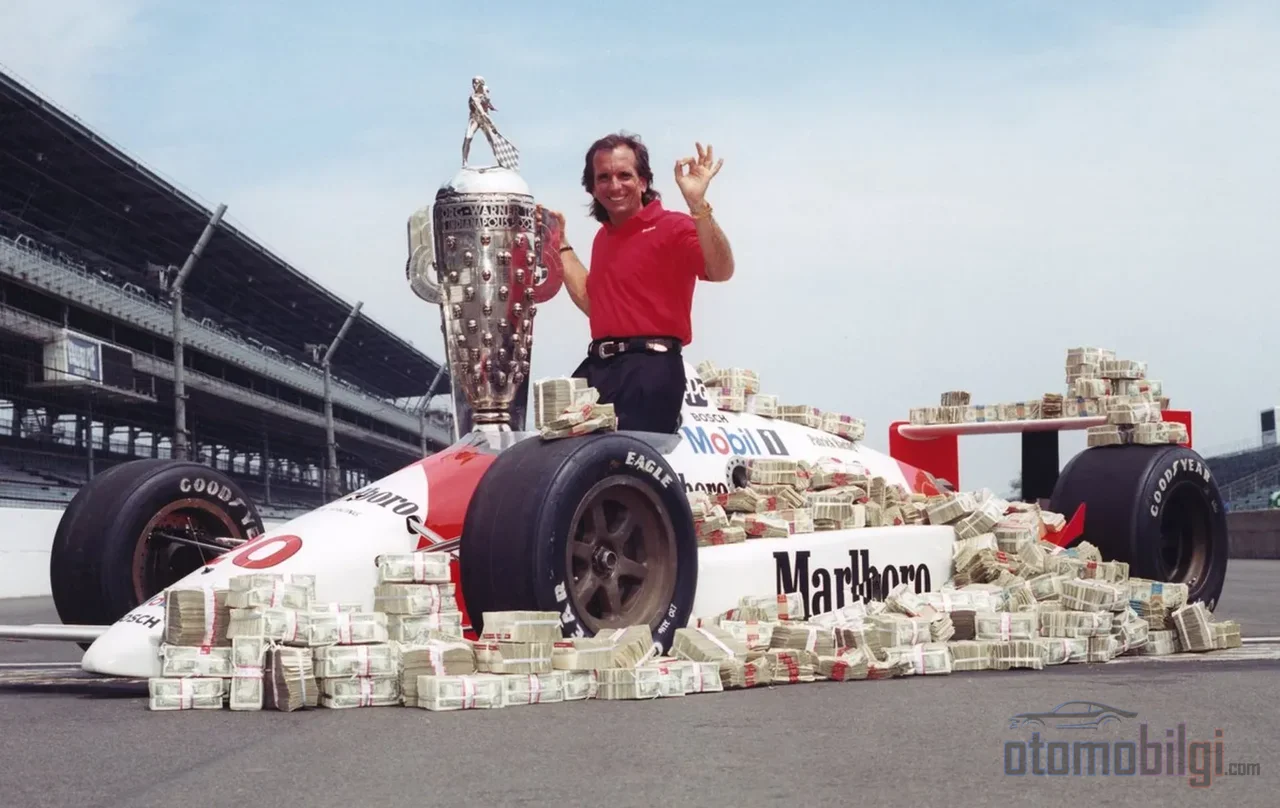
The brightest showcase of this second stage is without question the Indianapolis 500. As an interesting detail, the race was the only round of the F1 World Championship outside Europe between 1950 and 1960; that is, the two worlds actually crossed the same road at a certain point in history. Even today, the Indy 500 carries prestige comparable to an F1 championship for open-wheel racers: Emerson Fittipaldi won it twice, Takuma Sato won it twice, and Alexander Rossi claimed the victory that defined his career there.
Famous Names Who Moved from F1 to IndyCar: The Best and the Highest
Looking at the list, one pattern immediately stands out: those who moved were generally not just "survivors," but those who reached the goal. Here are the main names who followed this path and left their mark:
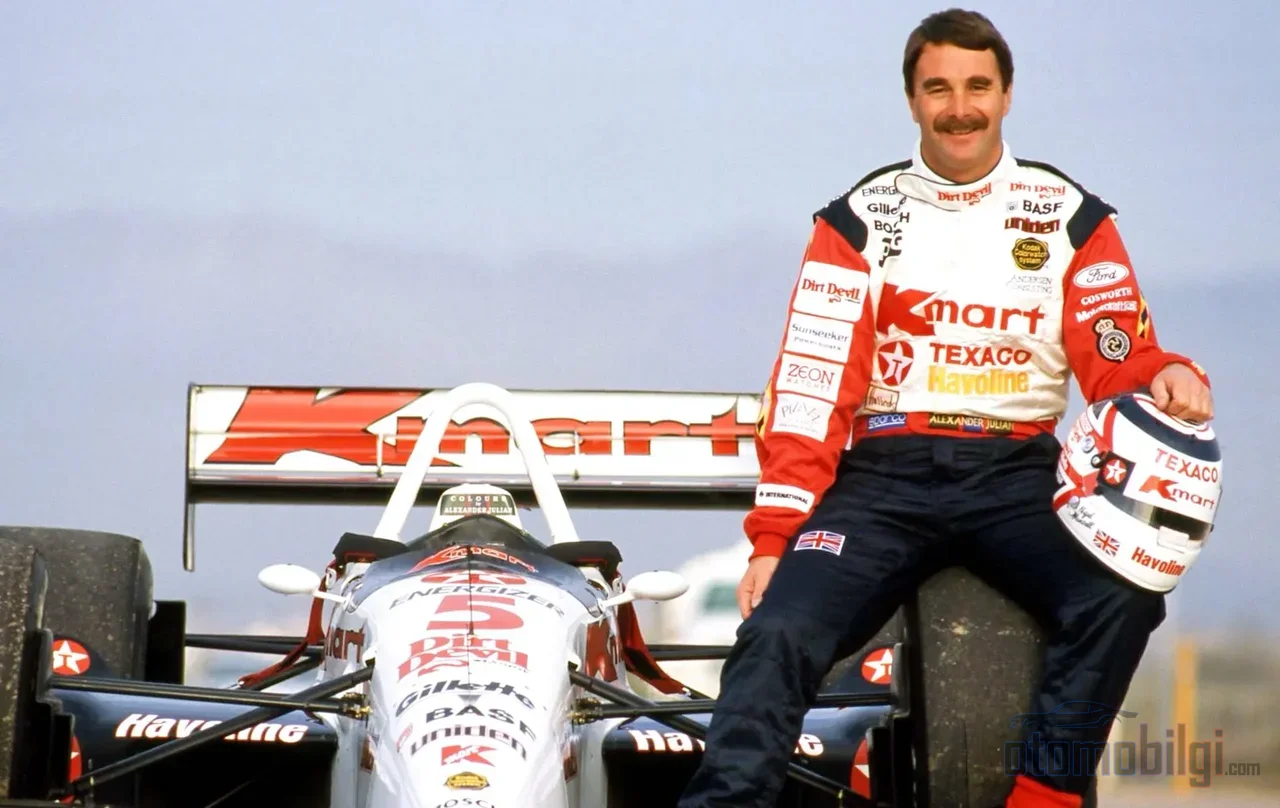
- Nigel Mansell - 1992 F1 champion (9 wins and 14 poles with Williams). He moved to IndyCar with Newman/Haas in 1993 and won the championship in his rookie season; the only driver to hold the F1 and CART championships at the same time.
- Emerson Fittipaldi - 1972 and 1974 F1 champion; in IndyCar, 22 wins, the 1989 CART championship and two Indy 500 victories (in 1989 and 1993, with different teams).
- Alex Zanardi - Scored a single point in 41 F1 starts, but became CART champion back to back with Ganassi in 1997 and 1998, taking 15 wins.
- Takuma Sato - After 90 F1 starts, he took 6 wins, 10 poles and two Indy 500 victories in IndyCar.
- Alexander Rossi - Moved to IndyCar after only 5 F1 starts; 2016 Indy 500 winner, 2018 runner-up in points, 7 wins in total.
- Romain Grosjean After 10 F1 seasons, he came to IndyCar with Dale Coyne in 2021 and, in his first year, competed only in road and street races.
The list goes on: Bobby Rahal passed through here with three CART championships and an Indy 500 win; Eddie Cheever, carrying the record for most F1 starts by an American with 132, won the 1998 Indy 500 with his own team; Justin Wilson notched 7 wins and two runner-up finishes in points in IndyCar, and tragically lost his life in the accident at Pocono in 2015. Names like Jim Clark were part of the first generation to bridge the two series: in 1965 he won the Indy 500 with a rear-engined Lotus, leading 190 laps.
Mansell's 1993: Still an Unequaled Season
Mansell's transition is the best script one could write on this subject. The story opened at Surfers Paradise: the rookie took pole and won in his very first race - a first since 1966. Over the season he collected 5 wins and 6 poles, led 222 laps at Michigan and 155 laps at Nazareth, and finished third at the Indy 500, including leading 34 laps. He lifted the championship with an average finishing position of 6.3.
The real fine point here is this: when Mansell entered IndyCar, he had zero oval experience. There is no such concept as an oval on the F1 calendar; Mansell masterfully filled that gap in a single season and dominated even on oval tracks. A textbook example of adaptability, in every sense of the word.
The Differences Between an IndyCar and an F1 Car
Both series produce open-wheel cars of mesmerizing speed, but their philosophies are entirely different. F1 is an engineering contest where every team builds its own design; IndyCar revolves around a single chassis manufacturer, with competition kept closer to the driver. Putting the differences side by side makes the job easier:
| Feature | Formula 1 | IndyCar |
|---|---|---|
| Length | ~5.6 m | ~5.1 m |
| Width | 2 m | ~1.9 m |
| Top speed | ~220 mph | ~240 mph |
| Where it is strongest | Road/street circuits (high aerodynamic downforce) | Ovals (straight-line speed advantage) |
| Design model | Each team designs its own | Single chassis, standardized approach |
| Standout technologies | From 2026 onward, the electric motor produces ~470 hp | Hybrid engine (~150 hp extra), Aeroscreen, track-specific Firestone tires |
The conclusion drawn from this table is confusing but clear: there is no single answer to the question "which one is faster." IndyCar pulls ahead in straight-line speed at superspeedways; F1 turns faster laps on complex, twisty circuits thanks to the cornering grip advantage of aerodynamics. Two cars, like answers to different questions - not which is faster, but which is more extreme at its own game?
Oval, Street Circuit, Road Circuit: IndyCar's Unique Mix
In an F1 season the circuits change but the circuit types remain largely the same: permanent or street circuits, each approached with aerodynamic fine-tuning. IndyCar's calendar is another beast. Superspeedways, short ovals, permanent race tracks and street circuits intertwine within the same season. It asks a driver to keep his balance on Detroit's wet concrete and, two weeks later, to run at over 240 mph at Indianapolis.
Racing on wet concrete in Detroit is harder than at any F1 circuit, including the streets of Monaco.
Bourdais, who knows both series well, isn't saying this idly. A driver who can't keep up on street circuits shouldn't be expected to feel comfortable on an oval either; the reverse holds true as well. That's why stringing together a consistent season in IndyCar is incomparably harder than excelling on a single type of circuit. Sato's career is living proof of this: he is one of the few drivers to have won on a superspeedway (Indy twice), a short oval (Gateway), two permanent tracks (Portland and Barber) and a street circuit (Long Beach).
Budget Realities: The Economic Gulf Between the Two Series
One of the reasons pushing drivers down this path goes beyond what appears on paper: money. In F1 the cost cap has risen to 215 million dollars - yes, that figure itself, the "cap," is larger than the total budgets of many racing series. In IndyCar, meanwhile, the seasonal ceiling per car is said to be around 14-15 million dollars, and the fact that the series pays a base payment of about 1.2 million dollars per car for a maximum of 22 full-time entries shows that the economic model operates on a completely different logic.
Still, comparing the two series directly is misleading; their commercial models, revenue distributions and team structures are so different that the "which one is bigger" debate often loses its meaning. But looking from the driver's perspective, the picture becomes clear: there is a real career math between holding onto a seat at a midfield team in F1 and racing for a championship-contending team in IndyCar. Rossi is the most recent example of this: after 5 F1 starts, he signed seven victories and one Indy 500 in IndyCar.
Is the Reverse Direction Possible? The Road from IndyCar to F1
This bridge runs both ways, but the traffic is far heavier in one direction. The most famous attempt at the reverse move belongs to Alex Zanardi: after becoming a two-time CART champion he transferred to the midfield team Williams and failed to meet expectations. The trace left by examples like this underlies F1 teams' reluctance to recruit from IndyCar; the two cars' driving characteristics are so different that IndyCar mastery doesn't translate automatically to F1.
Still, the door isn't completely closed. Heading into 2026, there's some interesting movement: Colton Herta moved to FIA Formula 2 for his F1 dream, while Álex Palou became one of the last IndyCar drivers to lap in McLaren's F1 car. The debate over how wide this path IndyCar has opened to F1 continues; but the two series are indeed drawing closer, at least on the technology front. While IndyCar's hybrid engine adds roughly 150 extra horsepower to the series, F1's 2026 rules raise electric power to around 470 horsepower - both series are looking to the future in hybrids and electrification.
A Comparison on the 2026 Calendars
Geography is also a good indicator of the difference: while IndyCar runs 18 races in North America in 2026, F1 tours the globe with 24 races in 21 countries. A new Washington D.C. street circuit and the Arlington Grand Prix have been added to the IndyCar calendar - the series is deepening on its home stage, while F1 is expanding geographically. One's scale is regional mastery, the other's a world tour; depending on what the driver wants, both are reasonable career plans.
Sato and the Indy 500 Allure: The Heart of the Crossover
Every crossover this article describes has a common magnet: Indianapolis. Takuma Sato's story is the warmest example of this. After his only F1 podium at the 2004 US GP, the Japanese driver moved to IndyCar, first becoming his country's first IndyCar winner at Long Beach in 2013, then winning the Indy 500 twice - in 2017 with Andretti Autosport and in 2020 with Rahal Letterman Lanigan - the only Asian driver to win the race. Moreover, he returned to the 109th Indy 500 (2025) with RLL in the No. 75 car; the target is the three-times club.
How do F1 drivers view the race? The answers cluster at the poles: some see the Indy 500 as one of motorsport's greatest challenges, while other drivers find its danger unnecessary. Even this divide says something about the race's status - there's nothing to be indifferent about here. The same race is considered one of the greatest single-day sporting events in history, and at the same time a sleep problem for an engineer sitting at its pit wall.
Conclusion: Two Stages, One Mastery
Moving from F1 to IndyCar is not a descent, but a second climb. Mansell dominating as a rookie on ovals, Fittipaldi winning the Indy 500 with two different teams, Zanardi rebuilding his career from scratch, and Sato's helmet twice kissed by the Bottle of Milk all say the same thing: in this transition, the formula for success is the courage to learn the new car's language and the rhythm of the new tracks. The two series are not copies of each other - one tests the limit of engineering, the other the versatility of the driver. And as history has shown, there are those who win first place in both categories.
Sources
- Top 10 F1 Drivers Who Converted to IndyCar
- Shifting Gears: F1 Drivers Have Made Successful Transition to INDYCAR - IndyCar.com
- Nigel Mansell - Wikipedia
- Takuma Sato - Wikipedia
- Two-Time Indy 500 Champion Takuma Sato Returns to RLL - rahal.com
- Is IndyCar's once-promising pathway to F1 now a road closed? - ESPN
- IndyCar vs F1: Key Differences Explained - Red Bull
- INDYCAR 101: Technology - IndyCar.com
- IndyCar vs. Formula One 2026 - IndyStar
- What is the F1 cost cap and why has it gone up? - Formula1.com
- How F1 drivers really feel about the Indy 500 - Yahoo Sports
- 2026 IndyCar Teams & Drivers - Indianapolis Motor Speedway