IndyCar Guide: The Indianapolis 500 and the American Open-Wheel Tradition
Share This Page
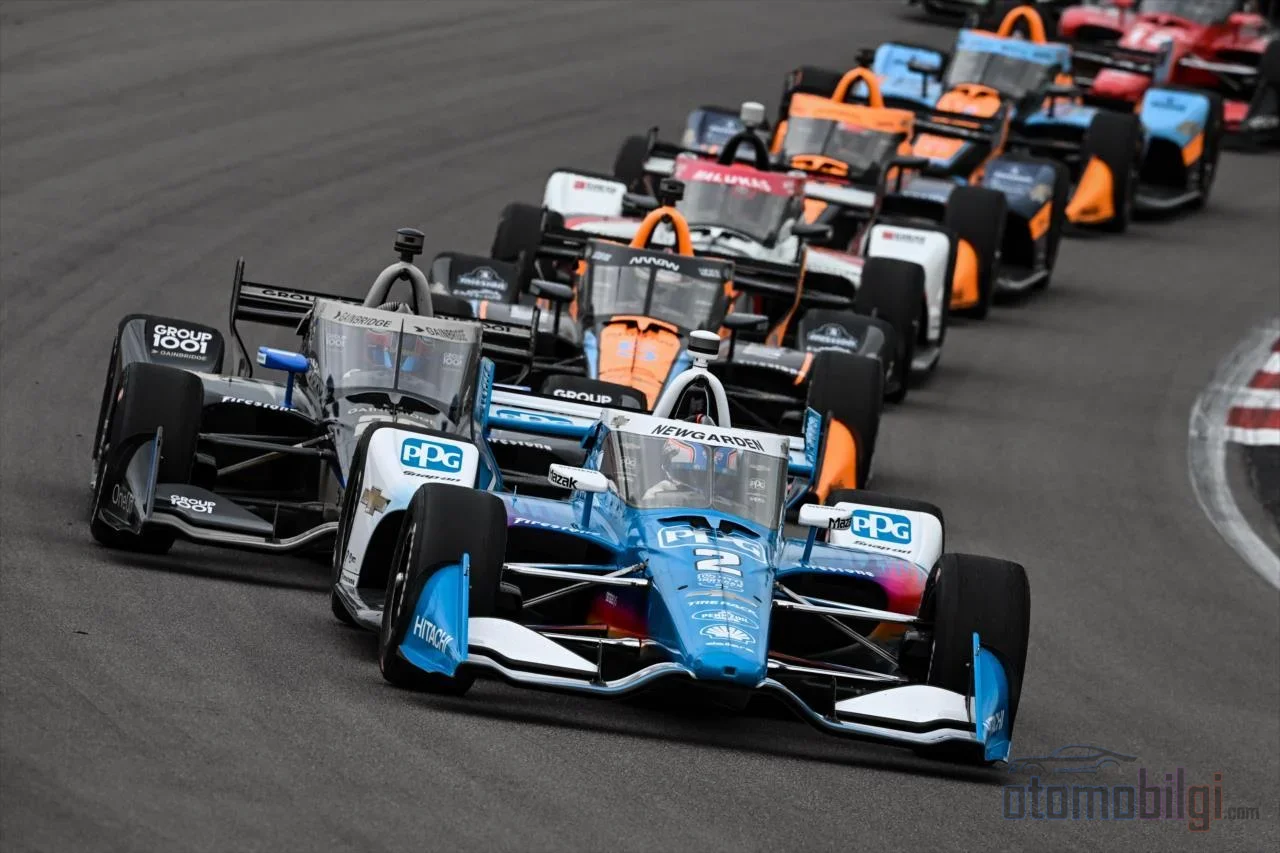
IndyCar is a championship held in the United States where open-wheel, single-seater cars race; it consists of a mix of ovals, permanent road courses, and street circuits. Though it resembles Formula 1, it is a world of its own with its spec chassis, the absence of power steering, and oval classics like the Indianapolis 500.
Highlights
- IndyCar races since 1996 have been held at 50 different tracks: 24 ovals, 11 road courses, 14 street circuits.
- All teams have been using the spec Dallara IR-18 chassis since 2018; the engines produce 700+ horsepower of power.
- The Indy 500 winner traditionally drinks milk - a tradition that started in 1936.
- At superspeedways, cars can accelerate to over 230 mph. can accelerate over
- Foyt, Unser, Mears, and Castroneves: the club of legends who have won the Indy 500 four times.
I'll admit it: at first glance at IndyCar, I said "isn't this F1?" Open wheels, a huge front wing, a body that seems glued to the ground... But once you start watching, you realize this is a completely different universe. Think about it: for one week you're turning counterclockwise on a giant 2-mile oval in Florida, and two weeks later you're weaving through a track set up on the streets of a crowded city. Which F1 driver could do that, you ask? Very few. Come, let me take you into this world.
What Kind of Championship Is the IndyCar Series: Ovals, Road Courses, and Street Circuits
To describe the series in a single sentence: it's a championship where the track type never changes, yet everything changes. IndyCar races on three different types of tracks, and each one rewrites everything from the car to the setup to the driver's nervous system.
- Ovals (speedways): Giant tracks with only right-hand turns, run flat out. Tracks of 1 mile and under are classified as "short tracks," while those of 2 miles and above are "superspeedways."
- Road courses: Permanent facilities with both left and right turns. This is the part that most resembles F1.
- Street circuits: Temporary circuits set up by enclosing city streets or airport runways with barriers. The walls are close, and there's zero margin for error.
This diversity also shows itself in serious numbers: the fact that the series has raced at 50 different tracks from 1996 to the end of the 2026 season (24 ovals, 11 road courses, 14 street circuits, and 1 combined road course) draws a map stretching from the USA to Canada, from Brazil to Japan. The official series itself admits this: when spec chassis and regulated engines narrow the field, packed grids and countless overtakes naturally follow. So instead of a car difference, you watch a driver difference - that's why the races are so full of action.
Wait a minute, let me squeeze in a little question here: If it were you, would you prefer turning left for 200 miles, or memorizing every corner yourself? Drivers who have felt like they've tried both have no common answer; but what makes IndyCar IndyCar is precisely going back and forth between these two. The series' 2026 calendar features new street circuits like Arlington, Markham, and Washington DC; after an eight-year hiatus, Phoenix Raceway has also returned to the ovals.
Why Is the Indianapolis 500 the Greatest Race in the World?
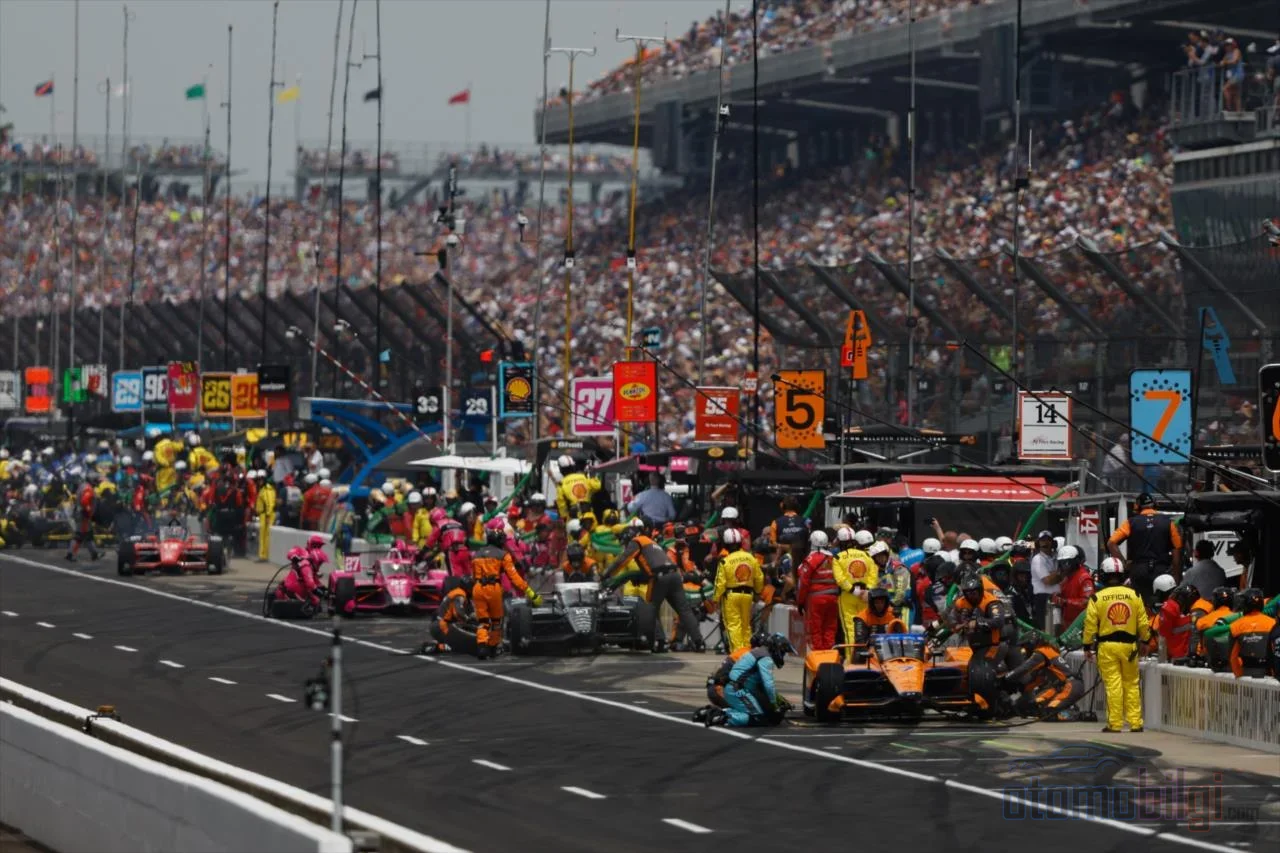
The heart of the series is, without question, the Indianapolis 500. Run for 200 laps counterclockwise on the legendary 2.5-mile oval, this race has appeared on the series calendar exactly 30 times throughout IndyCar history (since 1996). But it is not just the track length that makes the Indy 500 legendary; it is all the rituals surrounding it.
The Milk Drinking Ceremony: A Strange but Indescribable Tradition
The winner of one of the world's fastest machines drinks a bottle of milk in front of the cameras. Why? Because in 1936, three-time winner Louis Meyer asked for buttermilk after a hot and exhausting race - and the cameras never forgot that image. In 1956, when dairy companies began sponsoring the race prize fund and highlighted this celebration, the ritual became permanent.
Today things are much more organized: all 33 drivers officially declare their milk preference before the race (skim, 2%, or whole?). It is even known that at one point undecided drivers were persuaded with a $400 prize. And since 2005, a representative of the Indiana Dairy Farmers hands the bottle to the winner - the first to receive this honor was a rookie farmer. There is also the yard of bricks celebration: in the race's early years the track was paved with bricks, and drivers crown their victories by kissing or touching that famous brick at the start-finish line.
The Triple Crown: The Hardest Achievement in Motorsport
In motorsport there is an unofficial "Triple Crown" concept: winning the Monaco Grand Prix, the Indianapolis 500, and the 24 Hours of Le Mans. Very few names have achieved it; it is often debated that Graham Hill is the only person to have done so. IndyCar also has its own Triple Crown: in some years, the driver who scored the most points across three 500-mile superspeedway races was considered the "Triple Crown Champion." The only name to win this trio in a single season? Al Unser. One season, three major races - no one has repeated it so far.
What Kind of Beast Is the IndyCar: Single Chassis, Turbo V6, and Hybrid
Now let's get to the technical part, but keep it simple. IndyCar's philosophy is simple: everyone uses the same chassis, and the difference should come from driver and team intelligence. It is like everyone cooking in the same kitchen - the recipes are the same, but the dishes that come out are not.
- All teams have been using the single-spec Dallara IR-18 chassis since 2018; the basic structure has been Dallara DW12-derived since 2012.
- The engines are 2.2-liter twin-turbo V6s, supplied by Honda or Chevrolet, with 700+ horsepower; a hybrid energy recovery system is integrated.
- The car has no power steering - meaning turning the wheel at high speed really takes muscle.
On the aerodynamic side, the setup changes according to track type: large wings with high downforce on road and street courses, a balanced setup on short ovals, and on superspeedways low wings that minimize drag - and here speeds 230 mph are exceeded. There is also push-to-pass: in road and street races, drivers press the button to use extra power for a limited time allocated per race. Choosing well when to press it makes the move. A real game of strategy.
The Incoming Next Generation: IR-28
introduced in July 2026, the new Dallara IR-28 chassis will enter competition in 2028. Approximately 100 pounds lighter; with Chevrolet and Honda's 2.4-liter twin-turbo V6 engines, up to 760 horsepower of power is on the table. The hybrid system will store roughly 14 times the current energy capacity; Xtrac's gearbox that is 25 pounds lighter, driver-adjustable electronic anti-roll bars, and the AXIS inertia-control suspension are also on the list. Testing begins in 2026 - meaning what you're watching now is approaching the close of an era.
What Is the Difference Between IndyCar and F1?
This is the question I hear most often, so let me be clear. Both series are open-wheel, but their philosophies are at opposite ends.
| Feature | IndyCar | Formula 1 |
|---|---|---|
| Chassis | Spec Dallara, identical for everyone | Each team designs its own |
| Track mix | Oval + road + street courses | Road and street courses |
| Power steering | No | Yes |
| Top speed | ~240 mph (oval setup) | ~220 mph |
| Hybrid electric power | ~150 hp additional power | ~470 hp as of 2026 |
The numbers can be confusing at first glance, so let me explain: an IndyCar car in superspeedway setup reaches a higher top speed with minimum wing and minimum drag; F1 stands out with its cornering grip and 2026's powerful "active" aerodynamics. In other words, one is like an athlete who runs faster on a straight street, the other one who is more agile on the track. There is no single answer to which is "better" - whichever one makes your heart beat faster while watching is your favorite.
Those Who Moved from F1 to IndyCar and the Legendary Trio: Andretti, Foyt, Mears
Traffic between the two series is not one-way, but it flows much more easily in one direction. The names who moved from F1 to IndyCar and shone are truly impressive: Nigel Mansell, who moved directly to IndyCar after the 1992 F1 championship and became one of the best fits. Emerson Fittipaldi, Alex Zanardi, and Bobby Rahal are also on this list; Jacques Villeneuve is a great example who won the IndyCar championship. Sébastien Bourdais (2011) and Rubens Barrichello (2012) joined as a later wave. Juan Pablo Montoya's story is particularly beautiful: he first shone in the US, went to F1, then returned - one of the few drivers to complete that round trip. Names like Jim Clark, Derek Daly, Roberto Guerrero, Stefan Johansson, and Mauricio Gugelmin also experienced both worlds. The reverse direction, lasting success from IndyCar to F1, is far rarer; Mario Andretti and Dan Gurney lead that minority.
The Legendary Front Row of 1991
Let's travel back in time: who was on the front row of the 1991 Indy 500? On pole was Rick Mears, in the middle A.J. Foyt, on the outside Mario Andretti. Three names, a total of 9 Indy 500 victories. A single photo frame, half a century of history. Mears won that race from pole, becoming the third name to win the Indy 500 four times; the four-win club was completed with Foyt, Al Unser, Mears, and later Helio Castroneves. Mario Andretti's story is a bit bittersweet: despite being one of the most decorated names in the sport, he could only win the 500 once. In that same race, Mario, Michael, Jeff, and John Andretti all competed - four members of one family on the same grid is, in my opinion, one of the sweetest details in racing history.
2026 Season: The 115th Year of Open-Wheel Racing
2026 is the 115th official championship season of American open-wheel racing and the 31st season under the IndyCar Series banner. The season started, in keeping with tradition, on the St. Petersburg street circuit. The biggest move on the transfer front was Scott Power's switch to Andretti Global's Honda program. The race calendar is also expanding in Indy NXT by Firestone, the rising ladder for young drivers - meaning we will see new names on this grid in the coming years.
If you have read this page up to here, you now know one thing: IndyCar is not F1's "American copy," but a world with its own rules, rituals, and heroes. Next time May comes around, I suggest you watch an Indy 500 - the moment the winner lifts the milk, you will smile too, guaranteed.
Sources
- What Makes the NTT INDYCAR SERIES Race Car Unique?
- From Street Circuits to High-Speed Ovals
- List of IndyCar Series racetracks
- Indianapolis 500 traditions
- Milk | Where Tradition Never Stops
- Milk Tradition | American Dairy Association Indiana
- Triple Crown of Motorsport
- Triple Crown (IndyCar)
- 1991 Indianapolis 500
- Dallara DW12
- 2026 IndyCar Series
- Mastering the art of IndyCar strategy
- Top 10 F1 Drivers Who Converted to IndyCar
- The F1 drivers who conquered Indy
- IndyCar vs F1: Key Differences
- Formula One vs. IndyCar Racing
- All Eyes on 2026