Marmon Wasp: The First Indy 500 Won with 110 Horsepower
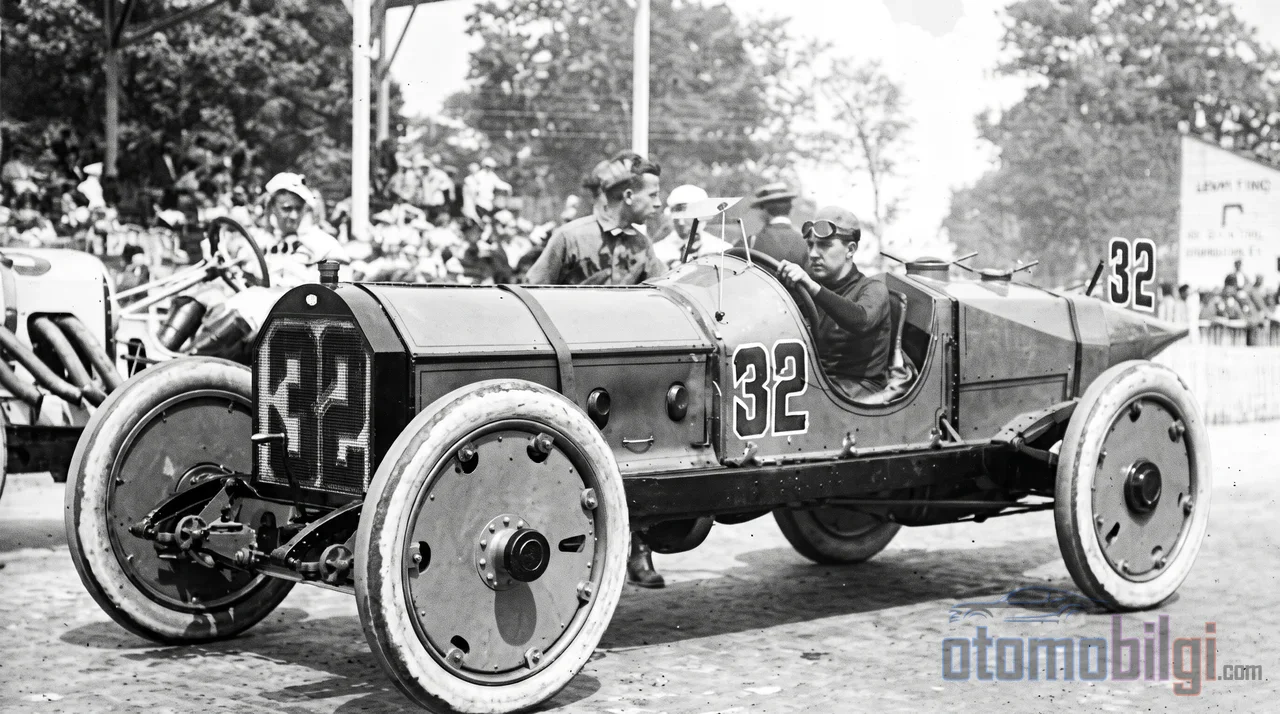
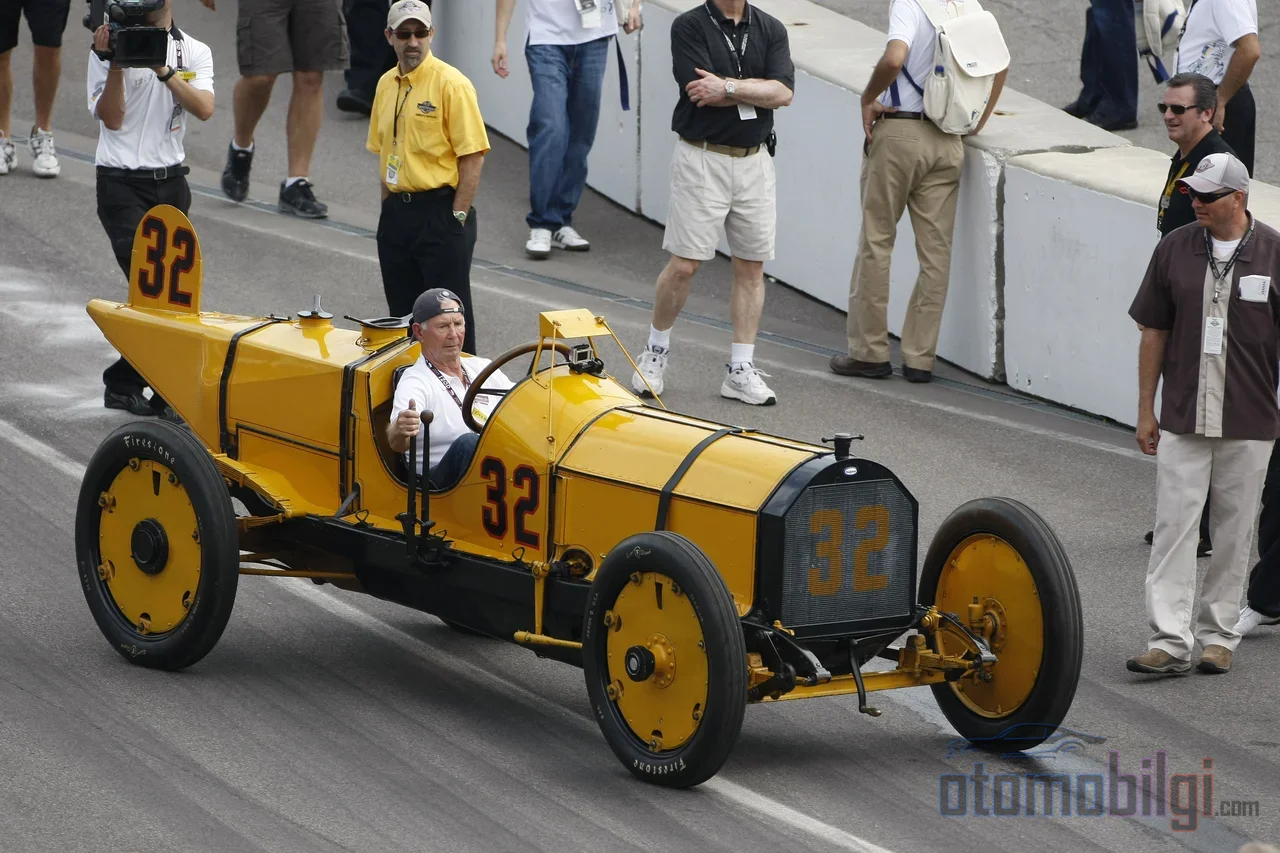
May 30, 1911, Indianapolis. There are 40 cars on the track, roughly 80,000 people in the grandstands, and behind the grid, starting from the 28th row, sits a yellow car: the Marmon Wasp. Everyone else's car has two seats, with a driver and a riding mechanic. This yellow car, however, has a single seat, a body shaped like a pointed wasp stinger, and on its hood something no race car had ever featured before: a rearview mirror. So how did this strange single-seater win the first Indianapolis 500? If you're ready, we're diving into the coolest "less is more" story in motorsport history.
This page tells exactly that story: Ray Harroun's Marmon Wasp, the story of how the 1911 Indianapolis 500 was won, the world's first rearview mirror ever seen in racing, and the birth of the world we today call IndyCar. Let's begin.
How Was the Indianapolis Motor Speedway Born?
The story begins even before the race. An entrepreneur named Carl Fisher came up with the idea of a private facility for testing automobiles in 1906, and in 1909 a massive track was built on a 328-acre farm outside Indianapolis. At first, many short races were organized; but at some point Fisher and his partners changed their minds: instead of short races, they would hold one big spectacle a year. 500 miles. A single race. The richest prize pool of the era.
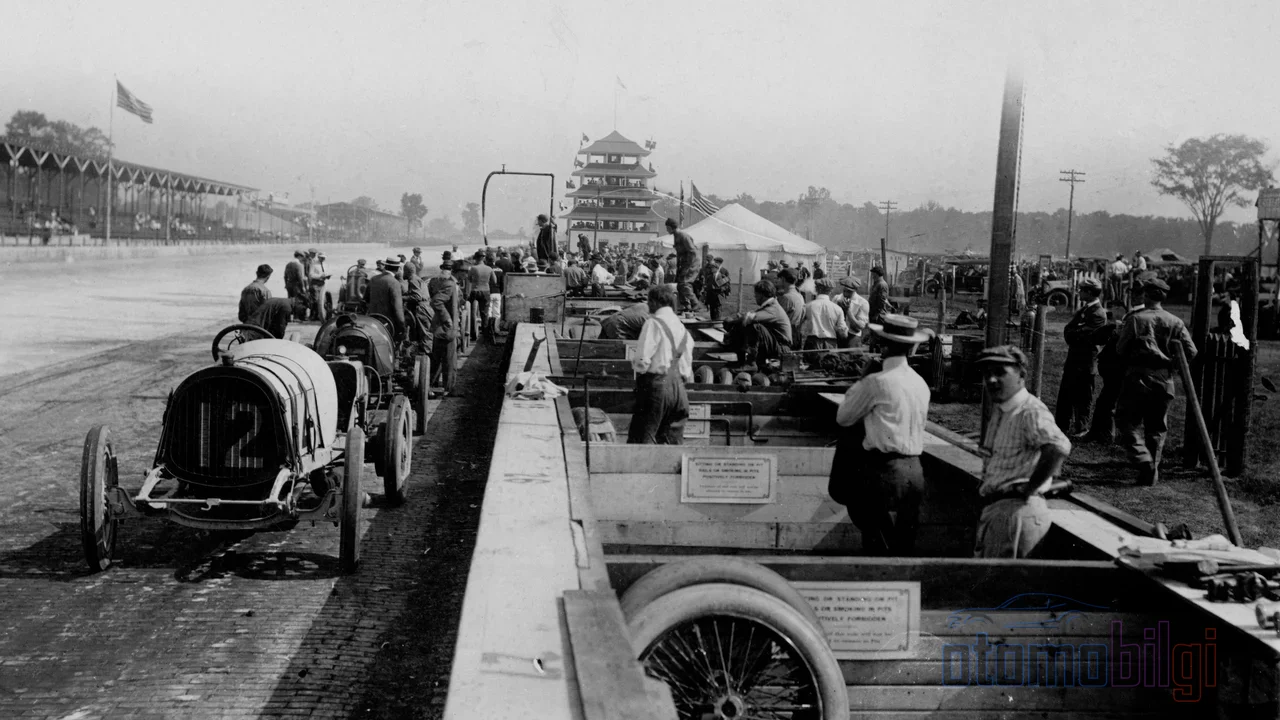
That's how the first Indianapolis 500 was born. On May 30, 1911, 40 cars out of 46 entries took the start, and the first known rolling start in automobile racing history was made: the cars lined up in groups of five, except for a lone Benz at the back, and the grid was formed by circling the track behind a pace car driven by Fisher. Today's Indy 500 starting ceremony traditions date back to that very day.
What Is the Marmon Wasp and Why Was It So Different?
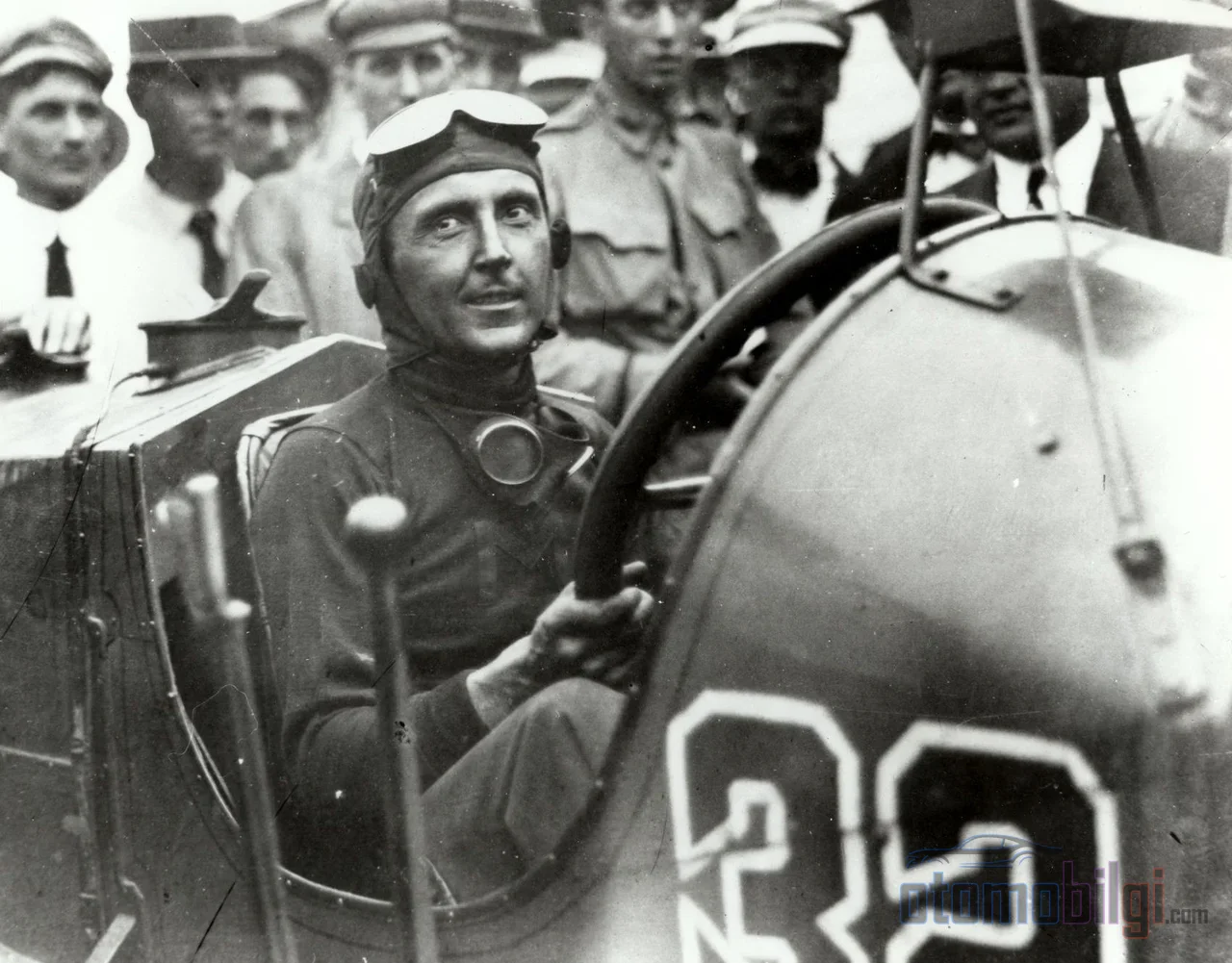
Let's first look at the race cars of the era. They all had two seats: a driver and a passenger mechanic known as the "riding mechanic." This mechanic both tended to the car and turned around to report on the cars approaching from behind; in other words, he worked like a live rearview mirror. Harroun, however, working as a member of Nordyke & Marmon's engineering staff, thought completely differently: he removed the second seat entirely.
The result? The car shed one person's weight, the body narrowed, and with a pointed fishtail-shaped tail it became far more streamlined. Compared to its contemporaries, the Wasp was definitely a more "slippery" car. That's where its name comes from, after all: with its yellow body and needle-like tail, it resembled a wasp. With its lightweight aluminum chassis, this car weighed about 2,200 pounds (roughly 1,000 kg), completely defying the racing conventions of its time.
Highlights
- First Indy 500 victory: May 30, 1911, Ray Harroun and the Marmon Wasp
- Average speed: 74.602 mph (roughly 120 km/h), with a time of 6 hours 42 minutes 8 seconds
- The world's first rearview mirror used in a race was on the Wasp's hood
- Harroun, who led 88 of the 200 laps, ended his career after the race
Technical Specifications
So what was actually inside this car? Here are the values based on mainstream corporate records:
| Specification | Value |
|---|---|
| Engine | Liquid-cooled, inline 6-cylinder (flathead) |
| Displacement | 477 cu in (approximately 7.8 L) |
| Power | 110 hp |
| Torque | Not disclosed by the manufacturer |
| Transmission | 4-speed, rear-wheel drive |
| Weight | Approximately 2,200 pounds (~1,000 kg) |
110 hp sounds low today, doesn't it? But in 1911, it was serious power for a car weighing nearly a ton. As for the 0-100 km/h acceleration figure, it appears neither in official records nor in reliable sources; it was not disclosed by the manufacturer. Also, figures like 9.8 L displacement and 140 hp circulate in some databases; these values do not match the 477 cu in / 110 hp data provided by the Indianapolis Motor Speedway Museum and corporate records, and are not accepted by the mainstream.
How Was the First Rearview Mirror Born?
Here comes the most entertaining part of the story. Since Harroun would race in a single-seat car, criticism started pouring in: there was no one beside him to watch the rear, which meant a responsibility in terms of safety. Harroun's answer went down in history: he mounted a mirror on top of the hood. This is widely accepted as the known example of the first rearview mirror used in an automobile and in racing; some sources prefer to say "probably the first," but the truth is: no one had ever seen anything like it on a racetrack until that day.
Where the idea came from is another lovely detail: it is reported that the inspiration came from a horse race vehicle in Chicago. So that mirror you use every day in your car, the one you find completely ordinary, was a revolutionary invention in 1911. Harroun compared himself to a jockey and said that the victory belonged not to him but to the car: in his view, it was the Marmon that won the 500; he just happened to be behind the wheel. A humble engineer, indeed.
Race Day: A Test of Patience Lasting 6 Hours 42 Minutes
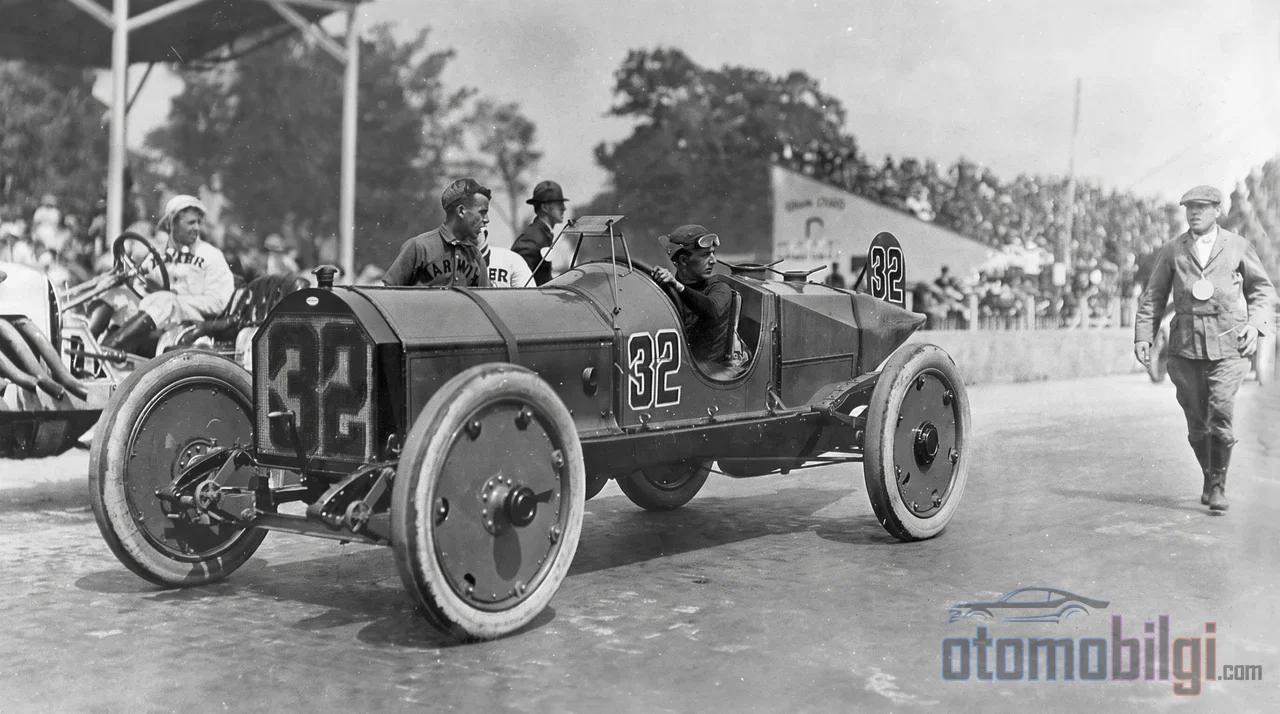
500 miles, 200 laps. Harroun's strategy was very clear: not speed, but consistency. And it worked. Throughout the entire race, he made only 3 tire changes, and all on the same wheel. At the finish, three of the four original tires were still on the car. For comparison: runner-up Ralph Mulford had to change tires a full 14 times with his Lozier, and on lap 193 he returned to the pit with even the wheel rim removed. The debate over who actually won the race was joined by this tire difference, but the official result was finalized in Harroun's favor.
The race was not lacking in drama either. On lap 13, a tire-wheel failure in Arthur Greiner's Amplex caused a multi-car crash, and Greiner's mechanic Samuel Dickson lost his life; this was the race's only fatal accident, and it also temporarily disrupted the scoring. Due to oil accumulation on the track, the management scattered sand. When Harroun showed signs of fatigue around 150-160 miles, he handed the wheel over to Cyrus Patschke; Patschke drove the car forward for about 100 miles, then Harroun took over again. This substitute driver practice was a move that was within the rules of the era.
The finish line: 6 hours 42 minutes 8 seconds, at an average of 74.602 mph (approximately 120 km/h). Harroun was the name who led the most laps, with 88 laps in front. Second place went to Ralph Mulford (Lozier), and third to David Bruce-Brown (Fiat). The prize figures cited for the victory differ across records: official result records mention a victory prize of $14,250, while it is also reported that the winner received $10,000 and that Harroun retired with this money.
Why Did Harroun Retire While at the Top?
Here's the detail most people don't know: Harroun had already retired at the end of the 1910 season. Marmon persuaded him to come back for what would be his "last race," and Harroun reluctantly took his place on the grid. Then he won the first Indy 500 and never raced again. He ended his career having won the world's greatest race, at the very top. Even his farewell lap was classy, wasn't it?
But he didn't cut ties with motorsport: as a team owner, he raced Maxwell cars with names like Eddie Rickenbacker and was remembered as a pioneering race car builder. Harroun, who lived between 1879 and 1968, became one of the founding figures of American motorsport with his identity as both engineer and champion.
Why Is This Race the Starting Point of Today's IndyCar?
To give a brief answer: Ray Harroun won the first Indianapolis 500 with the Marmon Wasp on May 30, 1911, at an average of 74.602 mph in a time of 6 hours 42 minutes 8 seconds; this victory came with a single-seat car carrying the first rearview mirror used in racing, and it became the symbolic starting point of American open-wheel racing.
Its impact was long-term. From 1934 onward, the starting grid switched to today's classic Indy format of 11 rows with 3 cars in each row, and this arrangement still applies. Pit stop culture spread from Indianapolis to all of American motorsport. Harroun's single-seat design can be considered the conceptual ancestor of the open-wheel race car.
There's also this striking comparison: Harroun's championship speed in 1911 would only have been good enough for 10th place on the grid at the 1922 Indy 500. That was the extent of it. Within just one decade, Indy cars had become much smaller, lighter, and more technologically advanced than consumer cars. That innovation frenzy started by the Wasp never stopped; today, at the first link of that entire chain of technology stretching from the aeroscreen to the hybrid power unit, there stands a yellow car with a tail as pointed as a bee.
Frequently Asked Questions
Who won the first Indy 500, and with which car?
Ray Harroun won it with the No. 32 Marmon Wasp. He started from 28th place, completed 200 laps in 6 hours 42 minutes 8 seconds, and was declared the official winner with an average of 74.602 mph.
Was the rearview mirror really used here for the first time?
It is widely accepted as the first rearview mirror used in a race. However, the statement "the first known example" is more accurate; some sources prefer to say "very likely the first" rather than using definitive language. What is certain is this: without that mirror, the single-seat Wasp most likely would not even have made it to the grid, for safety reasons.
So who was the real winner, Harroun or Mulford?
A dispute arose at the finish: a crash on lap 13 had disrupted the scoring, and Mulford declared himself the winner. After a review lasting more than 24 hours, officials declared Harroun the official winner, and the result did not change.
The story of the Wasp reminds us of this: sometimes the greatest victories are born from the boldest ideas. Removing a seat and fitting a mirror; simple, right? But on that day in 1911, these two simple ideas changed the direction of racing history.
Sources
- 1911 Indianapolis 500 race results - Indianapolis Motor Speedway
- 1911 Marmon Wasp - IMS Museum
- Marmon Wasp - Marmon Holdings
- 1911 Indianapolis 500 - Wikipedia
- The First Indy 500 - Britannica
- First Indianapolis 500 held - HISTORY.com
- How the Indy 500 has changed motor racing - ESPN
- Ray Harroun - Wikipedia