Why Did the Indy 500 Switch from Methanol to Ethanol?
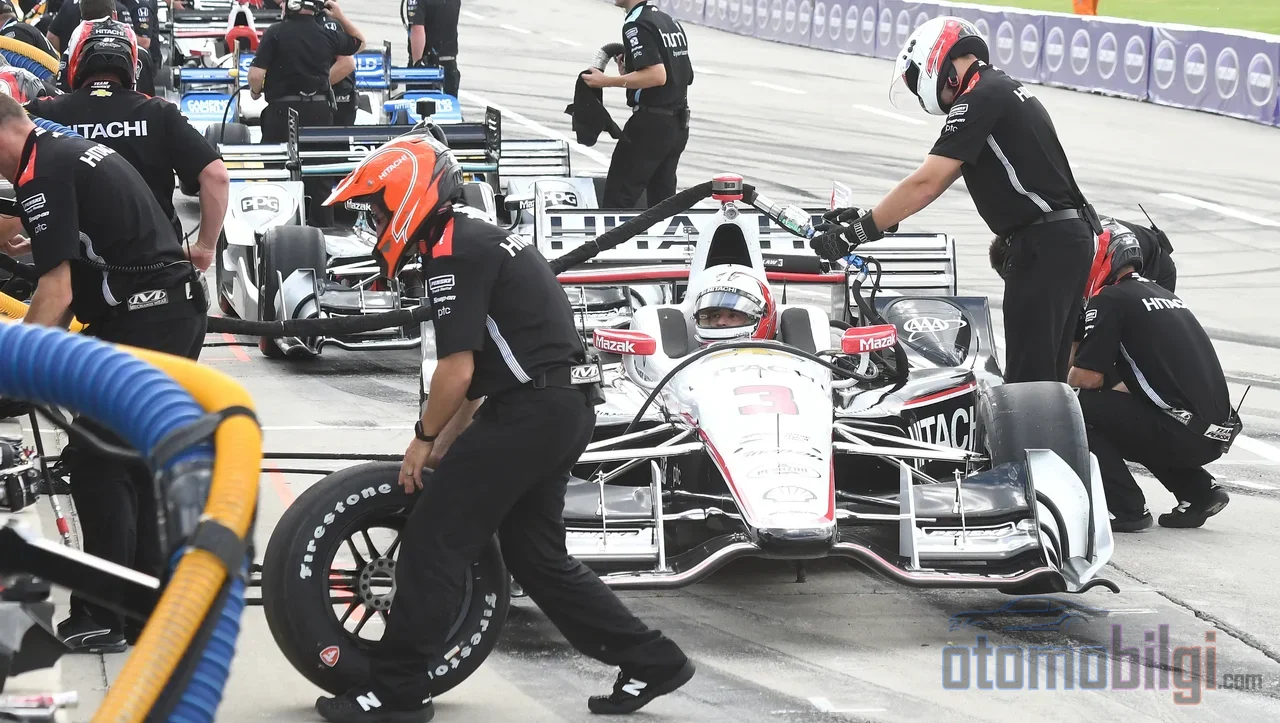
Suppose a race car's fuel tank gets punctured, fuel spills onto the track and catches fire. The marshals around, the mechanics, everyone is looking at you but nobody can see the fire. Because that fire is almost invisible to the naked eye in daylight. Sounds like a horror movie, doesn't it? But this really happened in the history of the Indianapolis 500, and it was the darkest side of a fuel choice that shaped American open-wheel racing for decades: methanol. So why did the Indy 500 switch from gasoline to methanol, and then to ethanol in 2007? The answer can be summed up in one word, but the real story is much deeper.
In this article, I will tell that long journey from the tank to the engine: from the tragic crash of 1964, to the invisible pit fire of 1981, and on to the era of renewable fuels. If you're ready, keep your foot on the gas.
The Gasoline Era and the 1964 Crash That Changed Everything
From 1911 onward, the Indy 500 was run on gasoline for years. In the early years of the series, the fuel diversity was also surprising: Cummins experimented with diesel-powered cars, and in 1934 a 45-gallon fuel restriction was imposed on the cars. So what was in the tank was always a subject of debate. But the real turning point came in 1964.
On the second lap of the 1964 Indianapolis 500, seven cars got tangled together. Eddie Sachs and Dave MacDonald, driving gasoline-powered cars, lost their lives in the crash. The fire caused by the gasoline created a thick, black cloud of smoke that made it impossible for the approaching drivers to see the track at all. And it was exactly at this point that an interesting witness came into play: Johnny Rutherford, who used methanol in the crash, also had his car leak fuel and ignite with the first ball of flame after the collision, but it created a fire that was much smaller and produced no smoke compared to the gasoline-powered cars. This testimony and the intense safety pressure from the Indianapolis press accelerated the decision: In 1965, USAC switched the series to methanol fuel.
Highlights
- Eddie Sachs and Dave MacDonald lost their lives in the seven-car crash of 1964; black smoke rose from the gasoline.
- In 1965, the series switched to methanol because it could be extinguished with water.
- Methanol's flame is invisible in daylight; in 1981, Rick Mears paid the price for this in the pits.
- From 2007 onward, the series has used 100% fuel-grade ethanol because it is renewable.
- In 2023, IndyCar became the first US-based series to switch to 100% renewable racing fuel.
Why Was Methanol Chosen? The Safety Math
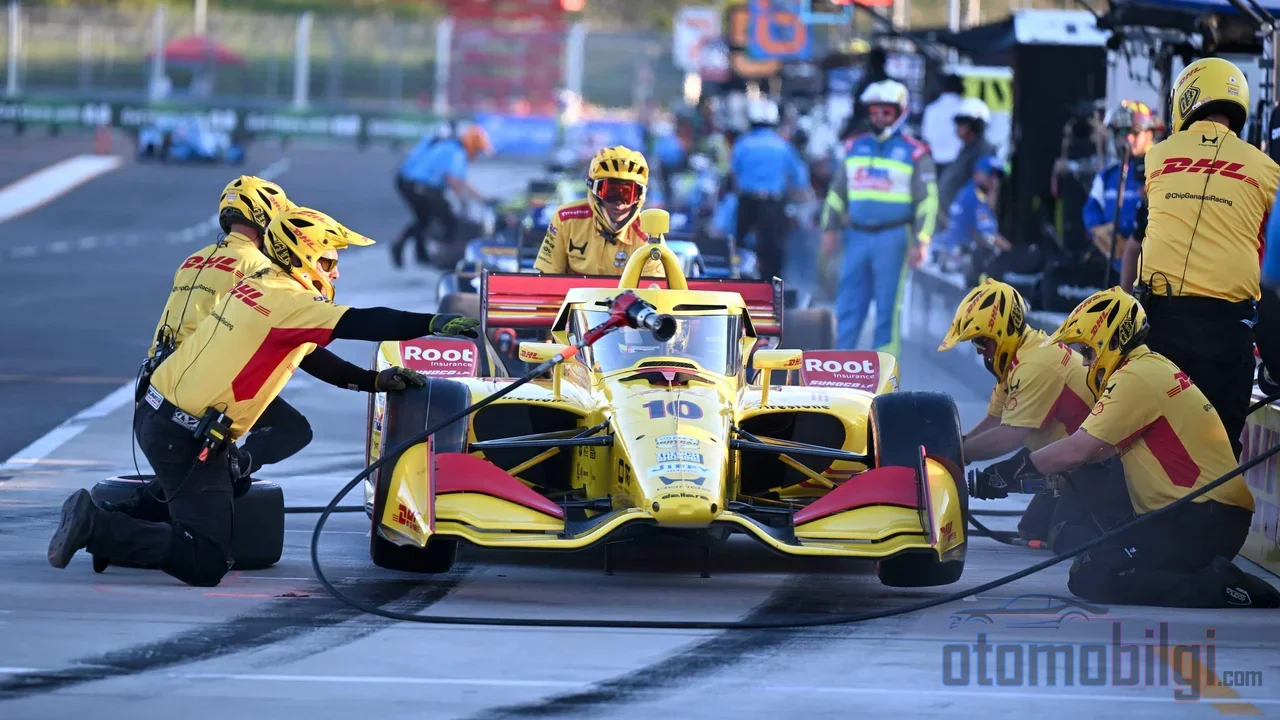
Let me explain this with an analogy from everyday life: gasoline can be thought of as the liquid form of a lighter; it grabs a spark, ignites quickly and produces plenty of smoke. Methanol, on the other hand, is a much more "reluctant" fuel. Methanol is much harder to ignite, burns about 60% more slowly, and a methanol fire releases energy at only about 20% of the speed of a gasoline fire. In other words, it gives the driver time to escape at the moment of a crash.
My favorite feature is this: a methanol fire can be extinguished with plain water. Water both cools the flame and dilutes the fuel below its ignition threshold. If you pour water on a gasoline fire, things get worse; if you pour methanol on it, the fire goes out. There are always tons of water at the edge of the track, so this feature was a complete gift to the racing world. A methanol fire breaking out on the track also doesn't produce smoke that blocks drivers' vision or giant flames. Safety was the dominant factor in the choice of methanol; and nobody hides it.
But if it was so safe, why was it later switched to ethanol? Because methanol had a secret, and that secret was sometimes more dangerous than safety itself.
The Invisible Flame Problem and the Terrifying 1981 Pit Stop
Methanol gives off very little visible light in daylight. Even if a fire breaks out, seeing it and estimating its size is extremely difficult. This both delays intervention and creates an invisible trap for people nearby. In addition, methanol vapor is heavier than air; if ventilation is poor, it accumulates on the ground and can ignite with a spark above certain concentrations. Methanol is also poisonous: even very small amounts can cause permanent optic nerve damage.
The most painful proof of this danger came at the 1981 Indy 500. Rick Mears caught fire while refueling on lap 58 of the race due to an invisible methanol leak. The people around him couldn't see the fire; Mears was burning, but to those around him it seemed like nothing had happened. After this terrifying incident, safety measures were renewed and a dye was added to the fuel to make fires visible. So the invisibility problem couldn't be completely solved, but at least it was made "visible".
Methanol's other side is the technical side: it has an octane rating of 114, but its specific energy is about 17 MJ/kg, half that of gasoline (34 MJ/kg). That's why it's run with very rich mixtures; the air-fuel ratio is around 6.4:1, and this rich mixture provides an advantage in racing by cooling the engine from within. More horsepower was possible with methanol, but the price was both wear on engine parts and that invisible flame. This is exactly where the balance shifted.
The Road to 2007: The Ethanol Era Begins
In 2006, the IRL switched to a blend containing 10% ethanol through a partnership it formed with the ethanol industry; and from 2007 onwards, the series began using fuel-grade ethanol entirely. With this transition, IndyCar became the first motorsport series to race on ethanol, and throughout the entire 17-race 2007 season, including that year's Indy 500, all cars burned ethanol.
So why? There were more than one motivation, and they complemented each other. The environmental justification was the most visible one: methanol is typically produced from natural gas, meaning it is fossil-based. Ethanol, on the other hand, comes from a renewable source. On the safety side as well, ethanol is less toxic than methanol, biodegradable, and has a safer profile in terms of handling. There is also performance and practicality: thanks to ethanol's better fuel consumption, the tank capacity of the cars could be reduced from 114 liters to 83 liters. A smaller tank, less weight, a smarter race strategy. Also, ethanol has a pale yellow, visible flame; the nightmare of invisible fires is history now.
A small but interesting detail: the fuel the series used between 2007 and 2011 was not entirely pure ethanol. To comply with US regulations, it was a formula consisting of 98% ethanol and 2% gasoline, known as E98.
Methanol or Ethanol? The Numbers Speak
When you put the two fuels side by side, the differences become clear:
| Property | Methanol | Ethanol |
|---|---|---|
| Octane rating | 114 | 105 in the E85 formula |
| Flame appearance | Almost invisible in daylight | Pale yellow, visible flame |
| Extinguishing | Can be extinguished with plain water | Safer handling than methanol |
| Toxicity | High; small doses cause permanent damage | Less toxic, biodegradable |
| Source | Typically natural gas (fossil) | Renewable (corn, sugarcane, etc.) |
The honest answer for performance enthusiasts: methanol provides a slight advantage in a racing engine; thanks to richer mixture and extra cooling, it means a bit more horsepower. But both alcohols absorb water and are corrosive; neither is considered an "ideal" fuel for the engine. So the 2007 switch was not a pure performance decision; it was a combination of safety, environment and image.
E85, Renewable Fuel and Today's Picture
The story does not end in 2007. Between 2008 and 2014, the series also used Brazil-sourced sugarcane ethanol as part of the E85 blend. In 2012, the blend was reduced from 98% to 85%; the E85 formula lasted until 2022. The rationale was quite practical: teams were required to use a commercially available fuel. E85 contains 85% ethanol and 15% high-octane racing gasoline and delivers 105 octane.
The real big step came in 2023: IndyCar became the first US-based series to switch to a 100% renewable, non-fossil, ethanol-based racing fuel. And here is the latest: an updated formula for 2027 has been announced; ethanol will now be sourced from Indiana, the home of the series, from within the USA. The series' goal is also clear: to reduce race operation emissions by 50% by 2030.
So Why Did the Indy 500 Switch from Methanol to Ethanol? The Short Answer
The clear answer to the question is this: the Indianapolis 500 switched to methanol in 1965 for safety reasons - it is far less volatile than gasoline, can be extinguished with water and produces no smoke. When methanol's invisible flame and toxicity created a safety vulnerability, the series began using ethanol in 2007, which is less toxic, renewable and has a visible flame. So at the center of both switches lies the same thing: safety. Only the definition of "safety" evolved over 42 years from methanol's advantages to ethanol's advantages.
Next time you watch the Indy 500, take another look at the fuel flowing in the pits; in that liquid, the bitterness of 1964, the invisible fire of 1981 and the environmental goal of 2023 stand together. Racing history is sometimes written exactly in the fuel tanks.
Sources
- Methanol fuel - Wikipedia
- Indy Racing League Makes Move To 100% Fuel-Grade Ethanol - Honda News
- Racing Toward Zero - INDYCAR Sustainability Initiatives
- INDYCAR To Introduce Updated Shell 100% Renewable Race Fuel in 2027
- Rick Mears and the Invisible Fire at the 1981 Indy 500 - People
- Indy Racers Power Engines With Ethanol - CBS News
- IndyCar Series switching to ethanol in '06 - ESPN
- What Type Of Fuel Do Indycars Use? - Flow Racers
- Indianapolis 500 - Cummins Inc.
- Shell shifts its renewable IndyCar fuel sourcing to U.S. for 2027 - Racer