Who Is Scott Dixon? The Iceman's Career
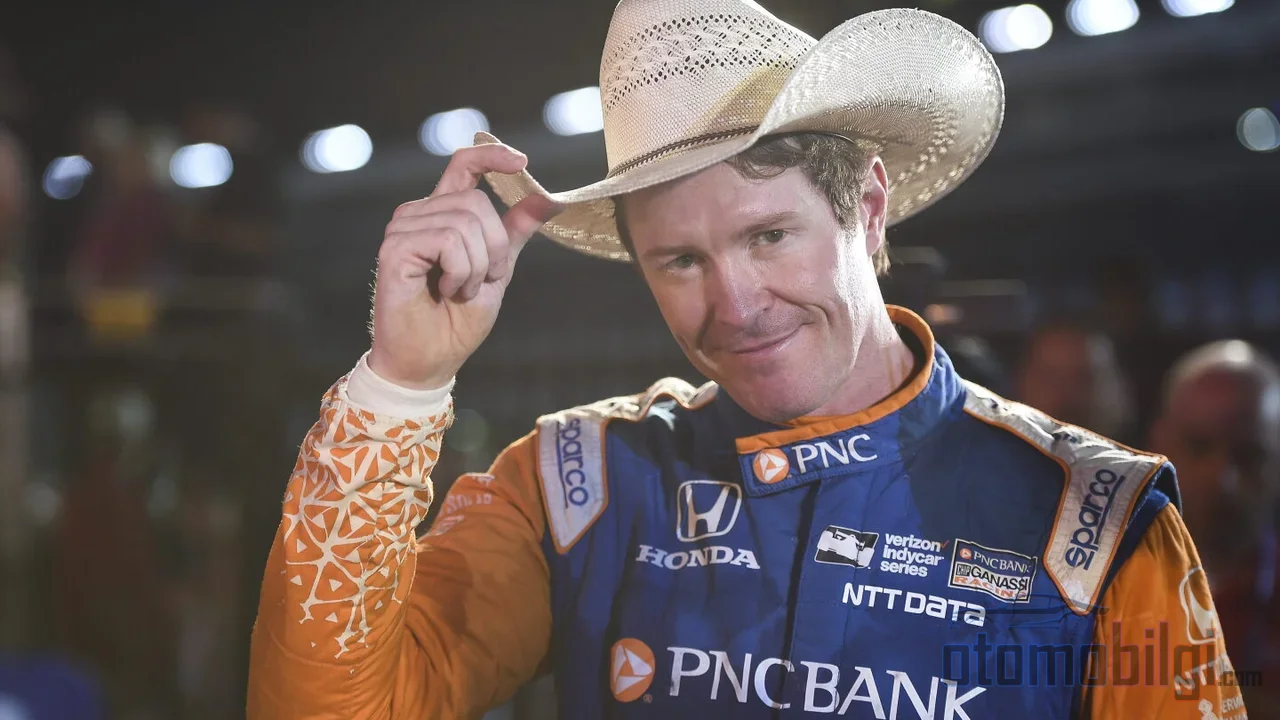
Say a racing driver started his career before you were even born, and he's still out there on the grid, up front. Sounds like science fiction, doesn't it? But that's exactly who Scott Dixon is. Born in 1980, nicknamed The Iceman, and while most of his rivals watched his first championship on television, they had just gotten off their bicycles. Six IndyCar championships, an Indianapolis 500 victory, and a career that's still going. So what's the secret behind those six championships? The answer isn't a single sentence; but I guarantee you, every kilometer of this story is a lesson in itself.
Rick Mears, A.J. Foyt, Al Unser and Mario Andretti... The pantheon of American open-wheel racing was written with these four names. What makes Dixon interesting is that he came after all of them yet sits at the same table. He stands second on the all-time wins list with 59 victories, behind only Foyt's 67 wins. On this page, we'll walk step by step through the journey from the karting tracks of New Zealand to the brickyard of Indianapolis.
Setting Off from New Zealand: The Kid Who Tied a Pillow to the Pedals
Scott Ronald Glyndwr Dixon was born on July 22, 1980 in Brisbane, Australia, but his hometown is Auckland, New Zealand. Racing runs in the family: his mother and father were short-track racers and owned a dirt speedway in Townsville. His father Ron imported karts from Japan, worked long hours, and took on debts he never told his wife about, in order to fund his son's karting career. So behind every victory in this story there is serious family sacrifice.
He started karting at age seven and quickly racked up 30 major karting championships in his age group across Australia and New Zealand. At 13 he moved up to cars; Motorsport NZ granted him a junior license exemption for the age limit. One detail sums up this kid's character: In a race at Pukekohe, he rolled a Nissan Sentra. He had tied a pillow to his back to reach the pedals, and climbing out of the overturned car on his own made the national press. You know how some people are just born racers - well, that's exactly it.
The Rapid Climb Up the Championship Ladder
His progress through the single-seater series was like an airplane: In 1994 he became New Zealand Formula Vee champion and took the title of the series' youngest champion, then NZ Formula Ford Class II in 1996, the Australian Drivers' Championship with Formula Holden in 1998, and the Indy Lights championship in 2000. In 1999 he moved to Indy Lights with the team founded by former Formula 1 driver Stefan Johansson; Johansson later became his manager and still holds that role today. So in Dixon's career, loyalty extends not just to the team but to people as well.
From CART to Ganassi: The Breakthrough Moment
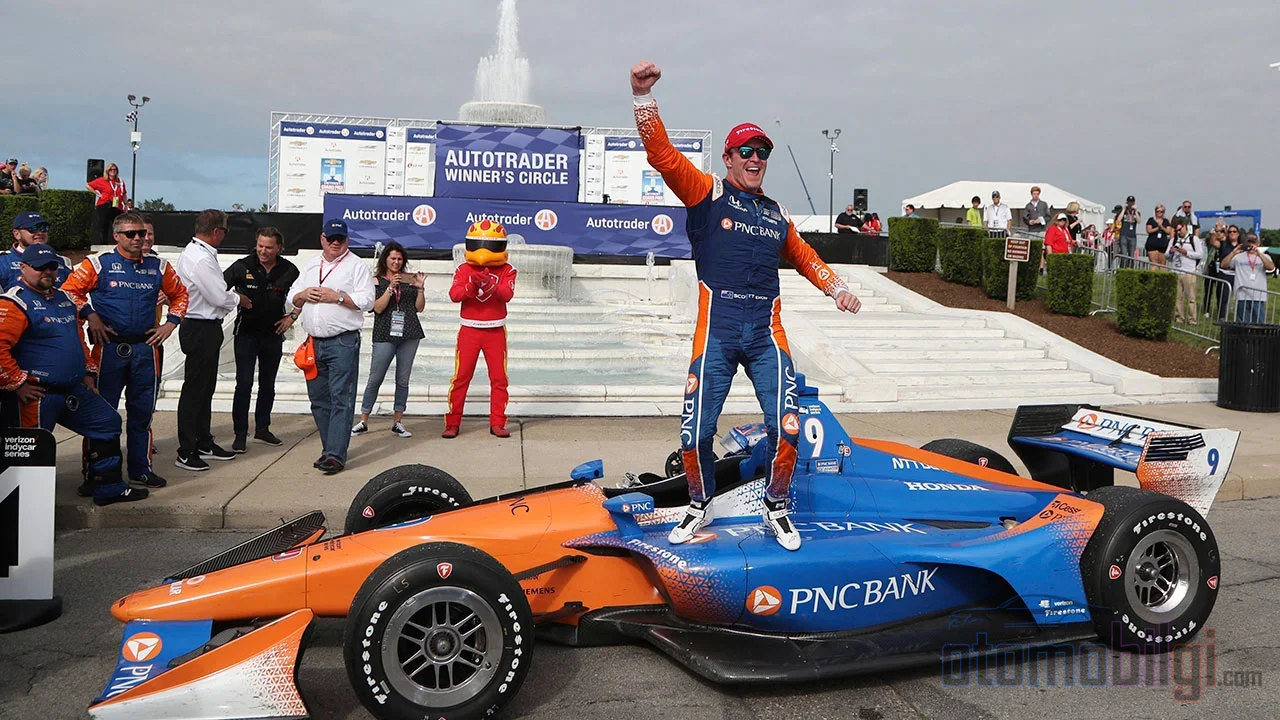
In 2001 he stepped into CART with PacWest Racing, and in only his third series race, at Nazareth, he scored his first major open-wheel victory with a fuel-saving strategy. Take note: first season, third race, a win. That's how early this man's coolness became apparent. When PacWest shut down in financial trouble in 2002, he moved to Chip Ganassi Racing from the third race of the season onward; this switch was made possible by Toyota's financial backing. Nobody knew it at the time, but one of the longest-lasting partnerships in American racing history was beginning.
Highlights
- 6 IndyCar championships: 2003, 2008, 2013, 2015, 2018, 2020
- Winner of the 2008 Indianapolis 500, starting from pole position
- The winningest active driver with 59 victories
- Championships in 5 different formula iterations of IndyCar
- Arrow McLaren driver from 2027 onward
Anatomy of Six Championships: From 2003 to 2020
Ganassi moved to the Indy Racing League in 2003, and Dixon captured the championship in his first full season. He opened by winning his first race at Homestead, capped the season with 3 total victories, and took the title despite failing to finish six races. This balance was the first example of what would become the signature of his career: his consistency is every bit as deadly as his speed is explosive.
| Year | Championship Summary |
|---|---|
| 2003 | First full season, 3 victories, title won despite six DNFs |
| 2008 | 5 victories, including the Indianapolis 500, second title |
| 2013 | Third championship with 4 victories |
| 2015 | Points tie with Juan Pablo Montoya, fourth title decided by win count |
| 2018 | Fifth championship with 3 victories |
| 2020 | Sixth and final title with 4 victories |
If everything had gone smoothly after 2003, the story would have been boring; it didn't. 2004 passed without a win, 2005 with a single victory. Then he rebounded: in 2006 fourth with 2 wins, in 2007 second behind teammate Dario Franchitti with 4 wins. And 2008: 5 victories, including the Indianapolis 500 win. Winning both the championship and the Indy 500 in one year was, in Dixon's own words, a unique year. In 2009 he was again second behind Franchitti, but he broke Sam Hornish Jr.'s record for consecutive wins. From 2010 to 2012, three consecutive third-place finishes; the championship that never seemed to come finally arrived in 2013, a third time with 4 victories.
2015 was a different scenario: a points tie with Juan Pablo Montoya arose, and the title went to Dixon on a countback of race wins. In 2018 he reached his fifth championship with 3 wins, and in 2020 his sixth with 4 wins. That final title carried great significance: with it, Dixon became the champion across five different iterations of the IndyCar formula. The rules, the cars, the tires changed; the Iceman never melted. What came after was no idle stretch either: fourth in 2021, third in 2022, second with three wins in 2023, sixth with two wins in 2024, third with one win in 2025. His latest victory came at the 2025 Mid-Ohio race, his 59th career win.
How Did the Iceman Become the Iceman?
The nickname is no accident. Will Power's observation is clear: Dixon has become an incredibly consistent driver and gets the maximum out of the car in every situation. Between 2010 and 2020, he finished a season outside the top four only twice. The secret, it seems, is not physical but mental: Dixon asks himself three questions: is he having fun, is he competitive, and does he still truly want to win. He adds this as well: this game is now more than ever a young man's game. So for a 46-year-old driver who has conquered 26 IndyCar seasons, staying on his feet against the young ones is only possible by playing their game too.
His endurance is not limited to IndyCar either: he won the 24 Hours of Daytona three times (2006, 2015, 2020) and Petit Le Mans twice; he raced in the 24 Hours of Le Mans between 2016 and 2024, with his best result being a fourth place in 2023. Long-distance races are like a kind of training that perfects his cool calculations of fuel and tire management. He had a streak of winning at least one race for 21 consecutive seasons; that streak was broken in 2026, but he still closed the season with a top-five finish.
The 2008 Indianapolis 500: The Day the Legend Was Crowned
The Indy 500 is the most daunting race on the calendar; it makes its winner a legend for a year and its loser regretful for a year. Dixon's 2008 victory was a clean job: he started from pole position, won the race with his Honda-powered car and took home the $15,103,746 prize. He says what he felt after the victory was not victory madness, but relief; he had said that there is a strange side to racers' relationship with this race. On top of that, the record for most laps led in Indianapolis 500 history also belongs to him, and he has seen 5 Indy 500 pole positions.
Being Mentioned in the Same Sentence as Foyt, Andretti and Mears
When the numbers speak, the picture becomes clear. On the all-time wins list, A.J. Foyt leads with 67 victories, Dixon is second with 59 wins, and Mario Andretti is third with 52. Dixon settled into this second place by passing Andretti. On the championship side, Dixon has 6 titles against Foyt's 7 and sits as the closest follower. In laps led, he is second all-time in the series with 6,992 laps; ahead of him is only Andretti's record of 7,595 laps.
These numbers have also started the greatest debate: Is Dixon the greatest of all time? Mario Andretti became the name that fueled this debate, and describing Dixon as one of the best drivers of his era is now common consensus. Since he is numerically behind Foyt, the answer remains open to debate; but let us not forget, Mears, Foyt, Unser and Andretti were legends of a different era, while Dixon is hunting their records in a different era, in a series with far more competitive and far shorter-lived cars.
Farewell to Ganassi and the McLaren Journey
Dixon's partnership with Ganassi lasted 25 full seasons; one of the longest relationships between an athlete and a team in professional sports. This partnership ends at the close of the 2026 season, and Dixon moves to Arrow McLaren's number 6 car in 2027. An interesting detail: he came very close to moving to McLaren in 2019, and Will Power's move to Andretti in 2026 inspired him to make this decision. At Laguna Seca, Chip Ganassi gave his driver a Rolex as a farewell gift; An intimate symbol of the close of 25 years.
The awards never stopped coming either: In 2024 he was inducted into the Motorsports Hall of Fame of America, and in 2025 New Zealand knighted him; his name is now officially Sir Scott Dixon. He lives in Indianapolis; he married Emma Davies, a former British 800-meter champion, in 2008, and they have three children named Poppy, Tilly and Kit. Off the track too, he is practically a machine of consistency.
How Did Scott Dixon Win His Six Championships? Short Answer
Dixon won his six championships in 2003, 2008, 2013, 2015, 2018 and 2020 respectively, and the common denominator of these titles is not a kind of speed but consistency: finishing near the top in every season between 2010 and 2020, unmatched composure in fuel and tire management, and a streak of winning races 21 years in a row. The Ganassi partnership gave him stability, and the three questions he asked himself gave him motivation.
So what do you think? With 59 wins and 6 championships, is Dixon at the top of your list, or does Foyt's 67 and 7 titles still stand as an unclimbable mountain? One thing is certain: The new chapter starting with McLaren in 2027 could add new numbers to this debate. The Iceman has no intention of melting.
Sources
- Scott Dixon - INDYCAR.com
- Scott Dixon - Wikipedia
- Scott Dixon and Will Power: two long IndyCar careers shaped by Ganassi and Penske - Motor Sport Magazine
- After 25 years, Dixon leaves Ganassi with championships, records and family bonds - Chip Ganassi Racing
- Scott Dixon - Indianapolis 500 driver stats - Indianapolis Motor Speedway
- Scott Dixon - McLaren
- Best Ever? Mario Andretti Puts Six-Time IndyCar Champ Scott Dixon Discussion - Autoweek
- Indy 500: Get to know Scott Dixon - IndyStar
- NTT INDYCAR SERIES Championship Standings - IndyCar.com