How Did Al Unser Become IndyCar's Quiet Giant?
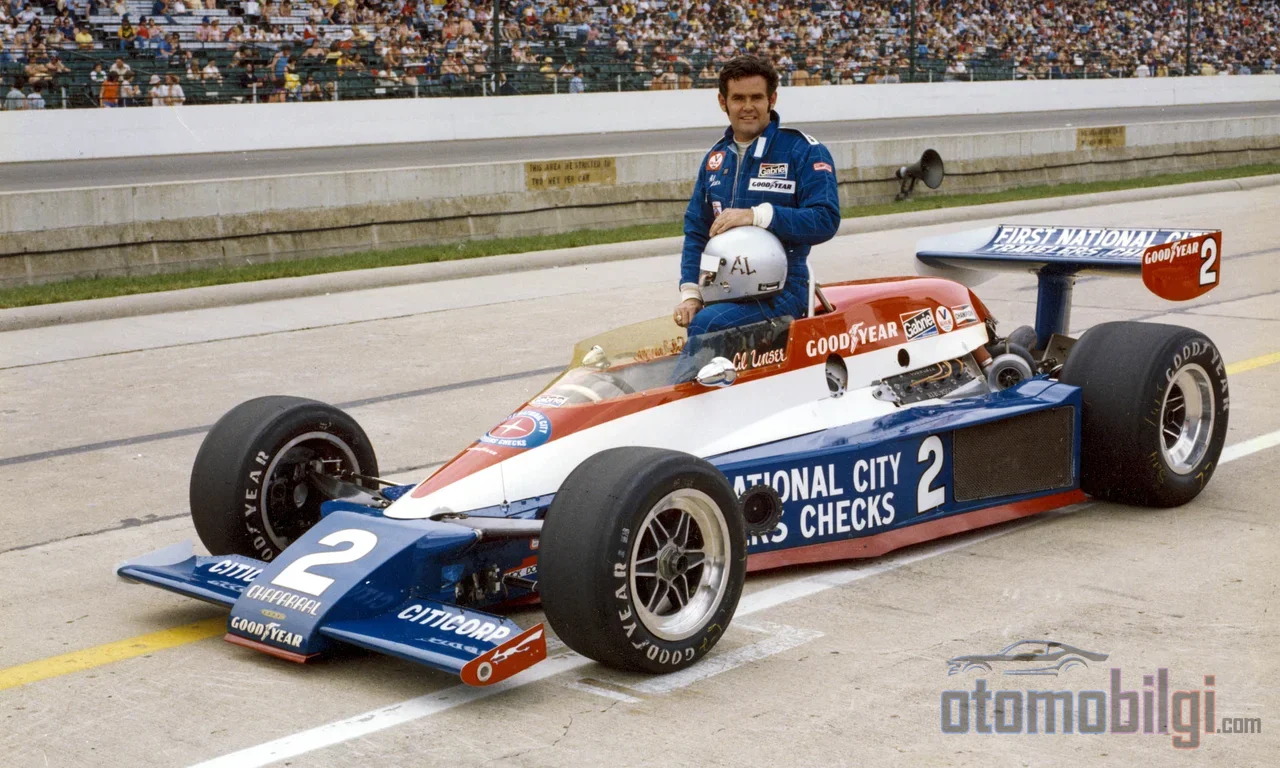
Say you don't have a race team. Your car was built a year ago, taken down from a wall to be displayed in a hotel lobby. You're also 47 years old, and you'll start from 20th position. What are your chances of winning? If your name is Al Unser, the answer is: good enough to kiss the bricks. The story of the 1987 Indianapolis 500 is one of the strangest and most beautiful victories in IndyCar history - and it sums up this man's career in a single sentence: go quietly, go long, win.
Rick Mears' quick repeat wins and A.J. Foyt's hard growl are always talked about. But the third man with four Indy 500 victories was the quietest member of the club. Let's take a closer look at the story of this calm cowboy who came out of the New Mexico deserts - because the only way to become a legend isn't by making noise.
From Chama to Indianapolis: A Boy Racer Hits the Road
Alfred Unser was born on May 29, 1939, in Albuquerque, New Mexico. But in truth, racing was in the family's blood: the Unser family had been racing in the Pikes Peak hill climb since 1926. Uncle Joe Unser was the first family member to lose his life, in a testing accident in 1929. His older brother Jerry became the first Unser to start at Indianapolis in 1958 - unfortunately, he died the following year in a practice crash.
Al stepped onto the tracks in 1957 at age 18, racing modified roadsters, sprints, and midgets. Imagine: the mountain roads where he grew up surrounded by racing became, in effect, his school. He won the Pikes Peak Hill Climb in 1964 and 1965, and finished 9th in his first Indy 500 in 1965. in his first Indy 500. The turning point came in 1970: he joined Vel's Parnelli Jones Racing and stayed with that team for a full seven years.
1970-71: The Johnny Lightning Years and Two Wins in a Row
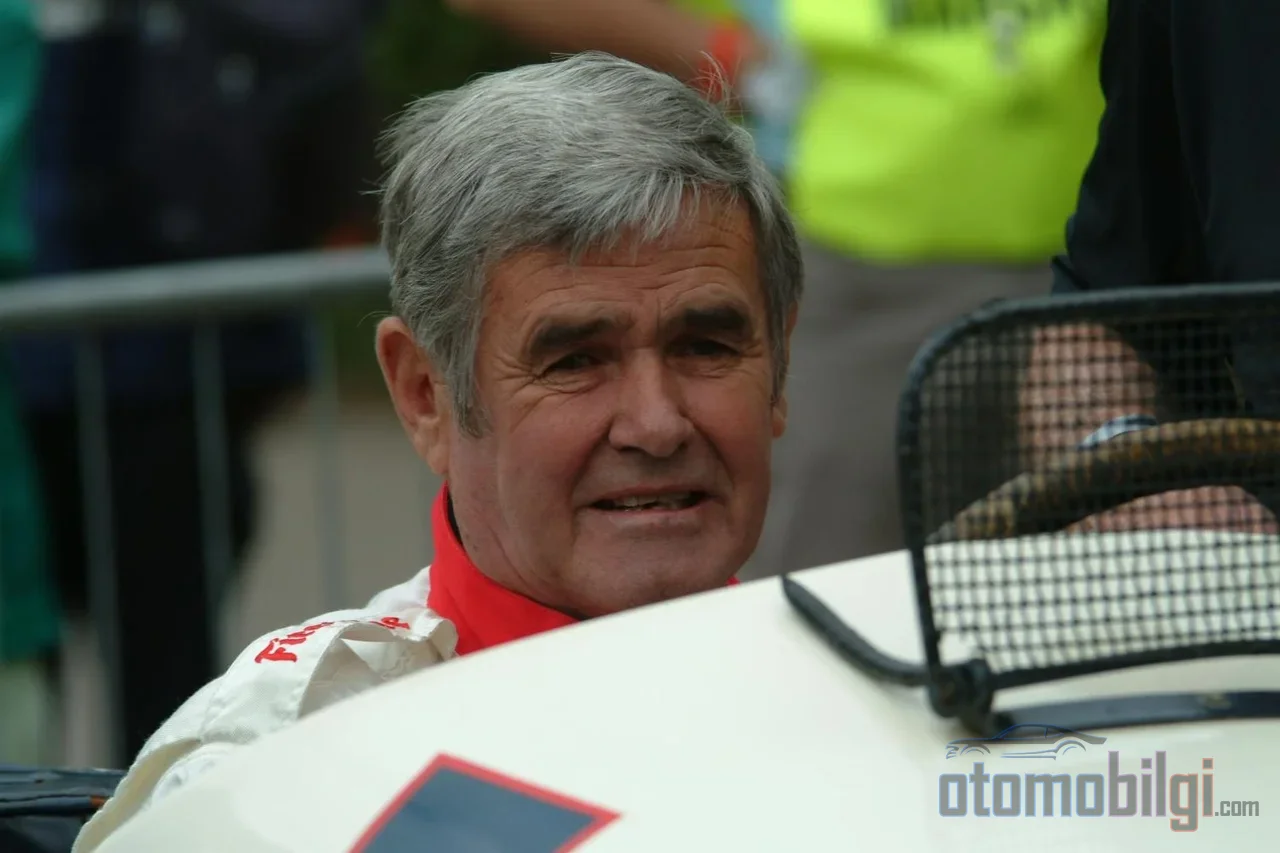
1970 was Unser's breakout year. That season he won 10 of 18 races - all on ovals, which was a record - and claimed the USAC national championship. The main stage, however, was Indianapolis: driving the VPJ car named Johnny Lightning Special, he led 190 of the 200 laps and won the race at an average speed of 155.749 mph. In other words, he showed his rear wheel to his rivals for nearly the entire race.
In 1971, things got even more cinematic: Unser won on his 32nd birthday (May 29, the very day of the race) - he still holds the title of the only driver to win the Indy 500 on his own birthday. Starting from fifth place, he passed Peter Revson's McLaren and finished with an average of 157.735 mph. The attempt at a third consecutive victory ended in 1972 with a 2nd place against Mark Donohue.
The Highlights
- 4 Indy 500 victories: 1970, 1971, 1978, 1987
- The oldest winner of the Indy 500, at 47 years and 360 days (the record is still his in 2026)
- 644 laps led in the Indy 500 - the highest figure in the race's history
- With 27 Indy 500 starts, third behind Foyt and Andretti
- 3 USAC/CART championships: 1970, 1983, 1985
The Anatomy of Four Victories: The Surprise of 1978 and the Miracle of 1987
The third victory came in 1978, at Jim Hall Racing's doorstep. The Chaparral Lola, sponsored by First National City Travelers Checks, was considered a second-class car before the race. What kind of analogy should we make? Think of a kid who shows up to the school tournament in the gym's spare jersey but lifts the trophy. On lap Unser, who had moved to the front, and rival Danny Ongais's lap 150, he found a 35-second breathing room advantage and finished the race with a 9-second gap. Average speed? 161.363 mph - making it the second fastest Indy 500 up to that day.
1987: From the Hotel Lobby to the Victory Podium
And 1987... You can't forget this story once you've heard it. He had left Penske; he didn't even have a team. But after Danny Ongais' crash during practice, Penske called Unser back. The car he would use? A one-year-old 1986 March-Cosworth pulled from the Sheraton hotel's exhibition. In other words, he was entering the race with a car destined to become a museum piece.
He started from 20th place. On lap 183. he won with an average of 162.175 mph and a 4.5-second margin - exactly five days before his 48th average of 162.175 mph and a 4.5-second margin - his 48th exactly five days before his birthday. That day, he also took over a record that had previously belonged to his brother Bobby: the oldest winner of the Indy 500.
| Year | Car / Team | Average Speed | Notable |
|---|---|---|---|
| 1970 | Johnny Lightning Special (VPJ) | 155.749 mph | 190 laps led |
| 1971 | VPJ | 157.735 mph | Won on his birthday |
| 1978 | Chaparral Lola (Jim Hall) | 161.363 mph | With a car called second-class |
| 1987 | March-Cosworth (Penske) | 162.175 mph | Car pulled from a hotel exhibition, from 20th place |
Quiet, Steady Driving Character: The Race Came to Him
But how? Foyt would practically attack the track; Mears and Unser, on the other hand, had a different philosophy: they waited for the race to come to them. They would lap patiently, at a consistent pace, knowing how to wait for rivals to make mistakes or for their pit strategies to settle. Think of it like a marathon runner on a long run who never disrupts their pace - it's not the fast moments, but the accumulating advantage that wins.
Looking at his career overall, we see this character reflected in his statistics too: In 30 years, 321 races, 39 wins, 98 podiums, 28 pole positions. Not just the Indy 500; he won the Pocono 500 twice (1976, 1978), the California 500 twice (1977, 1978), the 24 Hours of Daytona in 1985, the USAC Silver Crown championship in 1973, and two IROC championships in 1977-78. His total 500-mile wins number eight. He was named Driver of the Year twice, in 1970 and 1978. Once, those around him were so surprised by what he said that he could have given away all three of his championships - but he always let his work do the talking.
Team History: A Career Stretching from Penske to Menard
He left VPJ at the end of 1977; without his friendship with Parnelli Jones being broken. What followed was a bit up and down: Between 1979-81 he spent three winless seasons at Longhorn Racing - but by his own account, it was also the happiest period of his career. He moved to Team Penske in 1983 and won the 1983 and 1985 championships there; in 1985 he had finished the season with a single race win but countless top-fives. Step-by-step point-scoring consistency was once again his signature.
After 1987 he continued part-time: in 1990 with Patrick Racing in an Al Romeo-powered car - sorry, an Alfa Romeo-powered car - and in 1992 with Team Menard with a Buick engine, he took a much-talked-about 3rd place (a podium!) at Indy, though not the best result of his history. His 12th place at King Racing in 1993, with 15 laps led, was his final start. 28th in 1994. Indy 500 attempt, but finding no speed, he bid farewell to the tracks on May 17, 1994.
The Unser Dynasty: One Family, Nine Victories
The most striking part of all this: Al Unser is not a legend on his own, but the center of a dynasty. The Unser family has won the Indianapolis 500 a record nine times - meaning nearly 1 in 11 of the races went into an Unser's pocket. Al Sr. is the only person to have both a brother (Bobby) and a son (Al Jr.) win the Indy 500; he and Bobby are also the only pair of brothers to have won it in history.
Bobby won in 1968, 1975 and 1981 (he passed away on May 2, 2021, at the age of 87). Al Jr., meanwhile, reached victory in 1992 and 1994 - the 1994 win fell exactly on his father's 55th birthday. In fact, in 1992 the father was third and the son first. What a sweet birthday gift, right? Al Sr. lost his life to liver cancer at his home in Chama on December 9, 2021, at the age of 82 - just seven months after his brother Bobby's death.
Do the Records Still Stand in 2026?
The answer is short and clear: Al Unser is the oldest driver to win the Indy 500, at 47 years and 360 days, and as of 2026 this record still hasn't been broken by anyone. His total of 644 laps led at the Indy 500 puts him ahead of every rival he left out of the contest - this figure surpassed Ralph DePalma's old record of 612 on the final lap of his fourth victory. (Note: although some lists present this statistic differently, the race's own records give 644 as the record.) With 27 starts, he is also third all-time; only Foyt (35) and Mario Andretti (29) are ahead.
So did the four-win club grow? 110 Indy 500s have been run, with 77 different winners; but the four-time winners are still only four names: A.J. Foyt, Al Unser, Rick Mears, and Hélio Castroneves, who joined in 2021. So despite tens of thousands of racing hours, only one person has entered this club in the last 35 years. Unser's back-to-back victories in 1970-71 are also something only four drivers in history have achieved.
Why Is Al Unser IndyCar's Quiet Streak?
The full answer to the question is this: Without making noise, with his patient and consistent driving, staying at the heart of the Indy 500 for 27 years, with four victories, three championships, and still-unbroken age and lap leadership records, Al Unser became the series' most consistent legend. Foyt completed the first quartet in 1977; Unser followed him 10 years later, Mears joined in 1991, and Castroneves in 2021. Each of them has a different story - Unser's lay always in quietness, longevity, and that cold-blooded calm that let the race come to him.
After his death, the racing world's shared sentiment was this: he was the legend who spoke the least, but one of the most frequently named on the podium and in the record books. Because the whole secret of his career fit into a single sentence: don't rush, don't panic, move to the front - and win even with a car pulled out of a hotel lobby if you have to.
Sources
- Al Unser - Wikipedia
- Al Unser | Where Tradition Never Stops
- Al Unser Sr. - IMS Museum
- Indianapolis 500 Four-Time Winners
- Four-Time Indianapolis 500 Winner Al Unser Dies at 82 - IMS
- Al Unser: A Modest Indy 500 Record Holder - IMS
- Throwback Thursday - 1987 Indianapolis 500 - Team Penske
- Al Unser was racing's John Wayne - Hagerty
- ESPN Classic - Al Unser Sr. is oldest Indy 500 winner
- Unser Family Created Unmatched Legacy - IMS