The Great Rivalries That Shaped IndyCar History
Hold tight: On the final lap of 1982, Gordon Johncock passed Rick Mears to win the Indianapolis 500 by just 0.16 seconds. That margin was the closest victory in Indy history up to that date. Now think about it: after two hours of a cornerless duel, fate decided in favor of one side by a gap the length of a blink. Moments like these are exactly what make IndyCar, IndyCar. But here is the really interesting part: it was not a single race, but years of rivalries that turned this series into a legend. So which battles shaped IndyCar history this much? Let's dive in.
Why is the Foyt vs. Andretti rivalry the greatest in IndyCar history?
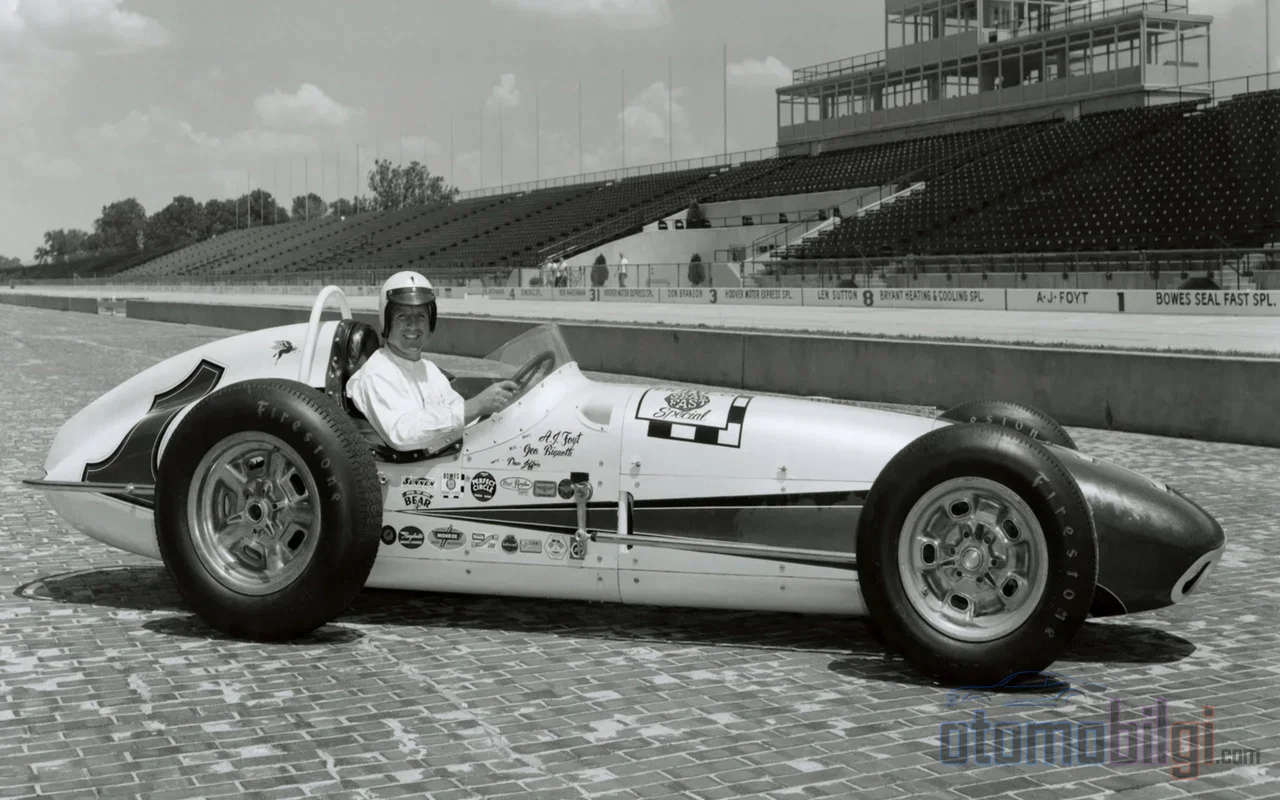
In racing, a rivalry is sometimes just two names going head to head. But A.J. Foyt and Mario Andretti's was different: fans cheered either for Foyt or for Andretti. Very few spectators rooted for both at once. So this wasn't a career comparison; it was almost a matter of identity. Even today, if you mention the name of one of the old guard in this series, which camp you belong to becomes immediately clear.
Let's look at the numbers to understand the balance on track. Foyt holds the record for the most wins in Indy car history: a full 67 victories. He was also the first to win the Indianapolis 500 four times. And add this: Foyt is the only driver to win the Indy 500, the 1972 Daytona 500, and the 1967 24 Hours of Le Mans. Mario's resume isn't bad either: 52 Indy car victories, the 1969 Indy 500 win, the 1967 Daytona 500, and on top of that, the 1978 Formula 1 World Championship. He is the only name to combine all three.
| Foyt | Andretti |
|---|---|
| 67 Indy car wins (all-time record) | 52 Indy car wins |
| First to win the Indy 500 four times | 1969 Indianapolis 500 winner |
| 1967 Daytona 500 and 1967 Le Mans winner | 1967 Daytona 500 winner and 1978 F1 champion |
| Seven-time USAC National Champion | He had won 8 races in 1967 |
But what impressed me most was the off-track story. Andretti says the two weren't always friendly at the track, but deeply respected each other's talent. In fact, Foyt's passion for racing across different disciplines fueled Mario's own ambition too. So the secret of this rivalry might be this: finding yourself between two giants who inspire each other pushes both the fans and the drivers to be better. Let's recall the 1967 season: Foyt won the Indy 500 that year, while Andretti won eight races and scored almost twice as many points as Al Unser in the championship. One wins, the other wins even more. That's how the scoreboard kept turning.
Highlights
- Foyt is the winningest driver in Indy car history with 67 victories.
- The 1982 Indy 500 finished with the closest margin at the time: just 0.16 seconds.
- The Unser family holds a record 9 Indy 500 wins.
- The front row of the 1991 Indy 500 is called the most impressive starting lineup of all time.
Was Al Unser the quiet hero of this trio?
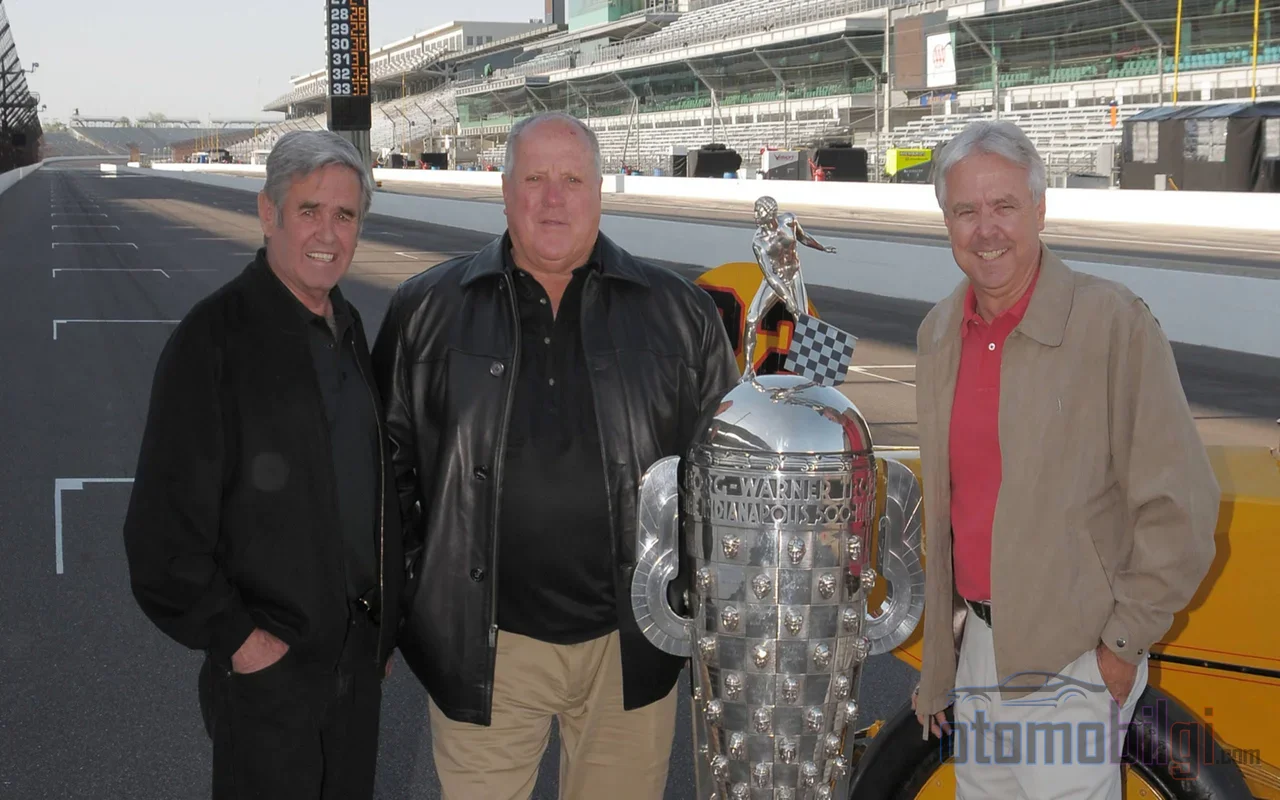
When Foyt-Andretti are discussed, there is a name standing in the middle that shouted a lot less: Al Unser. He won his first Indy 500 in 1970 and put together one of the most decorated careers in Indianapolis Motor Speedway history. Statistically: 27 Indy 500 starts - third place, behind only Foyt (35) and Andretti (29). So while Foyt and Mario were going at it, Unser had claimed his own space with an indescribable coolness. It is like two stars grappling in a basketball game while a third kid steals the game with his free throws.
Of course, there were also moments where the trio crossed paths. At the 1970 DuQuoin Ted Horn Memorial, Foyt tried to pass Unser on pole position, then crashed. And at the 1974 Ted Horn 100, Andretti, Unser and Foyt were all three locked in a three-way battle for the win. And one more beauty: The Unser family holds a record 9 Indy 500 wins in total - the surname alone is a legend. He was also on the front row of the 1991 Indy 500 alongside Foyt and Andretti; that starting grid is still considered by many today the most impressive front row of all time.
1982 Indianapolis 500: A 0.16-second classic
Now let's come to that duel that went down in racing history. Gordon Johncock was a name who had won the rain-shortened race in 1973; he came into 1982 hunting Rick Mears, who was on pole position. They battled throughout the race, and in the end Johncock beat Mears by a 0.16 second margin. At the time, that was the closest winning margin in Indy history. The record was later broken - in the 1992 race, the margin dropped to as little as 0.043 seconds. But 1982 holds a special place, because that duel wrote the names of two giants side by side.
Johncock remembered that victory as the greatest thrill of his career. He won 25 races in his 25-season career and passed away in May 2026, at the age of 90. Even in the obituaries, what he was remembered for most was squeezed into a single sentence: that 1982 duel with Mears. Would you say a rivalry can outlast a person by that long? Well, it can.
Let's also make a note of Mears: Rick Mears is among the names who reached four Indy 500 wins, alongside Foyt and Unser. This four-man club, as Autoweek also emphasized, remains unmatched - meaning only a handful of names have ever touched that summit that drivers who played at the four-win mark aspired to.
The split era: it was not rivalry, but division that hurt
All these legends seem like a sunny story, don't they? But American open-wheel racing also faced a major obstacle: organizational splits. The disputes of 1979 and 1996 divided participants and fans into two separate series. The sport reunited in 2008, but in the meantime NASCAR had overtaken Indy car and become synonymous with racing in America. Isn't that ironic, don't you think? While rivalries on the track grew the series, the fight between series shrank it. That is why it is important to distinguish the good kind of rivalry from the bad kind. On one side, fans take sides and rally behind two legends; on the other, the series itself is splitting in two. The first grows the sport, the second devours it.
The rivalries of the modern era: cold on paper, fiery on the track
Two generations whose fathers went head to head
The children of the Foyt-Andretti generation also took the stage. The battle between Michael Andretti and Al Unser Jr. was one of the most talked-about rivalries of the 1990s. Like their fathers, they too brought a new audience to the series. In later years, the fight between Bobby Rahal and Michael Andretti, and more recently the rivalry between Graham Rahal and Marco Andretti, also made the lists - as if competition is passed down genetically. In addition, the rivalry between Sébastien Bourdais and Paul Tracy is described as one of the greatest open-wheel rivalries of all time. As you can see, there is no single template: every generation has its own legendary duel.
Is today's main rivalry among the drivers?
Here's the interesting part: according to some commentators, the best rivalry in today's IndyCar is not among the drivers but among the team owners - between Chip Ganassi and Zak Brown, an almost personal duel. In the 2026 season, Alex Palou won his fourth consecutive, and fifth overall, championship and completed the season as the Indy 500 winner. Even rivals admit that Palou at the top will remain formidable. On the younger side, the atmosphere is different: Kyle Kirkwood and David Malukas climbing to the top with similar career paths is described as the friendly rivalry of the new generation. The 2026 season also featured racing for the first time on the street circuit in Arlington, Texas, and the series is, in its official statement, in a period of growth. So the form of rivalry has changed, but the fire is still burning high.
What have rivalries given to IndyCar?
Let's look at the common denominator of all these stories. The clash between Foyt and Andretti turned the 1970s into a golden age for both series, and Indy fans of that era followed these names almost like a team. The duel between Johncock and Mears explained, with a single photo frame, why the Indy 500 is considered the greatest race. Unser's cool-headedness turned back-to-back victories into legend. Today, the view voiced by Will Power still echoes: Formula 1 may be the peak, but IndyCar is far more competitive in terms of racing rivalry and more satisfying for fans. That is no coincidence - it is the result of years of rivalries creating a culture of closeness on the track.
My view is this: IndyCar history is a history of personal stories beyond the numbers. 67 wins is just a number; but the story of Foyt's respect for Mario, and the inspiration Mario drew from Foyt, keeps that number alive. Which generation's rivalry do you think was the greatest? My money is still on the final meters of 1982.
Sources
- Mario Andretti: Career 'richer' for battles with A.J. Foyt
- Al Unser | Where Tradition Never Stops
- 1982 Indianapolis 500
- Gordon Johncock - IMS Museum
- Two-Time Indianapolis 500 Winner Gordon Johncock Dies at 90
- Mario Andretti
- A.J. Foyt | USAC Hall of Fame Inductee
- American open-wheel car racing
- Looking Back on Reunification - John Oreovicz
- MARTIN: IndyCar's Best Rivalry
- 2026 IndyCar Series
- Friendly Rivalry: Kyle Kirkwood, David Malukas
- Historic Season Unleashes New Era of Growth
- Power: F1 is the pinnacle, IndyCar is best for competition