How Did Mario Andretti Become an IndyCar Star Before F1?
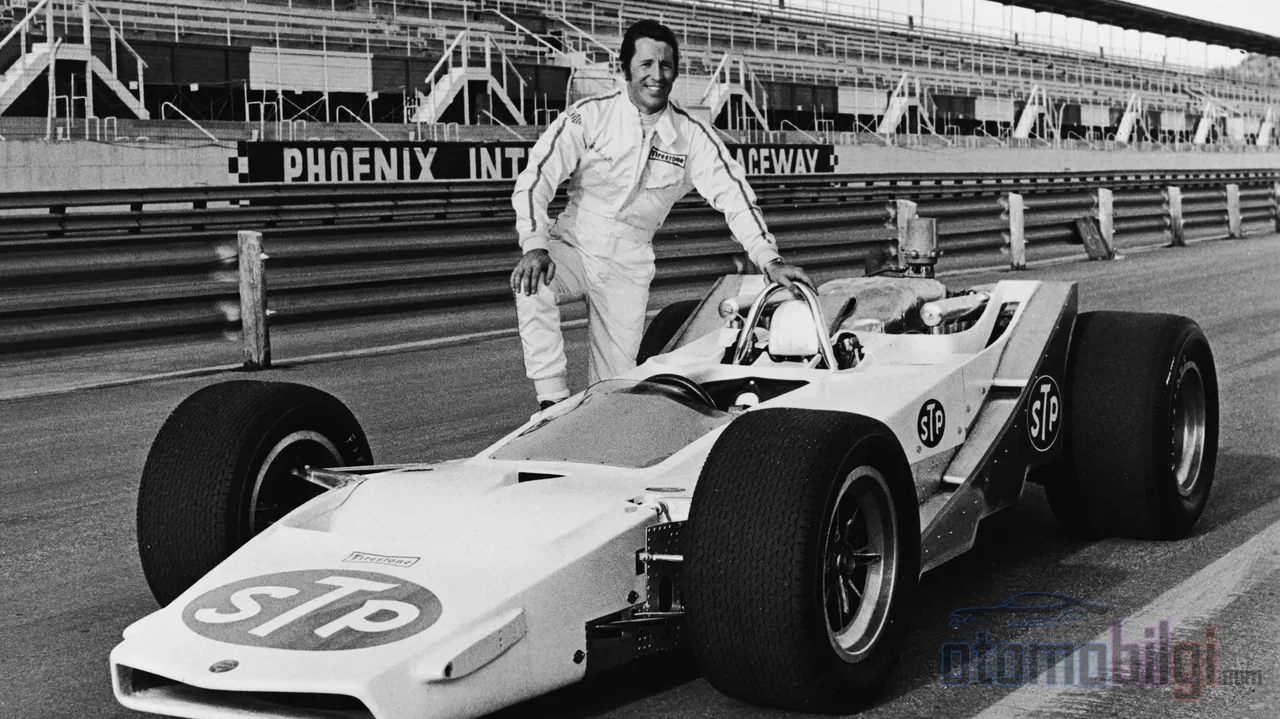
May 1969, Indianapolis Motor Speedway. A wheel fails during a practice lap, the car slams into the wall, and Mario Andretti's face is covered in burns. The race is only days away, and the main car is wrecked. Most drivers would have closed the book right there; Andretti, however, asked the next question: where is the backup car? And the story I'm going to tell you on this page explains exactly how we got to that point. Because while most people associate Andretti's name with his Formula 1 championship, his true stardom was built long before his F1 adventure, on the ovals and road courses of American open-wheel racing. So how did Mario Andretti become an IndyCar star before F1? If you're ready, let's get started.
To truly understand this story, we need two things: an ambitious young man gripping a steering wheel, and a system too skeptical to accept him. Spoiler: the young man wins.
From Dirt Tracks to IndyCar: The Road of a Young Italian from Nazareth
Mario Gabriele Andretti was born on February 28, 1940, in the town of Montona in Istria (present-day Motovun, Croatia), to an Istrian-Italian family. His family set out on the migration path in 1948; after seven years in a refugee camp in Lucca, Italy, they settled in 1955 in the town of Nazareth, Pennsylvania. So this is the famous American dream story come to life, word for word.
He began his career with a thoroughly classic romantic start, racing dirt track events alongside his twin brother Aldo. Looking at the numbers, it's hard not to smile: Of the 46 modified stock car races he entered between 1960 and 1961, he won 21. Then, between 1961 and 1963, he raced in the ARDC midget series; he finished in the top five 29 times in 46 races and finished third in the championship in 1963. Calling this kid "fast" would be an understatement; "insatiable" would be more accurate.
1964: The Rejected Rookie and the First Step in Trenton
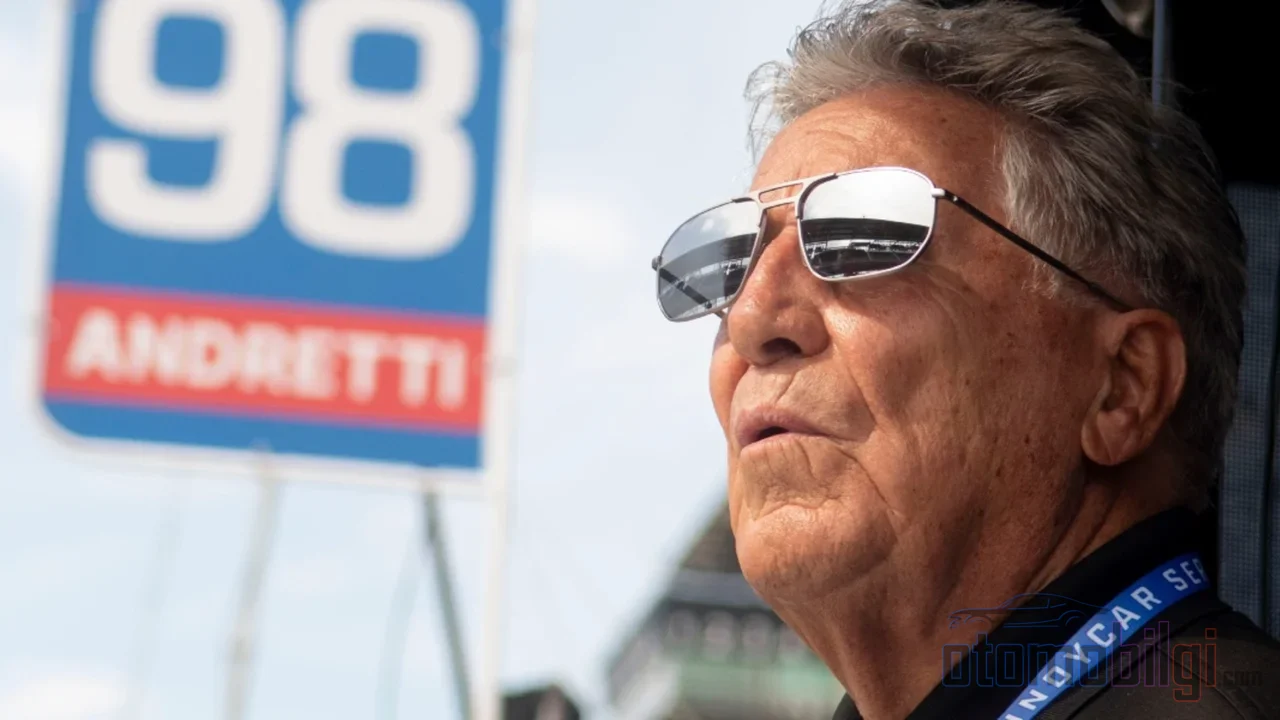
April 19, 1964, the Trenton 100. Andretti made his IndyCar debut with the Doug Stearly team; he started 16th and finished 11th, earning exactly $526.90 from this 100-mile race. Yes, you read that right: it all started with a check worth a few thousand dollars in today's money.
The more interesting part is what happened with the Dean Van Lines team. Legendary chief mechanic Clint Brawner rejected young Andretti at their first meeting. Imagine: you're turning away someone who will become one of the greatest names in IndyCar history. But Andretti didn't give up; with his mid-season sprint race at Terre Haute and a ninth-place finish at Langhorne, he managed to convince Brawner with his IndyCar performance. In Brawner's eyes, Andretti's determination to work on the car reminded him of A. J. Foyt, whom he knew from his own rookie days. Thus the two names began to be mentioned in the same sentence, and the seeds of the greatest IndyCar rivalry of the 1960s were sown.
Andretti, who ran the last eight races of the season with Dean Van Lines, finished the championship 11th and was named IndyCar Rookie of the Year. Not a bad start, right? Next came the real explosion.
Highlights
- Andretti was the IndyCar national champion four times, in 1965, 1966, 1969, and 1984.
- In 1965, at age 25, he became the youngest IndyCar champion in history; the record stood until 1995.
- His career includes 407 IndyCar starts, 52 wins, and 67 pole positions (all-time records).
- He won the 1969 Indianapolis 500 with the backup car set up after a crash in practice.
- Between 1966 and 1969, he won 29 of 85 USAC championship races.
1965-1966: Back-to-Back Championships and the Youngest Champion Record
1965: A Season That Made History at 25
1965 was Andretti's first full season with Dean Van Lines, and he had the new Brawner Hawk chassis (a design derived from the Brabham F1 chassis). He took only a single win, yes; but in the same season he finished second six times and third three times, scoring points in 16 of 18 races and becoming the youngest IndyCar champion in history at age 25. That record stood until 1995, when Jacques Villeneuve broke it. He took his first win at the Hoosier Grand Prix. That same year, in his first Indianapolis 500, he started fourth and finished third, and was named Rookie of the Year. Let me make a comparison: winning a championship with a single win is like a striker who scores only one goal but is the best player on the pitch in every match. That is exactly what Andretti's season was like.
And a small footnote: after that race, Lotus boss Colin Chapman promised Andretti a Formula 1 seat in the future. So the F1 world was watching Andretti long before he ever raced in F1. But don't worry, that story is not the subject of this page; Andretti still thought he had a lot left to do in IndyCar.
1966: An Eight-Win Showcase
In 1966 he won his second consecutive USAC championship, and that season was almost frightening in statistical terms: he won eight of 15 races, led 1,142 laps, and completed 54.5% of the season's laps at the front. That ratio was a record until Al Unser's 66.8% in 1970, and remains the second highest in history. There is only one black spot: despite starting the Indianapolis 500 from pole position, he retired on lap 27 with a mechanical failure. The Indy 500 seemed determined to keep its distance from Andretti right from the start.
The Rivalry with Foyt: The Most Dramatic of Lost Championships
In 1967, despite taking eight wins, he lost the championship to A. J. Foyt. The season ended in such a way that, had it been written as a script, it would not have been believed: Andretti had taken pole position for the Indy 500 but lost a wheel, and raced with a broken rib. In the season finale, when he ran out of fuel, Foyt took over Roger McCluskey's car, arranged by tire manufacturer Goodyear, raced it, and won the championship by an 80-point margin. Andretti later said he had the championship in his hands but lost it at the last moment; knowing he was so close to winning weighed on him even more heavily than losing.
1968 was even more bitter: the championship went to Bobby Unser at the Riverside finale by a margin of just 11 points, the narrowest margin in USAC history. Yet he still set two records in a single season with 11 second places and 16 podiums, and both remain valid to this day. He won three USAC championships between 1965 and 1969; he was just 93 points short of his fifth championship. His 29 victories in 85 USAC championship races between 1966 and 1969 are considered his statistical peak. In short, those four years were one of the most dominant stretches in modern IndyCar history.
The 1969 Indianapolis 500: The Crashed Lotus and the Backup Car That Carried Victory
Now we come to the heart of the page. For 1969, Andretti had an entirely new weapon in his hands: the four-wheel-drive Lotus Type 64 with a turbocharged 2.65-liter Ford V8 engine. Team owner Andy Granatelli's plan was ambitious; his turbine cars had failed in the 1967 and 1968 Indy 500s, and USAC had revised the engine rules for 1969 in a way that effectively eliminated the turbine. In other words, Granatelli and Andretti had staked everything on this new Lotus.
Then a wheel failed during practice. The Lotus crashed, the four-wheel-drive car was destroyed, and Andretti suffered burns on his face. The only hope left in their hands was their old friend the Brawner Hawk-Ford, which had been prepared as a backup car in just a day and a half. With this car, Andretti made it to time trials in time and earned the right to start from the second row, right behind the front row.
On May 30, 1969, the 33-car grid consisted, for the first time in history, entirely of rear-engined cars; there was not a single front-engined car. Andretti led the race for a full 116 laps and won at an average speed of 156.867 mph, incredibly, without ever changing his right rear tire. That backup Hawk dressed in STP colors wrote one of the most enduring stories in race history. The prize: The Borg-Warner Trophy and Andretti's only official Indianapolis 500 victory.
On Ovals and Road Courses Alike: Andretti's Versatility
This is what sets Andretti apart from ordinary champions. He is one of only three drivers in history to win major races on paved ovals, road courses, and dirt tracks in a single season, and he achieved this feat exactly four times. He also became the USAC National Dirt Track Champion in 1974. Considering that today's IndyCar calendar blends ovals, street circuits, and permanent road courses, Andretti is the legend who best fits the definition of this series.
Looking at his overall career, the picture becomes even clearer: Between 1964 and 1994, he made 407 IndyCar starts with 52 wins, 141 podiums, and 67 pole positions according to official records - the all-time IndyCar record. In the Indianapolis 500 specifically, he has 29 starts, 1 win, 3 pole positions, 6 top-fives, and 11 top-tens; he also finished second twice. He is also the only driver in history to have won the Daytona 500 (1967), the Indianapolis 500 (1969), and the F1 World Championship (1978).
So Why Did F1 Come So Late?
The short answer takes a long sentence: Mario Andretti delayed his childhood dream of a Formula 1 championship because of his insistence on racing in his adopted homeland. The longer answer is this very page itself. Andretti's pre-F1 IndyCar stardom is the summary of four years spanning from the $526.90 start at Trenton in 1964 to the Indy 500 win in 1969 with a backup car, and from back-to-back championships to the record of 67 pole positions. F1 came to him much later, through the door Colin Chapman opened in 1965; by that time he was the brightest star of American open-wheel racing. In fact, in 1984, six years after his F1 championship, he even won his fourth IndyCar championship. So the question should not be "why did he switch to F1" but "why did he wait so long".
Next time we will tell one more story from the Brickyard. But don't forget this: Remember that stubborn young man who, on Indianapolis's dusty ovals, made history one day with a backup car. Because legends are sometimes won not with the best car, but with the most stubbornness.
Sources
- Mario Andretti Biography
- Mario Andretti - Wikipedia
- Mario Andretti Driver Stats - Indianapolis Motor Speedway
- Mario Andretti - IMS Museum
- 1969 Indianapolis 500 - Wikipedia
- Mario Andretti's Against-All-Odds Indy 500 Win - Smithsonian Air and Space
- Mario Andretti's First Indy 500 Win - Hemmings
- Mario Andretti - Formula 1 Hall of Fame
- Mario Andretti - International Motorsports Hall of Fame
- 52 IndyCar Wins, a Record 67 Poles - Happy Hour Racing