The Offenhauser Engine: The Story of 27 Indy 500 Victories
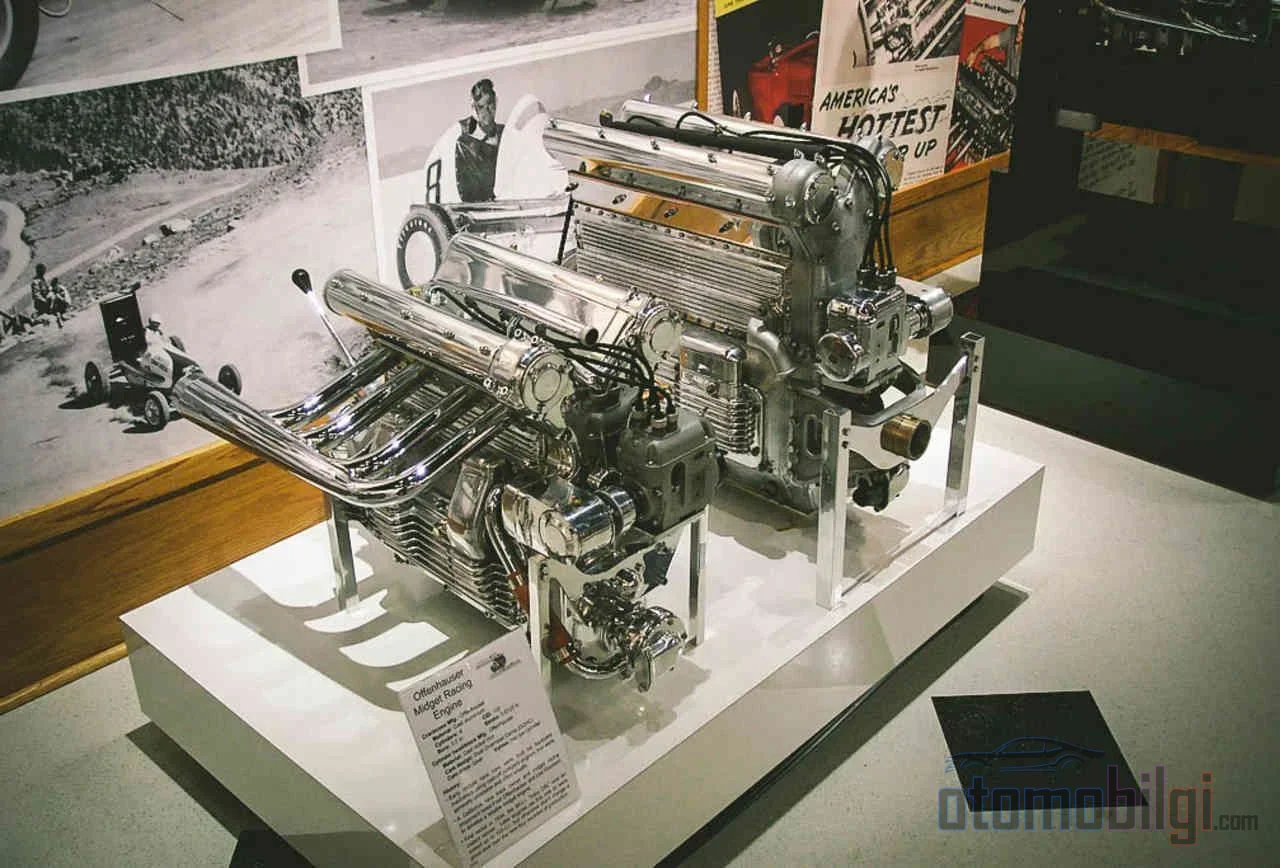
Suppose you have an engine: four cylinders, plain-looking, and a monster that ran the Indianapolis 500 as if it were its own backyard for nearly half a century. In today's engine wars, an engine winning the golden shield two seasons in a row is even news, right? But what if we told you about an engine that won the Indy 500 27 times? Yes, you read that correctly: Offenhauser won the Indy 500 exactly 27 times between 1935 and 1976, and that remains an unbroken record. How did a single engine design, with only four cylinders no less, dominate the world's greatest race for decades? If you're ready, let's head down to the garage and pop the hood.
Harry Miller's Legacy: Before the Offy Was Born
The Offenhauser story doesn't actually begin with a man named Offenhauser. The hero of this story is Harry Arminius Miller, perhaps the most creative engineer in American racing. Miller-designed cars won the race five times in one decade, starting with the first Indy 500 victory in 1922; between 1922 and 1938, Miller-powered cars collected a total of 12 Indy 500 victories. In other words, the Offy's DNA was written as early as the early 1920s.
An example showing the scale of Miller's technical genius: The Miller 91 engine, designed in 1926, produced 250 HP at 8,000 rpm from just 91 cubic inches (approximately 1.5 liters). This straight-eight, dual overhead cam, supercharged engine was practically science fiction for its time. Its influence wasn't limited to America: Ettore Bugatti, who examined two Miller 91 cars brought to Europe in 1928, bought both of them, and the next Bugatti engine bore a striking resemblance to the Miller design. So the Offy's ancestors had even influenced Europe's legendary engine manufacturer.
In 1930, a Miller-powered four-cylinder car with 151 cubic inches (2.47 L) set a new international land speed record at 233.186 km/h (144.895 mph). But this golden age came at a price: The Great Depression hit Miller just as it hit everyone else, and the company went bankrupt in 1933. So was this bankruptcy, or the true birth moment of the Offy legend?
Fred Offenhauser and Leo Goossen: The Legend Born from Bankruptcy
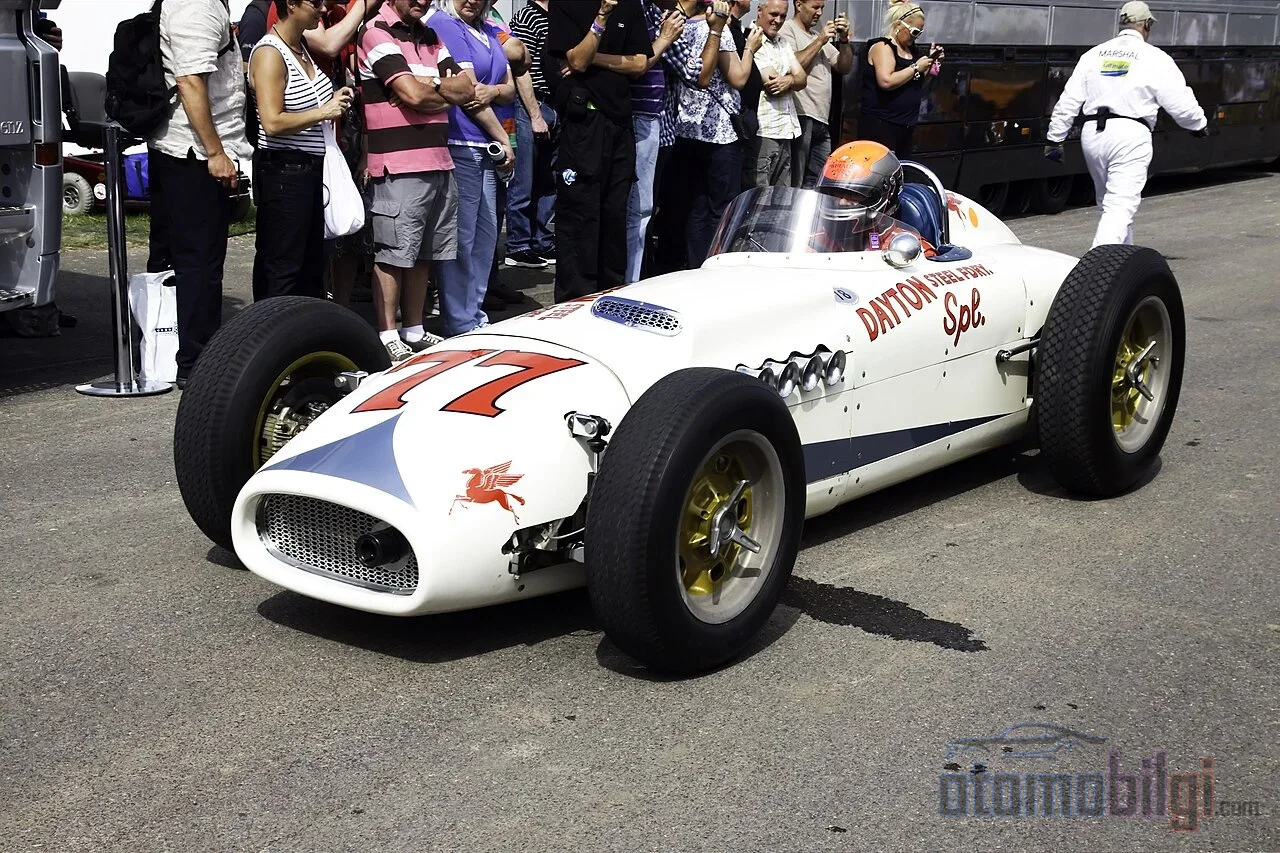
Here comes the best part of the story. When Miller went bankrupt, workshop chief Fred Offenhauser and designer Leo Goossen didn't sit idle: They bought Miller's designs and equipment at the bankruptcy auction and continued to develop them. The Offenhauser company was founded in 1933, and the engine won its first Indy 500 in 1935. Victories in 1937 and 1941 followed.
Highlights
- Offenhauser engines won the Indianapolis 500 27 times between 1935 and 1976 - that's a record.
- Every Indy 500 winner between 1947 and 1964 was powered by an Offy engine.
- The naturally aspirated 4.1-liter version produced 420 HP at 6,600 rpm with a 15:1 compression ratio.
- The turbocharged 1968 version made 750 HP at 9,500 rpm; at high boost values, it could deliver over 1,000 HP.
- The last Offy victory came at the Indy 500 in 1976, and its final race was at Pocono in 1982.
The war years paused the story for a while: The Offenhauser workshop worked for Lockheed from 1940 onwards; the last pre-war engine was shipped on July 17, 1941, and after Pearl Harbor production turned entirely to hydraulic systems. When the war ended, American racing was more than ready for the Offy.
Why Was It So Good? Technical Secrets
Okay, we've come to the most frequently asked question: How does a four-cylinder engine leave everyone behind for decades? At the center of the answer lies the monoblock design. The cylinders and the cylinder head were cast as a single piece; meaning there was no head gasket in the Offy - a part that in conventional engines gave engineers sleepless nights precisely because it caused problems. There were no cylinder stud troubles either. The result? The engine could withstand much higher cylinder pressures.
Let's use an analogy from everyday life: A normal engine is like joining two separate Lego blocks, putting a gasket in between, and hoping for the best. The Offy, on the other hand, is a structure cast as one piece, with no point of loosening anywhere. High pressure? No problem. Long distance? It pulls through.
Easy to Maintain, Power Ready for Service
Simplicity was the heart of the matter. The crankcase was a separate part; the bearings were screwed around the crankshaft and seated into a heated crankcase. The cam towers were mounted on top of the block, and the cams were driven from the crankshaft by gears. The best part: changing the cam profile was very easy. So tuning the engine to the characteristics of the track was a job mechanics could do without getting into extra power stress. Moreover, the engine was designed precisely for that - not to avoid running continuously at high rpm and constant speed, but exactly for it: for the ovals. On road courses, things got more complicated - but we'll get to that.
Offenhauser in Numbers
| Version | Displacement | Power | Notes |
|---|---|---|---|
| Naturally Aspirated Offy (255/252 cu in) | 4,128 cc | 420 HP @ 6,600 rpm | 15:1 compression ratio |
| Offy 270 (naturally aspirated) | 4.4 L | Approaching 1,000 HP | Largest-displacement version |
| Turbo Offy 168 (1968) | 2.75 L | 750 HP @ 9,500 rpm | Over 1,000 bhp was possible with approximately 3.05 bar of boost |
| Last turbo Offy (159 cu in) | 2.65 L | 770 bhp @ 9,000 rpm | With a boost limit of 1.70 bar |
The naturally aspirated 4.1-liter Offy produced 81 kW per liter; some variants reached 3 HP per cubic inch, that is approximately 137 kW per liter. This power density is an insane level for a four-cylinder straight out of a 1930s drawing. We're not sharing torque and price figures here because they are not found in period records; we won't make them up.
The Overwhelming Years: Uninterrupted Victory Between 1947 and 1964
Now let's turn to the statistics, because these numbers are truly groundbreaking. Throughout the 18 years from 1947 to 1964, every car that won the Indy 500 was powered by an Offenhauser engine - and in most years, Offy-powered cars swept all three steps of the podium. Between 1950 and 1960, Offy-powered cars won the races and dominated the podiums, also taking pole position in 10 of the 11 years. During this period, the Indy 500 was part of the World Championship (the calendar of today's F1); so the Offy, without realizing it, was running World Championship races exactly as it pleased. Fred Agabashian taking pole position with an Offy-powered car in 1952 is also among the memories of this era.
Behind this domination there was not just engine power but also market reality: the Offy was almost the only mass-produced racing engine available on the market. Engines removed from mass-production road cars were trying to compete with this special creature without its displacement advantage. A fun side note: Rodger Ward managed to beat exotic sports cars with an Offy-powered midget in the Formula Libre race at Lime Rock in 1959. But the same year at the United States Grand Prix at Sebring, the car was completely uncompetitive. The Offy was the king of ovals; road circuits were not its stage.
Ownership Chain: The Meyer and Drake Era
In 1946, Fred Offenhauser retired and sold his stake to three-time Indy 500 winner, legendary driver Louis Meyer, and Dale Drake. Although the company officially took the name Meyer-Drake, everyone still called the engine by its familiar name, Offenhauser. The Meyer-Drake era was the golden age of the engine both at the Indy 500 and in midget racing. In 1965, the Drake family bought Meyer's share and continued developing the engine. Then in 1975, the final link of the lineage was introduced: the DGS (Drake-Goossen-Sparks) engine.
Foyt, Andretti and the Culture of the Offy Era
The story of an engine cannot be considered apart from the story of the people who drove it. A.J. Foyt became the first driver to win the Indy 500 four times, in 1961, 1964, 1967 and 1977; he took his 1977 victory with a Foyt-brand engine named after him. He accumulated 67 Championship Car victories in his career, 15 more than Mario Andretti. Four-cylinder engines won the Indy 500 a total of 37 times, and the last four-cylinder victory came in 1976 with Johnny Rutherford.
Mario Andretti won the 1969 Indy 500, and the Smithsonian National Air and Space Museum displays that car today. However, Andretti's Indy victories from 1969 to 1971 came with Ford-powered cars; not with the Offy. This was the clearest sign of the changing of the era. Let's note one thing on the side: it is also said that the famous master mechanic Smokey Yunick worked on a reverse-engineered, improved version of the Offy.
Ford, Turbo and the Mid-Engine Revolution: How Did the End Come?
Every legend has an end, and the Offy's came not at all from the engine aging. In 1963, Ford took to the field with its dual overhead camshaft four-valve engines, and the domination was broken for the first time. Ford won the Indy 500 in 1965-1967 and 1969-1971. Those same years were the era of the mid-engine transformation, when the racing car concept changed completely and the engine was moved to just ahead of the rear axle. The Offy continued to be used in this transition, but the world was becoming an entirely different place.
The Offy responded with turbocharging, and it was quite an impressive response: In 1968, Bobby Unser won the Indy 500 with the 2.75-liter turbocharged Offy; the engine produced 750 HP at 9,500 rpm, effortlessly pushing past 1,000 horsepower with roughly 3.05 bar of boost. The 2.6-liter (159 cu in) turbo Offy took five consecutive years of Indy 500 victories between 1972 and 1976. The final version displaced 2.65 liters; compressed to a 1.70 bar boost limit, it produced 770 bhp at 9,000 rpm. Extracting these figures from a decades-old basic design is the greatest proof of Offy engineering.
Farewell: From 1976 to 1982
The last Offy victory at the Indy 500 came in 1976. The engine's final victory overall came in 1978 at Trenton, with Gordon Johncock's Wildcat. Its last race was the 1982 Pocono 500: Jim McElreath took to the track once more with his Offy in an Eagle chassis. The two Vollstedt-Offys attempted for the 1983 Indy 500 failed to qualify. After 1983, the Offy began living not on the tracks but in museums and classic racing events.
So What Made the Offy a Legend? The Short Answer
The clear answer we promised: What made the Offenhauser unique was the robustness of its monoblock construction, its power density of up to 3 HP per liter, the ease of a cam swap, and the reliability that was the sum of all these. A single four-cylinder design became the most successful engine in Indianapolis history with 27 Indy 500 victories, winning the race for 18 straight years between 1947 and 1964. Even the Cosworth DFV's 10 Indy victories between 1978 and 1987 pale beside that number. The Offy era ended not because the engine declined, but because the Indy car concept changed entirely.
The next time you open the hood (or rather, the cover) of an Indy car, think of this: every one of today's engines has passed through the pages of the rulebook the Offy spent decades writing. Four cylinders, a single-piece casting, and a stubborn engineering culture: sometimes you don't need 12 cylinders to become a legend.
Sources
- Winning Engine Manufacturers | Indianapolis 500 Stats
- Offenhauser
- The Immortal Offenhauser Racing Engine
- Harry Miller - Engine Builder Hall of Fame
- The Harry Miller Fred Offenhauser Leo Goossen Race Car Society
- A. J. Foyt
- Mario Andretti's Against-All-Odds Indy 500 Win - Smithsonian
- The forgotten founder of the Indy 500's most dominant engine