Rick Mears: The Hero of Four Indy 500 Victories
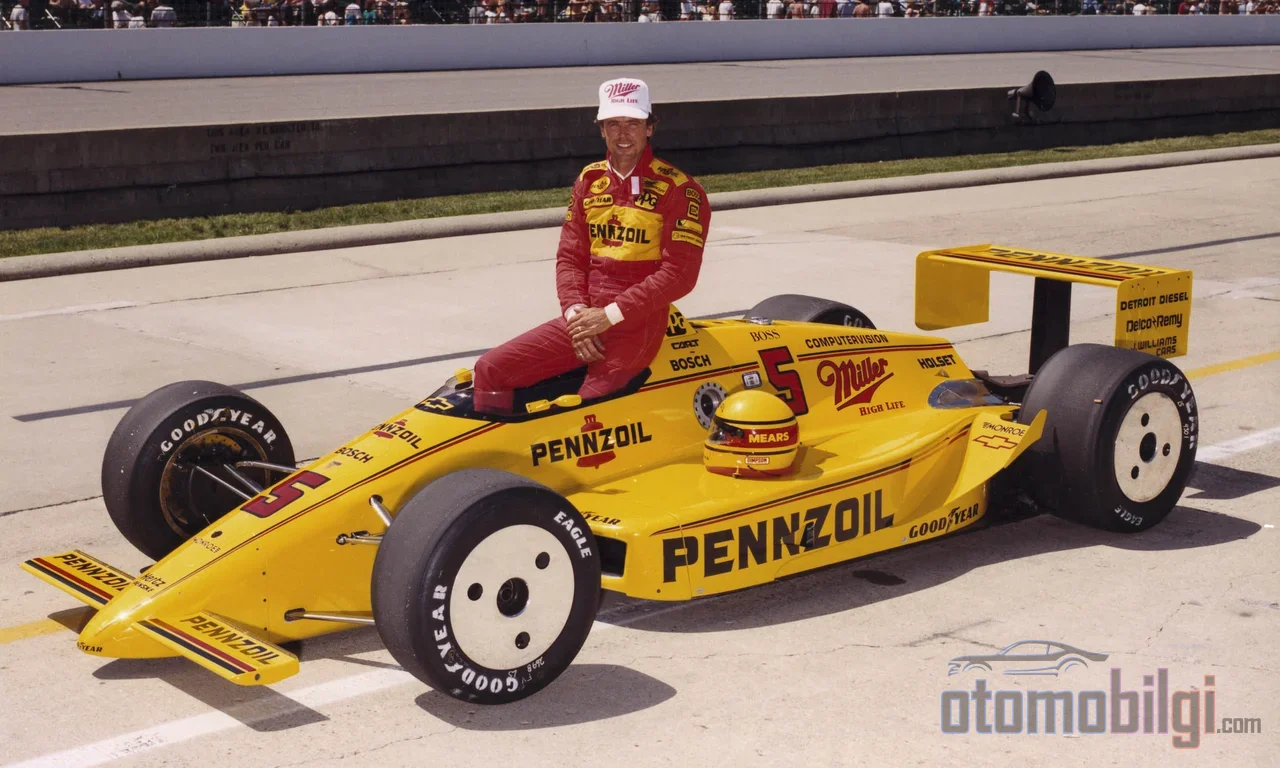
Consider a driver who: Wins the Indianapolis 500 four times, yet races less than half as much as the other legends. Survives a pit fire, returns to victory two years later, and simply says "no" when a Brabham Formula 1 test offer comes along. That is exactly the story of Rick Mears: quiet, calculating, and incredibly consistent. So what makes him A.J. What makes it worthy of sitting on the same shelf as giants like Foyt and Al Unser? Let's tell it from scratch, because this story truly deserves it.
On this page, we walk through Mears' career from start to finish: his 1979, 1984, 1988 and 1991 Indy 500 victories, his three championships, his legendary partnership with Roger Penske, and the pace management that made him the calmest speed monster on the track. If you're ready, let's begin.
Highlights
- Only four drivers have won the Indy 500 four times - Rick Mears is one of them.
- He still holds the Indy 500 record with 6 poles in the race.
- He amassed 29 wins, 75 podiums and 40 poles in 203 races.
- He turned down the Brabham F1 test offer because he didn't want to move to Europe.
- In 1991, just one day after crashing into the wall, he took a record 6th pole in a backup car.
Who Is Rick Mears? A Brief Introduction: From Off-Road to Indy Legend
Richard Ravon Mears was born on December 3, 1951, in Wichita, Kansas, but found himself in Bakersfield, California. He didn't come to racing through the classic paths; he emerged from off-road racing. In 1976, on Bill Simpson's advice, he entered the California 500 at Ontario with an old Eagle-Offenhauser and finished eighth. Finishing eighth may sound ordinary, but making the field with that car, on that track, at that level was proof of talent. The following year he moved to Theodore Racing, and that's when a man looking for a driver emerged: Roger Penske.
Penske's situation was this: Mario Andretti was busy with Lotus in Formula 1, and he needed a young, fast driver to focus on American races. In 1978, he offered Mears a part-time seat in 9 of 18 races. That offer came close to being remembered as one of the best investments in racing history - because this young man would run all 15 of his Indy 500s with Penske. Today, drivers live in a world where changing teams is normalized; Mears' loyalty to one brand is a record in itself.
Four Indy 500 Victories: Each One a Different Story
Ranking Mears' four victories is like ranking your children - it's hard to say which one he loved more. But each has its own unique drama, and all are worth seeing one by one.
1979: First Victory and First Championship
This victory, which came in CART's first year, was not entirely a waiting-in-the-wings reward. Bobby Unser's mechanical failure carried Mears forward, but being able to finish the job when out front is a separate skill. He won his first championship the same season - before his rookie period had even ended.
1984: Second Victory with March
In 1984, he won for the second time with a March chassis. But this year also brought the darkest moment of his career: He suffered a heavy crash at the Sanair Super Speedway in Quebec. In the March chassis of that era, the driver sat far forward of the nose, and there was almost no protection for the legs - meaning the driver was technically unprotected from the first point of impact in a collision. Mears suffered leg and foot injuries, and these injuries shaped the rest of his career. Over the next three seasons, he could only manage 2 victories.
1988: A New Page Opens for Chevrolet
His third victory came with the new Penske PC-17 and the Chevrolet engine. Even better: it was Chevrolet's first victory in Indy 500 history. Mears delivering a manufacturer's first win in the most prestigious race shows just how strategic the Penske partnership was. The team, the car and the driver were climbing to the top at the same time.
1991: The Wall, the Backup Car and the Andretti Duel
1991 is, in my opinion, the most cinematic of them all. For the first time in his career, he hit the wall at Indianapolis. For most drivers, this would have been the end of the week. What did Mears do? He came back the next day in the backup car and took a record 6th pole position. On race day, there was a brilliant duel with Michael Andretti: Andretti passed him on the outside on the first lap, Mears took it back a lap later with the same move, turned up his turbo boost and claimed his fourth victory. He thus became the third driver to win the Indy 500 four times. In August of the same year, he took his final career victory at the Michigan 500.
That year's front row was also legendary: first Mears, second Foyt, third Mario Andretti - the three drivers had a combined 9 Indy 500 victories. It is still considered one of the strongest front rows in history.
Why Is the Penske Partnership So Special?
Driver-team relationships are often short-lived; they last two or three seasons, and if results don't come, they part ways. The relationship between Mears and Penske was exactly the opposite: from the part-time seat in 1978 to his retirement in 1992, all 15 Indy 500s were with the same team. He even announced his retirement at Team Penske's Christmas party, at a moment that only Roger Penske and his wife Chris knew about. That's enough to tell how personal this relationship was.
His first victory was also a product of this partnership: On June 18, 1978, he won the Rex Mays Classic at the Milwaukee Mile, and it became Team Penske's 9th IndyCar victory. That same year, he added Atlanta and his first road course victory at Brands Hatch. So Mears was fast on road courses too; but over time he transformed himself into a great oval driver, and that's exactly where the legend was born.
Pace Management: "Fast Enough to Win, Controlled Enough to Finish"
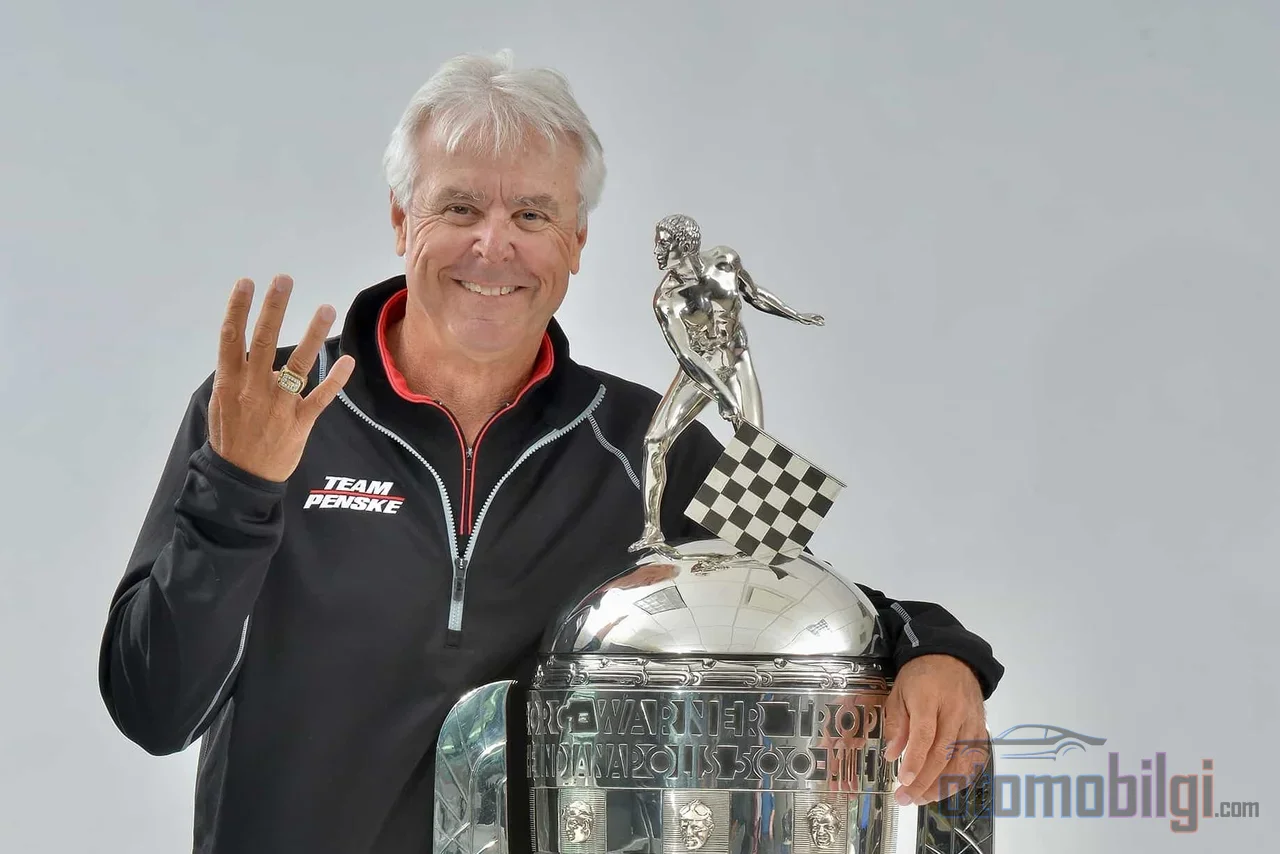
So what made Mears different? The answer isn't a single word, but it revolves around one idea: pace management. A 500-mile race is not a sprint but a marathon; it's easy to think about, but very hard to execute on the track. Let me explain it this way: Using a turbocharged IndyCar to its full extent is like having unlimited internet in your first class of the morning - after a while, everything runs out. Mears' approach was to push the car, the tires and the engine just enough to reach the finish line, never asking for more than necessary.
The results are proof of this philosophy. He made 15 starts at the Indy 500 and started from the front row in 11 of them; in his first 11 attempts he was always on pole. He was fast enough in qualifying that you "couldn't get through without flying," and on race days he was consistent with surgical precision. Some of his rivals ran far more Indy 500s - but it was Mears, with the shorter career, who claimed all four of those victories. This shows that he was "not just fast, but smart-fast."
In 500-mile races he also holds the record with 16 poles and won a total of eight 500-mile races: the Pocono 500 (1982, 1985, 1987), the Michigan 500 (1991), and of course his Indy victories. In 1983 he also added the Domino's Pizza Triple Crown championship. He had also won the Pikes Peak Hill Climb in 1976 - meaning he was a master both at the top of the mountain and on flat ovals.
Saying No to F1: The Brabham Offer
Here's the surprising part: In 1980 he received a test offer from Bernie Ecclestone for the Brabham F1 team. In his first test he got within half a second of Nelson Piquet, and in the second test he set even faster laps. Even Piquet suggested him as the second driver. Europe's biggest ladder was laid out before him, and Mears turned the offer down. His reason was simple: he didn't want to move to Europe and leave oval racing.
Looking at it from today, it may seem like a crazy decision; but for Mears, Indy's 2.5-mile oval spoke louder than Monaco's concrete walls. This decision clarifies his identity: he valued mastering the work he truly loved more than trying to become a star in another arena.
The 1982 Photo Finish and the Pit Fire: The Difficult Years
His career was not just about victory celebrations. In the 1981 Indy 500 he suffered facial burns in a pit fire - yet just a few weeks later he was behind the wheel, not in a hospital bed, and across the two seasons of 1981-82 he took two championships with 10 victories. That comeback alone is the stuff of a movie.
The 1982 Indy 500, meanwhile, was a full cinema scene: in the final pit stop, an unnecessary refueling dropped him 11 seconds behind Gordon Johncock. Then he practically melted the gap and lost the duel that went to a photo finish by only 0.16 seconds. That margin held the record as the closest finish in Indy 500 history for a full 10 years. That same year he also came under criticism for the crash on the pace lap; Johncock, Rutherford and Bobby Unser said they held Mears responsible for the slow pace. For the quiet master, such disputes had always been something of an oddity - because very few people had enough problems with him on the track to talk about it.
Is Foyt the Best, or Mears?
This debate is Indy's classic dinner-table conversation. The two names frequently come face to face in the "best of Indy" debate; in a poll that was held, Foyt was ahead by only three votes, and both legends avoided commenting on the matter. The numbers also paint an interesting picture: Foyt raced the Indy 500 far more times, while Mears collected the same four victories in his own, shorter career and holds the pole record. Rather than saying who was "the best," let's put it this way: one is a symbol of endurance and a long career, the other of efficiency and technique. Watching both of them was a privilege.
Mears's reputation doesn't come just from the numbers; he was known as a rare gentleman, both on and off the track. Mario Andretti is also known to have highlighted this side of him. Fierce competition, clean character - the winning formula, exactly.
The Technology of the Era: Chassis, Engines and the Ground-Effect Revolution
Mears's career coincided with one of the fastest periods of technological evolution in American open-wheel racing. His first Penske car was built on the PC-6 chassis with a Cosworth DFX V8 turbo engine. In the 1980s, Chaparral's ground-effect chassis was technologically ahead of its rivals, and Johnny Rutherford dominated the season that year - meaning Mears raced during the years when the technology race was at its fiercest. For those who don't know what ground effect is: it is a design that uses the airflow beneath the car to make it "stick" to the road more; think of it like an elevator descending rapidly into a pit.
The Indy 500's role as a technology laboratory isn't unique to Mears's era either; the Speedway has been standing since 1909, and the first 500-mile race in 1911 was run with 40 cars. Over the years, the race was the birthplace of many automotive innovations, from rearview mirrors to turbocharged engines. The victory with the PC-17 and the Chevrolet engine in 1988 was the link in this chain that belongs to Mears's era.
Retirement and Today: Mentor Rick Mears
At Indianapolis in 1992, he broke his wrist in practice, and retired after his first crash in a race. He was 41 years old, and as we mentioned above, he announced his retirement at the Team Penske Christmas party. He has been living in Florida since 1992, and said in an interview that he wasn't chasing records and that the fundamental principles hadn't changed.
But he didn't just walk away when he left the job: As of 2026, he still works at Team Penske as a consultant and driver mentor; he mentors names such as Scott McLaughlin, Josef Newgarden and David Malukas. So behind these young drivers' Indy 500 victory celebrations stands the experience of four victories. How sweet that sounds, doesn't it?
The Legacy of the Quiet Master
So why do we still count Mears among the best on ovals? The answer lies somewhere beyond the numbers: 203 races in 17 years, 29 wins, 75 podiums, 40 poles and three CART championships - plus the distinction of being the first driver to win the PPG Cup three times. But the real point is this: Mears was one of those rare drivers who combined winning with finishing in the same sentence. Injury shortened his career, but it couldn't shorten his legacy. When you watch the next Indy 500 and see a driver maintaining the same calm pace all the way to the end of the race, know whose shadow you are feeling in that wardrobe now. Do you think one of today's drivers could win four Indy 500s with so few races? Let's meet in the comments.