The Borg-Warner Trophy: Every Champion's Face Is on This Trophy
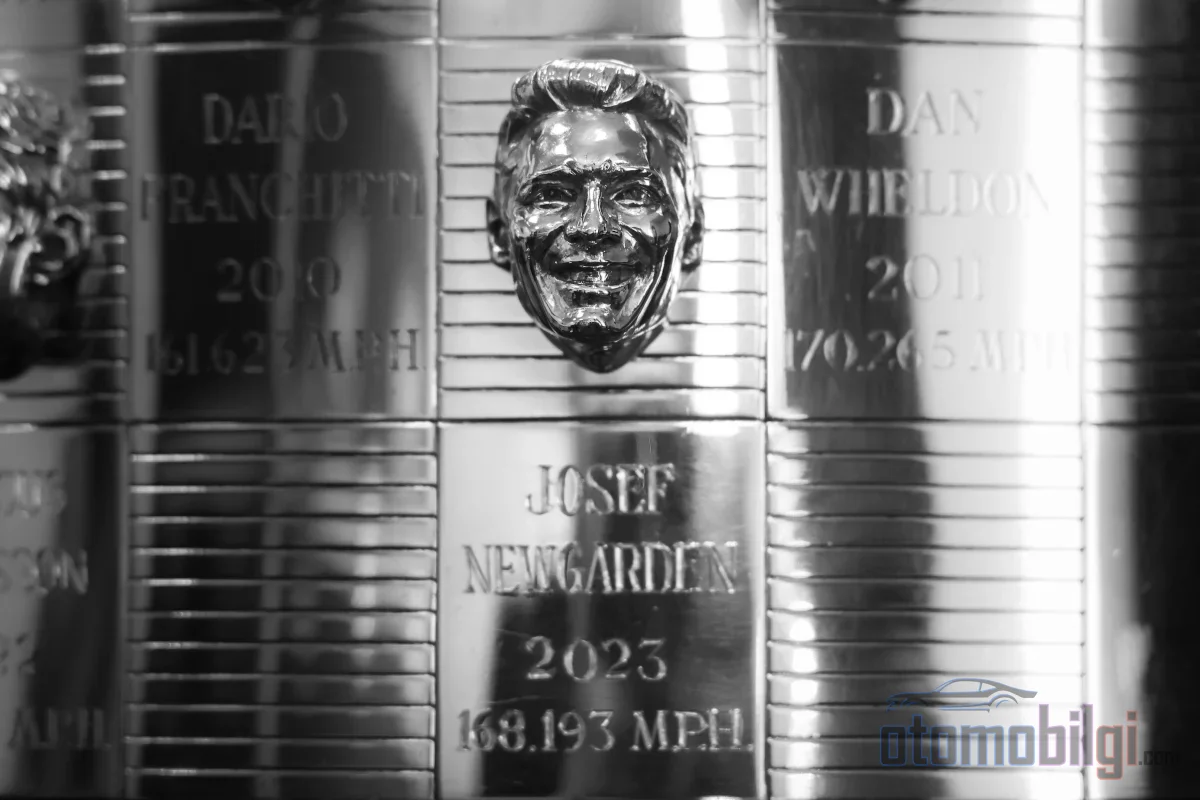
Imagine this: you win a race, the whole world is talking about you, champagne is popping... and a few months later you sit down in front of a sculptor. Because your face will be carved onto a sterling silver trophy. Forever. The Borg-Warner Trophy of the Indianapolis 500 carries a tradition without equal in motorsport: the face of every winner is engraved onto the body of the trophy as a separate work of art. So where did this idea come from, what happens when the trophy fills up, and why can't the winner take the medallion home? That is exactly what this page is about.
A Single Trophy Since 1935: A Brief History
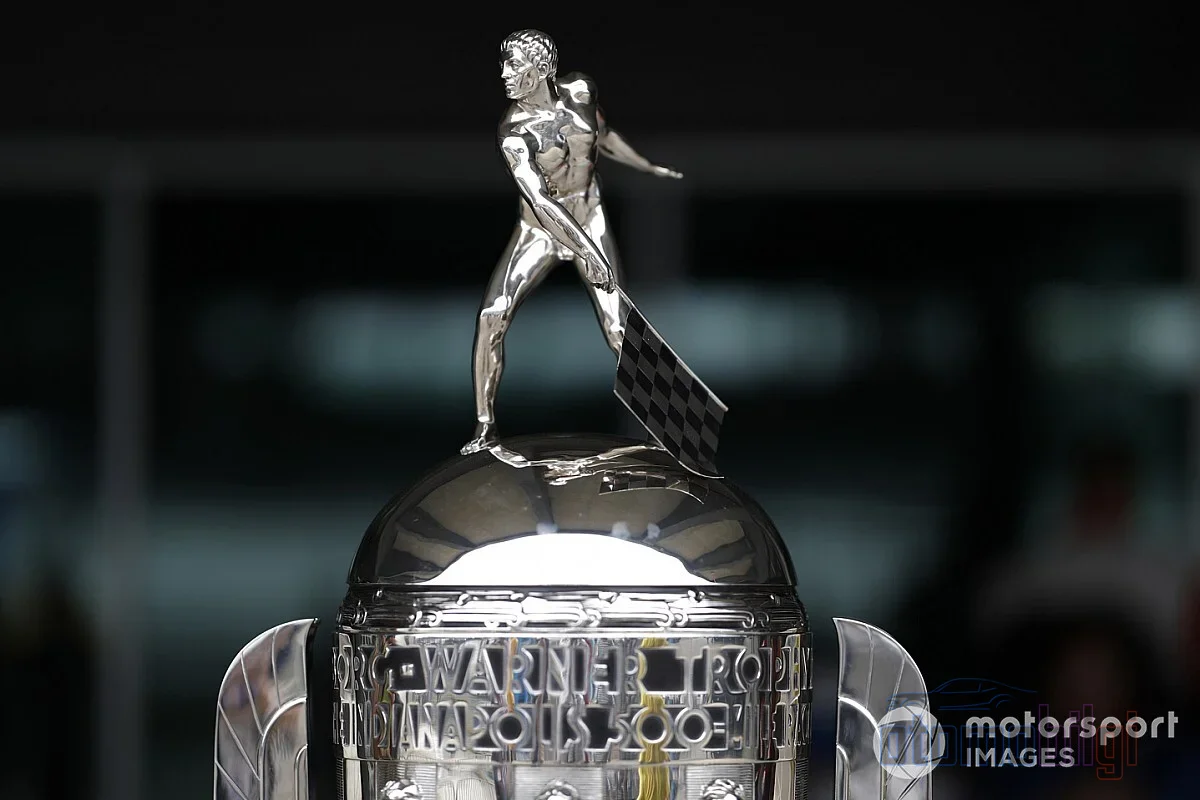
The trophy was commissioned in 1935 by Borg-Warner Corporation, the predecessor of today's BorgWarner, to honor the winner of the Indianapolis 500. The design belonged to Robert J. Hill and the Chicago-based Spaulding company; its production cost at the time was roughly 10,000 dollars. The trophy was first presented to its winner in 1936, and since that date the same award has been passed on every year.
Here is where the striking detail begins: When the trophy found its first owner in 1936, the faces of 24 drivers who had already won the race were already carved on it. In other words, the tradition began before the trophy's story, and the trophy itself gathered this legacy into a single body. The first face added belonged to Louis Meyer - when Meyer won his third Indy 500 victory in 1936, his face became the first to be engraved on the trophy. By the way, let's add this: Meyer was also the pioneer of the milk celebration tradition; the man truly left his mark on this track's traditions.
Highlights
- The trophy was commissioned in 1935 and first presented to its winner in 1936.
- With its base it stands about 1.64 meters tall and weighs 110 pounds (approximately 50 kg); 80 pounds of it is sterling silver.
- Its estimated value today is about 3.5 million dollars.
- The winner cannot take the trophy home; the trophy is permanently displayed at the Indianapolis Motor Speedway Museum.
- There is currently room for winners' faces up to the 2033 Indianapolis 500.
The Design of the Trophy: Art Deco Spirit and the Checkered Flag
The trophy was designed in the Art Deco style that defined the aesthetics of the 1930s. The wing-like forms on the sides symbolize flight speed - a fitting reference for an automobile race, don't you think? At the top there is a figure of a naked Greek athlete waving a checkered flag. The reason the figure is naked is also interesting: It was meant to reflect the Olympic spirit, designed like classical Greek sculptures. So the trophy is not really a decorative piece, but a chain of symbols from start to finish.
The dimensions, too, tell a story destined to grow. The original trophy stood 4 feet 3 inches tall and had room for 70 winners. The trophy was enlarged twice, in 1987 and 2004; today, with its base, it stands about 5 feet 4-3/4 inches, longer than 1.6 meters. Its weight with the base is 110 pounds, 80 pounds of which is sterling silver - the body is hollow and there is a removable dome at the top. The trophy that cost 10,000 dollars in 1935 is worth an estimated 3.5 million dollars today. It can be called one of the most valuable awards in the world, both materially and emotionally.
How Does the Face-Sculpting Tradition Work?
The heart of the tradition is this: the face of each winning driver is added to the trophy as a separate bas-relief. The process is not as fast as you might think - it starts just one day after the race and takes weeks. The sculptor who has handled this work since 1990 is William Behrends; today roughly a third of the faces on the trophy are his work. Behrends' portfolio is full of familiar names from sports and business, but the faces of Indy 500 winners seem to be his most special work.
The process roughly goes like this:
- The winner takes part in an official sitting at the sculptor's studio.
- A clay model of the face is made as a bas-relief.
- The clay model is converted into a sterling silver image and added to the trophy.
- A copy of the same sculpture is also worked onto the base of the winner's "Baby Borg" replica.
So the winner's face lives not only on the big trophy, but on their own award as well. It's an elegant detail, but the real question is this: why is so much effort spent on it? The answer is simple - the trophy is won not for a year, but forever. Each face is a time capsule that immortalizes that year's story.
The Numbers on the Trophy: 112 Faces, 2 Co-Winners, 1 Golden Head
The number of faces on the trophy increases every year; with current figures, 112 faces are counted, and 35 of them are repeated faces of multiple-time winning drivers. So why is the number of faces greater than the number of races? Because in some years the winning car was shared by more than one driver, and each was honored with a separate face on the trophy: In 1924, L. L. Corum and Joe Boyer, and in 1941 Floyd Davis and Mauri Rose.
There are four names who have won four times: Hélio Castroneves, A.J. Foyt, Al Unser and Rick Mears. Three-time winners are Louis Meyer, Mauri Rose and Wilbur Shaw; two-time winners are 12 drivers. For repeat winners, the face is made again and each victory is carved separately onto the same base - meaning a name like Foyt has four separate faces on the trophy. The only 24-carat golden head on the trophy belongs not to a driver, but to Tony Hulman; the man who bought the track in 1945 and remained its owner until his death in 1977 has his place on the trophy in gold.
And there is one surprising detail: the trophy has three faces of people who never led a lap at Indy 500 - Tony Hulman, Floyd Davis and L. L. Corum. So not every face on the trophy is a driver hero; the names who saved the track itself also live on this stone. The trophy also represents 12 countries and 21 US states, and there are nine faces from the Unser family (Bobby three, Al four, Al Jr. two victories). The youngest winner was 22-year-old Troy Ruttman in 1952, and the oldest was 47-year-old Al Unser in 1987. How many more stories do you think this trophy holds?
Why Can't the Winner Take the Trophy Home?
Here is one of the most frequently asked questions: can't the winner hang this magnificent trophy at home and admire the view? The answer is no. The Borg-Warner Trophy is on permanent display at the Indianapolis Motor Speedway Museum - the trophy is regarded as the shared memory of the track and the race, not the personal property of a single driver. As soon as the race ends, the trophy is taken to Victory Circle together with the winning car and driver, and those famous victory photos are taken.
What goes to the driver's home is the BorgWarner Championship Driver's Trophy, awarded since 1988, known in the motorsport community as the "Baby Borg". It is a unique 14-inch replica of the trophy, made as a one-off for each winner. The person who brought the idea to life was four-time winner Rick Mears - he received the first Baby Borg. Going further back, in 1936 the winners were given only a small wooden plaque engraved with their names and a half-scale replica of the trophy; compare that with today's tradition and it is a massive leap forward. Then in 1998, a separate award was established for team owners: the Team Owner's Trophy, bearing a strip of Art Deco racing cars with gold accents, also symbolizes the team effort behind the winner.
What Happens When the Trophy Fills Up?
The trophy gains one more face every year, and it is a physical object - its capacity is limited. There is currently room for winners up to the 2033 Indianapolis 500; it was enlarged twice, in 1987 and 2004, but a trophy cannot grow forever. No definitive decision has yet been announced about what will happen when it is full; the trophy could be enlarged once again, a new section could be added, or a completely different solution could be considered. After all, this is motorsport's most valuable single object - every decision will be debated for years.
One final up-to-date note: Felix Rosenqvist won the 2026 Indianapolis 500, finishing just ahead of David Malukas; Rosenqvist's "life-sized" likeness was carved into the trophy. The trophy also underwent an extensive restoration that same year - meaning the tradition, with both its history and its future, remains alive and well.
What Makes the Trophy So Special
In many sports, the champion wins a new trophy: the same design every year, a new name. At the Indy 500, however, winning is something entirely different - your face joins the row of faces engraved onto the same body since 1936. Right next to Louis Meyer's face are Rick Mears's four faces, Hélio Castroneves's four faces, and Rosenqvist's fresh bas-relief... The trophy is not a single story, but an archive of 90 years of stories. To sum it up in one sentence: The winner of the Borg-Warner Trophy does not receive the award; they become part of it. From supercharging technology in engines to track traditions, every corner of this sport is full of detail, but in my view none of it is as romantic as the idea of carving a human face into silver forever.
Sources
- The Indianapolis 500 - BorgWarner
- Borg-Warner Trophy Awarded to 2026 Indianapolis 500 Winner Felix Rosenqvist - BorgWarner
- BorgWarner Presents Championship Trophies to 2018 Winners - BorgWarner
- The Borg-Warner Trophy - MultiVu/BorgWarner
- Face of a winner: Power sees his Borg-Warner sculpture – IndyCar
- The Borg-Warner Trophy – IndyMotorSpeedway.com
- What is the Borg-Warner Trophy Made of? – Manhattan Gold & Silver
- Borg-Warner Trophy – Wikipedia