What Does an Indianapolis 500 Victory Actually Earn a Driver?
Share This Page
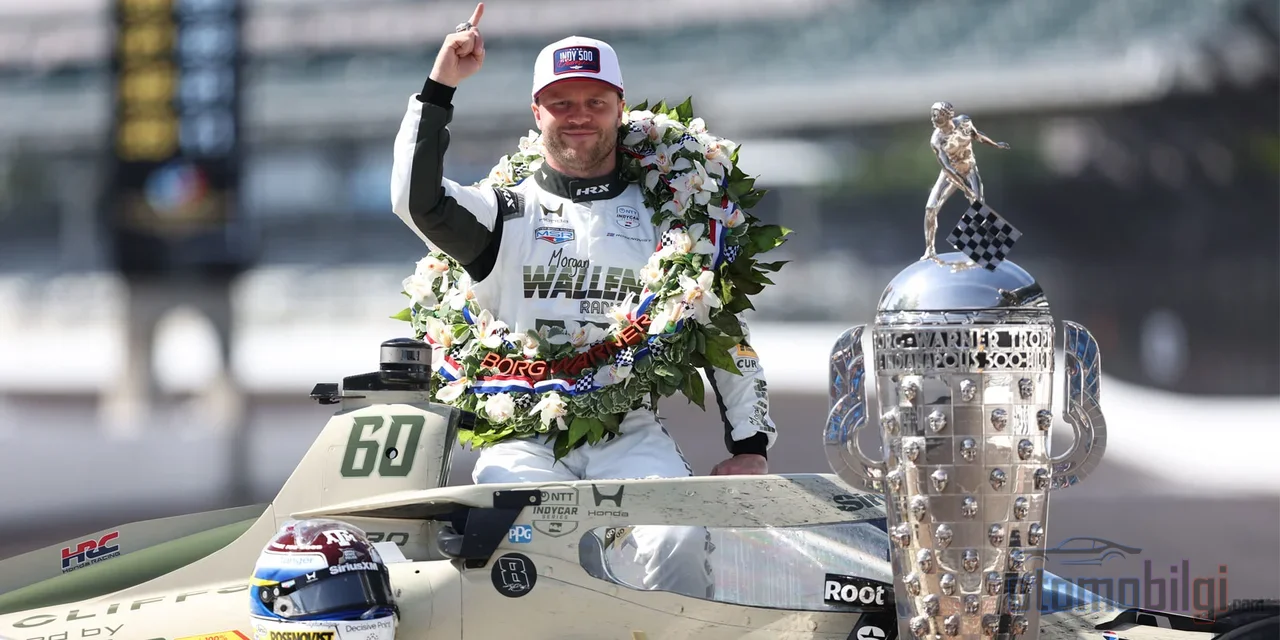
Winning the Indianapolis 500 gives a driver a record-breaking prize purse as of 2026 - a check of up to 4.34 million dollars from a single race - a face engraved on the Borg-Warner Trophy as a permanent monument to victory, and legendary status that lasts a lifetime. The money goes to the team, but the career value of the victory stays with the driver. So what exactly comes out of this victory? Come on, let's break down the numbers together!
Highlights
- 2026 winner Felix Rosenqvist took home a record 4,340,500 dollars from a single race.
- The total 2026 prize fund reached 30,906,400 dollars - a record for the fifth consecutive year.
- The big version of the trophy doesn't come home; since 1988, the winner only receives the 35.6-centimeter miniature replica.
- Rosenqvist's face will be the 113th name engraved on the trophy.
- The share from the first victory in 1911 was 14,250 dollars - how times have changed, right?
How much money does the Indy 500 winner get?
We're talking about one of the biggest automobile races in the world, so the numbers are world-class too. Felix Rosenqvist won the 110th Indianapolis 500, run on May 24, 2026, beating David Malukas by a hair - exactly 0.0233 seconds - and in return pocketed the highest single-race payout in history: Felix Rosenqvist won the Indianapolis 500 after passing David Malukas by a hair - exactly 0.0233 seconds - and in return pocketed the highest payout ever for a single race: 4,340,500 dollars. The previous record belonged to that famous finish in 1992; Al Unser Jr. won by 0.043 seconds. Rosenqvist made history with an even thinner margin. Now think about it: a sum that could be collected across several races of a Formula 1 season, earned in a single afternoon. That doesn't seem like small money to you, does it?
But the really interesting part is the entire fund. The total pool to be shared by everyone racing in 2026, known in English as the purse, reached 30,906,400 dollars. That means the fund has broken a record for five consecutive years. Everyone who races gets a share: the driver who takes pole position gets about 100,000 dollars, the Rookie of the Year gets 50,000 dollars, and a separate payment is made for every lap led. So even a driver who leads mid-race and then drops back doesn't send his wallet home empty.
Does the money really go into the driver's pocket?
This is exactly where the journalist's question comes in: who is that big check written to? The answer is no surprise, actually - the prize money goes to the registered owner of the car, in other words, the team. The driver splits it according to the share in their contract; in the IndyCar world, that share is typically around half. So it would be wrong to say that the full 4.34 million dollars landed in Rosenqvist's account. Also, the winner's share is not a fixed percentage: things like laps led, sponsorship deals, and pole position change the payment. Just like a basketball player's championship bonus depends on their contract - the trophy is the same, but who signs the paycheck matters.
How has the fund grown since 1911?
Let's hop in the time machine for a moment. Ray Harroun, who won the first race in 1911, took 14,250 dollars out of a total fund of 27,550 dollars. A century ago that was a serious fortune, but by today's numbers it looks like a punchline. In 1970, the purse surpassed one million dollars for the first time, and in 1989 Emerson Fittipaldi became the first driver to earn millions. Let's look at recent years:
| Year | Total Purse | Winner's Share | Winner |
|---|---|---|---|
| 2022 | $16,000,200 | ~$3.1 M | Marcus Ericsson |
| 2023 | $17,021,500 | $3.666 M | Josef Newgarden |
| 2024 | $18,456,000 | $4,288,000 | Josef Newgarden |
| 2025 | $20,283,000 | $3,833,500 | Álex Palou |
| 2026 | $30,906,400 | $4,340,500 | Felix Rosenqvist |
The small table above tells the whole story on its own: The commercial power of the Indy 500 has been climbing like a rocket in recent years. The historical totals are impressive too - the total funds distributed since the race's inception amount to roughly 495 million dollars, and the winners' combined share has now exceeded 90 million. The all-time career earnings champion is four-time winner Helio Castroneves; he has collected around 16 million dollars from the Indy 500s.
The Borg-Warner Trophy: the silver sculpture on which your face is immortalized
Now let's turn to the side of victory that money can't buy. The driver who wins the Indy 500 is rewarded with the coolest trophy in history: their own face is engraved onto the Borg-Warner Trophy. Yes, you read that right - the face of every winner since 1936 has been added to this massive silver work, and the first face belongs to the 1936 winner, Louis Meyer. The trophy was commissioned by BorgWarner, which is why it bears that name. Originally costing 10,000 dollars to make, the trophy was valued at 3.5 million dollars in 2013; so it's not just sentimental - it is genuinely a fortune.
With his 2026 victory, Rosenqvist became the 113th name to be added to this collection. The faces have been sculpted by William Behrends since 1990; Will Power's face in 2018 was the 29th work to come from his hands. Just think about it: your face, standing side by side in the same sculpture with drivers who won a century ago. No paycheck can buy that.
So, can the driver take the trophy home?
The short answer: no, and that's the funniest part of the whole thing. That massive trophy stays in Indianapolis; since 1988, the winning driver receives a custom-made mini replica of it. Drivers affectionately call it the Baby Borg, and it stands exactly 14 inches tall, or 35.6 centimeters. So after winning, what you take home is a figurine slightly bigger than a medium-sized statuette. But that figurine is one of the most prestigious badges in motorsport - perfect for displaying on a shelf and telling every guest about it one by one.
How does victory change a career?
One of the truly fascinating aspects of the Indy 500 is this: once you win this race, the winner is no longer just an ordinary IndyCar driver, and their name is written onto a permanent list. Alexander Rossi is a living example of this; he says his victory as a rookie in 2016 changed both his career and his life. Imagine: a driver who hasn't even completed a full season suddenly enters one of the most exclusive clubs in motorsport history.
And of course, there's the financial side too. Winning drivers get personal TV promotion slots, and the money starts flowing from sponsors right after the victory. A win works like a card that strengthens your hand in sponsorship negotiations. But the interesting part is this: even victory is no guarantee in this world. Despite Rosenqvist's 2026 win, it was announced he would leave Meyer Shank Racing at the end of the season - meaning even a driver who has won Indianapolis can end up changing teams. Defending a career is not as easy as having your face engraved on a silver cup.
Legend status: winning four times
A victory's real lasting impact emerges years later. The first to win back-to-back was Wilbur Shaw, in 1939 and 1940. But the real peak is the legendary club of four victories each:
- A.J. Foyt - 1961, 1964, 1967, 1977
- Al Unser - 1970, 1971, 1978, 1987
- Rick Mears - 1979, 1984, 1988, 1991
- Helio Castroneves - 2001, 2002, 2009, 2021
Castroneves also holds a record: the longest interval between his first win and his last win belongs to this name. In other words, the legendary status he earned by winning the Indy 500 carried him for twenty years. That's really what you see when you look at the faces on the cup - not a prize bought with money and done with, but an identity passed down from generation to generation.
Just one race, or an entire economy?
If you want to put the prize money distributed to drivers into perspective, look at this: The Indianapolis Motor Speedway alone contributes roughly $1.058 billion a year to the Indiana economy, $566 million of which belongs directly to the month of May, that is, Indy 500 week. That impact is four times that of an NBA All-Star weekend and about twice that of a Super Bowl. In 2025 there were 350,000 spectators at the track, and the 2026 race reached 6.6 million viewers on screens through 60 hours of broadcasting. The winning driver is merely the most visible winner of an enormous lottery; the real machine turns on a much larger scale.
The 2026 race also summed up the spirit of the event: the most fiercely contested Indy in history with 70 lead changes, Álex Palou on pole, and among the rookies, Mick Schumacher named Rookie of the Year. So the next winner can change every week - but what awaits the winner never changes: a record-breaking check, an immortal face engraved on the trophy, and a legendary title to carry for life.
Frequently asked questions
Does the winner keep the entire check?
No. The prize money is paid to the team, and the driver takes a share according to their contract; that share is usually around half. It's entirely normal for the rest to go toward the team's costs, engineers, and mechanics - victory is a team effort.
Can the big trophy come home?
No, the Borg-Warner Trophy remains on display in Indianapolis. What the driver receives is the 35.6-centimeter mini replica, a tradition since 1988 - the Baby Borg. A small object, but one that carries just as much weight in substance.
Who holds the biggest single-race payday in history?
Felix Rosenqvist. With the 2026 victory, he earned $4,340,500, and the prize fund record climbed to $30.9 million that same year. Both for single-race earnings and for the total fund, the peak currently belongs to this name and this race.
Final word
Winning the Indy 500 may seem like a single day's work, but it actually splits a driver's life in two: before victory and after victory. Even though the money is shared with the team, the face engraved on the trophy and the legendary title won stay with the driver for a lifetime. Which do you think is more valuable - that massive check, or your small face on the century-old silver trophy? My vote goes to the latter, but I'm curious about your thoughts!
Sources
- Winner Purses | Indianapolis 500 Stats
- Indianapolis 500 Purse Soars to New Record
- 2026 Indianapolis 500
- Indianapolis 500 Winner Felix Rosenqvist Earns Record $4M
- Indianapolis 500 2026: Prize Money, Purse Breakdown
- The Indianapolis 500 - BorgWarner
- Sculptor, Engraver Put Talented Touch on Borg-Warner Trophy
- 6 Things To Know About The Borg-Warner Trophy
- Huge Impact of Indy 500 Victory Hits Drivers in Different Ways
- Top-10 Total Earnings | Indianapolis 500 Drivers
- List of Indianapolis 500 winners
- Indy 500 winner Felix Rosenqvist set to change teams