Why Is the Qualifying Battle at the Indianapolis 500 So Brutal?
Share This Page
Qualifying at the Indianapolis 500 is even more brutal than the race itself, because you are out there alone, on an empty track, chasing average speed over four laps with no room for a single mistake. If your qualifying result is good, you start from the front row; if it's bad, or you've run out of attempts, you face watching the biggest race of the year from the grandstands. What truly makes the Indy 500 grueling isn't the race itself, but the question of who makes it onto the grid.
Highlights
- Qualifying is done alone, on an empty track, over four laps based on average speed - no draft, no excuses.
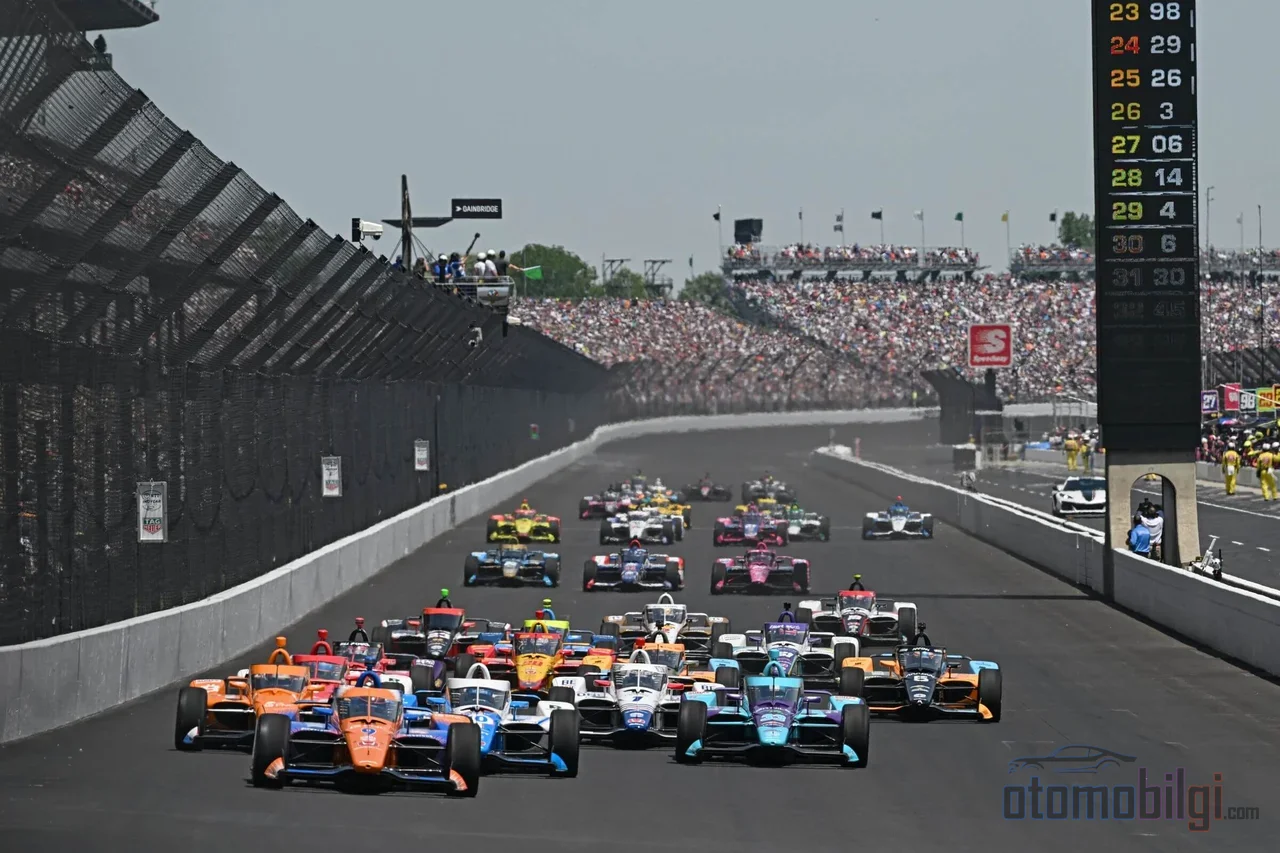
- The grid is limited to 33 cars, with 3 cars in each row; it is the only three-wide grid in IndyCar.
- Álex Palou won the 2026 pole for the second time with an average of 232.248 mph.
- For qualifying, engines are given about 40 extra horsepower with 140 kPa of turbo boost; it is reduced again for the race.
- Taking pole brings 12 points and a $100,000 prize, compared to the 1 point in a normal IndyCar race.
How Indy 500 qualifying works: Four laps, ten miles, zero excuses
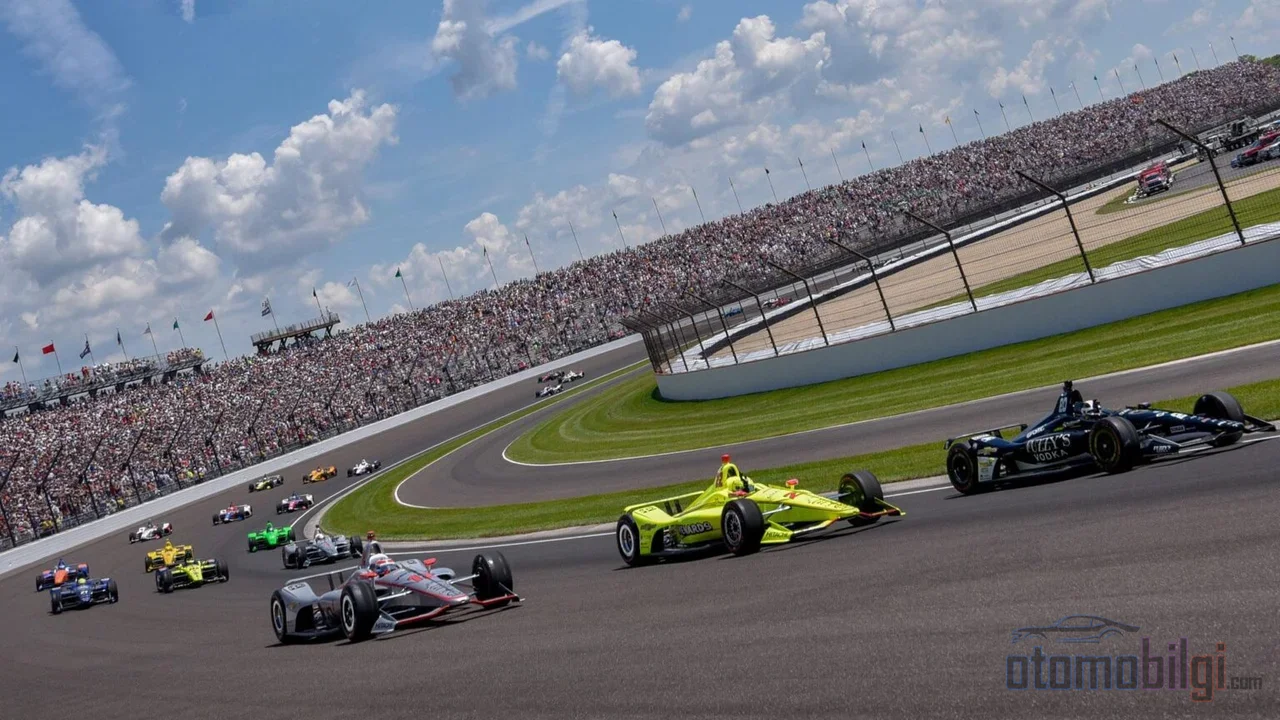
In a normal race, qualifying is a single lap time: go out, put your foot down, come back. At the Indy 500, things are completely different. Here, a single car takes to the track, runs four complete laps - 10 miles in total - around the 2.5-mile oval, and its result is calculated as the average speed of those four laps. One fast lap is not enough; you need to be consistent across all four laps. That is precisely why qualifying uses average speed: the format rewards a flawless performance over four laps, not a single brilliant lap.
This four-lap/10-mile format was first used in 1920 and has been applied the same way every year since 1939. A motorsport tradition approaching a century is a story in itself. Since there are no other cars on track, there is no draft either - meaning you have zero chance of tucking in behind another car and gaining free speed. Everything comes down to your car, your courage, and the conditions the track offers you that day.
There is an even more nerve-wracking side to it: each car is granted two warm-up laps, and your team representative must raise the green flag to start the attempt. If the flag doesn't go up, the attempt is canceled. The moment of decision comes on the second pass in front of the flag stand: you either start the attempt or cancel it. If you have a lap that looks consistent but the track is starting to degrade, weighing that moment is more of a psychology test than engineering.
33 cars, 11 rows, and the hard-to-fill spot
The Indy 500 grid is limited to 33 cars: 11 rows, with 3 cars in each row. It is the only three-wide grid on the IndyCar calendar - and because it is limited, qualifying becomes a matter of destiny. When there are enough entries - that is, when more than 33 cars are registered - things change once the field is full: a car posting a faster time knocks the slowest car in the field out. This event is called bumping, and the car in the slowest position is called the bubble. Regardless of which day the run takes place, if someone faster bumps the car in the bubble, that car goes home. Imagine: a car prepared for months, thousands of kilometers of engineering effort, undone by a single average speed.
So how is the starting order determined? By a blind draw held before the first day of qualifying. That means a fast team could wake up in the morning and find itself at the very end of the line; in that case, it enjoys both the advantage of being the first car to learn the track in the morning and the uncertainty of how the wind will behave.
From Pole Day to Bump Day: The old four-day drama
Up to this point the rules were simple, but qualifying's true identity lay in the rituals built up over the years. For decades, Indy 500 qualifying was a four-day event spread over two weekends. The first day was Pole Day - the day the battle for pole position was fought. The last day was Bump Day: a day of chaos where the field filled up, cars bumped each other out of the grid, and teams rushed to the track with last-minute engine changes.
Then the format began to simplify. It was cut to two days in 2010, and from 2014 onwards two days were used permanently. But even that first era was full of drama: On Pole Day, positions 1-24. were set, and at the end of the day the fastest nine drivers would race again for pole in a 90-minute shootout. On Bump Day, positions 25-33. were filled, and once the field was full, bumping began.
A quick history of the formats
| Period | Highlight of the format |
|---|---|
| 1933-1938 | The run was extended from 4 laps to 10 laps |
| Since 1939 | The 4-lap / 10-mile format has been used every year |
| 2010-2013 | Positions 1-24 on Pole Day, then a 9-car shootout; positions 25-33 on Bump Day |
| 2014-2018 | Bumping was moved to the first day; on day 2, the Fast Nine Shootout determined pole |
| 2019-2021 | Positions 10-30. locked in, with the Last Row Shootout and Fast Nine Shootout |
| 2022-2025 | Last Chance Qualifying, Top 12 and the Fast Six three-session format |
The constant change in this table actually tells of a tension: between the traditional Pole Day/Bump Day identity and a modern, short, TV-friendly two-day format, IndyCar has always been searching for a balance. The rules changed in 2010, 2014, 2019, 2022 and 2026 - meaning the format never settled once and for all; it was debated anew each time.
Today's format: Top 12, Firestone Fast Six and the new Final 15
110th. 110th race spans two days. The first day sets positions 16-33.; determines the positions; the nine fastest cars lock directly into the Top 12 shootout of the second day. The innovation arriving in 2026 is the Final 15 round: 10-15 on the first day. The cars that took part make a single run in reverse order of speed - from 15th down to 10th - and the three fastest advance to the Top 12. In other words, a second door is opening for those who narrowly missed out.
The second day turns into a three-layered battle for pole. The Top 12 round sets positions 7-12., the fastest six advance to the Firestone Fast Six, and in the Fast Six the fastest driver wins pole position, the $100,000 prize and the NTT P1 Award. This prize carries serious prestige: in a normal IndyCar race, pole position is worth a single point, while in Indy 500 qualifying, pole brings 12 points, second brings 11 points, and it keeps decreasing down to 12th. keeps decreasing down to that position. A driver who wins both days collects 42 points - a figure that comes quite close to the 100 points a race winner receives.
In 2026, the winner of this process was Álex Palou: he won pole for the second time with an average of 232.248 mph, followed by Alexander Rossi at 231.990 mph. The Fast Six featured Ferrucci, Malukas, O'Ward, Palou, Rosenqvist, and Rossi. Look at the gap - roughly a quarter of a mile, defining the peak of two weeks of work.
Qualifying engines: Not the same as the race car
Up to this point everything looked like a driver battle, but during qualifying weekend engineers also take the stage. Indy 500 cars, just like the series, use a 1600 cc hybrid engine and can produce roughly 700-800 horsepower depending on the setup. For qualifying, IndyCar raises turbo boost pressure from 130 kPa to 140 kPa on Fast Friday and qualifying weekend - which means roughly 40 extra horsepower. The extra power is obtained by manipulating the turbo wastegates connected to the exhaust system. With a simple analogy: you widen the airway a bit and pump more air into the engine, then restrict it back before the race.
This extra power is not free. For Carb Day and the race, the pressure is lowered back to 130 kPa because the qualifying setup creates a monster tuned to run at full throttle for four laps on track. After the crashes following qualifying in 2015, IndyCar required teams to lower turbo boost pressure back to pre-qualifying levels; speeds were expected to drop below 230 mph. In other words, part of the qualifying speed really comes from the engine's short-lived crazy mode.
What does it mean to go over 230 mph? Even the official format definition emphasizes this: four intense laps, 16 perfect corners, 230+ mph. One of the fastest four-lap qualifying averages in history was 233.947 mph - and in 2019, the average of all 33 qualifiers was 228.240 mph. So even the slowest car in the field maintains a pace most road cars could only dream of.
Unforgettable bump moments: Even the champion can't escape
The best way to describe the brutality of qualifying is the list of victims. In 1993, that year's national champion Bobby Rahal failed to make the race on Bump Day. Think about it: the season's champion had to watch the biggest race of the year on TV. That is exactly the identity of Bump Day - status, name, history; none of them can save a slow average speed.
2019, meanwhile, offered one of the most intense chapters in bumping history. Fernando Alonso failed to make the Top 30 and dropped into the Last Row Shootout; and there, too, he was eliminated. The drama of that day peaked with James Hinchcliffe: after a qualifying crash, he made back-to-back attempts in the backup car but failed to make the Top 30 with an average of 226.956 mph. He entered that race from pole with Simon Pagenaud, but who wasn't on the grid was always talked about. That weekend, Hinchcliffe explained that Indy 500 qualifying is the most intense, most intimidating but most rewarding thing an IndyCar driver will do all season - and he proved it from his own experience.
In 2021, however, the picture was reversed: Scott Dixon, the fastest name at the time, was favored for his fourth pole, while stars like Will Power had dropped to the last-chance round, and names like Sage Karam, Simona de Silvestro and Charlie Kimball were in the Last Row Shootout. Even the name Last Row Shootout sums it all up: the fight to save the last row. From 2020 onward, this session was extended to 75 minutes and multiple attempts were allowed - meaning the margin for error was widened somewhat, but the tension didn't diminish.
Is bumping coming back? The big debate of 2026
Here is the most current and most painful part of the topic: The 2026 format has no bumping. There were 31 confirmed entries, the field stayed below 33, and therefore no one was going to be bumped. The race was run on May 24, and the grid was set with Palou on pole. But this situation raised a serious question mark about qualifying's traditional identity.
IMS President Doug Boles emphasizes that it is certain IndyCar and IMS will not allow fewer than 33 entries, and explains that they are focusing on ways to bring the bumping drama back to qualifying. The challenge is this: Since 2016, more than half of Indy 500 entries have been declining, and in 2027 IndyCar is removing non-charter, that is, open entries from races other than the Indy 500. The charter system preserves Indy 500 bumping while limiting teams to three guaranteed entries. This decision sparked contentious debates; some harshly criticized the removal of open entries, while others see the preservation of bumping as the most valuable aspect of the decision.
The 2027 Indy 500 is said to be heading toward only 33 entries at the moment - if the number doesn't increase, Bump Day drama may once again not happen. Even Andretti Global's situation regarding entries and Abel Motorsports evaluating its first Indy 500 entry strengthens the possibility of a qualifying without bumping for the fourth consecutive year. In short, qualifying's most beloved nightmare is currently fighting for survival, and in my view, this is a story as worth watching as the race itself.
Frequently asked questions
What do Pole Day, Bump Day and Carb Day mean?
Pole Day is the first day of qualifying and the day the battle for pole position is fought. Bump Day is the final day when the field is full and cars knock each other off the grid. Carb Day is the final tuning day before the race; you may also remember it as the day turbo pressure is lowered back to race level, that is, 130 kPa, for the cars.
Is qualifying harder than the race?
In the race, with 33 cars, you battle strategy and race pace over 500 miles. In qualifying, with the track completely empty, you depend on a single average speed for four laps; if you open a corner slightly too late or the wind blows against you, four days of work can go to waste. Which one is harder is debatable, but few would argue that qualifying is the most psychologically grueling job. Which do you find more nerve-wracking: Fighting for position for 500 miles, or being alone with your heartbeat for four laps?
Ultimately, what truly makes the Indy 500 special is not who wins over 200 laps, but the years-long battle over who gets through the gate of that grid. When the next qualifying weekend comes around, don't just look at the pole time - also keep an eye on the names on the bubble, because that's where the real drama lives.
Sources
- Indianapolis 500 Qualifying Format
- Old Qualifying Rules for the Indy 500
- Qualifying Procedure Expanded for 110th Indianapolis 500
- Alex Palou Beats Heat To Earn Second Indy 500 Pole
- Alonso Bounced from Top 30, Faces Dramatic Last Row Shootout
- New year, same Indy 500 qualifying drama for Hinchcliffe
- Boles focusing on the need to bring bumping drama back to Indy qualifying
- IndyCar Eliminates Open Entries Except Indy 500 Starting in 2027
- How IndyCar makes high boost for Indy 500 qualifying
- Big Names to Last Row Shootout, Scott Dixon Fastest For Now