How Did A.J. Foyt Become IndyCar's First Big Star?
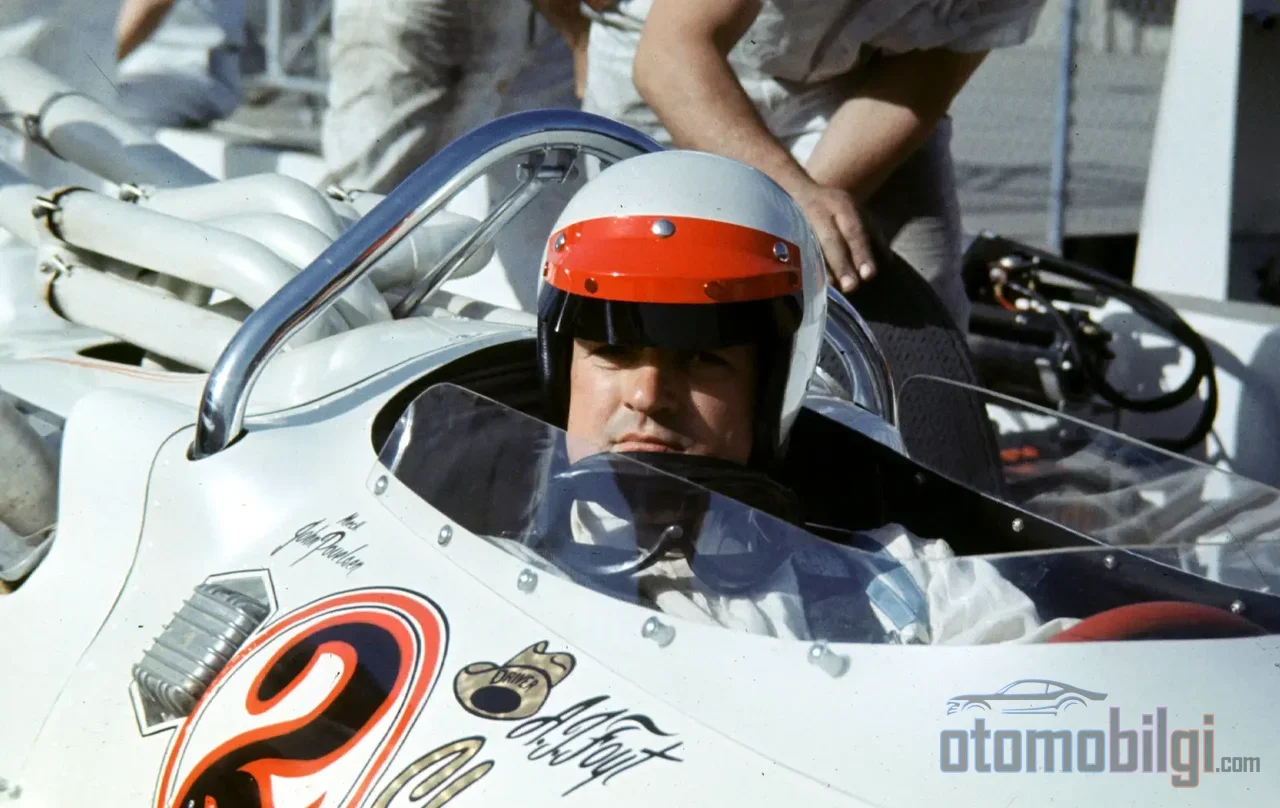
In the dusty soil of Texas, a father gives his three-year-old son a toy race car powered by a lawn mower engine. That boy grows up, and his name becomes one of the greatest competitors in the history of motorsport: A.J. Foyt. So how does a driver manage to become IndyCar's first star? Seven national championships, four Indianapolis 500 victories, Daytona, Le Mans, even Formula 1... Buckle up tight, because this story is no ordinary one.
From Texas to the Track: Foyt Grew Up with Fire
Anthony Joseph Foyt Jr. was born in Houston on January 16, 1935. His father Tony Foyt was a mechanic who owned and raced tiny race cars called midgets; meaning A.J. practically grew up in the garage dirt. He took his first victory as early as age five: he pulled ahead in a match race against local midget champion Doc Cossey at Buffalo Stadium. Think about it, this kid was getting used to the winners' podium even while still on a school field trip.
School couldn't hold him either. He left without graduating from high school and started working as a mechanic, devoting himself entirely to racing. He raced midget cars from age 17 onward. This detail matters, because being able to understand and repair his own car and having deep mechanical knowledge throughout his entire career was what set Foyt apart from his rivals. Not just someone turning the steering wheel, but a driver who knew his car.
Highlights
- 7 national Indy car championships - the all-time record
- 4 Indianapolis 500 victories - the first to achieve this feat
- 67 Indy car victories - the career record
- The only driver to win the Indy 500, Daytona 500 and Le Mans together
Four Indy 500 Victories: How Did Foyt Become a Legend?
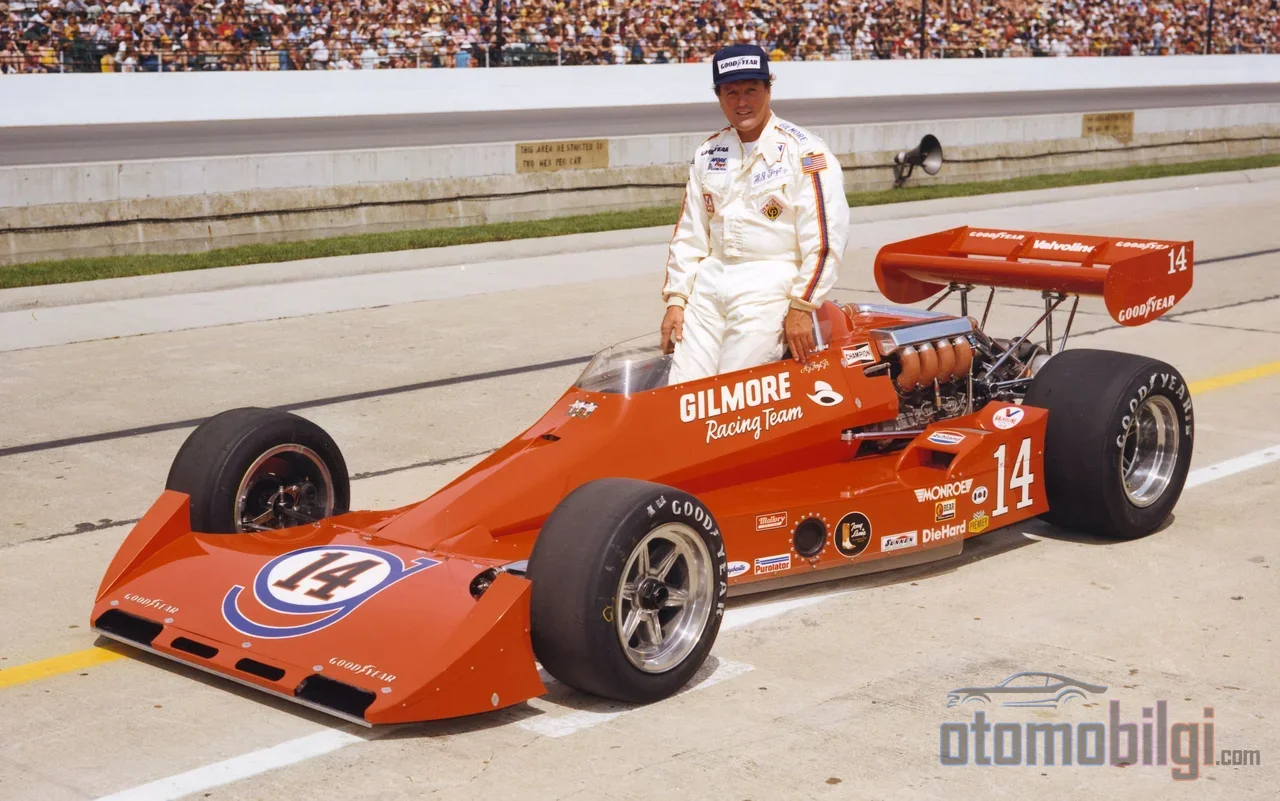
Foyt's four victories written into Indianapolis 500 history are like four separate movie scenes. He reached his first in 1961, becoming the first driver to also claim the points championship that same year. He passed Eddie Sachs by only a margin of 8.28 seconds - the second-closest finish seen up to that day. How the tension just hits its peak, right?
1964: Offenhauser Power
His second victory came in 1964, and its story is interesting: Ford offered him the third car under the Team Lotus-Ford banner. But when Colin Chapman wouldn't guarantee a spare car, Foyt stayed with his roadster powered by an Offenhauser engine - one that sounded quite old but was reliable. He set a record by winning 10 of 14 races during the season and took the Indy 500 as well. That race is sadly remembered for the second-lap accident that claimed the lives of Dave MacDonald and Eddie Sachs - it's worth recalling just how dangerous racing was in those days.
1967 and 1977: Rewards of Patience
His third victory is a story of pure luck and readiness: In 1967, Parnelli Jones's turbocar broke down with 3 laps remaining and Foyt moved ahead. What's more, he won by making his way through an accident involving five cars on the front straight during the final lap. In racing, a bit of luck is needed too, of course. The fourth victory, in 1977, is a story of pure defiance: When he ran out of fuel, he pitted, raised the turbo boost to close the 32-second gap behind Gordon Johncock, and gained 1.5-2 seconds per lap. When Johncock's engine failed, Foyt took the lead and made history. With those four wins, he became the first driver to win the Indy 500 four times - later Al Unser and Rick Mears joined the same club.
| Year | Notable Detail |
|---|---|
| 1961 | By an 8.28-second margin over Sachs; defended the championship |
| 1964 | With an Offenhauser roadster, a season with 10 race wins |
| 1967 | Jones's turbocar broke down; survived the crash |
| 1977 | Raised the turbo boost, passed Johncock |
How Do You Accumulate Records? Foyt's Career Numbers
Foyt's career figures are broader and deeper than you would expect from a racer. In total, he won 7 national Indy car championships (1960, 1961, 1963, 1964, 1967, 1975, 1979) - still the American National Championship record. His Indy car win count stands at the career peak of 67; he finished in the top 10 in about 200 of roughly 370 starts. His career stretches from 1957 to 1992, that is, 35 years! The length of the career, not the show, is what surprises me.
His numbers at the Indy 500 are incredible too: He entered 35 times in a row, led 13 times, and holds the records with a total of 4,909 laps and 12,272.5 miles. His USAC-sanctioned wins are a bonus - he has more than a hundred victories including stock car, sprint car, and midget. 148 in his first Indy 500 in 1958. 148 he spun out; considering he gained experience from that, how great is this momentum, right?
Only IndyCar? Foyt's Versatility
Here is the biggest thing that sets Foyt apart: He did not confine himself to a single discipline. He is the only driver to win all of them: the Indy 500, Daytona 500, 24 Hours of Daytona, 24 Hours of Le Mans, and 12 Hours of Sebring. Like a polyglot speaking the different languages of motorsport, seriously. In 1967, he won Le Mans with Dan Gurney in a Ford GT40 Mk IV and drove almost 18 hours of the 24 himself - not bad for someone who said he had never seen the track before, huh? He is also the only name to win the Indy 500 and Le Mans in the same season that year.
On the NASCAR side, he has 7 wins and 36 top-10 finishes; he won the 1972 Daytona 500 with Wood Brothers Racing and was the only driver to drive the entire 500 miles. In the 1965 Riverside crash, he was injured so severely that doctors briefly declared him dead - he came back to life with chest injuries and a broken back and ankle. He won the IROC championship in 1976 and 1977, and in 1987 he set a closed-course speed record of 413.799 km/h with the Oldsmobile Aerotech. He entered six Grands Prix in Formula 1. In short, he succeeded in just about anything with wheels.
From Driver to Team Owner: Foyt's Legacy
Foyt founded his own team in the mid-1960s and built his own Coyote chassis under the name Gilmore-Foyt Racing between 1966 and 1983. As a driver, he won two more Indy 500s (1967, 1977) and three more championships for the team - meaning he racked up victories both behind the wheel and in the management seat. After retirement, A.J. Foyt Enterprises continued on: Scott Sharp shared the 1996 IRL championship, Kenny Bräck became champion in 1998 and won the 1999 Indy 500 in Foyt's car.
And an interesting detail: IndyCar named its oval championship after him between 2010 and 2012. His hall of fame list goes on and on - Texas Sports, Auto Racing, Motorsports HOF of America, International Motorsports HOF, USAC HOF and more. He is also the oldest living winner of the Indy 500. The debate over whether Foyt or Mario Andretti is better still goes on among fans, and I think that in itself is proof of how great he was.
In short: Who Is A.J. Foyt and Why Is He So Important?
To sum it up briefly, A.J. Foyt was IndyCar's first big star and the most versatile driver in American motorsport: He broke records with 7 national championships and 4 Indianapolis 500 victories, and by also winning the Daytona 500 and Le Mans he became the only figure in history to do so. He was stubborn behind the wheel, mechanically brilliant, and an opponent hungry to win in every car. Finishing in the top 10 at the Indy 500 in five different decades shows he was not just fast but also incredibly durable. Do you think today's drivers could achieve this success across so many disciplines? I think it's hard.