How Did the Indianapolis Brickyard Escape Becoming a Residential Area?
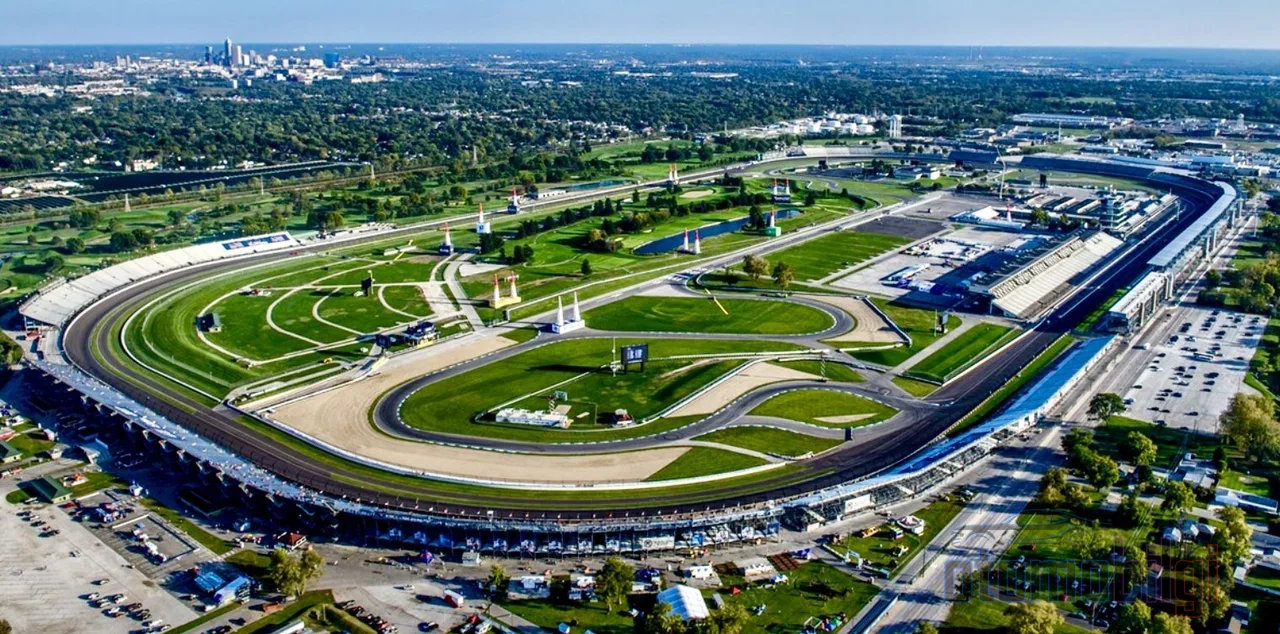
November 1945, Indianapolis. The war had just ended, everyone was trying to return to normal. And for four full years, not a single engine sound had come from the most famous race track in the world. Those arriving from outside describe it: doors rusted shut, wooden grandstands on the verge of collapse, weeds sprouting from between the bricks on the main straight. People in the area were even said to be hunting rabbits in the pit area. I'm serious, rabbits! The Indianapolis Motor Speedway was for sale, and nobody wanted to buy it as a race track; locally, there was talk of the track being parcelled out and turned into a residential development. So how did this story become the road that still today leads to 33 cars circling every May, to the very existence of IndyCar? The answer is tied up in a single name: Tony Hulman.
The Track Abandoned During the War Years
Let's take a brief look at how the story reached this point. the U.S., World War II, on December 29, 1941, the track's then-owner Eddie Rickenbacker cancelled the 1942 Indianapolis 500. What followed was complete darkness: On July 31, 1942, by federal decree, all motorsport was halted for the sake of fuel and tire conservation, and the track was locked up.
An interesting detail: During World War I, the track had served the defense industry with an aircraft repair depot built inside it. Rickenbacker, himself a former war pilot, brought a similar proposal this time too, but it was not accepted - the track was now too small and slow for the new generation of warplanes. So the massive facility simply stood there as an empty space useless even to the government. For four years it received no maintenance at all.
When a test team visited the track in the fall of 1944, the picture was pitiful. Firestone was secretly testing at the track for synthetic tire trials, and the name behind the wheel was the legend Wilbur Shaw, a three-time Indy 500 winner. Shaw lapped in an old Miller car at an average speed of 100.34 mph - he would later describe that run as the longest and coldest high-speed test of his life. But what really stuck in memory was the track's condition: rotting grandstands, the infield turning into a forest, grass growing from the brick joints.
Wilbur Shaw's Persistent Quest
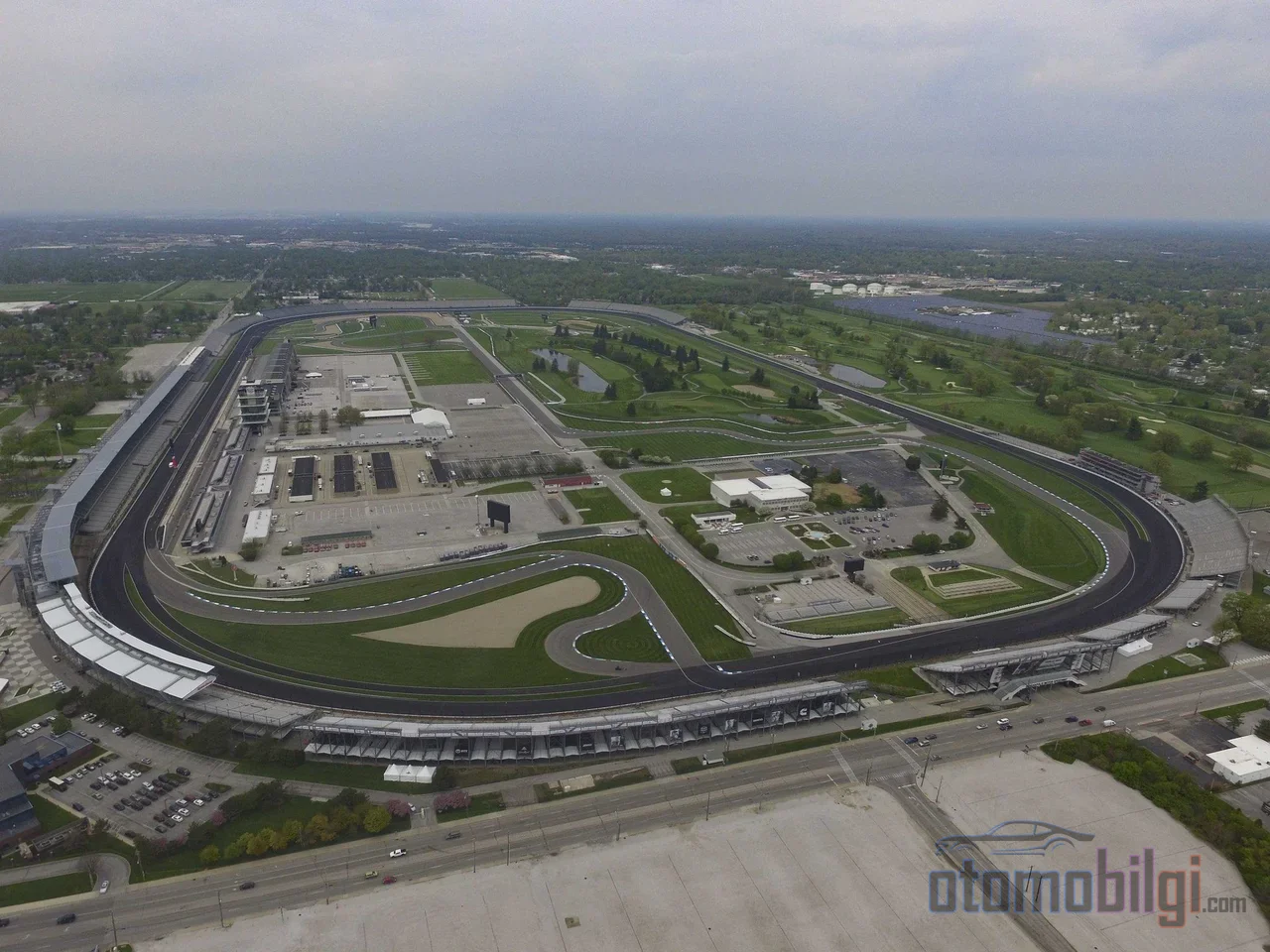
Shaw was not someone who would sit back after seeing such a sight. He had spent the war years in Akron, Ohio, managing Firestone's aircraft division, and he could not remain a bystander to the track's fate. He wrote roughly thirty letters, offering partnerships to companies connected to the racing world. The answers came, but Shaw noticed a problem: the companies were setting up exclusivity schemes that would exclude owners of rival products from the track. In other words, the track could be saved, but with the racing world split in two. Shaw gave up on that - the right decision.
Just as he was about to lose all hope, the investor and old friend Homer Cochran gave him a name: a businessman from Terre Haute, known for buying struggling but good companies and turning them around. Tony Hulman. In early October 1945, Shaw and Cochran sat down across from Hulman in the office of Hulman & Company. And the man at the table was someone who had made a fortune with a baking powder brand called Clabber Girl and had no organic ties whatsoever to the racing world.
Highlights
- Hulman bought the track on November 14, 1945 for $750,000 - almost exactly the amount Rickenbacker had paid in 1927.
- The track was restored in less than five months and hosted the 30th Indy 500 on May 30, 1946. was prepared for the Indy 500.
- An estimated 165,000 spectators watched the 1946 race.
- The Hulman-George family managed the track until 2019, when it was sold to Roger Penske.
Who Is Tony Hulman? From Baking Powder to Motorsport
Anton "Tony" Hulman Jr. was born on February 11, 1901, in Terre Haute, Indiana. As an Indiana businessman, he served as president of Hulman & Company, and was best known for the Clabber Girl baking powder brand. His career had followed a steady upward trajectory: He graduated from Yale's Sheffield Scientific School in 1924, became sales manager at the company in 1926, and in 1931, at only 30 years old, took the president's chair. In his youth, at the age of 17, he had already served in the American Red Cross Ambulance Corps during World War I.
So why would such a man invest money in a dilapidated race track? Hulman's motivations rested on three pillars: His pride in Indiana, his love of the sport, and a sound investment vision. The model in his mind was clear - what Churchill Downs was for Kentucky, the "500" should be for Indiana. There was even an ironic detail: around the same period, Churchill Downs was also for sale, and Hulman turned down that opportunity. So he had the chance to choose between two American icons, and he chose Indianapolis.
There was also a matter of principle. Hulman said he would not draw profit from the track for himself, and would spend all revenue on renewing and improving the facility. But the businessman's logic was also sound: the track must not lose money. In short, not philanthropy, but smart long-term ownership. Much like not selling the old bicycle at home but repairing it and using it for years - just on a somewhat larger scale.
A Deal Closed in a Single Day
So how did the money talks go? On the morning of November 14, 1945, at 11:30, the parties sat down at the table in Parlor Room D of the Indianapolis Athletic Club. Two sides facing each other: on one side Eddie Rickenbacker, on the other Hulman. Hands were shaken around 5:00 in the afternoon - meaning the deal was completed in one sitting, in just a few hours.
There is a detail that makes the price incredibly reasonable. Rickenbacker had bought the track with his partners on July 31, 1927, for $750,000. Eighteen years later, selling it with the added burden of a massive restoration, he demanded only the same amount, $750,000. He waived passing on to the price the expenses he had made in his day - the golf course in 1929, the safety investments. It was a gesture of taking responsibility for the track's fate. (The details of the sale price were never fully disclosed to the public; $750,000 is the believed amount. Also, official records list the sale as November 14, 1945.)
A small footnote: It is said that Rickenbacker had actually planned to reopen the track himself until just before the meeting, but backed out of that decision at the last moment. A single day can change everything in history.
A Miracle in Five Months: The 1946 Reopening
The signature was in place - so what came next? Hulman took over the track presidency; Wilbur Shaw was appointed president and general manager of IMS, with T. . "Pop" Myers as vice president. The company was founded, and then came the really hard part: getting the track ready by race day.
The calendar was merciless. In less than five months, the crumbling grandstands were repaired, the track was cleaned up, and the facility was brought into racing order. On May 30, 1946, the 30th Indianapolis 500 was run: an estimated 165,000 spectators filled the grandstands, and the winning car finished in a time of 4:21:26.70 with an average speed of 114.820 mph. Even that day's pace car had a story to tell - it was a Lincoln Continental Cabriolet, driven by Henry Ford II himself, who drove it at 100 mph.
But the sweetest moment belonged to Hulman. On race morning, he was eating himself up with worry, fearing that no one would come to a race that had been closed for years. When he stepped out onto a crowded street, his heart nearly stopped; and when the traffic locked up at an intersection, he finally relaxed - the gridlocked traffic was proof of just how many people had shown up. With a police escort, he barely made it to the track in time. Just imagine: the man who bought the track barely makes it to his own race.
The Long Legacy of the Hulman-George Family
The purchase was only a beginning; the real story started afterward. Hulman did not draw profit out of the track; he continuously reinvested the revenue back into the facility, and Indianapolis gradually transformed from a fate debated between becoming a housing project into a modern grand arena.
Gentlemen, Start Your Engines!
After losing Shaw in a plane crash on October 30, 1954, Hulman became the public face of the track. He was the one who traditionally delivered that famous command from the starting line - Gentlemen, start your engines! - on race mornings. Hulman passed away on October 27, 1977, at St. Vincent Hospital in Indianapolis, dying on the operating table from heart failure caused by a ruptured aortic aneurysm. His last public appearance was at the 1977 Indy 500 a few months earlier, riding in the pace car alongside A. . riding in the pace car alongside Foyt.
Family Tradition and the Transition to Penske
The baton stayed within the family. Mari Hulman George (born 1934), the only child of Hulman and Mary Fendrich, whom he married in 1926, rose to the chairmanship of the board; she passed away on November 3, 2018, at the age of 83. Her grandson Tony George, continuing the family tradition, took charge of the facility. The family was also remembered for its charitable work: Rose-Hulman Institute of Technology took that name in 1971, the Hulman Center at Indiana State opened in 1973, and there was also a Hulman Links golf course in Terre Haute.
The closing of one era opened a new one: On November 4, 2019, the Hulman-George family announced that it had sold the Indianapolis Motor Speedway, the IndyCar Series, and the IMS Museum to Roger Penske. The price was not disclosed. Tony George's assessment was that the family had taken the track as far as it could.
So How Did Hulman Actually Save the Track?
The short and clear answer is this: On November 14, 1945, Tony Hulman bought the Indianapolis Motor Speedway - then dilapidated and headed for a fate of being parcelled out into residential lots - for $750,000, invested the revenue into renewing the track, and restored the facility in less than five months, making it possible for the Indy 500 to be run again on May 30, 1946. Discovery and organization were Wilbur Shaw's work, while the money and vision were Hulman's; that is why the two are remembered together as the saviors of the track.
Today, the drivers battling for the Borg-Warner Trophy every May, the traditions renewed each year, and IndyCar itself are, in fact, extensions of the deal signed in just a few hours in a living room on that November day. Had it not been for the Indiana pride and common sense of a businessman - and not, as one might say, a Chicagoan with barely any English, sorry, make that an Indianapolitan, who happened to be the president of a baking powder brand - the Brickyard might today be just an ordinary neighborhood. It was one of the best investments in motorsport history, and that $750,000 price tag still seems incredible, doesn't it?
Sources
- Hulman, Shaw Teamed Up To Rescue IMS from Ruin in 1945
- Indianapolis Motor Speedway History - Owners
- Tony Hulman - Wikipedia
- Tony Hulman - International Motorsports Hall of Fame
- Anton Hulman, Jr. - IMS Museum Hall of Fame
- 1946 Indianapolis 500 - Wikipedia
- How Tony Hulman and Wilbur Shaw Rejuvenated IMS, 70 Years Ago
- Tony George says the Hulman family has taken IMS far as we can - Autoweek
- The 1946 Indianapolis 500 Pace Car - Lincoln Club