Toyota Woodland SEMA Concepts Head Off-Road
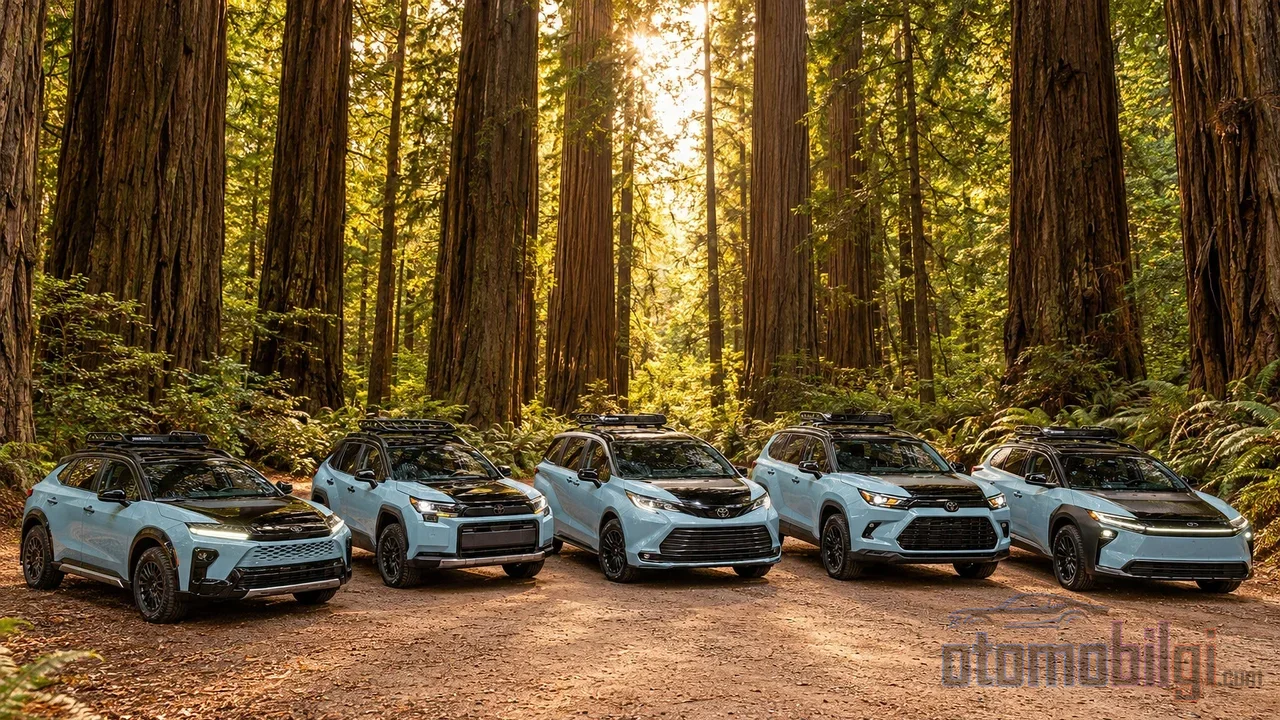
The SEMA Show has always been the center of over-the-top engines, thousand-horsepower mills, and body kits tough as armor; which is why the five vehicles Toyota introduced for its 2026 program seem unremarkable in this crowd at first glance. Yet there is a side to this that deserves some thought: When you pop the hood, what you find are a minivan, a compact crossover, and a battery-electric model. The Woodland concept family, officially announced in a press release on October 30, 2026, is an exercise in taking every one of the segments we call family vehicles and leading them, one by one, off the pavement; and that is exactly where the real question begins. What are these five vehicles saying at SEMA, and what are they not saying?
Five Vehicles, One Idea: The Woodland Family at SEMA 2026
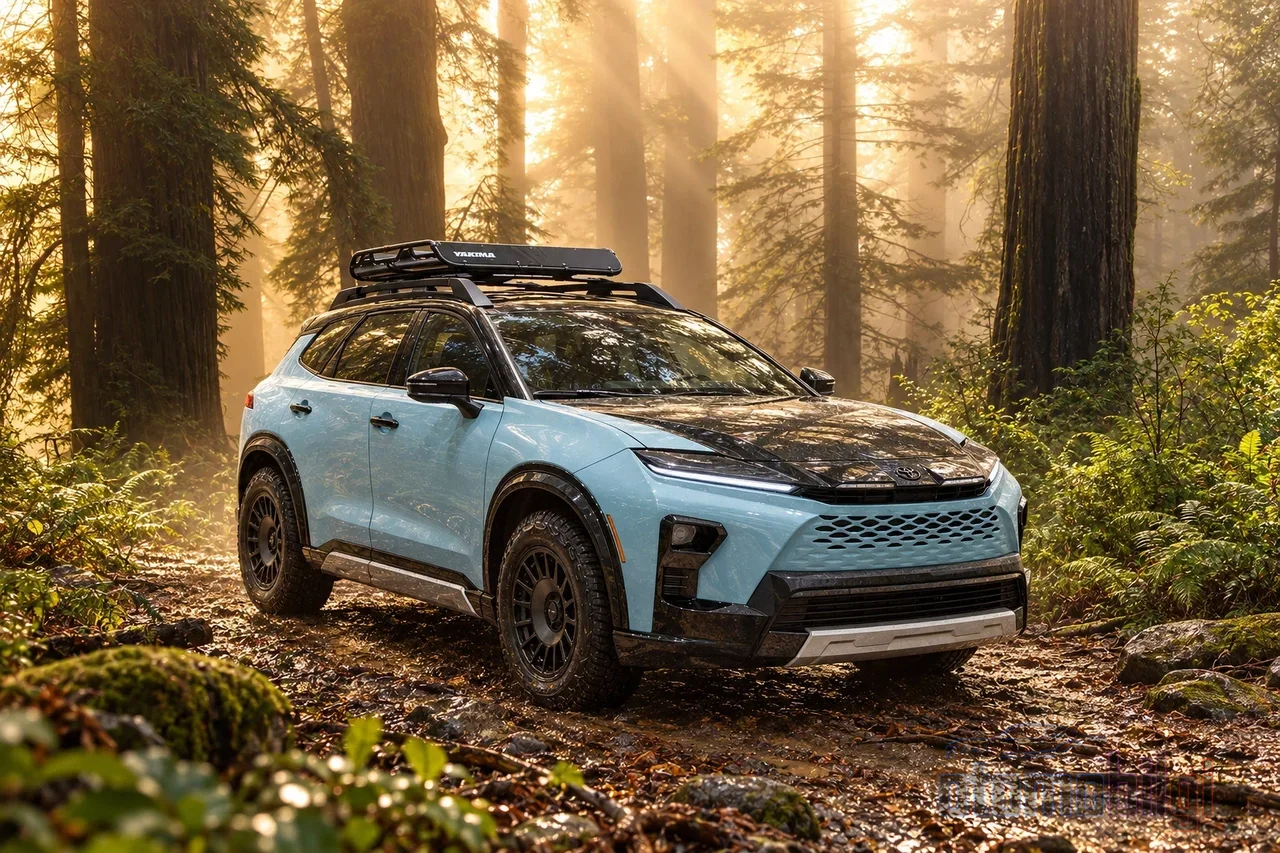
In its official announcement from Plano, Texas ahead of the SEMA Show 2026, which begins on November 3, Toyota gathered five concepts under a single theme: RAV4 Woodland Plug-in Hybrid Concept, Grand Highlander Woodland Concept, Sienna Woodland Concept, Woodland bZ Concept, and Crown Signia Woodland Concept. Their designs were revealed to be the work of CALTY Design Research, the brand's design studio in California. The idea Toyota put behind the concepts is simple: adventure is not a place, it is a lifestyle.
The subtle point here is this: Woodland is not a new Toyota invention. In the US, it has been used for years to name more off-road-focused versions of certain models. The production bZ Woodland is already on sale, and its spec sheet lists 375 hp of system output, standard AWD and X-MODE, ground clearance of roughly 8.3-8.4 inches, and a towing capacity of 3,500 lb. Toyota Canada also announced last month, on October 1, 2026, that it had added the Grand Highlander Woodland Edition to its 2027 model year program. So the concepts are not filling a gap; they are spreading a name that already exists across the whole family.
Highlights
- Toyota introduced five Woodland concepts for SEMA 2026: RAV4 Plug-in Hybrid, Grand Highlander, Sienna, bZ, and Crown Signia.
- All vehicles were covered in Horizon Blue paint inspired by a 1960s palette; the roof and hoods are in contrasting black.
- The design was handled by CALTY Design Research; the vehicles are on display at the SEMA Show starting November 3, 2026.
- Toyota describes them as special prototypes that could void warranties and may not be street legal.
- The Woodland name also exists in production: the bZ Woodland offers 375 hp of power and a towing capacity of 3,500 lb.
Shared Modifications: Which Equipment Do All Vehicles Have?
The equipment lists of the five concepts are almost identical, which sums up the nature of the project well. They all come with raised suspension, that is, lift kits; large fender flares that emphasize the body lines have been added, the wheels are in satin black, and all-terrain tires spin beneath them. Cross bars have been mounted on the roof rails, and a two-tone paint application has been applied to the hood and roof. Every vehicle's tailgate also features a Woodland badge.
Color is the most elegant detail of this project. Toyota covered all the concepts in a special paint called Horizon Blue; the inspiration for this shade comes from the palette the brand used on models like the Stout, Crown and Corona in the 1960s. For an eye that has been following this trade for over three decades, this choice is meaningful: Toyota has chosen to use not a fashion color, but its own historical memory, on vehicles destined for off-road use. For contrast, an opposing black tone appears on the roofs and hoods.
One final technical note: Toyota explicitly states that these vehicles are officially "special prototype projects modified with parts that cannot be sourced from Toyota," that the modifications may void the warranty, and that they may not be legal for street use. This is a long-standing tradition reminding us that not every vehicle roaming the SEMA floor has to become a drivable car.
What Stands Out on a Model-by-Model Basis?
Each of the five vehicles represents a different segment of the family, and Toyota frames this explicitly in its communication. Since detailed technical reviews will not be published until the show begins, the information we have is limited to the highlights of the official press release - but even those highlights make the idea clear enough.
| Concept | Electrification | Highlighted role |
|---|---|---|
| RAV4 Woodland | Plug-in hybrid | The adventurous fit of the compact crossover |
| Sienna Woodland | Hybrid | The family-oriented minivan's fit for off-road use |
| Woodland bZ | Fully electric | Carrying the theme into a battery-electric future |
| Grand Highlander Woodland | Hybrid | One interpretation of refinement and versatility |
| Crown Signia Woodland | Hybrid | The other interpretation of refinement and versatility |
The final pair is presented within an interesting frame: The Grand Highlander and Crown Signia concepts are described as bringing two different interpretations of refinement and versatility to the show. The Crown Signia also has low-profile driving lamps integrated into its upper fascia above the grille - one of the standout visual details among the five. The Woodland bZ, meanwhile, is the strategic leg of the lineup: Toyota dressing its electric line in rough-road equipment can be read as a message that off-road use is being taken seriously on the EV side.
From Badges on the Wheels to the Logo on the Roof Rails
There are also small but meaningful details regarding the equipment list: A Yakima signature is visible on the roof rails, the tires are Yokohama Geolander X-AT, and some wheels carry small Woodland badges. The presence of these names on the concepts shows that Toyota designed the project together with its supplier ecosystem. SEMA is already the showcase for the supplier side of this business; we are not wandering a motorcycle hall here, but the annual group photo of the accessories industry.
Why Does Toyota Care So Much About SEMA?
The presentation of this family at SEMA is no coincidence. Toyota has been in the US market for about 70 years, employs roughly 48,000 people in the country, and has produced more than 36 million vehicles to date across 11 manufacturing plants. The SEMA Show is the place where this market's enthusiasts and the accessories industry are most intensely represented; brands bring new ideas here to gauge public interest. In the past, SEMA concepts were one-off engine-swap experiments; now they have turned into curated exhibitions where a brand gathers its entire product range under a single theme. Toyota's Woodland family is exactly an example of this transformation.
The Woodland five is not even the sole subject of Toyota's SEMA 2026 program. In the same hall, the brand also features Crown Signia GT-S, a performance concept, along with Snowhunter variants consisting of snow-tracked off-roaders. In other words, the Woodland family is a showcase piece; behind it stands a broader SEMA arrangement. But the point that needs to be flagged is this: Within that arrangement, Woodland represents segment diversity.
What Does the "Every Segment Can Go Off-Road" Message Mean?
Toyota's official framing is that the concept family shows that capability can take many forms and expands the brand's modern vision of adventure. In practice, this means presenting, under a single theme, a spectrum stretching from plug-in hybrid to fully electric, and from compact dimensions to the premium segment. The brand's traditional off-road vehicles - 4Runner, Land Cruiser, Tacoma, Tundra - were always limited to a certain crowd: body-on-frame chassis, rugged suspension, the heavy-duty class. The Woodland concepts step outside this map and claim that unibody, family-oriented, electrified vehicles can also have a role off-road.
There are already concrete steps behind this claim: Toyota made AWD standard in models such as the Crown, Crown Signia, and Corolla Cross Hybrid in the 2026 model year. So the concepts are not a moment of birth; they are the public presentation at SEMA of a direction long underway. There is also a visual and hardware language for closing the distance between putting AWD in a family vehicle and taking it off-road: lift kits, all-terrain tires, roof rails.
Will These Concepts Go Into Series Production?
The clear answer is this: Toyota has not announced any production decision for the concepts. These five vehicles are not purchasable products; they are introduced, in the brand's own words, as special prototype projects, with warnings about warranty and street legality. With thirty years of observation, let us say that such projects can follow two different paths. Either they remain showcase pieces and become history on showroom shelves, or public interest is measured and selected parts are added to official accessories channels.
The likelihood of the second scenario should not be underestimated. In the automotive press, the reading on these modifications is quite mild - they are treated almost entirely as visual and simple-equipment-level touches. And there is a logic to this simplicity: The purpose of the concepts is not to show an engineering limit, but to gauge which details are embraced by the public. The deliberate restraint of details features in this reading; if the reaction is positive, some parts could find their way into official sales channels in the future. That said, it must be noted that this is not a plan confirmed by Toyota, but merely an analysis of the reports.
Also, the exhibition starts on November 3; the vehicles have not yet hit the show floor. Specific data such as lift height, suspension details, and tire size have not been shared by Toyota. It would be a reasonable expectation for these gaps to be filled once the physical vehicles are on display.
Conclusion: The Trail-Ready Outlook of the Family Vehicle
Toyota's five Woodland concepts are a measured project compared to SEMA's tradition of excess - but being measured does not make them trivial. Taking a lineup ranging from a minivan to a fully electric crossover off-road under a single theme is the most visible presentation of the brand's "every segment can go off-road" approach. There is no production decision, and no vehicles to be bought on the street; what we have are five reference vehicles showing which direction Toyota is looking. When the exhibition doors open, seeing which concept the public lingers in front of the most will also bring the first signal of the anticipated production decision.
Sources
- Toyota Expands Its Woodland Vision with New Adventure-Ready Concepts at SEMA
- Toyota's 5 Woodland SEMA Concepts Are Giving Almost-Rugged Treatment
- Toyota reveals five new lifted Woodland concepts including an EV
- Toyota's All-Electric Lineup Gains Rugged, Powerful New bZ Woodland SUV
- Toyota Canada Newsroom - Grand Highlander Woodland Edition announcement
- Toyota Reimagines Crown Signia as GT-S Performance Concept for SEMA