Toyota's New 1.5 Hybrid Engine Promises 85 mpg
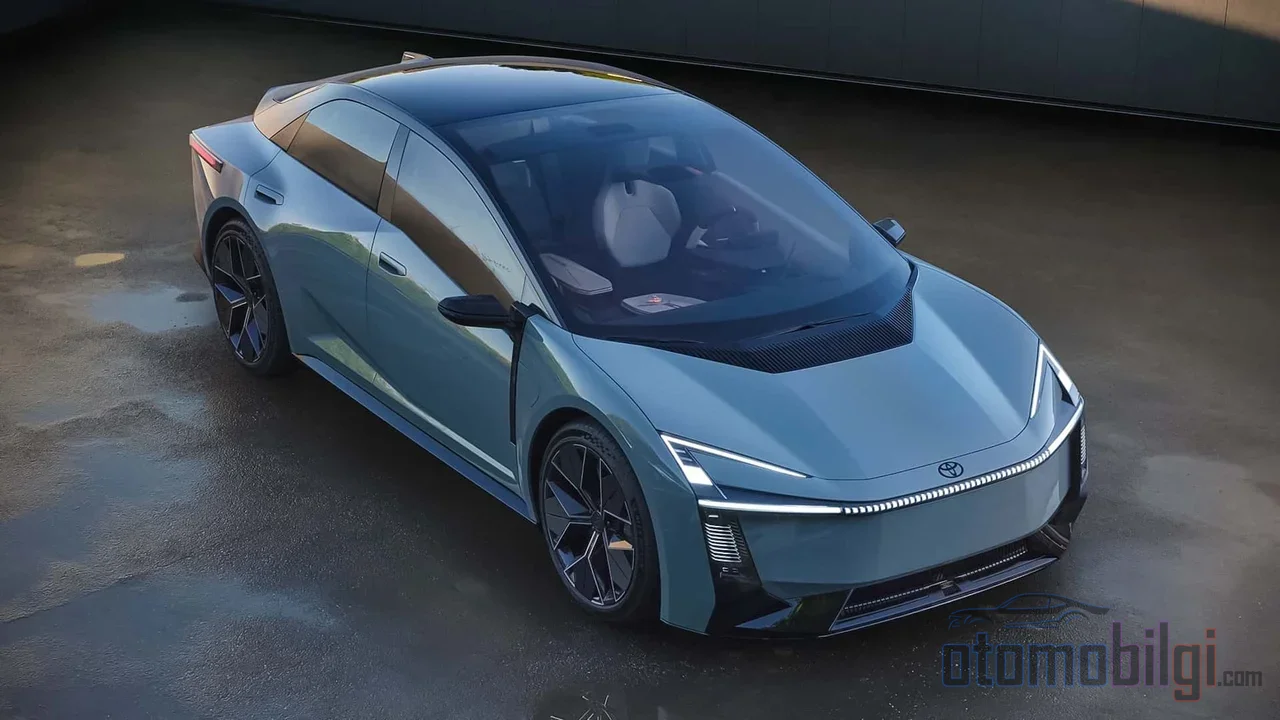
Toyota has announced a move on October 28 that will shape the future of its hybrid systems: a new-generation 1.5-liter engine family and a lighter, more compact hybrid module built around it. While the company's announcement may look like a technical detail, it actually lays the foundation for the Corolla we will see in our garages in the coming years, and much more. So how different is this new unit really from the current engines, and what does the promised efficiency jump mean when put into figures?
The New 1.5 Engine Family Announced on October 28: Naturally Aspirated and Turbo
Toyota's official announcement centers on a four-cylinder 1.5-liter engine family. The family has two separate versions: one naturally aspirated, the other turbocharged. The critical point is that the engine was designed from the ground up to accommodate a turbo; in other words, the turbo is not a later add-on but part of the architecture. This approach shows Toyota's transition from its long-standing philosophy of a single-engine lineup to a modular mindset that produces many variants from a single platform.
The new hybrid module that comes with the engine is the second pillar of the announcement. The components are lighter and more compact; this makes the system usable not only in classic hybrid (HEV) applications, but also in plug-in hybrid and range-extender electric vehicle configurations. There is talk of a new multi-pathway platform announcement following TNGA; meaning the same base could host vehicles at different levels of electrification.
A 10-20 Percent Efficiency Improvement: What Do the Numbers Say?
The most concrete official projection for the new system is an improvement of between 10 and 20 percent in fuel economy. This range, relayed by Toyota's powertrain officials at the Tokyo Motor Show, gains meaning when applied to the current picture. Today, the Corolla Hybrid in its front-wheel-drive version delivers a combined 50 mpg according to EPA measurement; this value is also Toyota's reference point in the compact class. A 10-20 percent improvement corresponds to roughly 55-60 mpg from this base.
To be honest here: there are talks circulating among the public that 70, even 85 mpg could be reached with this new unit. However, no such figure appears in Toyota's official statements; the measurable, verifiable claim is the 10-20 percent range. As someone who has spent years in this business, let us note: there has always been a gap between the projected improvement percentages in press releases and the EPA values in the showroom brochure. It was like that before, and it is like that now. There is also a projection of a 5 percent drop in total consumption with different packaging, relayed by GreenCars; such differences usually stem from differences in measurement scope and specification.
Highlights
- Toyota announced its new 1.5-liter hybrid engine family on October 28; available in naturally aspirated and turbo versions.
- The new hybrid system is projected to deliver an improvement of 10-20 percent in fuel economy.
- The combustion engine delivers 94 hp, while the 30 kW electric motor delivers 40 hp; for a total of approximately 134 hp.
- The system features a modular architecture that enables HEV, plug-in hybrid, and range-extender applications.
- Its first use is expected to arrive in 2028 with the next-generation Corolla.
Technical Table: Where Does the Power Come From, and What Does It Replace?
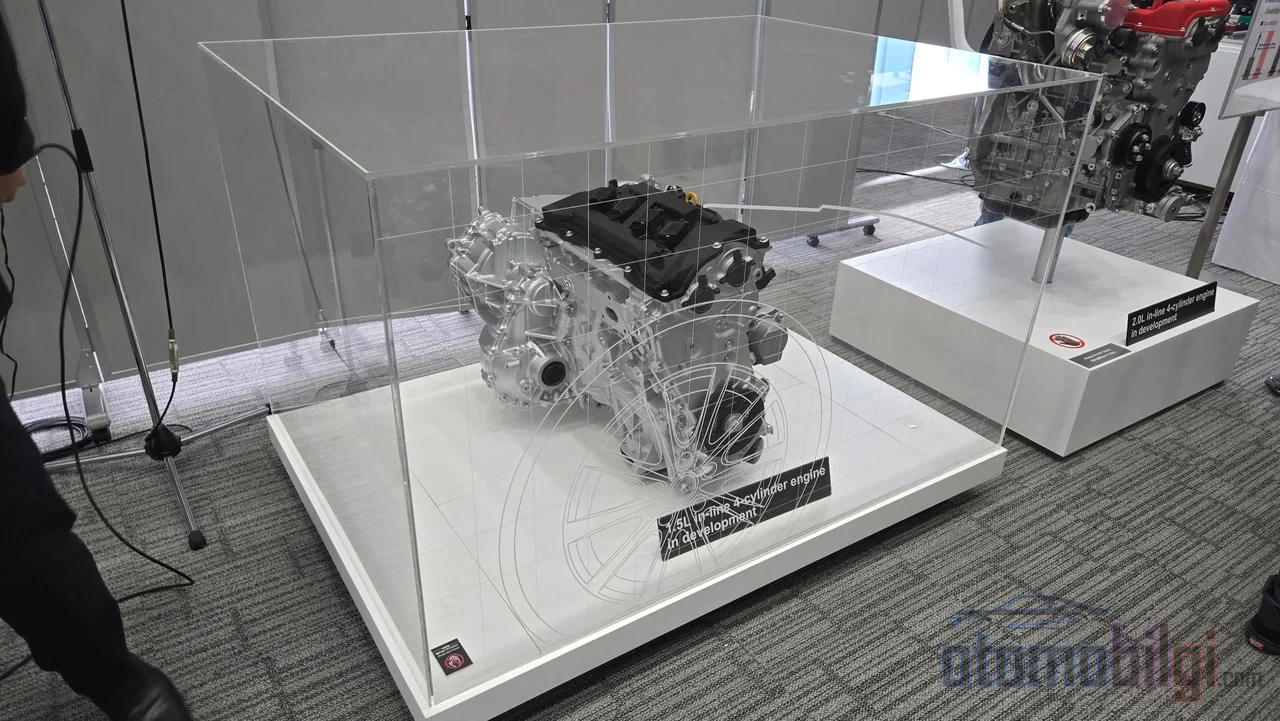
The new system's power distribution shows an interesting balance. The projected output from the combustion engine is 94 hp; to this, 40 hp - the contribution of the new 30 kW electric motor - is added. Total system output reaches approximately 134 hp. Compared to the current Corolla Hybrid's 1.8-liter unit, the combustion engine side has less power; in fact, even the total system output stays below 138 hp. It is clear that Toyota is targeting efficiency rather than power here.
| Feature | Current Corolla Hybrid | New 1.5 Hybrid System |
|---|---|---|
| Combustion engine | 1.8-liter, four-cylinder | 1.5-liter, four-cylinder (NA or turbo) |
| Total system output | 138 hp | Approximately 134 hp (94 hp engine + 40 hp electric) |
| Combined consumption (FWD) | EPA 50 mpg (53/46/50 mpg) | Projected improvement of 10–20 percent |
| Electric motor | Dual-motor hybrid, eCVT | New 30 kW unit |
| Application area | HEV | HEV, PHEV, range extender |
Another remarkable aspect of the system is its expansion potential. As in the current Corolla Hybrid's AWD version, an additional electric motor may sit on the rear axle in future applications; the compact body makes this easier. For those who want all-wheel drive, this is a significant advantage.
2028 Corolla: The New Engine's First Stop
It has become largely clear which vehicle the new engine will first appear in: the next-generation Corolla. The Corolla concept was unveiled at the Tokyo Motor Show and demonstrated that the future platform is compatible with multiple powertrains. The production version expected for the 2028 model year will move to a new platform that opens the door to plug-in hybrid and fully electric configurations in addition to conventional gasoline and hybrid options. A Corolla offered with four different powertrains means unprecedented variety in this class.
The expansion of the engine lineup is also noteworthy. In addition to the new 1.5, there is talk of a new 2.0 that will replace the current 2.0-liter 169 hp unit; moreover, a turbocharged 2.0 capable of producing up to 395 hp is being developed for GR models. This unit may replace the 300 hp 1.6 three-cylinder in the GR Corolla. Toyota's technical management clearly states that internal combustion is positioned as a technology that will be produced until the very end; meanwhile, investment also continues in hybrid, fully electric, and fuel cell areas. This picture is the very essence of the multi-pathway strategy. In fact, within the modular family, there is even talk of a twin-turbo V8 hybrid for the GR GT sports car; although the reliability of the sources is debatable, it shows how flexibly the family has been designed.
Discussions: Is Hybrid Still the Right Way?
Toyota's heavy reliance on hybrid is not without controversy. The math that EV advocates often point out is simple: the annual energy cost of an EV charged at home with solar power can fall well below the fuel cost of an efficient hybrid. For example, the operating difference between a hybrid doing 30 km/l and a fully electric vehicle turns into serious money over the years for high-mileage drivers. Toyota's answer is about infrastructure and usage scenarios: charging infrastructure is not equally mature in every market, and a hybrid offers efficiency independent of infrastructure.
The second criticism concerns power. The projected 94 hp from the new 1.5's combustion engine falls behind the record-setting current 1.8, and the total system output is below 138 hp. Toyota's choice here is deliberate; but the question of whether the new-generation Corolla Hybrid will feel even slower for buyers who value performance is up in the air. Enthusiast comments that hybrid efficiency has seen limited progress over the past 20 years are partially answered by the new system's 10-20% improvement target: not a revolutionary leap, but cumulatively significant.
85 mpg: Real or Not, and When Does It Arrive?
As for the 85 mpg figure in the headline: no official source confirms such a value. The verifiable fact is that Toyota projects a 10-20% fuel economy improvement with the new hybrid system; which points to roughly 55-60 mpg from today's 50 mpg Corolla Hybrid baseline. The new 1.5 engine will replace the current 1.8 unit and most likely the 2.0 as well; the first application is expected in 2028 with the new-generation, presumably 13th- generation Corolla. The system's modular architecture allows the same foundation to be used in HEV, plug-in hybrid, and range-extender electric variations. So the real news is not a single mpg figure, but the fact that Toyota has already laid the groundwork for the engine architecture that will define its next twenty years.
Sources
- Toyota develops next-generation hybrid for future multi-pathway vehicle platforms
- Future Toyota Corolla to Get Next-Gen Hybrid System - Car and Driver
- The 2028 Toyota Corolla - Car and Driver
- 2028 Toyota Corolla: Four Powertrains, New Engines - TopSpeed
- Toyota Fuel-Efficient Cars - Toyota.com
- Corolla Hybrid: Legendary Value, Epic MPG - Toyota Pressroom
- Toyota Corolla Hybrid MPG Guide
- 2024 Toyota Corolla Hybrid - Edmunds