Toyota Will Sell Its Gasoline Engines to Other Brands
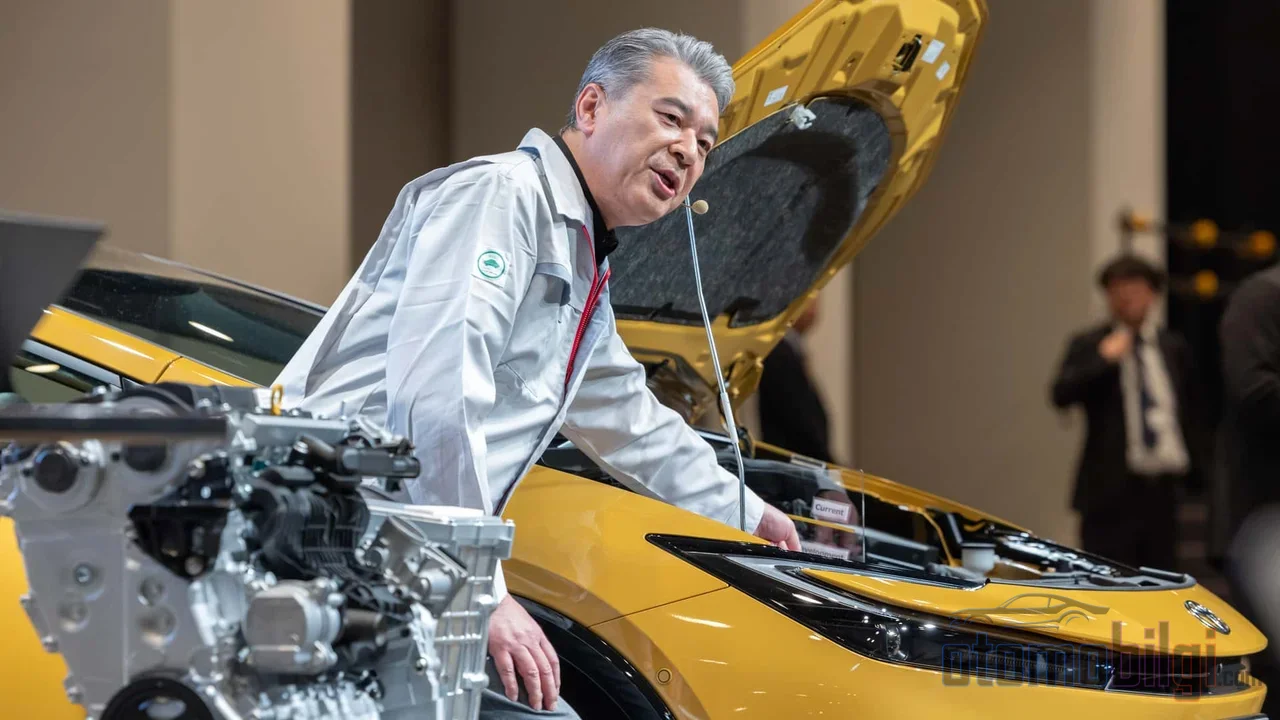
Toyota's claim has always been the same: develop the engine yourself, manufacture it yourself, share it with no one. For someone who has been following this industry for more than thirty years, there is no need to explain how deeply rooted this attitude is; the Japanese manufacturer putting its internal combustion engine under someone else's hood used to be considered an absurd scenario. Now, however, the opposite news is on the table: Toyota is planning to sell its next-generation gasoline engines and hybrid systems to other automakers. So which engines does this decision involve, how does it fit with the industry's trend toward collaboration, and how does Toyota's production plant in Sakarya fit into this picture?
Why is Toyota selling its engines to other brands?
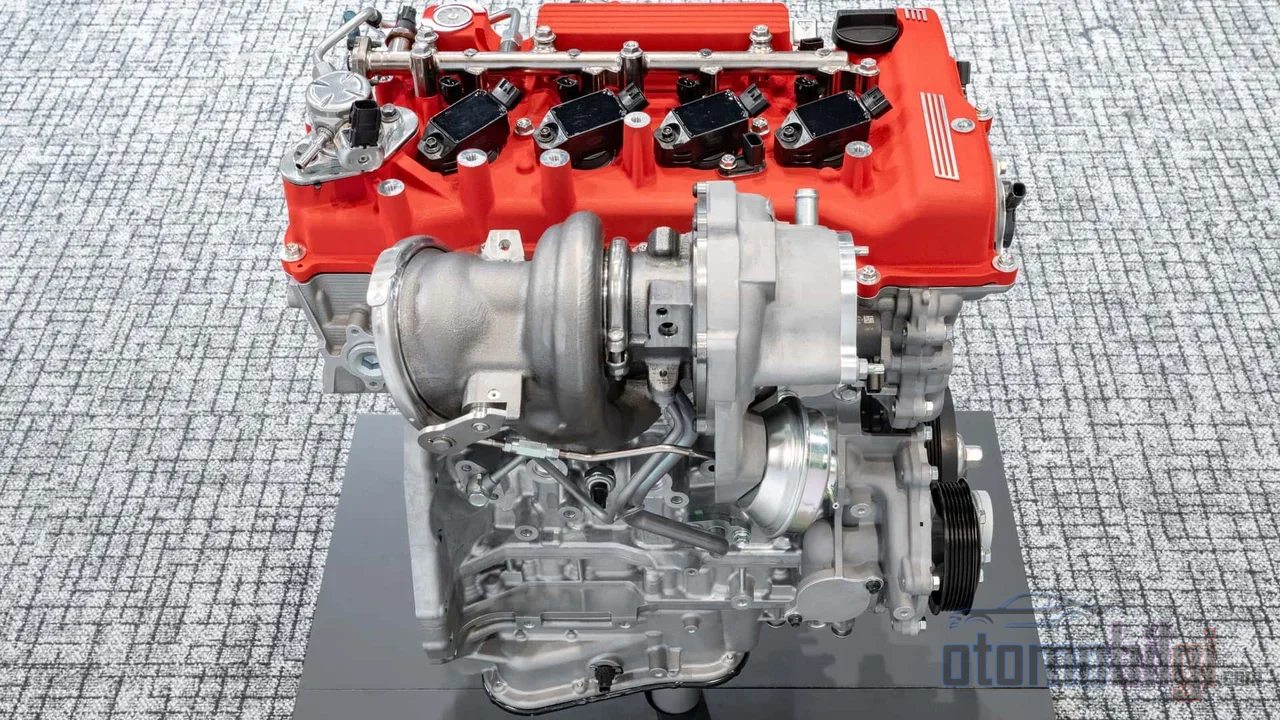
The essence of the plan announced on October 28, 2026 is this: Toyota will open its next-generation gasoline engine family and the hybrid systems offered alongside them to third-party brands. The aim is not merely technical collaboration; it is to triple the revenue generated from engines and hybrid systems by 2032. The size of the reported revenue target varies depending on the outlet reporting it; one source speaks of a $1.7 billion target, while another report presents it as a revenue expectation on the order of billions of euros. The exact size of the figures is not yet clear, but the direction is common: Toyota is now thinking of selling the engine as a product.
This is a quiet but notable change in the revenue model of the largest manufacturer in automotive history. The company maintained its world leadership for the 7th consecutive time with sales of 5.39 million vehicles in the first half of 2026; In the April-June period, it raised its net profit by 75.6% to 1.48 trillion yen. In other words, Toyota does not need to sell engines - it is a choice. This choice can be read as the monetization of a long accumulation in hybrid technology.
Highlights
- Toyota is planning to sell its next-generation gasoline engines and hybrid systems to other brands (October 28, 2026 announcement).
- The new engine family includes 1.5- and 2.0-liter four-cylinder options.
- The goal: to triple the revenue from engines and hybrid systems by 2032.
- The Toyota-Subaru-Mazda engine development collaboration was announced in May 2024; the new strategy is consistent with that line.
- Toyota's factory in Sakarya produces the Corolla and C-HR; a significant portion of production is exported to more than 150 countries.
What technical specifications does the new engine family carry?
The announced family includes two four-cylinder engines, a 1.5-liter and a 2.0-liter, both of which will be offered with hybrid systems. The displacement values alone point to an interesting detail: Toyota is choosing to invest in a conventional four-cylinder architecture at a time when turbocharged small-displacement three-cylinders dominate - an era in which dynos work like a breathing tube. The efficiency target is achieved by treating the engine as part of a hybrid system; meaning the engine is not designed to work on its own, but to perform a choreography with the electric motor.
The preparation for this line is not early. It had already come up earlier, in December 2024, through a company-sourced report that Toyota's newly designed 1.5-liter four-cylinder engine would enter use starting in 2026. In May 2024, Toyota, Subaru and Mazda had shaken hands on new-generation internal combustion engines suited to the electrification era: in the collaboration, Toyota took on the inline four-cylinder engine, Mazda the rotary (Wankel) engine, and Subaru the new-generation boxer engine. The common goal of the three partners was for the engines to also be usable with alternative fuels, for the purpose of carbon neutrality. Today's sales decision looks like an extension of the seed planted back then.
Is engine trading a sign of a new era of collaboration in the industry?
Those who have been around this business a long time know: in the past, the engine was a manufacturer's most sacred treasury. Even joint development was an exception; engine sales were almost nonexistent. Now the picture is changing. The cost burden brought by electrification is making standalone engine development increasingly difficult for small and mid-scale manufacturers. A brand buying Toyota's engine can shift its own engine development budget to electric platforms, while Toyota can amortize its engine investment over a wider volume. A classic supply strategy in which both sides win.
Toyota's sharing of its engine technologies is also consistent with the industry's collaborative tendency. The engine development partnership the company established with Subaru and Mazda was already a concrete example of the debate on extending the internal combustion engine's life into the electrification and alternative fuel era. Engine sales take this one step further: it doesn't remain at collaborative development, it turns into a commercial product. There is still one question left unanswered: Which brands will use these engines? The company did not give a definite customer list; this list will reveal the true scale of the strategy over time.
Is Sakarya connected to this engine family?
As for the Turkiye side, the job needs to be kept honestly limited. Toyota Otomotiv Sanayi Turkiye is located in the Arifiye district of Sakarya; 90% of the shares belong to Toyota Motor Europe and 10% to Mitsui & Co. The plant produces the Corolla and the C-HR, and a large portion of production is exported to more than 150 countries. However, there is not yet an official statement on Sakarya's direct connection to this new engine-selling strategy; where the plant will stand on the production or supply map of the new engine family is not information disclosed by the company. Filling that in with speculation is not the way of this trade.
Still, the general course of the plant provides the background that could fit into this picture. In November 2023, Toyota announced an investment of around 305-308 million euro for the Sakarya facilities, and the production in Turkiye of the batteries for the plug-in hybrid C-HR had also come onto the agenda. The corporate communication also included an announcement that production would take a short break. In the Ministry of Industry and Technology's September 17, 2026 SCT domestic contribution rate declarations, the C-HR 1.8 Hybrid versions are listed; meaning domestic production and the hybrid line still carry weight on the plant's current agenda.
How do Turkiye's production and export figures fit into this picture?
It is no exaggeration to describe the volume coming out of Toyota Turkiye's plant: Since 2002, cumulative exports of 37 billion dollars have been realized, and total production has reached more than 2 million vehicles. In 2025, the plant carried out exports worth 3.9 billion dollars, ranking as Turkiye's second-largest exporting company; total investment has also reached the level of 2.5 billion euros. The 4 millionth vehicle rolled off the line in Sakarya. If a factory feeds a supply chain of this scale, every decision about which engine is produced where directly affects hundreds of suppliers in that chain. That is exactly why where the new engine family will fit into Turkiye's production map is a question that should be closely watched in the period ahead.
The general industry picture also sets the stage for this curiosity. In Turkiye, total automotive exports in the January-September period amounted to 685,671 units; in the first 8 months, production fell to 841,583 units with a 7.3% decrease, while exports maintained their strong course at 27.2 billion dollars. Production is lagging, exports are rising; this divergence keeps cost pressure on the supply chain. The fact that a strategic component like the engine has become a subject of international trade may reopen discussion on the role of such production centers.
Is selling gasoline engines risky in the middle of the electric transition?
This strategy does have a shadowy side. The risks of investing in gasoline engines and seeking revenue through engine trade as the electric vehicle transition accelerates are still being debated in the industry. The criticism that Toyota's success in hybrid and gasoline vehicles has distanced the company from an all-electric future is a well-known part of this debate. The plan to sell engines can be read in two ways: as an effort to turn this success into a revenue model, or as a gamble made against the pace of the electrification wave.
Still, Toyota's position appears solid enough to carry this gamble. The company also tops the list as the world's most valuable automotive brand in 2026; its sales momentum is also strong in growing markets like Turkiye - so much so that in January 2026 it raised its sales to 8,700 units with a 65% increase and secured second place with an 11.5% market share. This picture shows that engine sales can contribute to revenue not as a luxury, but as an additional line item.
So what does this decision mean?
To sum it up: Toyota plans to sell its new 1.5- and 2.0-liter four-cylinder engines, together with hybrid systems, to other brands, aiming to triple the revenue from this item by 2032. Which brands will use these engines has not yet been announced; and no official connection between the Sakarya plant and this engine family has been announced either. But one thing is certain: the engine that has been guarded like a sacred treasury for thirty years is now being placed on an open market table. In the final chapter of the internal combustion engine, the winners may not be those who hold the technology, but those who know how to sell it. Toyota is playing exactly that card.
Sources
- Subaru, Toyota, and Mazda Commit to New Engine Development - Mazda official press release
- Toyota to sell its new gasoline engines to other brands - DonanımHaber
- A $1.7 billion target from Toyota: It will sell engines to its rivals - CNBCE
- Toyota to sell its new-generation gasoline engines to other brands - Motor1 TR
- Toyota did not give up the top spot: It kept the title of the world's best-selling vehicle brand for the 7th time - TC Lira
- Toyota Türkiye made $3.9 billion in exports - CNN Türk
- Toyota - Invest in Türkiye
- 305 million euro investment in Toyota's Sakarya plant - Motor1 TR
- 2026 Domestic Contribution Ratio Declarations for Motor Vehicles - Ministry of Industry and Technology
- Data for the first 8 months of 2026 in the automotive industry - Business Ekonomi