How Volkswagen's Losses Affect Its Plans for Turkiye
Volkswagen Group's worst quarterly results in over 11 years and the letter of intent signed with Dogus Automotive landed in the same week. On one side, an operating loss of 5.9 billion euros, a downsizing program and plant closure debates; on the other, the option of passenger car production in Turkiye being taken under evaluation. These two developments need to be placed on the same table and questioned: will the Turkiye production plan be crushed under this picture, or is it part of the group's search for profitability?
The figures announced in Wolfsburg on October 29 had a severity long unseen in the automotive world. In a quarter where analysts expected a loss of 2.6 billion euros, the result that came in was more than double the expectation; in the same period last year, there was an operating loss of 1.3 billion euros. The interesting thing was that the news from Istanbul arrived just one day before this loss was announced: Dogus Automotive notified the PDP that it had signed a letter of intent regarding the evaluation of options for Volkswagen passenger cars to be produced in Turkiye. The tension between these two developments is the real subject of this article.
What Is Inside the 5.9 Billion Euro Loss?
Let's break down the figures one by one, because the nature of the loss is as important as its size. In the third quarter, the operating loss reached 5.9 billion euros (approximately 6.6 billion dollars); this is the worst quarterly result since the diesel emissions scandal in 2015. The net loss after tax is 2.7 billion euros; in the same quarter last year, the company had recorded a net profit of 3.4 billion euros. Sales revenue fell 6.3 percent to 75.28 billion euros, and global deliveries dropped 14.3 percent to 1.885 million units.
The largest item of the loss is not a loss that requires a cash outflow. Due to weakened future expectations, a 6.4 billion euro write-down was recorded on the Porsche brand value; this is an asset write-off that directly affects operating profit but does not take money out of the till. Adding an approximately 1 billion euro additional write-off due to the loss of market share in China and expenses related to the planned sale of the Osnabrueck facility, the one-off negative impact reached 7.8 billion euros in total.
The truly quiet but historic development took place in China. For the first time since it began operations, Volkswagen announced a period loss in this market. China operations, which generated a profit of 744 million euros in the first nine months of last year, fell to an operational deficit of 113 million euros this year; deliveries declined 38.5 percent to 406 thousand units. On top of that, adding the cost pressure of US customs tariffs reaching billions of euros annually, a picture emerged that strengthens management's hand.
Highlights
- Volkswagen announced an operating loss of 5.9 billion euros in the third quarter; the worst quarter since 2015.
- The largest item of the loss is the 6.4 billion euro Porsche brand value write-down.
- Volkswagen recorded a period loss in China for the first time; deliveries fell 38.5 percent.
- Over nine months, automotive net cash flow rose to 4.4 billion euros; European orders increased 4 percent.
- A letter of intent was signed with Dogus Otomotiv for passenger car production; letter of intent - there is no investment decision yet.
Where Is the 31 Billion Euro Downsizing Program Heading?
For someone who has been through the thick of this business, the real story is not the losses, but the response to them. The group's approximately 31 billion euro cost program covers streamlining the model lineup, organizational simplification, reductions in vehicle and overhead costs, and factory efficiency. The goal is to raise the operating profit margin to the 8-10 percent band by 2030; because it was clearly stated that, excluding special items, a 3.8 percent margin is too low to sustain future investments, according to management's assessment. According to the plan announced in July, the number of models will be cut in half, and the number of options in the remaining models will be reduced by up to 75 percent.
The cost of the restructuring is heavy: layoffs of 100,000 employees worldwide are on the agenda. In Germany, the closure of some facilities, including three Volkswagen factories in Hannover, Emden and Zwickau as well as the Audi plant in Neckarsulm, is on the table; but these decisions have not yet been finalized. Union opposition is fierce, and it is reported that the plan could lead to strikes starting from the beginning of next year. For someone who has seen that such a program could not even be put on the table in the German automotive industry in the past, this single sentence shows how much the picture has changed.
Is There Good News Amid the Bad?
The picture is not monochrome. In the first nine months, automotive net cash flow rose from 1.8 billion euros to 4.4 billion euros; the 145 percent increase shows that operational liquidity is still strong. In Europe, orders reached 3 million units in the first nine months with a 4 percent increase, fully electric orders rose 39 percent, and an order backlog of approximately 1.1 million units had formed by the end of September; 40 percent of it is electric. For the Electric Urban Car Family, there are nearly 150,000 orders.
Nevertheless, the same management emphasizes that electric vehicles still yield lower earnings compared to internal combustion ones, and that this puts pressure on profitability. The 2026 targets were revised downward in mid-September: sales revenue of approximately 315 billion euros, an operating profit margin of at most 1 percent, and an automotive investment ratio of 11-12 percent. In short, the company is not burning cash, it is generating cash; but it is not earning enough profit. All investment decisions pass through the filter of this dilemma.
What Does the Letter of Intent Mean, and What Does It Not Mean?
First, let's clarify what it is not: a letter of intent is not an investment decision. The wording used in Dogus Automotive's disclosure to the Public Disclosure Platform refers to a letter concerning the evaluation of options for Volkswagen passenger brand cars to be produced in Turkiye. In other words, there is no factory contract on the table; there is a study, an option, and a preliminary step.
The historical weight of this step, however, comes from the Manisa experience. In 2019, a factory in Manisa worth around 1 billion euros with an annual production capacity of 300-400 thousand vehicles was being discussed; The project, presented as the largest Turkish automotive investment in the last 22 years, envisages 4-5 thousand jobs, with the Passat and Superb to be produced there. In October 2019, Volkswagen postponed the final decision following the reactions to the then-operation, and in July 2020 suspended all its new investments, including Turkiye. Today's letter is the first official move after this six-year gap; that is why it carries news value.
The tension here is also this: while the group's restructuring plan foresees halving the number of models, trimming options, and shrinking its industrial footprint, adding a new production country seems at first glance to run counter to that logic. Although the contradiction is not entirely apparent -a location logic that lowers production costs within a lineup without classic segment sedans can be constructed- no concrete strategy has been announced yet and the question remains open.
Where Does the Turkiye Market Stand in This Picture?
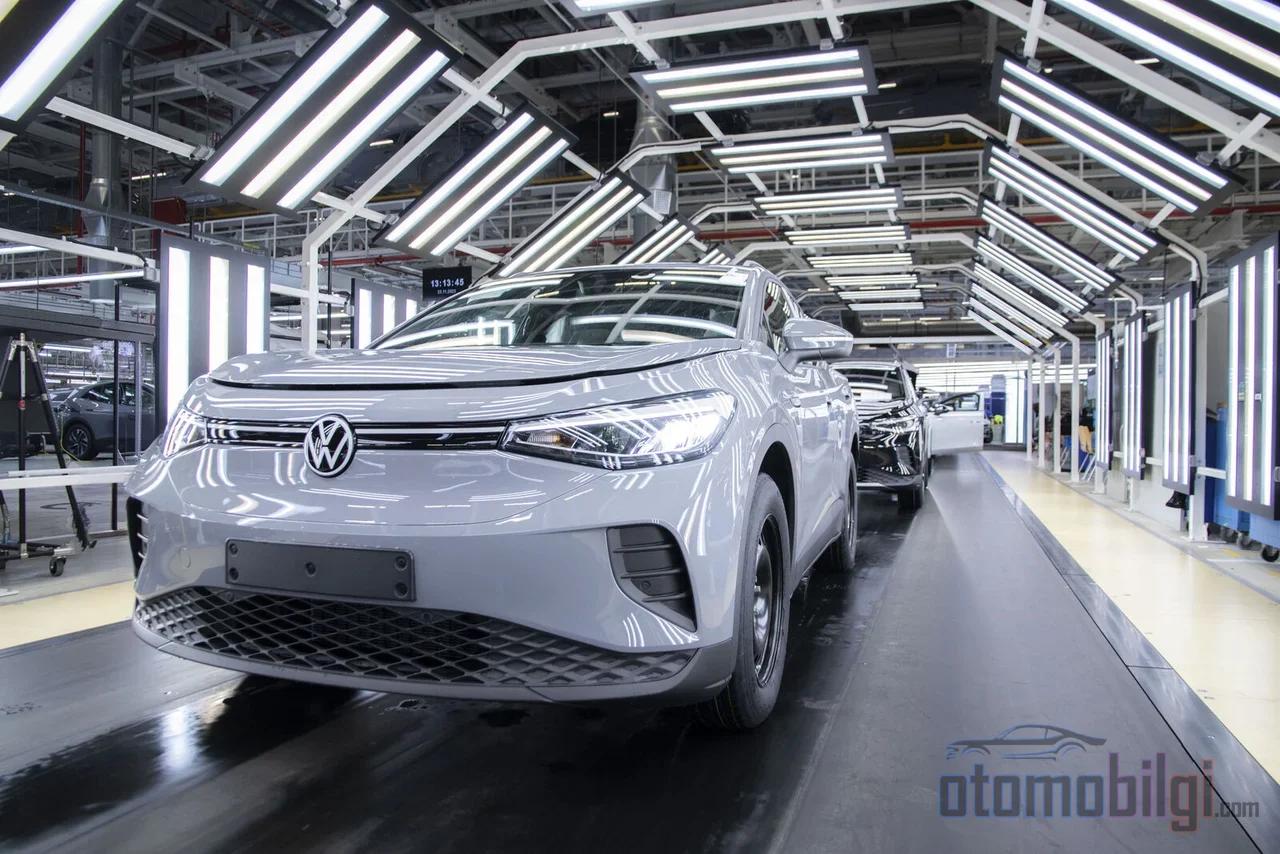
The Turkiye automotive industry itself is not going through a comfortable period either. In the first nine months, total automotive production fell 6 percent and exports 11 percent; as of January-August, production dropped to 841,583 units and car production shrank 19 percent in the first 8 months. In contrast, the export front is holding strong: in the first 8 months, automotive exports rose 2.5 percent, reaching 27.2 billion dollars; the sector set a historic record of 41.5 billion dollars in 2025, and the 2026 target was set at 43.7 billion dollars.
| Factory | Production (January-August 2026) | Share |
|---|---|---|
| Oyak Renault | 197,251 units | 43.1% |
| Toyota | 126,888 units | 27.7% |
| Hyundai Motor Turkiye | 106,380 units | 23.2% |
The factory-based table shows that Turkiye maintains its position as an export base: Oyak Renault continues its leadership, and the Clio was the best-selling car in the first half of the year. Although production has declined, the existing infrastructure, workforce experience, and export logistics are arguments that a group like Volkswagen would keep in mind in a location evaluation. The real gap lies in the remaining void in passenger car production.
Can the Plan Stay on Track? The Thresholds That Will Determine the Answer
The honest answer to the question is this: a letter of intent is an intention, not a plan; and whether the plan stays on track depends on a series of decisions to be made in Wolfsburg. There are concrete thresholds to watch in the coming months:
- The outcome of union negotiations: if the downsizing program moves into strikes from the beginning of next year, all new investment discussions fall behind on the agenda.
- The model lineup decision: only when it becomes clear which models will stay and which factories will close does the place of the Turkiye option within this structure become meaningful.
- The concretization of the letter: whether the option evaluation moves on to the feasibility, site selection, and product assignment phase is the first sign that will show the distance between intention and project.
- The China and customs front: whether delivery losses are deepening will determine how intensively the group pursues capacity outside Europe.
My reading is as follows: For Volkswagen, Turkiye is now part of the cost math, not the growth story. Thirty years ago, such a letter would have come to the table with capacity and market share calculations; in today's context, the calculation is based on which location can close the profitability gap in Europe with which product. Cash flow is strong, European orders are rising; but in the middle of a year when the margin target has been lowered to 1 percent, under the shadow of a 31 billion euro savings program, no investment decision is made early. The letter of intent marks the track; but the locomotive will be drawn by the unions, the model decision, and the China picture. The coming months will show whether these two developments are parts of the same story or two headlines trampling each other.
Sources
- Letter of intent signed between Doğuş Otomotiv and Volkswagen for production in Türkiye - AA
- New initiative for Volkswagen's production in Türkiye - Bloomberg HT
- Volkswagen announced its largest quarterly loss in 11 years - Foreks
- Volkswagen announced a 5.9 billion euro loss in the third quarter - 10Haber
- Volkswagen's operating loss in Q3 2026 exceeded 6.5 billion dollars - Paratic
- OSD - Automotive Industry Association, first 9 months of 2026 data
- Automotive Factory Production Figures August 2026 - Araclo
- Record 41.5 billion dollars in automotive exports in 2025 - Ministry of Trade
- Volkswagen's Türkiye factory decision and postponement - BBC Turkish (2019, background)
- Volkswagen plans to halve its model count - Foreks (10.07.2026)