Tofaş Charts a Roadmap for 660,000 Vehicles from K9 to Doblo
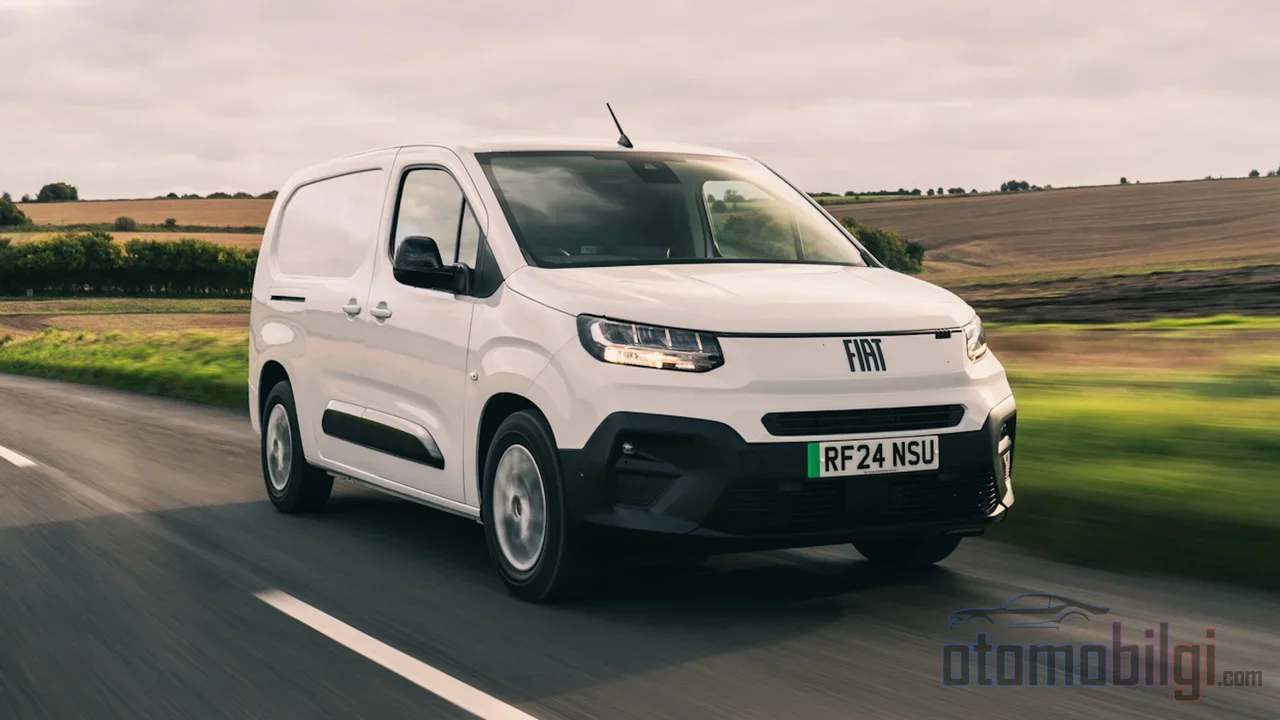
On Monday, the line restarted at the Tofas plant in Bursa, and the first vehicle off it was the Fiat Doblo. While the button was pressed for a model returning to Bursa after three years, the real point was not a single vehicle but the first step of a $300 million investment and a production roadmap running until the fourth quarter of 2034. What do the figures of the K9 project say, what will the factory produce next, and how will Omer Koc's new model talks and the Made in EU debate affect this picture?
What Is the K9 Project and When Did It Enter Series Production?
The K9 project is based on the manufacturing agreement signed between Tofas and Stellantis in September 2025. The investment, worth approximately $300 million (also reported as 256 million euros at the time of the agreement), sets up a new line at the Bursa facility enabling multi-brand light commercial vehicle production. Series production began on Monday, October 26, 2026 with an official ceremony.
Attending the ceremony were Industry and Technology Minister Mehmet Fatih Kacir, Bursa Governor Erol Ayyildiz, Commission Chairman Mustafa Varank, Tofas CEO Cengiz Eroldu, Koc Holding Chairman Omer Koc, and Stellantis COO for the Middle East and Africa Samir Cherfan. The symbolic moment of the ceremony was the first Doblo, with Minister Kacir at the wheel, being driven off the line.
Highlights
- Series production started in Bursa on October 26, 2026; the first vehicle off the line was the Fiat Doblo.
- The investment size is approximately $300 million; annual additional capacity is 100,000 vehicles.
- The same line will produce five models: Doblo, Berlingo, Combo, Rifter, and Partner.
- Production of 660,000 vehicles by the fourth quarter of 2034 is targeted.
- The localization target is around 50 percent; approximately 20 percent of production will be exported.
How Are Five Models from Four Brands Produced on the Same Line?
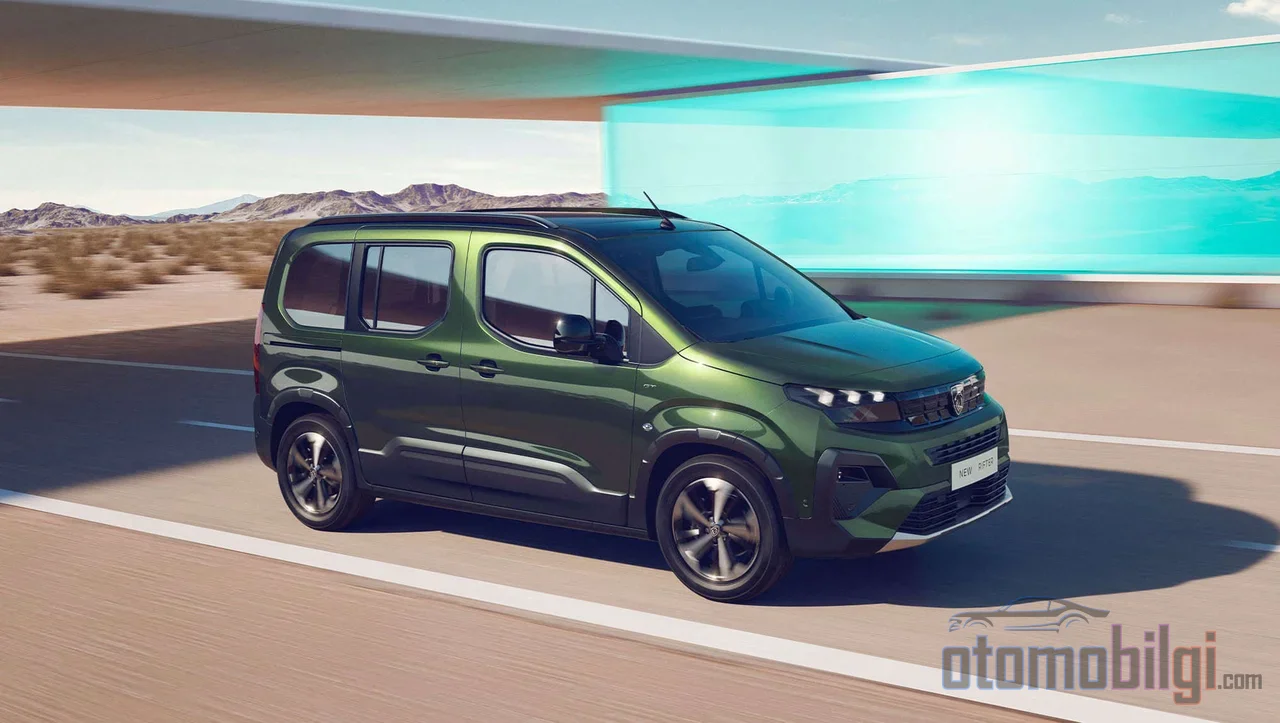
The most striking aspect of the K9 line is that five models belonging to four different brands will be produced in a single facility. In this approach, the body and mechanical base are shared, while the brands are given distinct identities at the level of front panels, interior, and equipment. This multi-platform logic, long practiced in the automotive industry, has moved considerably away from the old notion of a separate factory per brand.
| Brand | Model to Be Produced on the K9 Line |
|---|---|
| Fiat | Doblo |
| Citroën | Berlingo |
| Opel | Combo |
| Peugeot | Rifter |
| Peugeot | Partner |
The Doblo's Return to Bursa
For the Doblo, this is a homecoming. The second generation of the model, whose production started in Bursa in 2000, was also produced at this facility between 2010 and 2022-2023, and the engineering development processes of that generation were completed entirely at the Tofas R&D Center. The model, whose production ended in 2023, returned to the line three years later; in the Turkiye market, it reached sales of over 600,000 units in 26 years. In the eyes of light commercial vehicle users, the portability and durability of the Bursa-built Doblo is already a proven reference.
The Roadmap for 660,000 Vehicles: Capacity, Localization, and Export Targets
According to the contract details, under the K9, the production of approximately 660,000 vehicles is targeted by the end of 2034. CKD (completely knocked-down kit) production is not included in this target. The allocation of the additional annual capacity of 100,000 units is also clear: 80 percent of the vehicles will go to the Turkiye market, while the remaining 20 percent is planned for export. In terms of the domestic supply chain, the picture looks promising; around 100 local suppliers will join the production process, and the local content rate is aimed to reach around 50 percent.
On the employment side, 1,000 new job opportunities are on the table. Another important point is that the new line will be built compatible with a multi-energy platform: this way, the door remains open for electric light commercial vehicles to also be produced in Bursa in the future. At a time when electrification in the light commercial segment is accelerating, the infrastructure being ready for this scenario from today is a detail that strengthens the plant's hand.
What Production Volume Will K0 and K9 Reach Together?
The K9's story is not a standalone one; the real scale emerges when read together with the existing K0 project. With an investment of 386 million Euros, the K0 started production at the end of 2024, plans to produce around 1 million units by 2032, and has the goal of exporting 230,000 units annually to North America as the Ram ProMaster City starting from 2027. When the K0 line's capacity of around 100,000 units combines with the K9's 100,000 units, the plant's annual finished vehicle production reaches 230,000-250,000 units. Tofas CEO Cengiz Eroldu confirmed that if the K0 continues at full capacity, annual production will rise to 250,000 units.
Another figure Eroldu provided summarizes the company's long-term approach: The Tofas R&D Center, with over 600 employees, has been allocating around 3 percent of its revenue to R&D for about 20 years, and patent applications have approached 300. The era when production in Turkiye only evoked images of an assembly line is behind us; today, the picture shows a collaboration model in which engineering is also carried out in these lands.
What Did Omer Koc Say About New Models and Reciprocity?
The strategic messages behind the ceremony were concentrated most of all in Omer Koc's statements. Koc stated that the investment made in Tofas over the last five years has reached 1 billion dollars, half of which was allocated to R&D and innovation; he positioned Tofas as one of Stellantis's leading production and R&D centers. More importantly, he shared that negotiations with Stellantis regarding new models are ongoing. This statement, which goes beyond the 660,000-vehicle target and means that additional models are on the agenda to fill the plant's capacity, is a sign that the K9 exceeds its long-term commitment on paper.
Koc's second message was directed at the protectionism on Europe's agenda. He pointed out that the Made in EU approach carries the risk of disregarding the 30-year Customs Union relationship between Turkiye and the EU; emphasized that steps within a reciprocity framework may be inevitable to preserve production and engineering capacity, and underlined the need for mechanisms that will grow the domestic market and make investments attractive.
Why Is the Made in EU Debate Critical for Turkiye?
Behind this lies the European Commission's Industrial Acceleration Act proposal, announced on March 4, 2026; its aim is to create a shield against third countries, primarily China. If the definition is kept narrow, the possibility of Turkiye being left out of this system was also at the center of Koc Holding Automotive Group's warning at the end of September 2026. It is known that Turkiye's automotive sector is holding talks with the EU in order to fully benefit from the Made in Europe system. For a facility producing for European brands like the K9, this debate is not academic; it is a matter directly concerning its export future.
Market Size and the Share of State Incentives
The figures given by Minister Kacir at the ceremony are enough to explain why this investment came to Turkiye. Annual car sales in Turkiye rose from 300,000 at the beginning of the 2000s to 1.5 million; last year, a record 41.5 billion dollars in automotive exports was achieved. Over the past 23 years, 1.6 trillion lira in incentives was provided to 3,857 automotive projects; under the HIT-30 program, 9.5 billion dollars in support is foreseen for the electric vehicle and battery fields. Kacir also touched on the participation of approximately 100 local suppliers in the project, emphasizing the localization dimension.
Mustafa Varank, on the other hand, offered a more political reading: He argued that this production decision in Bursa, while protectionist policies strengthen in Europe, is an indicator of the confidence placed in Turkiye's production capability. From the Stellantis side, Samir Cherfan said along the same lines that the K9 will strengthen Tofas's position within the global production network and that the electric light commercial infrastructure will respond to future needs.
The Meaning of the K9: What Does It Say Beyond the Numbers?
Reading the K9 project solely as an investment news item falls short. The target of 660,000 vehicles, with a balance of 80 percent domestic market share and 20 percent exports, shows that the project primarily addresses Turkiye's substantial light commercial demand; facing Europe's protectionist tendencies, not targeting exports more ambitiously than today is a self-justifying choice. When Doblo's return to Bursa after three years, the same line serving four brands, and the electric production infrastructure being kept ready are put together, the picture that emerges is this: Tofas is on its way to becoming one of the flexible bases in Stellantis's production network surrounding Europe. Omer Koc's pointing to talks on new models and openly voicing the reciprocity debate reminds us that the two questions that will determine the factory's next decade, namely capacity utilization and market access, have not yet been clarified. The first Doblo coming off the line is a beginning; the rest of the story will be written until 2034.
Sources
- Stellantis and Koç Holding Strengthen Tofaş and Deepen Their Partnership in Türkiye
- $300 million new investment in automotive
- $1 billion invested in Tofaş over the last 5 years
- Tofaş's $300 million K9 investment has entered production!
- Tofaş and Stellantis signed a production agreement
- Fiat Doblo Returns to Production in Bursa After Three Years
- Production of 5 different models including the FIAT Doblo at the TOFAŞ plant
- Ram ProMaster City to be produced by Tofaş in Bursa receives award from the US
- Warning from Koç Holding about Made in Europe
- Türkiye is negotiating with the EU so that the automotive industry can fully benefit from the Made in Europe system