Top Vehicle Producing Countries: Where Does Türkiye Rank?
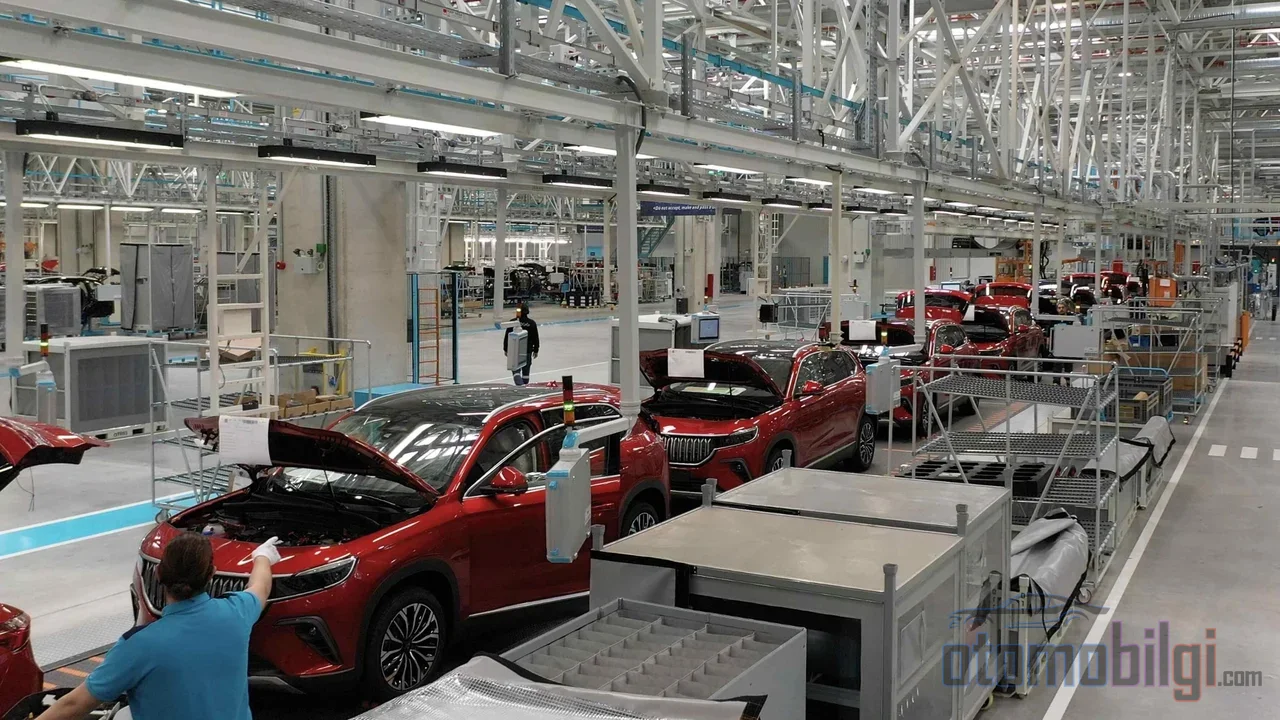
The world ranking of automotive production quietly changes every year; even though the top spot never moves, positions below shift around. Turkiye, a country that has long moved along a production band of 1.3-1.5 million units, stands in the middle section of this table. So which countries produce the most vehicles in the world, and exactly where does Turkiye rank on this list? The answer reveals a more interesting picture than you might expect: in the latest update, Turkiye has overtaken two long-established automotive countries.
The Countries Producing the Most Vehicles in the World: The Top Spot Remains in China's Hands, As Always
For someone who has been following this field for over forty years, the top three of the ranking is now second nature. According to data from the International Organization of Motor Vehicle Manufacturers (OICA), China alone accounts for roughly one-third of world production. In 2024, production of 31.2 million vehicles was more than triple that of the second-place United States. That same year, the United States finished the top three with 10.5 million vehicles, and Japan with 8.2 million. I remember the years when Japan and the United States used to go head to head; now the difference between the two remains at the detail level compared to the distance China alone has opened up.
Highlights
- In 2024, China produced roughly one-third of world production with 31.2 million vehicles.
- In 2025, Turkiye overtook the United Kingdom and Canada with production of 1,419,464 units.
- One out of every two vehicles produced in Turkiye comes out of Kocaeli.
- In the first nine months of 2026, Turkish production declined by 6% and exports by 11%.
- BYD's investment in a facility with an annual capacity of 150,000 units could move the ranking upward.
The group behind the top spot also breaks down into distinct layers within itself. India has settled into fourth place with 6 million units; South Korea is fifth with 4.1 million, Germany sixth with around 4 million, and Mexico seventh with production again around 4 million. Brazil with 2.5 million, Spain with 2.3 million, and Thailand with 1.8 million units of production complete the top ten. Annual production worldwide has now surpassed pre-pandemic levels: Global production reached 93.5 million units in 2023 and hovered around 90 million in 2024.
| Rank | Country | Production (2024) |
|---|---|---|
| 1 | China | 31.2 million |
| 2 | United States | 10.5 million |
| 3 | Japan | 8.2 million |
| 4 | India | 6 million |
| 5 | South Korea | 4.1 million |
| 6 | Germany | ~4 million |
| 7 | Mexico | ~4 million |
| 8 | Brazil | 2.5 million |
| 9 | Spain | 2.3 million |
| 10 | Thailand | 1.8 million |
Where Does Turkiye Rank? Here Is the Current Picture
Turkiye's position varies between 12th and 13th depending on which year and which data set is taken as the basis. According to OICA data, Turkiye achieved a global share of 1.6% with production of 1,468,393 units in 2023 and ranked 13th. Place. In 2024, production declined to 1,365,296 units. However, the 2025 data changed the picture: With production of 1,419,464 units, Turkiye overtook the United Kingdom and Canada, countries that have come a long way in automotive history, returning once again to 13th. queue, but in a considerably stronger position. France and Thailand are still ahead of it.
Official records prefer to speak a bit more optimistically. According to the Ministry of Trade's positioning, Turkiye ranks 12th in the world and 5th in Europe in motor vehicle production; in automotive exports, however, it is 16th in the world. The Investment Office also ranks Turkiye as the world's 13th largest and Europe's 5th largest automotive manufacturer as of the end of 2024. automotive manufacturer as of the end of 2024. For 2023, it is also stated that Turkiye ranked first in commercial vehicle production in Europe and third across Europe. It is natural for the figures to shift depending on the source: some are based on full-year actuals, while others rely on ministry-defined shares. Overtaking these two countries carries a separate significance; for someone who knows the UK's car manufacturing tradition, I can say this picture is a quiet yet striking turning point.
The export side completes this picture. The Ministry announced that a historic export record of 41.5 billion dollars was reached in automotive in 2025, and declared that a new record is targeted for 2026. In other words, Turkiye's ranking is shaped not only by the number of vehicles leaving factory gates, but also by the fact that most of these vehicles go to export.
What Determines the Ranking: The Weight of Kocaeli and Bursa
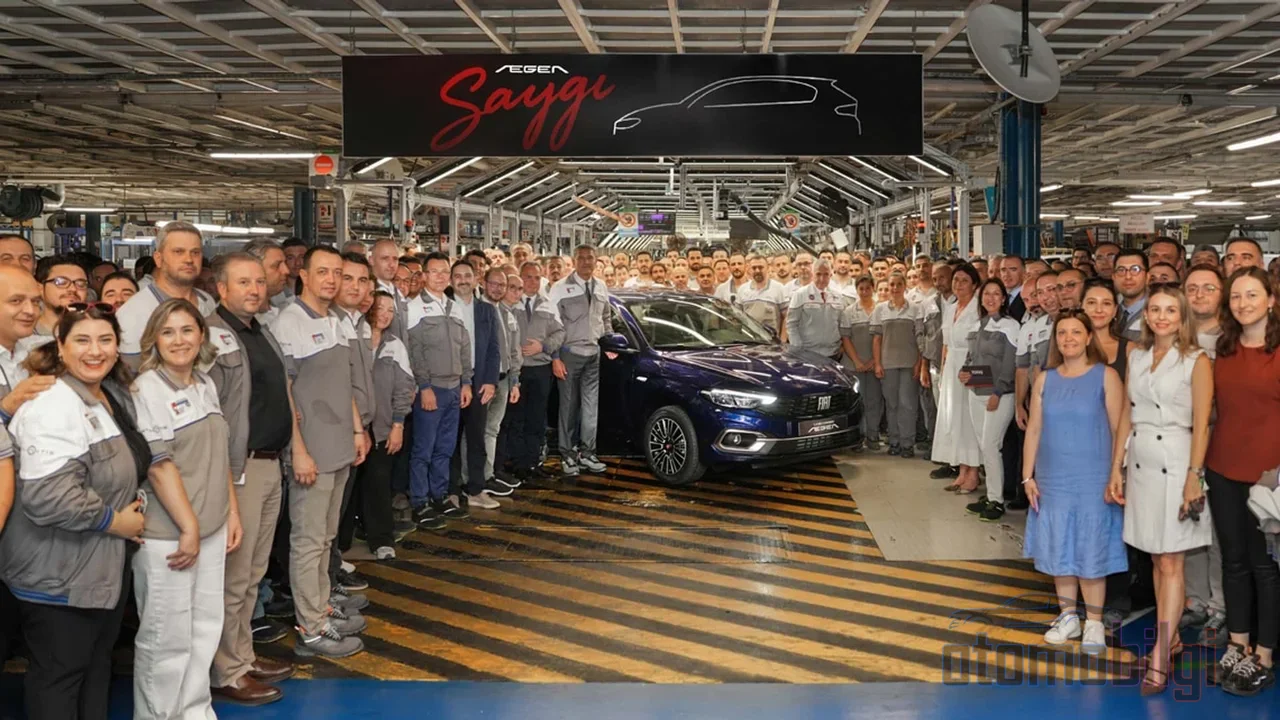
Turkiye's production map is concentrated around two cities. Kocaeli is a hub where one out of every two vehicles produced in the country comes from, and which alone accounts for 56% of automotive exports. 460,729 vehicles were produced in the first half at the Kocaeli facilities of Ford Otosan, Hyundai Motor Turkiye and Anadolu Isuzu; this corresponds to roughly half of Turkiye's total production. Ford Otosan's Kocaeli plant is the best example of how this business has changed scale: The facility, which opened in 2001 with a Transit capacity of 40 thousand units, has today reached an annual capacity of 440 thousand vehicles. The company accounts for 26% of Turkiye's automotive production and 70% of Ford's commercial vehicle production in Europe.
Bursa, meanwhile, is the second pillar of this picture. More than 8 million vehicles have been produced to date at OYAK Renault's Bursa plants, and the facility's annual capacity is 390 thousand vehicles; the Clio 5 and Clio 6 come out of here. Tofas has also announced an annual production capacity of 150,000 units in Bursa for the Fiat, Opel, Citroen and Peugeot brands. In the ranking of provinces prominent in automotive exports, Istanbul and Sakarya follow Kocaeli and Bursa. This geographic concentration also has a qualitative side: Ford Otosan's R&D center is one of Ford's three largest R&D centers globally; Tofas operates Stellantis's Bursa R&D center. While once positioned as a country where only assembly took place, development processes now also take place here; that is the real difference that ensures lasting presence in the rankings.
Why Is Production Lagging in 2026?
While the annual ranking reflects the previous year's outcome, the pulse within the year tells a different story. According to data from the Automotive Industry Association (OSD), in the first nine months of 2026 total automotive production fell 6%, while exports declined 11%. The decline was felt gradually throughout the year: in the first quarter production fell 7% to 321,856 units, in the first five months it dropped 10% to 538,700 units, and in the first eight months it contracted 7.3% to 841,583 units. The demand side is also weak; the market for passenger cars and light commercial vehicles shrank by 13.39% in the first nine months of the year.
However, there is also a signal of recovery within the year. In June, monthly production rose 15.5% to reach 124,679 units; in the first six months of the year total production reached 663,397 units, while exports came in at 462,552 units. In September, passenger car production jumped from August's 74,368 units to 129,571 units. The picture by manufacturer is clear: Between January and September, Ford Otosan maintained its export leadership with 295,007 units, while Tofas doubled its exports. In January-August production as well, Ford Otosan is first by a wide margin with 290,916 units and a 34% share.
How Will New Capacity Additions Change the Ranking?
The real question that will determine Turkiye's rank concerns the production capacity to be added in the coming years. The most concrete move is BYD's electric and rechargeable hybrid car production plant, to be built with an investment of around 1 billion dollars and an annual capacity of 150,000 units. An addition on this scale makes a perceptible difference in a production band of 1.4 million and is a genuine candidate for the threshold just above 12th place, making it a genuine candidate for the threshold just above the 12th spot.
Other projects on the agenda also point in this direction: TOGG's new models, Renault's new SUV model, and Hyundai's new electric model are all in the production plans. TOGG's T10F V2 LR model has the highest localization rate among vehicles produced in Turkiye, with a local content rate of 83.90%; this is not merely a matter of pride, but also an indicator of how deeply the supply chain has developed within the country. The Ministry of Trade has announced that it will continue to support the sector in pursuit of new records in automotive in 2026. Looking at it through the eyes of many years: production rankings are written not by a single year's performance, but by the accumulated capacity decisions of several years. When the BYD plant and the new models enter production, it would come as no surprise to see Turkiye's row on that chart pulled up one more step.
Conclusion: Turkiye's Place and the Threshold Ahead
To summarize: In the ranking of the world's largest vehicle-producing countries, China leads by a wide margin with 31.2 million units, followed by the United States with 10.5 million and Japan with 8.2 million. Turkiye, meanwhile, ranks 13th on the OICA list with production of 1,419,464 units in 2025; in the Ministry of Trade's share-defined data it appears in 12th place, having already overtaken the United Kingdom and Canada. This position is determined by a production network weighted toward Kocaeli and Bursa, an export-based model, and Ford Otosan's dominance in commercial vehicles. Although 2026's year-to-date data shows a decline in production and exports, the recovery in June and September along with new capacity investments suggest the ranking could be revised upward in the coming years.
Sources
- OICA Production Statistics
- OSD - Automotive Industry Association
- Ministry of Trade - statement on the 2025 export record and 2026 target
- Investment Office - Automotive sector
- AA - Kocaeli carries out roughly half of Türkiye's automotive production and exports
- Istanbul Post - OICA ranking: Türkiye surpassed the United Kingdom in automotive production
- Genç Gazete - Countries Producing the Most Vehicles (2024 data)
- AraClo - Automotive Factory Production Figures
- Arabam.com - Automobile Factories in Türkiye
- Getmidas - Automotive sector review (BYD investment)