Volkswagen Is Trying for a Second Chance in Production in Turkiye
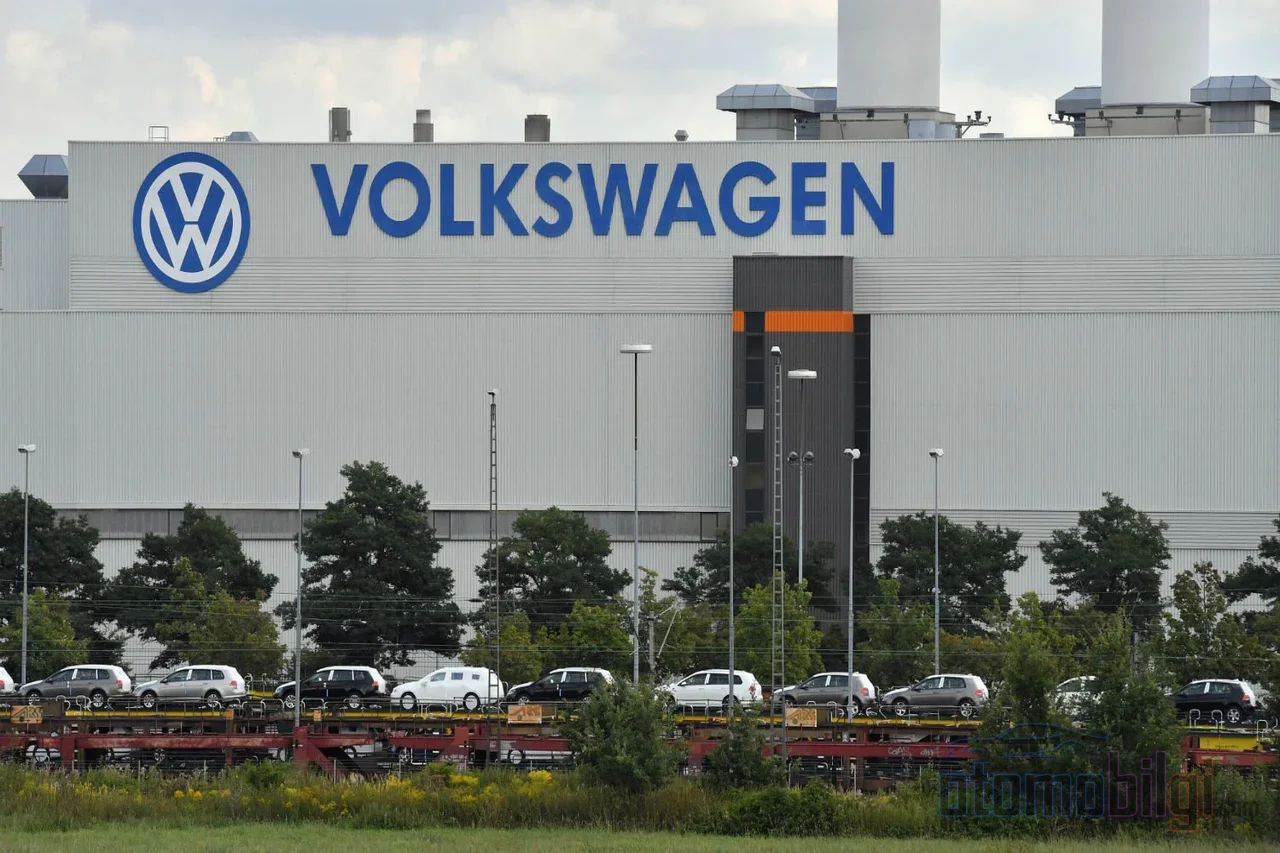
Volkswagen's agenda for passenger car production in Turkiye turned into a concrete official step on the morning of October 30, 2026: Dogus Otomotiv announced in a statement published on the Public Disclosure Platform at 09:30 that a letter of intent had been signed with Volkswagen Group Companies. This comes after a factory whose foundation was never laid in Manisa six years ago was shelved - the German manufacturer's second attempt in its Turkiye journey. So is this letter a production decision, or merely a statement of intent that opens a door? And why did this deal stall halfway back in 2020?
The Road to KAP: Partnership Step Announced on the Morning of October 30
Dogus Otomotiv Servis ve Ticaret A.S. made the public announcement as required by stock exchange rules. It was reported that a letter of intent had been signed between the company and Volkswagen Group Companies regarding the evaluation of options for producing Volkswagen brand passenger cars in Turkiye. The statement also emphasized that the new collaboration is expected to bring value-added products suited to new technologies to the Turkish market and contribute to the development of the Turkish automotive industry.
That is all the picture behind the door shows for now. The KAP announcement contains not a single word about when possible production would start, which models it would cover, the amount of the investment, or where the factory would be built. This absence is no coincidence; it is the clearest sign that the parties have not yet agreed on a production plan. We've been around this business a long time, and we know well what a letter of intent is: not a commitment, but an invitation to sit down at the table.
Highlights
- The letter of intent was reported to KAP on October 30, 2026; it is not a production decision
- The Manisa project announced in 2019 targeted annual capacity of 300,000 vehicles with an investment of 1.4 billion euros
- The Manisa investment was suspended in July 2020, and the liquidation process began the same year
- Tofas started series production of the K9 project in Bursa on October 26, 2026
- The Turkish passenger car and light commercial vehicle market shrank by 13.39% in the first nine months of 2026
Letter of Intent: A Production Guarantee or Just an Option?
This is the first question that needs clarifying, because the two concepts were quickly conflated in the first public commentary. The signed document does not mean Volkswagen will begin production in Turkiye. The agreement is aimed at evaluating production possibilities; that is, the parties have agreed to sit down at the table and examine scenarios. Questions such as which models could be produced, what scale of facility would be needed, and what the timeline would be all remain unanswered at this stage.
Nor is this distinction a dry legal detail. In automotive history, many projects on the road from letter of intent to series production have stalled due to financing, market conditions, or changes in group priorities. Volkswagen's own Turkiye history has a current example of this, and that is where we need to pick up one end of the main story.
The Manisa Experience: The 1.4 Billion Euros Whose Foundation Was Never Laid
When Volkswagen announced in 2019 that it would build a factory in Manisa, the project came onto the agenda with quite concrete details. An investment of approximately 1.4 billion euros was projected, an annual capacity of 300,000 vehicles was targeted, and the facility was expected to provide employment for thousands of people. For this purpose, Volkswagen Turkiye Otomotiv Sanayi ve Ticaret AŞ was established, and the company's capital was set at 943.5 million TL. According to the quarter-century-old habit of Turkiye's automotive industry, a group formally establishing a company at this scale was a sign of serious intent.
Then the world changed. Pandemic conditions and falling sales pushed Volkswagen to suspend the investment in July 2020. In December of the same year, the liquidation of the Manisa company began; the project ended without the factory foundation ever being laid. During the cancellation period, a distracting move by Volkswagen also came onto the agenda: the group's decision to make an additional 500 million euro investment in its facilities in Slovakia was a sign of where the resources were being directed. While the Manisa company was being liquidated, investments were being channeled to a central production point in Europe.
Therefore, today's initiative must be read in the shadow of Manisa. The calendar putting a title under its pages six years later is not without reason: the time between the 2020 cancellation and the 2026 letter of intent also contains the conditions that keep the two projects from being mere repetitions of each other. In the past, a market's appeal was measured by the size of its domestic market; now that column of the ledger has long since given way to export logic.
Differences Between the 2019 Plan and the 2026 Initiative
| Element | Manisa Project (2019) | New Initiative (2026) |
|---|---|---|
| Nature of the document | Investment and factory decision | Letter of intent |
| Investment amount | Approximately 1.4 billion euros | Not disclosed |
| Capacity target | 300,000 vehicles per year | Unknown |
| Location | Manisa | Unknown |
| Outcome | Suspended in July 2020, ended with liquidation | In the stage of evaluating options |
On social media, content has been circulating claiming that the Manisa site, which Volkswagen had on its agenda at the time, was later associated with BYD's factory investment; however, this connection is not based on a verified statement and should not be evaluated as such.
The Dogus Otomotiv Factor: A New Line Written Over a 30-Year Partnership
Why Dogus? The question seems simple, but the answer lies at the heart of the matter. Dogus Otomotiv is Volkswagen's distributor in Turkiye and has a partnership history of more than 30 years with the group. Recently, it expanded its regional role by also taking over the sales and after-sales operations of the Volkswagen passenger car brand in the Iraq, Azerbaijan, and Syria markets. So the letter signed today is not the product of an entirely new acquaintance, but of taking an established commercial relationship to the next level.
On the production side, however, the picture is different; distribution and a manufacturing partnership are not classrooms of the same school. Dogus has no direct experience in production operations, and the KAP disclosure contains no concrete model in the form of building a factory or taking over an existing facility. This also explains why the process has remained at the intent stage: there is much to discuss at the table, and each of the questions of which vehicles will be produced, at what scale, and under whose operation is of a nature that would rewrite the project's economics from the start.
Why This Intent Now, While the Market Is Shrinking?
The question the reader will rightly ask is this: How can it make sense for a manufacturer to evaluate production options here when Turkiye's total automobile and light commercial vehicle market shrank by 13.39% to 803,465 units in the first nine months of 2026, and automobile sales shrank by 15.45% to 627,977 units? The answer lies not in market size but in production geography logic. The contraction of the domestic market does not, on its own, make the evaluation of an investment with export-oriented production potential wrong; in fact, considering Volkswagen's scale, it is clear that a capacity pattern of 300,000 units already largely anticipates sales to foreign markets.
The broader picture also supports this reading. The Volkswagen Group produced approximately 8.9 million vehicles worldwide in 2025, positioning it as the world's second-largest automotive group in production volume; the Toyota Group leads the list with approximately 11.3 million vehicles. The Volkswagen Passenger Cars brand delivered approximately 4.7 million vehicles in 2025 and operates 28 production facilities in 12 countries. For a group that houses brands such as Audi, Porsche, Škoda, and SEAT, the efficiency of the European production base has long been a debated topic in its cost calculations. One end of this debate extending toward Turkiye can be read as a reflection of the strength of the region's production infrastructure.
Timing from Bursa: K9 Production and the Appeal of the Local Ecosystem
The week the letter of intent was announced was already symbolically intense for the Turkish automotive industry. Tofas started series production at its Bursa factory on October 26, 2026, just days before the letter of intent, in the K9 project under the agreement signed with Stellantis in September 2025. The first vehicle to come off the line was the Fiat Dobló. The project foresees an annual capacity of 100,000 vehicles; although some public reports mention capacity of up to 150,000 units and investment figures in different currencies, the official framework shared by Koc Holding aligns with the statement of a 300 million dollar investment.
The fact that the K9 is a project opening the door to vehicles from four brands being produced in Bursa is current proof of the multi-brand flexibility of Turkiye's production ecosystem. The production launch ceremony, represented at ministerial level, also shows the importance political will attaches to this field. The point to note here is not to establish a cause-and-effect relationship: K9 is a commercial vehicle project, while Volkswagen's agenda is passenger cars. The two developments are not the cause of each other; but the fact that they fell on the same week is an instructive coincidence, revealing how visible Turkiye's production infrastructure and workforce are in the eyes of international investors.
What This Letter of Intent Does NOT Mean, and What It Does NOT Promise
Let us wrap up the answer to the question we asked at the top of the page. A letter of intent is not a production guarantee; it is an officially confirmed first step in which Volkswagen has put passenger car production options in Turkiye on the table and will conduct this evaluation with its 30-year distributor Dogus Otomotiv. The factory's location, the models to be produced, the investment amount and the timeline are still uncertain; none of the concrete parameters comparable to the 2019 Manisa project are on the table yet. Whether production will happen depends on the decision the parties will make at the end of this options evaluation. The single sentence the reader should keep in mind at this stage is this: The document signed today may herald a factory, but it is not yet the factory itself.
In a thirty-year professional career, we have seen many such letters of intent; some turned into factories, others remained in the archive. In Volkswagen's Turkiye story, the first act closed in Manisa. The second act will show how it will close and which of the options on the table will be brought to life. Until then, what needs to be done is to keep distinguishing the officially announced step from street rumors.
Sources
- Letter of intent signed between Doğuş Otomotiv and Volkswagen for production in Türkiye (AA)
- Production move from Volkswagen in Türkiye: Letter of intent signed (Habertürk)
- First step toward Volkswagen's production in Türkiye: Letter of intent signed with Doğuş Otomotiv (Gazete Oksijen)
- Volkswagen will produce cars in Türkiye (NTV)
- VW's factory project in Türkiye canceled (DW Türkçe)
- Volkswagen's Manisa facility plan canceled (bianet)
- Tofaş's 300 Million Dollar K9 Investment Enters Production (Koç Holding)
- The 300 Million Dollar K9 Project at TOFAŞ Enters Production (Alomaliye)
- September 2026 ODMD Press Release
- Sharp braking in automotive sales in September (Bloomberg HT)