Fiat Punto Is Coming Back: The Legendary Name Is Back on the Table
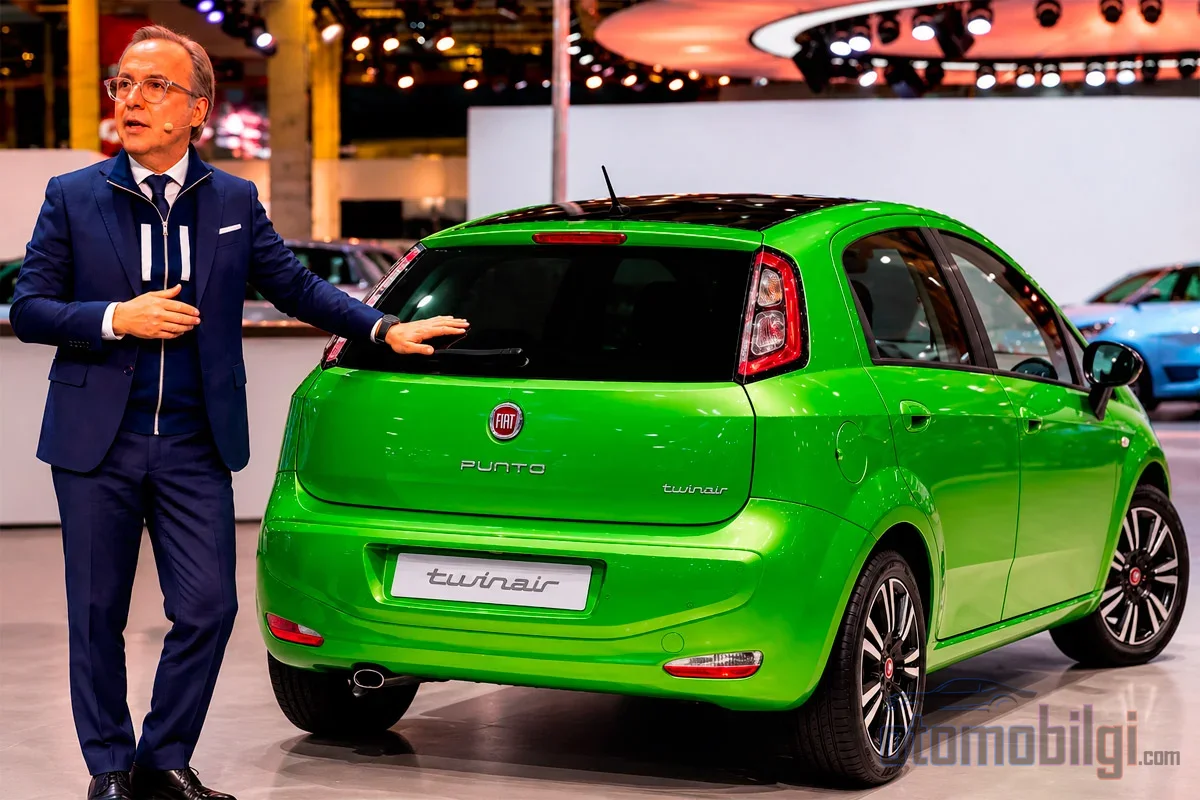
The statement made in Paris by the executive in charge of Fiat, Abarth and Lancia has opened the door to the Punto, whose production ended in 2018, coming back onto the agenda. The model, which sold more than nine million units across three generations, hit the roads in Bursa, Turkiye, and was a whole generation's first car, is now being reevaluated within the new balance of the B segment. So is this a return, or just a signal of intent for now?
What Belloni's statement says, and what it does not say
Speaking to a French automotive magazine as part of the 2026 Paris Motor Show, Fiat, Abarth and Lancia CEO Arnaud Belloni stated that the Punto should be present in the brand's product range. This sentence lifted the cover off a name with a history of more than thirty years and strengthened the possibility of a comeback in the industry. But it needs to be read with caution: Belloni did not announce a production decision, gave no timeline, and shared no pricing or technical data.
There is a truth well known to those who have been through this business: in the automotive world, the distance between an executive statement and a series production decision is often measured in years. What we have right now is, officially, a signal of consideration. As for the content circulating on social media and video platforms that portrays the model as if it had already been unveiled, it is not based on any verified information; the new Punto has not yet been shown.
Belloni's reasoning is also noteworthy. He emphasizes that Fiat's withdrawal from the B segment opened up room for the Renault Clio to strengthen its market position. With the Ford Fiesta being discontinued, the competitive landscape in Europe's small car market has changed; it would be no surprise for a management that sees this gap to bring a legendary name back to the table.
Highlights
- The Punto was first introduced in 1993; more than 9 million units were produced across three generations, and production ended in 2018.
- Fiat management stated that the model should be in the product range; however, there is no official production decision or timeline.
- Rather than a neo-retro design, the new Punto is aiming for an entirely modern line.
- In Turkiye, the Punto has reached sales exceeding 47,000 units since 2006.
- The B segment in Europe is dominated by the Dacia Sandero and Renault Clio; on the electric side, by the Renault 5.
Is the Punto coming back? Today's situation in one sentence
The Punto's return has not yet been confirmed: Fiat's top management has clearly stated that the model should be in the range, but there is no official information about production approval, unveiling date, pricing, or technical specifications. So for today, what we have is not a decision, but a strengthened possibility.
The legacy of three generations: A legend born from the Uno
The Punto was introduced in 1993 to replace the Uno. The first generation proved itself in a short time and was named Europe's Car of the Year in 1995. Produced across three generations, the model also carried the names Grande Punto and Punto Evo in its later period. When the production line stopped in 2018, more than nine million vehicles had been left behind; that figure is enough to explain just how serious a business a B segment model can be.
Those who have long experience in this market remember: in the past, there was a Punto on almost every street corner in Europe. Now the same streets are filled with crossovers, and that is exactly why the name's return is being discussed; the small hatchback, once the backbone of the mass market, has today become a niche choice.
The Tofas connection in Turkiye
Turkiye plays a big part in the Punto's story. Since 2006, the model has reached more than 47 thousand sales in Turkiye; the renewed version introduced in 2012 had also been launched in our country. With Tofas's production in Bursa, Fiat closed 2010 with records both in Turkiye and on the global stage, and Turkiye became Fiat's third-largest market.
In these lands, the Punto's name is mentioned in the shadow of a deeper partnership. Tofas, established through the partnership between Koç Holding and Fiat, laid the foundations of the Turkish automotive industry with production that began in 1971 with the Murat 124; it peaked in the 1980s with the Sahin, Dogan and Kartal. The picture is still dynamic today: Tofas signed a new vehicle production agreement with Stellantis Europe S.P.A, and production is being discussed with investments of up to 256 million euros. Under the company's K9 project, it was announced that light commercial models are being produced for the Citroën, Fiat, Opel and Peugeot brands with an investment of approximately 300 million dollars, and an annual target of 150 thousand units has been set. Tofas has also raised its production capacity to 500 thousand vehicles and rolled out its 7.5 millionth vehicle from the line. In a country with such a production infrastructure, the renewed talk of the Punto name naturally attracts special interest.
Where is the gap: Today's map of the B segment
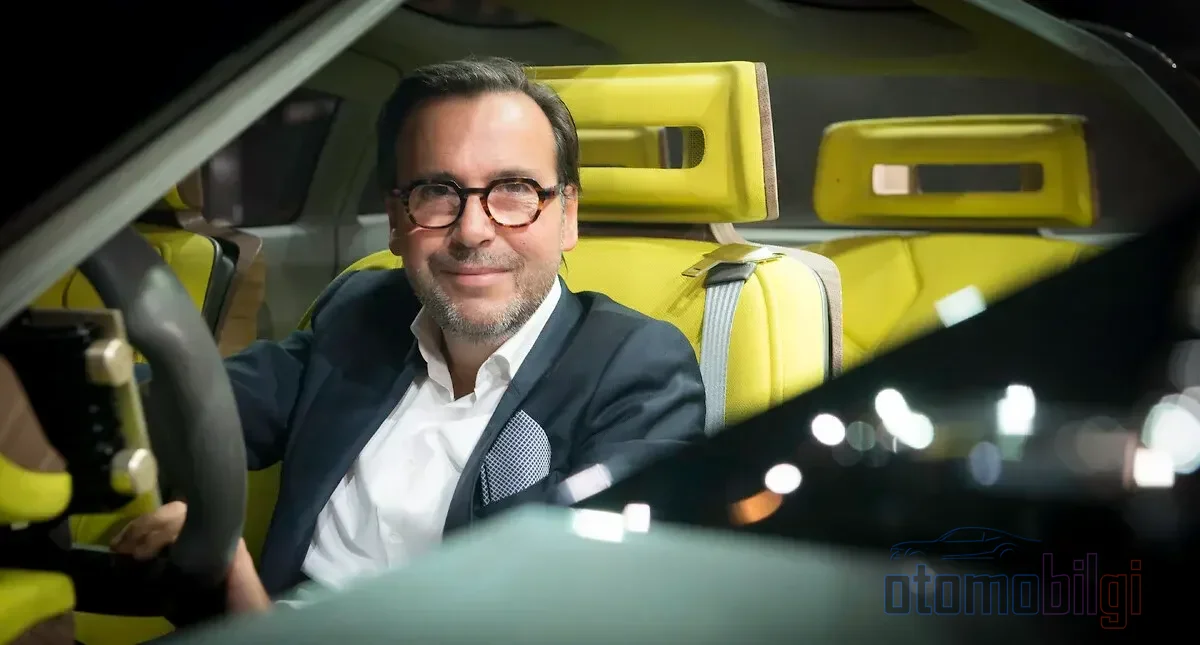
When evaluating whether a model can return, one must first look at the market's current picture. In Europe's B segment, the Dacia Sandero and Renault Clio maintain their strong positions; on the electric small car side, the Renault 5 stands out. The discontinuation of the Ford Fiesta marks a significant change in this picture; and it is precisely from this point that Fiat's management starts. The Fiesta's departure and the Clio's strengthening opened up serious room ahead of their rivals.
The Turkish market also demonstrates the weight of this segment. B-segment cars accounted for 31.3% of the market in February 2026 with 40,927 sales; in the first eight months of the year, they took a 28.9% share with 162,982 units. The C segment, with 313,013 units and 55.1%, is the biggest item in the picture. The overall framework is challenging: the total market for cars and light commercial vehicles shrank by 13.39% in January-September 2026 compared to the same period of the previous year, falling to 803,465 units. Positioning a new model in a shrinking market is a riskier calculation than before.
In Turkiye, the names B-segment hatchback buyers gravitate to most are the Hyundai i20 and Renault Clio. In second-hand comparisons, the Clio stands out with its rich equipment and relatively low price; the i20 stands out with its modern design and perception of safety. A new Punto would have to enter a picture where this duo exists; the question is at which price and equipment point it would settle.
Fiat's own game: Seeking room in the shadow of the Grande Panda
After leaving the B segment in 2018, Fiat returned to this space with the Grande Panda. Today, the Grande Panda has ceded the title of Fiat's best-selling model in Italy to the classic Panda (Pandina). The new Punto is expected to be sold alongside the crossover-styled Grande Panda and appeal to customers looking for a traditional B-segment hatchback. So the plan is not for the two models to share the same cabin, but for one to carry the crossover style and the other the classic hatchback form.
Whether this will work depends on a lesson we once learned: a name cannot do new business without escaping the shadow it casts. The Punto name carries a strong legacy; but this legacy must grow alongside the Grande Panda rather than eating into its market. Fiat's decision-making process on this points to the technical question most worth asking: the platform.
Platform and technical picture: what is known and what is unknown
There is no official statement yet on the technical side, but the candidates on the table are clear. The first option is the Smart Car platform used in the Grande Panda and Citroën C3; the second is STLA One, which is on the agenda for the future Peugeot 208 and Opel Corsa. On the energy side, the possibility of a multi-energy strategy supporting internal combustion and fully electric versions is being considered. Previously published technical assessments had written that the Punto could come with a choice between the STLA Small and STLA Medium platforms; STLA Small is an architecture spanning segments A to C that supports electric, hybrid, and internal combustion powertrains. The fact that different scenarios are circulating shows that a decision has not yet been made.
| Topic | Known today | Not yet announced |
|---|---|---|
| Production decision | There is an executive-level range assessment | Official approval and timeline |
| Design | A modern line is targeted, not neo-retro | Free design details |
| Platform | Smart Car and STLA One are candidates | Choice |
| Energy | Multi-energy and fully electric possibility | Version list |
| Dimensions, battery, range | No information | All technical data |
| Price and production location | No information | Announcements on both matters |
What the careful reader must discern
It is necessary to filter out the misinformation circulating around this topic. There is content on video platforms presenting the model as if it were already on the market; forum and wiki pages contain entries that open the door to this. The verified picture is this: the Punto has not been unveiled, has not opened for orders, and its price has not been set. Seeing the difference between an executive's range assessment and showroom display cars is the most useful reflex in this market for many years now.
The limit of the uncertainties is also clear: no information has been announced about the launch date, price, production location, Turkiye sales, or release timeline. The possibility of an electric version is being discussed but has not been confirmed. As for the retro design expectation, according to executive-level reports, it does not pan out; a modern and completely renewed line is aimed for.
Conclusion: the name is ready, the decision is on the table
The Punto's comeback story, in its current state, is not a decision but a clearly voiced intention. On the other hand, the picture is favorable for the return of a legendary name: With the Fiesta gone, the Clio strengthened, and the electric small car market seeking new balances, a production history of nine million units is a serious asset in Fiat's hands. The new Punto is expected to appeal to buyers looking for a classic hatchback alongside the Grande Panda; questions of platform, energy, and price, however, await answers. The real moment of return for this project will begin on the day the first official production approval is announced. Until that day, the Punto will remain the most valuable name on the table.
Sources
- Is the Fiat Punto coming back? A striking statement from the brand's new boss
- Fiat's unforgettable model is returning: the Punto surprise after 8 years
- Is the Fiat Punto finally coming back?
- After 13 years, Fiat decided to discontinue Punto production
- 2012's First Big Innovation: The New Fiat Punto in Türkiye!
- History - Tofaş
- Production agreement between Tofaş and Stellantis
- Tofaş's $300 Million K9 Investment Has Entered Production
- February 2026 ODMD Press Release
- October 2026 Fiat Price List Announced