Tofaş K9 Series Production Begins in Bursa
Share This Page
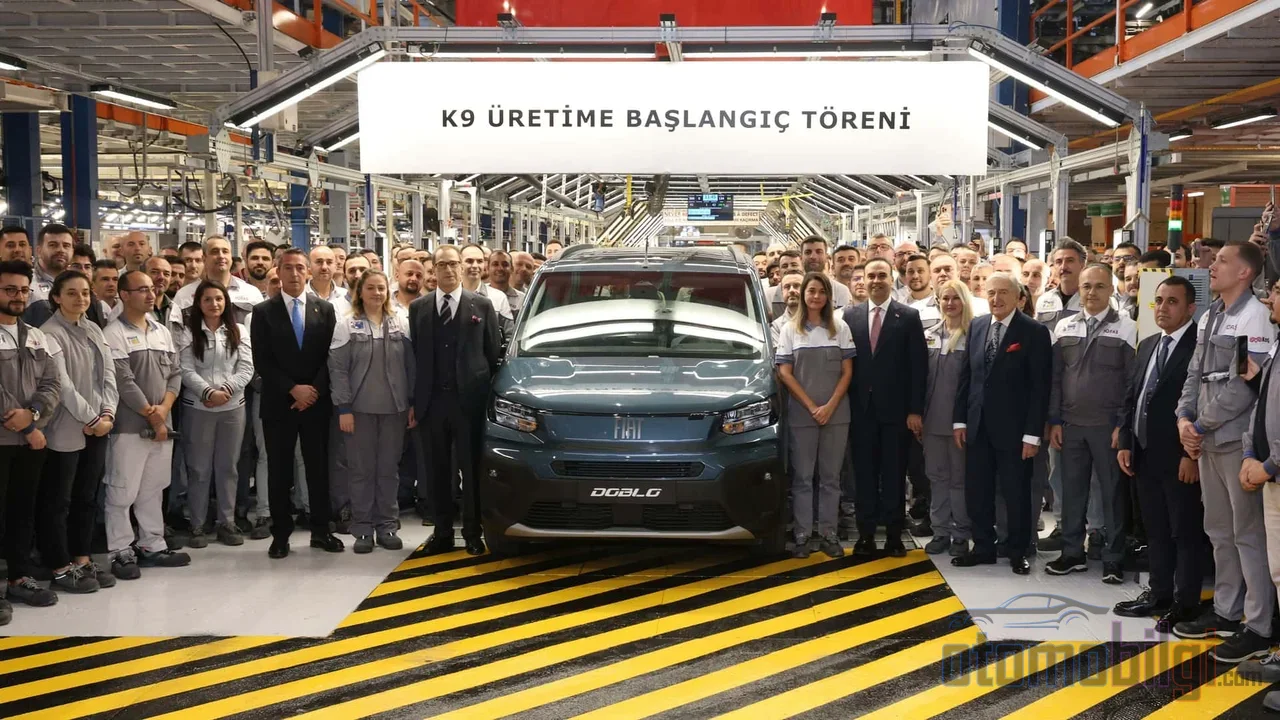
In Bursa, the same question has been heard for many years: which vehicles will that line produce? On October 26, the answer to this question officially became clear. At a ceremony also attended by Industry and Technology Minister Mehmet Fatih Kacır, Tofaş began series production of the light commercial vehicle project codenamed K9, and the first vehicle off the line was, as expected, the Fiat Doblò. As someone who was on the ground to watch a 300 million dollar investment turn into a product, I can say this: such ceremonies are often symbolic; this one, however, is a measurable threshold in terms of capacity, employment and exports.
What is really intriguing is the order lying beyond the ceremony: a production architecture in which five different models will come off the same line, a growing capacity in a shrinking market, and a factory shipping parts to four European brands at once. In this article, we cover the numbers behind K9 production, who is involved in manufacturing, and where Türkiye's light commercial vehicle position is evolving to.
Highlights
- The K9 project moved to series production in Bursa on October 26, 2026; the investment amount is 300 million dollars (approximately 256 million euros).
- The first vehicle off the line is the Fiat Doblò; the Berlingo, Rifter/Partner and Combo will also be produced on the same line.
- An annual additional capacity of 100 thousand units, with a target of 150 thousand units including CKD.
- New employment for 1,000 people; one hundred domestic suppliers, with a 50 percent localization target.
- Exports to the US restart in 2027 with the vehicle codenamed K0; with a total target of 230 thousand vehicles.
Tofaş K9 Series Production: The First Vehicle Off the Line and the Production Order
The ceremony showed more than a classic ribbon-cutting scene. The moments when Minister Kacır took the wheel at the factory were widely covered on social media and in the press; but the real news was behind the ceremonial backdrop. The K9 is not a single model, but a production architecture in which five different brands are placed on a single platform. Series production, which started with the Doblò, will continue on the same line with the Citroën Berlingo, Peugeot Rifter, Peugeot Partner and Opel Combo.
This picture is nothing new for the Turkish automotive industry; Tofaş has been successfully managing multi-brand production for years. The difference here, however, is that a single commercial platform carries five brands at the same time and brings such an intense volume to the factory. The Doblò being produced abroad since 2022 and now returning to Bursa is a concrete sign that the production geography of the global light commercial vehicle market is being redrawn.
The two faces of the numbers: 100 thousand or 150 thousand?
The figure highlighted at the start of series production is an annual additional capacity of 100 thousand units. In the announcement of the agreement between Tofaş and Stellantis, however, an annual production capacity target of 150 thousand units was mentioned, including knocked-down vehicles (CKD). These two numbers do not contradict each other; one refers to the number of complete vehicles coming off the line, the other to the total volume including assembly kits. The kits destined for assembly lines abroad will significantly increase the load on the supply chain in Bursa.
There is a similar wording difference in the investment amount: Minister Kacır's speech mentions 300 million dollars, while the agreement announcement mentions 256 million Euros. The exchange rate and which items fall within the scope of the investment place these two figures at slightly different points; both point to the size of the same project.
Local Suppliers and Employment: The Economic Pulse of the Project
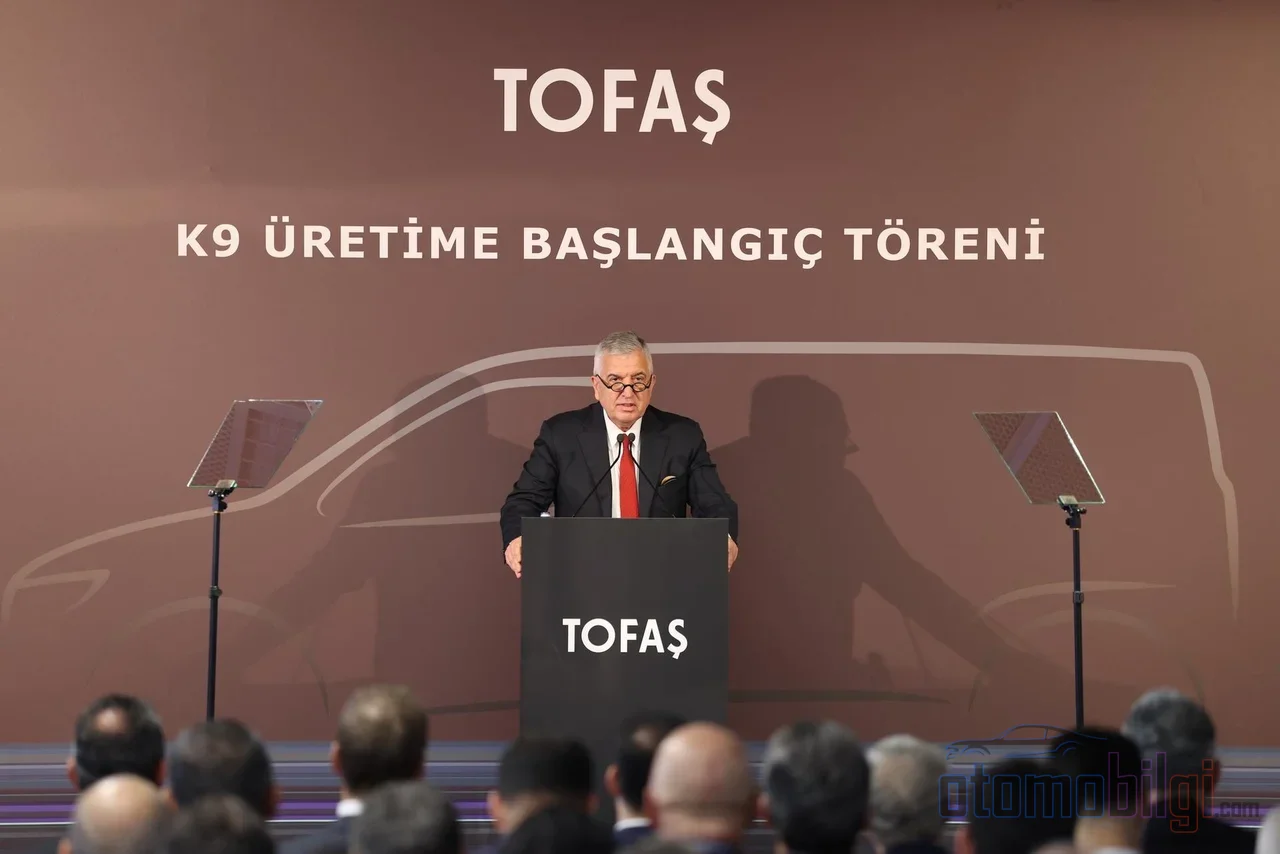
The most striking of the figures Kacır gave at the ceremony is not just about capacity. The project will provide new employment for 1,000 people and one hundred local supplier companies are involved in production. The targeted localization rate is 50 percent. For many years, reaching localization rates at this level in light commercial vehicle production has required a gradual supplier development process; for this reason, the 50 percent target should be read not as a promise spoken at today's ceremony, but as a framework that will be filled gradually.
The fact that Tofaş's R&D Center carries out the engineering and validation work in the project is also worth a separate note. This means the project is kept in Türkiye not only for assembly but also on the product development side. In terms of long-term value creation, this is as important as capacity, or even more important than capacity.
Tofaş's 2026 expectations
- An annual investment plan of approximately 250 million Euros
- A target of raising export volumes from 47 thousand to 65-75 thousand units
- An expectation of 350-370 thousand units in domestic retail sales
- Taking over the Stellantis Türkiye distributorship (after April 2025 approval)
Five Models, One Line: The Breadth of the Production Spectrum
Producing five models on a single line is a production engineering task that requires strong curation. In Stellantis's multi-brand strategy, adapting the same platform to different brands is a standard approach; the innovation here is concentrating this adaptation in one factory at this intensity. The table summarizes the models planned to be produced in Bursa under the K9:
| Model | Brand | Note |
|---|---|---|
| Doblò | Fiat | The first vehicle off the line; a return to Bursa after 2022 |
| Berlingo | Citroën | Multi-brand production on the same line |
| Rifter | Peugeot | Previously produced in Spain; brought to Bursa with the K9 |
| Partner | Peugeot | A commercial variant of the same platform |
| Combo | Opel | A model newly put into production in Bursa |
The Doblò's production history is not easy either: the model first began production in Türkiye in 2000 and has since reached more than 600 thousand sales. The fact that sales in the first four months of 2026 more than doubled compared to the same period last year shows that the model's market appeal continues to be preserved.
The K0 and the Return to the US: A Target of 230 Thousand Vehicles
Right behind the K9 stands a project coded K0. With this light commercial vehicle it will produce in Bursa, Tofaş is resuming exports to the US in 2027. The vehicle will be sold in the US market as the Ram ProMaster City and the K0 will be produced in Bursa for four different Stellantis brands. Under the project, a total of 230,000 vehicles are targeted to be shipped to the US; the export process is planned to begin in the second half of 2027.
This is a serious move toward America after a long hiatus in Turkish automotive exports. The North American market's regulations and vehicle classifications differ from those of the European market; therefore, developing the K0 to be US-compliant is also an indication of the confidence placed in Tofaş's engineering capacity. A factory that once sent light commercial vehicles to the US returning to this route shows that its production base is once again gaining global acceptance.
FaSTLane 2030: Where Does the K9 Fit into Stellantis's Global Strategy?
In May 2026, Stellantis unveiled its 60 billion Euro five-year strategic plan, FaSTLane 2030. The plan includes targets of more than 50 new models, more than 30 platforms, 50 percent of production volume concentrated on three global platforms, and up to 70 percent parts commonality by 2030. In the Middle East-Africa region, targets of increasing regional revenues by 40 percent and achieving double-digit operating profitability were announced.
The K9 is the Türkiye leg of this framework. Producing vehicles for five brands and four geographies on a single platform increases parts commonality and production efficiency exactly in the way FaSTLane seeks. The emphasis in Stellantis's Türkiye press release on transforming the supply model and efficient utilization of the production infrastructure points in the same direction. For this reason, the K9 is not an isolated investment but a visible part of the reconfiguration of the regional supply chain.
Growing Capacity in a Shrinking Market: Contradiction or Export Strategy?
So far the picture is bright; but the market side is just as muted. In the January-September 2026 period, Türkiye's automobile and light commercial vehicle market shrank by 13.39 percent, falling to 803,465 units. In July, the market contracted by 25 percent year-on-year; on the light commercial vehicle side, the contraction remained at 1.94 percent in the first five months of the year. Expanding production capacity while a market shrinks by double digits may seem odd at first glance.
However, it should be remembered that the K9 is a project geared more toward exports than the domestic market. Tofaş's aim to raise its 2025 export volume of around 47,000 units to a band of 65,000-75,000 in 2026 shows that the project's real customer is not Türkiye but Europe and (with the K0) the US. Targeting external demand instead of betting on the domestic market is a rational positioning in a shrinking local market. Still, the pace of recovery in domestic demand remains on the table as the variable that will affect the factory's utilization rate.
Conclusion: Bursa's New Role
The K9's arrival at series production is a threshold that redefines Türkiye's position in light commercial vehicle manufacturing. A $300 million investment, an additional capacity of 100,000 units, 1,000 new jobs and a 50% localization target are the key figures that convey the scale of the project. When these are combined with the return to the US via the K0 and an annual production volume approaching 250,000 units in total, it becomes clear that the Bursa plant is being transformed into a regional production base.
On the risk side, there is the shrinking domestic market and fluctuations in global demand. However, as someone who has watched Tofas survive difficult periods in the past by diversifying production, it is possible to say that the K9 will take root well in these lands. October 26, 2026 should be read not merely as a ceremony date for the Turkish automotive industry, but as the opening note of a new production era.
Sources
- Minister Kacir took the wheel: $300 million mega investment, the K9 project officially begins
- Industry and Technology Minister Kacir spoke at the Tofas K9 Production Launch Ceremony
- A major investment in light commercial vehicles from Tofas and Stellantis
- A huge export move from Tofas: Fiat Doblo to the US
- Tofas announces its 2026 expectations
- ODMD Press Release, October 2, 2026
- Stellantis strengthens its FaSTLane 2030 strategy in line with regional growth targets
- Our Strategy – Stellantis