Will the Dacia Striker Disrupt the Balance in the C Segment with Its European Prices?
Share This Page
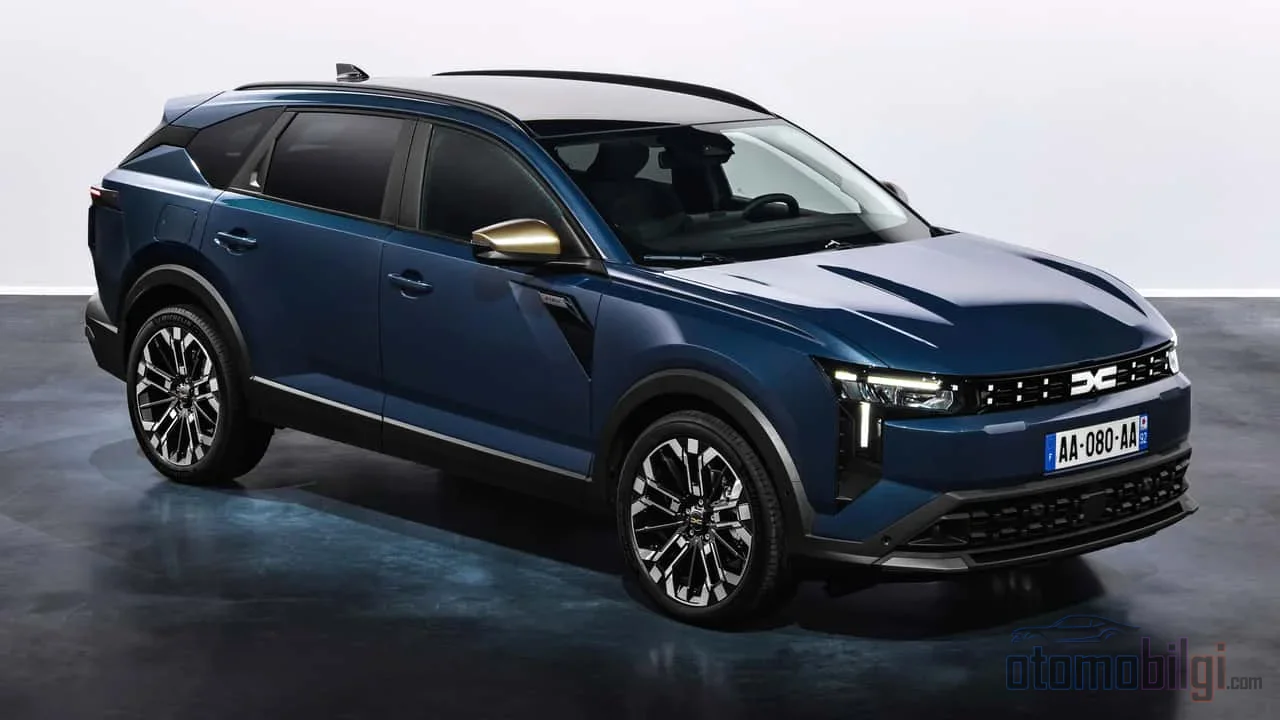
The Dacia Striker, produced on the Bursa Oyak Renault line and the first Dacia model opened for orders in Europe, carries the ambition of shaking up the established balance in the C segment with a price tag starting from 23,490 euro. From the Turkish consumer's perspective, the real question is this: Will this car, which will go on sale in Türkiye in December 2026, truly change the price positioning of its C segment rivals thanks to its local production and SCT exemption advantage? Compared with current rival prices, the answer lies closer than we think.
Highlights
- Europe entry price: 23,490 euro (Essential trim, Mild Hybrid-G 140)
- Production: Bursa Oyak Renault factory, part of a 400 million euro investment plan
- Three engine options: Mild hybrid with LPG, full hybrid, and hybrid 4x4
- Türkiye sales: December 2026
- Localization rate above 40% in the Mild Hybrid-G 140 and Hybrid 155
What does the Dacia Striker's European price list show?
Orders opened on October 13, 2026, and the price list clearly reveals the message Dacia wants to send to this segment. In the entry-level Essential trim, the Mild Hybrid-G 140 engine comes in at 23,490 euro; in the Expression trim, the same engine is 25,100 euro, and with an automatic transmission 26,700 euro. The Hybrid 155 Expression sells for 28,100 euro. At the top are the Journey and Extreme trims in Hybrid 150 4x4 versions: 31,900 euro.
This picture is the natural continuation of Dacia's thirty-year pricing strategy. In the past, we sold cheap but spartan cars coming from the factory in Romania; now we are offering a three-engine, four-wheel-drive C segment crossover produced in Bursa for nearly half the price of its rivals on the western side of the segment. The four rungs of the price ladder are as follows:
| Trim | Engine | Price |
|---|---|---|
| Essential | Mild Hybrid-G 140 | €23,490 |
| Expression | Mild Hybrid-G 140 | €25,100 |
| Expression | Mild Hybrid-G 140 Automatic | €26,700 |
| Expression | Hybrid 155 | €28,100 |
| Expression | Hybrid 150 4x4 | €29,900 |
| Journey / Extreme | MH 140 Automatic | €28,700 |
| Journey / Extreme | Hybrid 155 | €30,100 |
| Journey / Extreme | Hybrid 150 4x4 | €31,900 |
What stands out is that the trim-price balance works extremely consistently. The automatic transmission creates a step of about 1,600 euro, moving to full hybrid about 1,400 euro, and four-wheel drive about 1,800 euro. Such transparent price steps make the customer's decision process easier, unlike brands that have kept the steps murky for years.
What does Bursa production mean?
The Striker comes out of the Bursa Oyak Renault factory as the final link in the 400 million euro investment plan of OYAK and Renault Group. This factory takes on the Striker as its fourth model, after the Renault Duster, New Clio, and Renault Boreal. 80% of the vehicles produced at the plant with an annual capacity of 390,000 vehicles are exported; In 2025, production reached 387,113 units and exports totaled 271,994 units, a 14% increase.
A Dacia produced in Türkiye being shipped to the European market is nothing new; but a Dacia model being produced in Türkiye is a first. This distinction is also critical for the domestic market. The Mild Hybrid-G 140 and Hybrid 155 versions reaching a localization rate of over 40% opens the door to SCT exemption for these versions. Everyone knows how much of a car's price in Türkiye is tax and how much is the vehicle itself; which is why localization is a trump card that cannot be compared with competitors here.
The model made its world premiere at the 2026 Paris Motor Show; the first deliveries are planned for late 2026 or early 2027. Its dimensions are also worth talking about in the segment: 4.62 meters in length, 1.53 meters in height, and a cargo volume of up to 600 liters. Ground clearance rises to 20 centimeters in the 4x4 version. Dacia's first "T"-shaped LED light signature used on all four corners of a model also belongs to the Striker.
Three engines, three different customer profiles
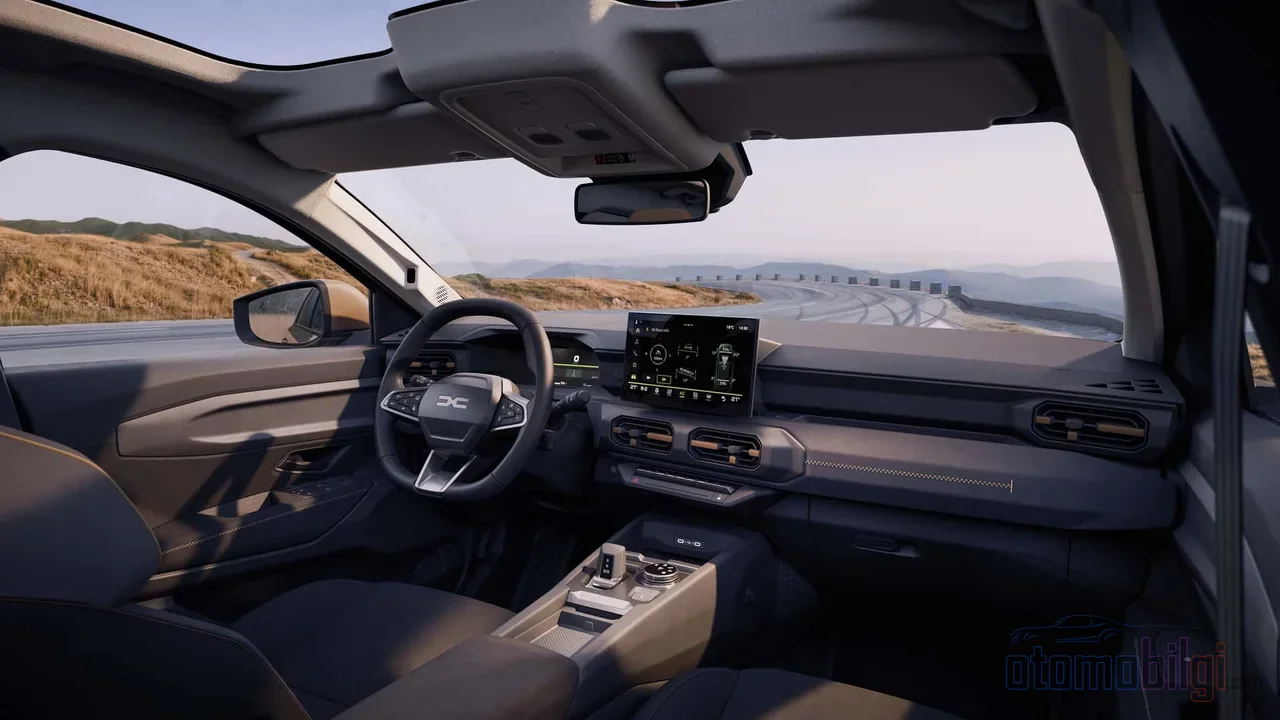
The Striker's engine range fits three distinct usage scenarios onto the same body. Dacia has been doing this for many years, but this time the technical differences between the options give enthusiasts plenty to think about.
LPG mild hybrid: Mild Hybrid-G 140
The 1.2-liter three-cylinder turbocharged gasoline engine comes with a 48V mild hybrid system and factory-fitted gasoline/LPG dual fuel. A six-speed manual or automatic transmission can be chosen. Total range goes up to 1,600 kilometers. In a market like Türkiye, where LPG culture runs deep, the importance of the factory-fitted Eco-G version cannot be understated; it eliminates the warranty headaches of customers who install LPG afterwards.
Full hybrid: Hybrid 155
The 1.8-liter 109-horsepower four-cylinder gasoline engine is combined with two electric motors and a 1.4 kWh battery. Average consumption is 4.2 liters/100 km; it can complete nearly 80% of city driving fully electric. For those who know that idling the gasoline engine in city traffic is a waste of time, this is a detail that directly touches the fuel bill.
Hybrid 4x4: On-demand four-wheel drive
While the 1.2-liter 48V semi-hybrid engine on the front axle produces 140 hp / 230 Nm, the 23 kW (31 hp) / 87 Nm electric motor on the rear axle engages when needed and provides on-demand four-wheel drive support. This is not a conventional 4x4 with a classic drivetrain; it is a solution that increases the safety margin on slippery surfaces and steep ramps, and with 200 mm of ground clearance, opens the door to light off-road use. Hardly any other brand offers a hybrid 4x4 at this price in the C segment.
What will the Türkiye price be?
Everything so far is the official picture as reported by the news. The real question is what will happen in Türkiye. There is no official price announcement yet and, to be honest, expecting the European prices to be converted directly to Türkiye would be wrong. Thanks to domestic production and SCT exemption, a noticeably more competitive price tag is expected in the domestic market; industry sources estimate the price could rise up to 2.3 million TL in richly equipped hybrid 4x4 versions.
When we put this figure side by side with current C-segment prices, it becomes clear why the Striker is sparking debate:
| Model | Starting price | Position |
|---|---|---|
| Renault Clio | 1,830,000 TL | Best seller (31,643 units) |
| Toyota Corolla | 1,850,000 TL | Classic C-segment sedan |
| Toyota C-HR Hybrid | 3,419,000 TL (3,132,000 TL with campaign) | C-SUV hybrid |
| Dacia Striker (estimated upper limit) | Up to 2.3 million TL | C crossover, domestically produced |
Where the entry version will fit into this table is uncertain, but even the top trim's 2.3 million TL band remains well below the C-HR's recommended price. Offering a full hybrid, all-wheel-drive car in the C segment at this price is enough to shake up the existing order.
What happens when a shrinking market has its price balance disrupted?
The market context should not be overlooked. In the January-September 2026 period, the total market shrank by 13.39% to 803,465 units, while car sales fell by 15.45% to 627,977 units. Of the 440,234 cars sold in the first half, 155,559 were produced in Türkiye; domestic production accounts for roughly 35% of the market. In other words, as the market shrinks, domestically produced vehicles are in a comparatively more advantageous position; a tax regime that rewards the place of production lies at the root of this outcome.
Dacia's target is ambitious as well: raising its sales share in the C segment from 20% to 33%. This is not an ordinary model renewal goal; it is a target that directly threatens the market share of rivals sitting in the lower half of the segment. A brand that has been moving buyers from the B-SUV price band into the C segment for years will this time attempt the same feat one step higher.
The standard equipment list is also the basis of this claim. Regardless of trim level, every Striker comes with a 10.1-inch multimedia screen, digital instrument cluster and rearview camera; 17-inch wheels are standard, and the panoramic glass roof comes as standard on the Extreme. The YouClip system offers up to 9 fastening points in the cabin and the trunk. The image of a modest but bare cabin that once came to mind with Dacia appears to be left behind; still, those who trust the brand's cost discipline know that something has been cut with a knife somewhere in the attic.
Toward December 2026: The Türkiye scenario
According to the official calendar, sales in Türkiye begin in December 2026. We are currently in the last days of October; meaning orders in Europe have just opened, the premiere in Paris is fresh, and there are about two months until the Türkiye price is announced. This period is the most critical act in terms of both price and equipment map.
There are three audiences with a clear question: For those who want LPG to remain covered under warranty, there's the Mild Hybrid-G 140; for those who want to reduce city consumption, the Hybrid 155; and for those who don't trust winter tires and rely on traction, the Hybrid 150 4x4. The "My Dacia is Protected" package, with a warranty of up to 7 years, stands as the second factor influencing the purchase decision after the price.
The Striker's European price list is Dacia's long-standing formula carried over to the C segment: one trim level more equipment than the rival, one trim level less price. When local production and SCT exemption are added to this formula in Türkiye, it leaves an open door for the C segment price list to be rewritten in December. How prepared the rivals will be by the time that day comes, however, is a separate question.
Sources
- Dacia Striker hybrid: solid design and 4x4
- Dacia Striker from Bursa opened for orders in Europe: Here is the price list
- Dacia Striker to Be Produced in Bursa Opens for Orders in Europe
- Oyak Renault Automobile Factories
- Türkiye Automobile Market September 2026
- New Car Prices
- Toyota New Vehicle Price List October 2026