Renault Megane E-Tech Returns with a New Battery
Share This Page
The mid-life refresh of the Renault Megane E-Tech is based on an unusual move for this class: the existing 60 kWh NMC battery is being replaced by an approximately 67 kWh LFP battery, and the WLTP range increases from 460 km to 500 km. DC fast charging power also rises from 130 kW to 165 kW, while the 15% to 80% charging time drops to 24 minutes. The car is planned to arrive in Türkiye in the last quarter of 2026, entering the electric D-segment at a time when it is one of the fastest-growing markets.
Highlights
- New battery: 67 kWh LFP, with cell-to-pack architecture
- WLTP range 500 km; 15-80% charging 24 minutes
- European prices: Techno 34,990 Euro, Esprit Alpine 37,990 Euro
- Türkiye launch: last quarter of 2026; price cap of 2,386,000 TL
- Motor unchanged: 220 hp, 300 Nm
What has changed in the new Megane E-Tech?
At the heart of the change is the battery. While capacity rises from 60 kWh to 67 kWh, the real technical work happened in the chemistry and the pack architecture. The new battery cell-to-pack (C2P) architecture: 232 pouch-type cells with LFP cathodes are integrated directly into the pack. Eliminating the intermediate module layers makes it possible to fit more energy into the same volume; this is the approach that deserves the main credit for breaking the 500 km threshold. The weight penalty, meanwhile, is remarkably low: just 64 kg.
The progress on the charging side is tangible. DC fast charging power has increased by 25% to 165 kW; the 15% to 80% charging time has dropped from roughly 32 minutes in the previous generation to 24 minutes. On the AC side, standard 11 kW charging is available; the optional 22 kW unit also offers bidirectional charging. The V2L function can power devices of up to 220 V and 3,700 W directly from the vehicle - not a luxury for camping users, but a practical option for field work or power outages.
On the technical side, the only major thing left untouched is the powertrain. The motor 160 kW (220 hp) continues with 300 Nm of torque; top speed is 160 km/h. The 0-100 km/h figures are shown as between 7.4 and 7.6 seconds depending on different measurement conditions. In other words, it gives the impression that Renault has finished the job on range and charging, and left performance as is.
| Feature | Old Megane E-Tech | New Megane E-Tech |
|---|---|---|
| Battery | 60 kWh NMC | 67 kWh LFP (C2P) |
| WLTP range | 460 km | 500 km |
| DC charging power | 130 kW | 165 kW |
| 15-80% charging | ~32 min | 24 min |
| Power / torque | 160 kW / 300 Nm | 160 kW / 300 Nm |
| V2L | - | Up to 3,700 W |
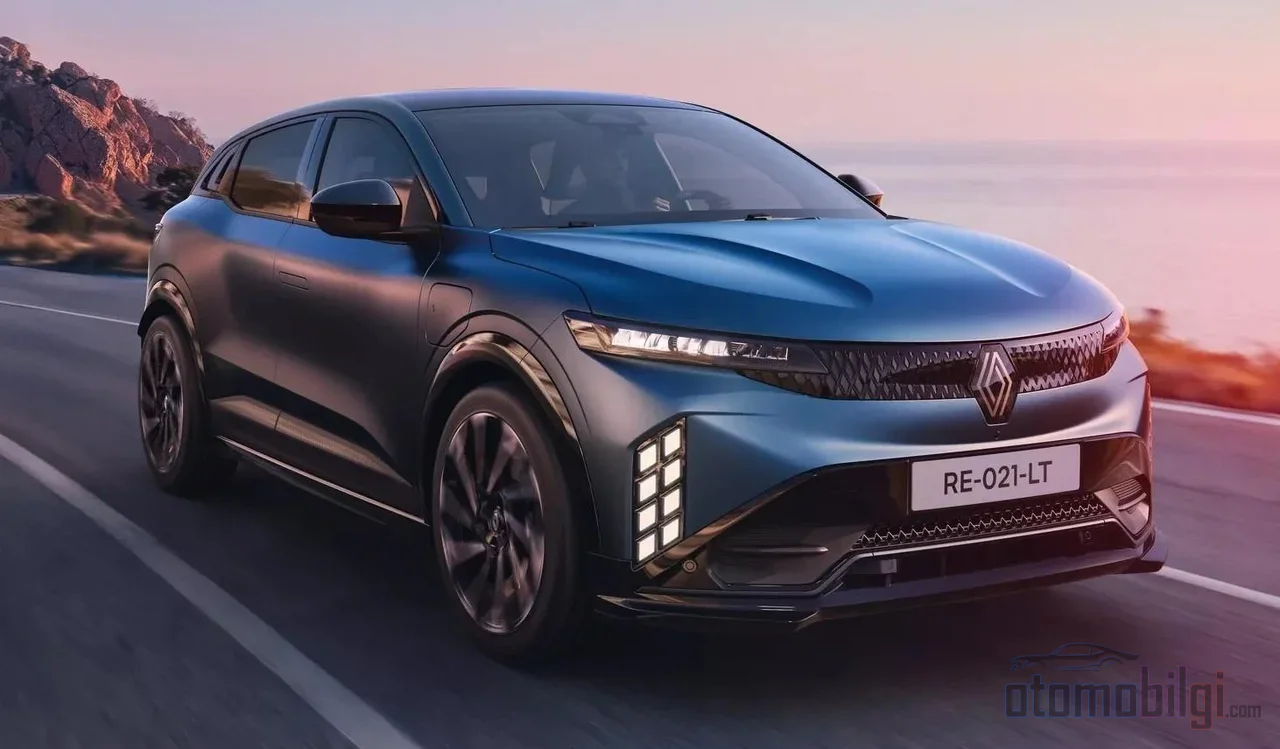
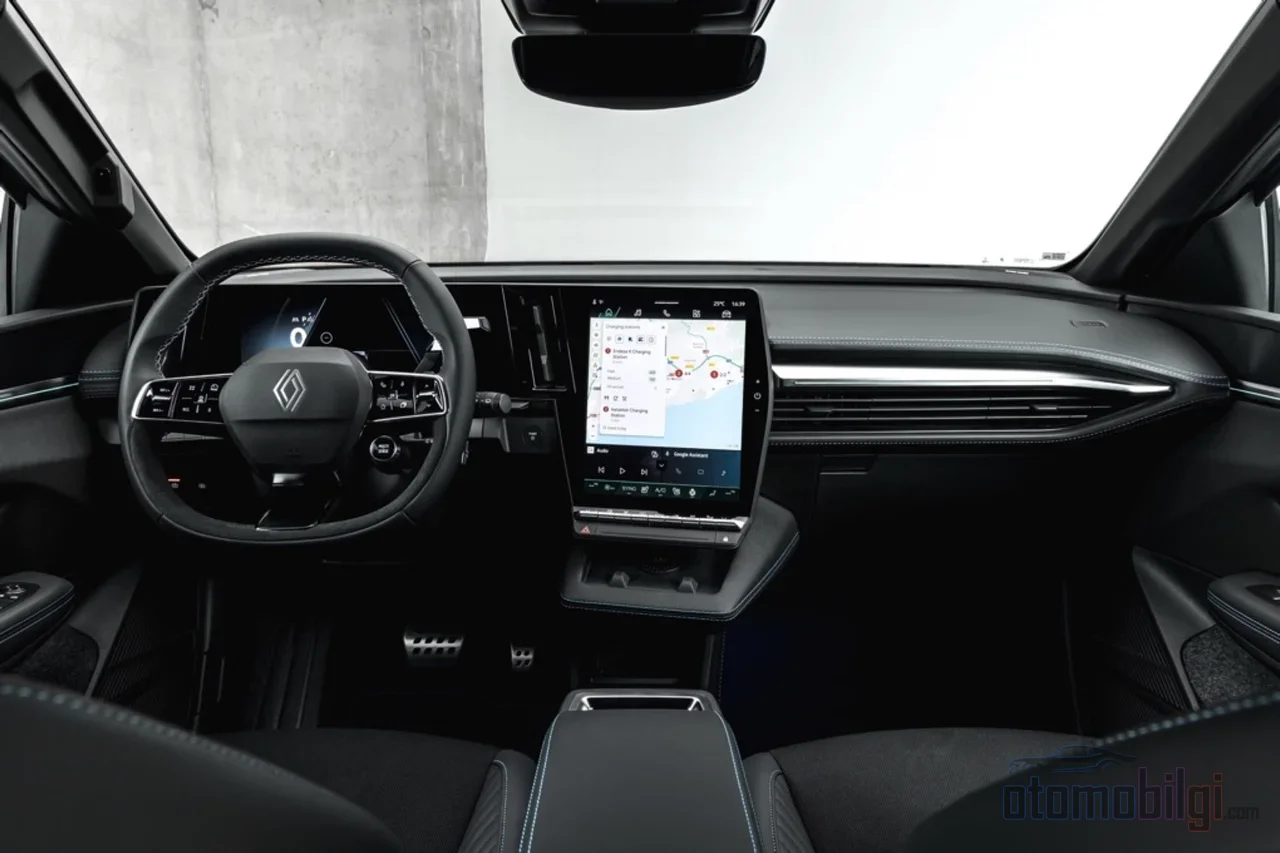
In terms of design, the entire front section except the headlights has been renewed: diamond-pattern daytime running lights, the Renault logo moved under the hood, and three-dimensional full-width tail lights give the body a new identity. There are seven body colors and 19-20 inch wheel options. Inside, the 12.3-inch digital instrument cluster and 12-inch multimedia screen that come with the OpenR Link system, Google Maps, and future Gemini AI integration stand out; the Android Automotive OS base, facial-recognition driver profiles, and, offered for the first time, One Pedal Driving with four-level regenerative braking are also on the list. Approximately 30 driver assistance systems and the digital side mirror camera in the Techno trim are not items there just to pad out the count; they meet expectations for the class. The trim lineup has been simplified to two: Techno and Esprit Alpine.
LFP or NMC? What does this change bring the user?
The classic weakness of LFP chemistry is energy density: it sits in the 90-160 Wh per kilogram band, while NMC talks in the region of 200-300 Wh. In the past, this difference meant a direct range difference in a pack of the same size. Cell-to-pack architecture has changed that equation; the Megane has managed to surpass its previous NMC-equipped version with LFP. This alone does not count as an industrial milestone, but it is noteworthy because it blurs the line that once seemed to separate two distinct chemistries.
What is gained in return? First of all, cycle life. LFP cells offer longer lifespan and better thermal stability, and the flexibility of 0-100% charging also eases daily use. NMC's healthy lifespan is generally accepted to be around 1,500-2,000 cycles and it usually needs to be kept charged to at most 80% - such rigor is not required with LFP. Then comes cost: LFP is a low-cost chemistry, and Renault's purpose in switching is clearly to pull costs down and push competitiveness up. For the user, this can translate into either a more reasonable price or more equipment at the same price - both being the two variables where the D-segment is most sensitive.
And Türkiye's winter?
LFP's biggest weakness is cold weather; the range drop in winter is more pronounced compared to NMC. As a general rule for lithium-ion batteries, range can decrease by 10-30% in the cold, and LFP behaves close to the lower end of that band. So a Megane that sets out with a 500 km WLTP figure in summer will effectively deliver less range in an Anatolian winter - this is a reality for every EV; with LFP its share is just a bit larger. It should also be added as an honest note that modern battery heating and thermal management solutions keep the problem largely under control. Winter used to be the ball and chain of EV ownership; now it has been reduced to a line item in the calculations.
Is the battery really from CATL?
Turkish media has carried headlines claiming the new battery is made by CATL; however, Renault Group's official presentation text does not disclose the cell supplier by name, and this name does not appear in independent EV publications either. What is known for certain is this: Renault had announced in 2024 that it would source LFP cells from both CATL in China and LG in Poland; the Megane's NMC battery before the facelift came from LG's facility in Poland. In other words, the claim of a "battery signed by CATL" has not been officially confirmed and these lines should be read with caution. For the reader who will base their purchase decision on price and range, this detail is of secondary importance for now.
What will the price in Türkiye be?
The European side is settled: the Techno trim is 34,990 Euro, and Esprit Alpine is 37,990 Euro. Renault Türkiye announced that the renewed model will go on sale in the last quarter of 2026; however, the official Türkiye price and definitive equipment list have not yet been disclosed. The only known commitment is that the starting price will not be higher than the current model. This draws a concrete ceiling: as of July 20, 2026, the list price of the current Megane E-Tech 2,386,000 TL. Since April, the official page still shows the old model's 60 kWh and 468 km figures - the new version is not yet on the list, which could also be taken as a sign that the launch is near. The information that the vehicle will fall in the 25% SCT bracket is also among the elements framing the price expectation. The LFP cell, which underpins cost in this class, may also open the way to fitting more vehicle under the same ceiling.
Market context: Where does the Megane stand as EV share grows?
In terms of timing, Renault is in a strong position. In September 2026, 15,074 electric cars were 15,074 electric cars sold in Türkiye and the market share reached 23.65% - a year earlier, the same month was 14.39%. At the top is the Togg T10X with 4,237 units . In the first half of 2026, 80,709 fully electric cars were sold, a share of 18.33%; in the first 8 months, the figure rose to 105,255 units and the share to 18.7%. Although there is a slight decline in unit terms compared to the same period last year, the share continues to grow. As of June 2026, the electric vehicle fleet in Türkiye exceeded 447 thousand units . Calculations once made with an electric share below one percent are today the main variable shaping the market; in this picture, a model offering 500 km with a 2.4 million TL ceiling does not have a hard job.
Range comparison with its rivals
The Megane facelift moves directly ahead of its rivals in range and charging speed. The Kia Niro EV, with 460 km of range and a 41-minute 10-80% charging time, is in the same league; the Hyundai Kona Electric Long Range has a similar profile with 454 km. Both produce 204 hp, and in terms of torque the Megane's 300 Nm is above the Niro and Kona. The general picture of the range map is as follows: at the top of the class are premium models with 800-volt architecture, in the middle are compact D-segment vehicles in the 450-500 km band.
| Model | Range (WLTP) | 10-80% charging | Power |
|---|---|---|---|
| Renault Megane E-Tech (new) | 500 km | 24 min | 220 hp |
| Kia Niro EV | 460 km | 41 min | 204 hp |
| Hyundai Kona Electric (Long Range) | 454 km | 41 min | 204 hp |
| Polestar 4 | 620 km | - | - |
| Audi Q6 e-tron | 625 km | - | - |
| Mercedes EQE | 626 km | - | - |
| Polestar 2 | 655 km | - | - |
| BMW iX3 | 805 km | - | - |
The conclusion from the table is clear: against the rivals in its own price band, the Megane carries an advantage of 40-46 km in range and nearly a halving in charging time. There is still a gap between it and the premium models that has not been closed; but that class's price range is on a completely different plane. The field where the Megane will compete is the non-flagship D-segment EVs in the 450-500 km band, and for now its best card in this field.
Frequently asked questions
- When will it go on sale in Türkiye? The planned schedule is the last quarter of 2026; Renault has officially confirmed this direction.
- What will the price be, more expensive than the current model? Renault has committed that the starting price will not be higher than the current model; the ceiling reference is 2,386,000 TL.
- Is the battery really from CATL? There is no official confirmation; the CATL claim is a report circulating in the Turkish press.
- Is the real range 500 km? 500 km is the WLTP figure; in practice it falls below that, especially in winter months.
- What is V2L used for? It lets you power 220 V devices with up to 3,700 W directly from the vehicle.
What Renault has done with the Megane E-Tech is not the kind of work that requires exaggeration, but the kind that gets the math right. A facelift that moves range and charging speed to the front of the class, drives down battery cost, and leaves the motor as it is - and a vehicle planned to arrive with a price commitment at exactly the point where the Türkiye market is most sensitive. The official price announcement in the last quarter will be the real test of this analysis.
Sources
- Megane E-Tech Electric - Renault Türkiye
- Megane E-Tech Electric Frequently Asked Questions - Renault Türkiye
- European pricing announced for the new Megane E-Tech with 500 km range
- New Renault Megane E-Tech Electric Delivers 500 Km of Range
- New Renault Megane E-Tech Offers 500 km of Range
- Differences Between LFP and NMC Battery Technologies
- NMC and LFP Batteries: What You Need to Know for Electric Vehicles
- How Do LFP Battery Vehicles Perform in Winter Conditions
- Electric Vehicle Winter Use Guide
- Best-selling electric cars in Türkiye
- June 2026 Electric Vehicle Bulletin
- Hyundai Kona Electric vs Kia Niro EV Comparison
- Electric Vehicle Range Comparison 2026