Renault Boreal Launched for Sale in Türkiye
Share This Page
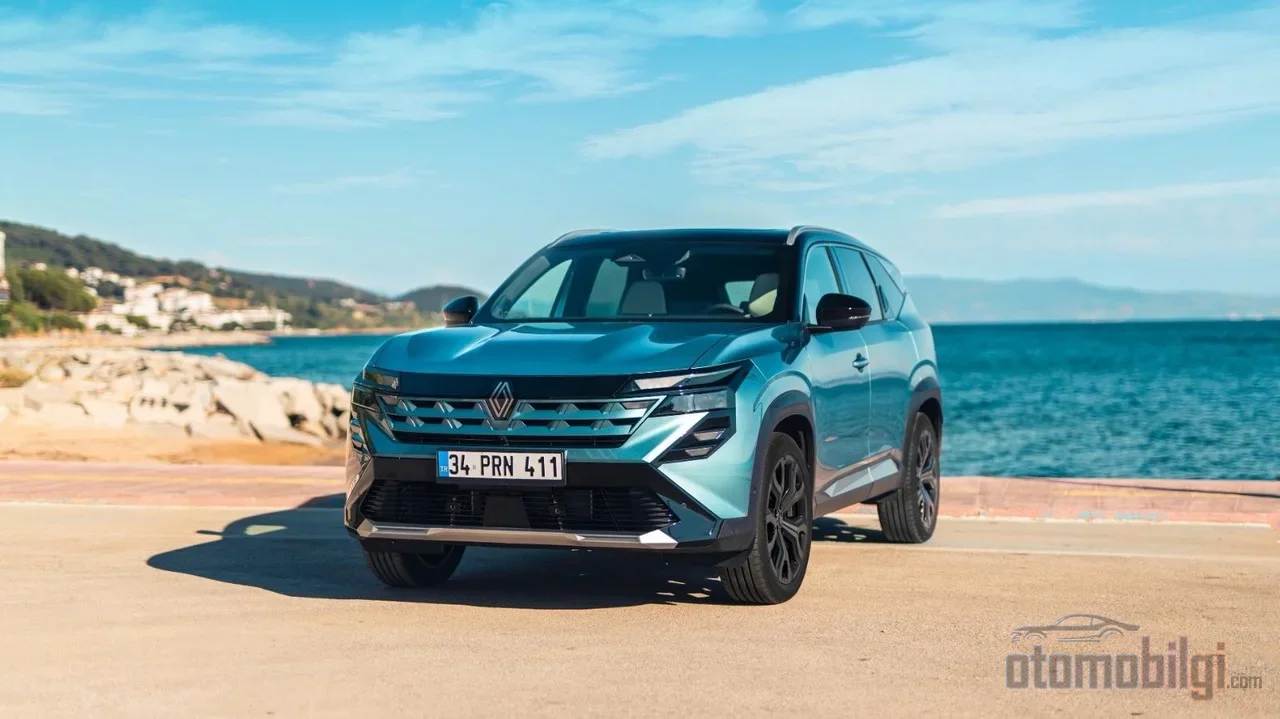
Renault Boreal has been launched for sale in Türkiye: the C-SUV, produced at the Bursa Oyak Renault plant, benefits from the Special Consumption Tax (SCT) exemption thanks to a local contribution rate exceeding 40%, and with its launch campaign it from 2,194,000 TL is finding buyers with starting prices. Positioned between the Duster and the Austral, the model comes in three trim levels with 1.3 TCe petrol and 1.8 hybrid engine options. Below you will find a detailed breakdown of prices, equipment and technical data.
Highlights
- Produced in Bursa, Renault Boreal C-SUV has gone on sale in Türkiye; the starting price is 2,194,000 TL with the launch campaign.
- The localization rate varies depending on the trim, between 50.60% and 58.80% ; all versions exceeding the 40% threshold qualify for the SCT exemption.
- Engine options: 145 hp 1.3 TCe EDC and 160 hp 1.8 hybrid; a 1.2 hybrid 4x4 is coming at the end of 2026.
- Cargo capacity 630 liters, wheelbase 2,701 mm, 25 ADAS and Level 2 active driving assistance on the top trim.
- An export plan to more than 50 countries from production; demand from Latin America will be met from the Brazil plant.
How much are Renault Boreal Türkiye prices, and which trims are available?
The model's launch defined three trim levels and two engine options: Evolution, Techno and Iconic. The launch campaign in the May-June 2026 period aimed to support sales momentum in a period when the market was shrinking, by offering a discount well above the list prices. The campaign was later continued in the July and August price lists; list prices, meanwhile, were updated upward as the gap closed.
| Version | Launch campaign price | Current list price, October 2026 |
|---|---|---|
| Evolution 1.3 TCe | 2,194,000 TL | 2,269,000 TL |
| Techno 1.3 TCe | 2,269,000 TL | 2,760,000 TL |
| Iconic 1.3 TCe | 2,860,000 TL | 3,049,000 TL |
| Iconic 1.8 Hybrid | 3,399,000 TL | 3,399,000 TL |
Two points need attention when reading this table. First, the much lower starting figures seen in some social media posts that circulated during the launch period do not match the official lists; the current official list should be taken as the basis. Second, for vehicles with SCT exemption, the upper price limit, including taxes, is 2,873,900 TL. The list price of the Iconic 1.3 exceeding this threshold shows that the model's SCT-advantaged sales were largely conducted through campaign prices. In other words, the discount here is not a marketing flourish but a necessity imposed by the tax regime - a situation well known to those closely involved in this business.
How does the localization rate enable the SCT exemption?
The mechanism behind the Boreal benefiting from the SCT exemption is simple: when the local contribution rate exceeds 40%, the vehicle falls within the scope of the incentive. According to declarations made to the Ministry, the rate varies by trim level; in petrol versions it is between 53.70% and 58.80% , while in the hybrid Techno it is 50.60% level. Although the press occasionally uses more general statements like "over 40%" or "over 50%", the equipment-based declarations are the dataset that provides the actual detail and paints a consistent picture. It is not surprising that the hybrid version's rate is somewhat lower; the import component share of the hybrid drivetrain is the most natural explanation for this difference.
The model's positioning as "developed for Türkiye, produced in Bursa" is meaningful within this framework. Keeping the local contribution high makes both the tax advantage and price flexibility possible at the same time. For someone who has been following this market for over 30 years, this picture is familiar: local production has always been the most critical determinant of prices, and the SCT system has made this even more pronounced.
Bursa production: Oyak Renault's new flagship model
The Boreal is produced at the Bursa Oyak Renault Automobile Factories. The facility has an annual capacity of 390,000 vehicles and 80% of production goes to export. The factory has produced more than 8 million vehicles to date; it currently produces the Boreal alongside two generations of the Clio on the same lines. The Boreal was described as one of the most concrete steps of the 400 million euro investment decision announced by Oyak and Renault Group.
The export map reflects an interesting strategic choice: the model will be shipped from Türkiye to more than 50 countries, primarily in the Middle East and the Mediterranean. The Latin American market, however, will be supplied by Brazilian production; supplying the same model to two different regions from two different centers is a classic method of Renault's global production planning and a sensible arrangement in logistics. Noting that the factory completed 2025 with a production of 387,113 units and that production of the new Clio started in Bursa in September 2025, how the Boreal fits into this packed schedule becomes self-evident.
It should be added that the production decision was first announced in July 2025, following the Duster. In short, this launch is not a decision made overnight; it is the result of a step planned for at least a year.
Engine options: 1.3 TCe or 1.8 hybrid?
Two engine options target two different user profiles. The 1.3 Turbo TCe produces 145 hp of power and 245 Nm of torque; front-wheel drive with a 6-speed EDC dual-clutch automatic. Its 0-100 km/h acceleration is 9.6 seconds, top speed is 180 km/h, WLTP average consumption is 6.6 lt/100 km and CO2 emissions are stated as 149 g/km. Sufficient for daily use and a setup the market is accustomed to.
The 1.8 Full Hybrid E-Tech, on the other hand, is more powerful with 160 hp and 270 Nm ; its average consumption is 4.8 lt/100 km goes down. The system, powered by a self-charging 1.4 kWh lithium-ion battery, can reach up to 110 km/h in electric mode and can drive electrically for up to 80% of city driving, promising fuel savings of up to 40%. It carries the potential to amortize the price difference for those who drive mainly in the city and keep their annual mileage high. If you are a buyer who mostly drives long distances, the cruising comfort of the petrol version remains a serious alternative.
When is the 4x4 hybrid version coming?
The third leg of the model range is planned to be added in the fourth quarter of 2026, the 1.2 hybrid 4x4 version. This powertrain will deliver 150 hp of power and 230 Nm of torque, with average consumption expected in the 5.8-6.0 lt range. The absence of a 4x4 option at launch may seem like a shortcoming at first glance, but offering traction preferences gradually is a common strategy manufacturers have followed in recent years in the C-SUV class.
Equipment levels: the differences between Evolution, Techno and Iconic
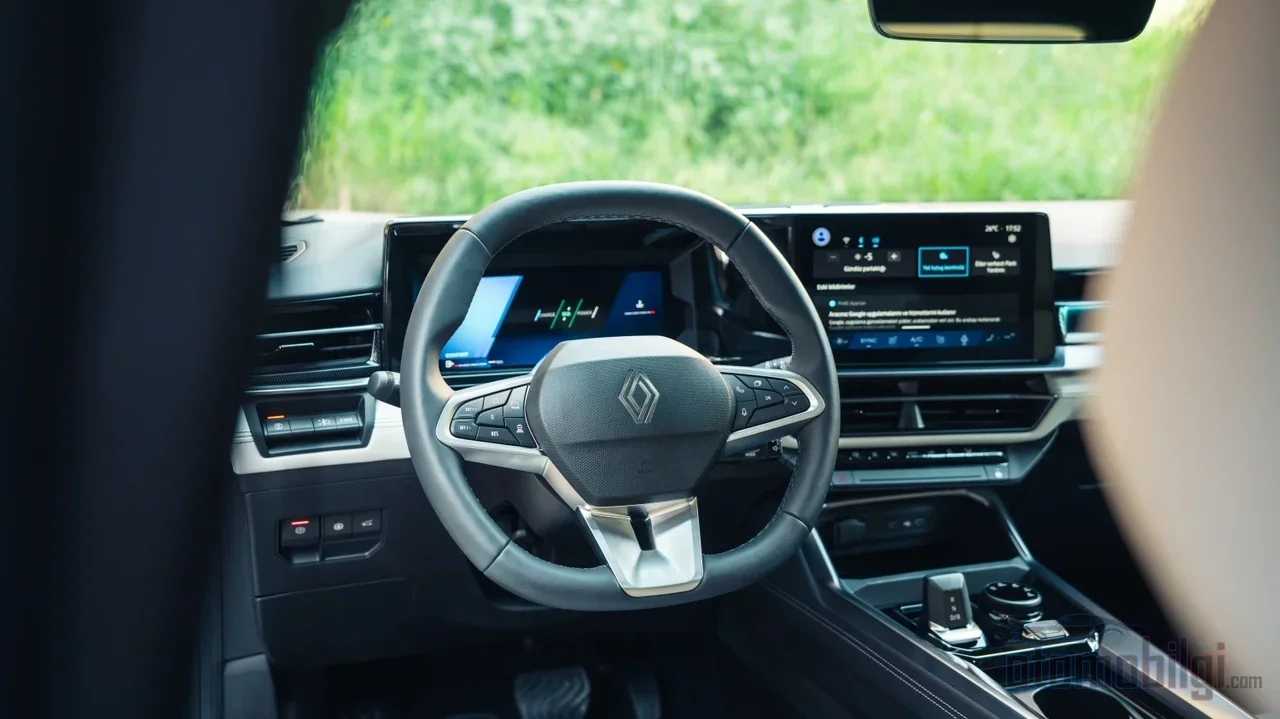
The entry-level Evolution offers a standard equipment list above the class norm. 100% LED headlights, 18-inch alloy wheels, 10-inch openR link multimedia and 7-inch digital display, dual-zone climate control, electric parking brake with auto-hold function, four-way parking sensors, rearview camera, keyless entry, wireless CarPlay/Android Auto, four USB Type-C ports and the Arkamys system's 6-speaker audio setup are all standard. On the driver assistance side it starts with 17 ADAS; adaptive cruise control with stop-and-go support and lane-keeping assist are also part of this list. The panoramic glass roof option is 94,737 TL, while the spare tire adds 14,211 TL .
Techno adds to this base 18-inch semi-diamond-cut wheels, a 10-inch digital display with map replication, Multi-Sense covering five driving modes, 48-color ambient lighting, auto-dimming side mirrors, cooled wireless charging, electric synthetic leather seats and an electric tailgate. The ADAS count rises to 21; blind spot monitoring, rear cross-traffic alert and safe exit assist are the contributions of this level.
Iconic is the top of the range: 19-inch darkened diamond-cut wheels, a 435-watt 10-speaker Harman Kardon sound system, opening panoramic glass roof, Google automotive services, heated front seats and steering wheel, a driver's seat with memory and massage functions, hands-free electric tailgate and a black roof. The ADAS count reaches 25; a 360° camera, active driver assist, emergency stop assist and hands-free parking are found at this level. Active driver assist is the element that takes the model to Level 2 autonomous driving capability. A striking detail is this: it is stated that many of the developments were made in Türkiye by Turkish engineers - an indication that the localization story is not limited to production alone.
Dimensions and suitability for family use
Boreal, with a length of 4,556 mm , is in reasonable dimensions for the C-SUV class; width is 1,841 mm, height 1,659 mm, wheelbase 2,701 mm. 222 mm ground clearance and an 11.01 m turning radius strike a balance that suits both light off-road use and urban maneuvers. Curb weight is 1,434 kg, and the fuel tank holds 50 liters.
The most eye-catching figure is in the trunk: 630 liters of standard volume, rising to 1,868 liters when the seats are folded. In a 4.5-meter body, this value is clearly above the class average and is one of the elements that makes the model especially appealing for family use. In the past, vehicles of this size made do with 400-450 liters of luggage space, and families would pile suitcases into the back seat; today's picture has changed considerably, and the Boreal stands on the right side of that change.
The Boreal's position in a shrinking market
The model's launch coincided with a challenging market environment. In July 2026, car sales declined by 25.79% to 62,478 units, while the overall market shrank by 10.72%. In the first nine months of the year, the market contracted by 13.39% compared with the same period last year, falling to 803,465 units. In such an environment, the trio of high localization, SCT exemption, and aggressive launch pricing gives the Boreal a clear positional advantage in the market.
Positioned between the Duster and the Austral in the C-SUV class, the model plays a bridging role, connecting two different characters within the Renault lineup. Its strongest cards against its class rivals are clear: the tax-advantaged price, the 25-ADAS package in top trim, and the 630-liter trunk. The fact that the top trim's list price exceeds the SCT limit preserves a dynamic that requires buyers to follow campaign periods. A familiar truth in this market already: timing can sometimes be as decisive as the right model.
In conclusion, the Boreal is a C-SUV that combines Bursa's manufacturing strength with a tax advantage and is also ambitious in terms of equipment richness. Its gasoline version appeals to a broad buyer base, its hybrid version to consumption-focused users; the coming months will show how the 4x4 hybrid arriving in the fourth quarter completes the lineup.
Sources
- OYAK - Developed for Türkiye, Produced in Bursa: The New Renault Boreal
- Renault Türkiye - Boreal Technical Specifications
- Renault Türkiye - Boreal Models and Versions
- Renault Türkiye - Tax-Exempt Vehicle Campaigns
- Renault Türkiye - Renault Boreal to Be Produced in Türkiye
- DonanımHaber - Price and equipment of the locally produced Renault Boreal announced
- arabalar.com.tr - Renault Boreal Prices and Equipment Package Ranking
- BloombergHT - Locally produced Renault Boreal goes on sale
- Dünya - Türkiye's role in the global production and export network is strengthening
- Motor1 - Oyak Renault 2025 production data
- Araclo - Türkiye Car Market January-September 2026
- ODMD Press Release