HABAŞ to Broadcast Promotion Until Year-End: Price Competition Comes to the Fore
Share This Page
HABAŞ aims to introduce its first passenger cars by the end of the year. The project, based in Honda's former factory in Gebze, has become one of the most closely watched ventures in the Türkiye automotive market with its investment of approximately 1 billion euros, its annual capacity target of 75,000 units, and the price competition it will establish in the C-Segment. Although no exact launch date has been announced yet, there is a clear picture that sedan and crossover body types will be offered with petrol, hybrid and plug-in hybrid engine options.
Highlights
- Investment amount: approximately 1 billion euros, covering passenger and light commercial vehicle production
- Target capacity in Gebze-Şekerpınar: 75,000 vehicles/year
- Launch target: end of 2026; no exact date announced yet
- Body types: sedan and crossover; engines: petrol, hybrid, plug-in hybrid
- Design signature: Frank Stephenson, who has worked at Ferrari and McLaren Frank Stephenson
When will the HABAŞ car be unveiled?
The company is known to be planning to unveil its first passenger cars by the end of 2026. That said, no exact launch date has been announced since the end of August. It must be said that this feels familiar from the past: a brand preparing to produce cars avoids making calendar commitments before technical preparations are complete. HABAŞ's silence should be read in this light. News in the Kocaeli press indicates that the lines at the Gebze-Şekerpınar factory are being readied for the new vehicle; in other words, the preparation is physically continuing.
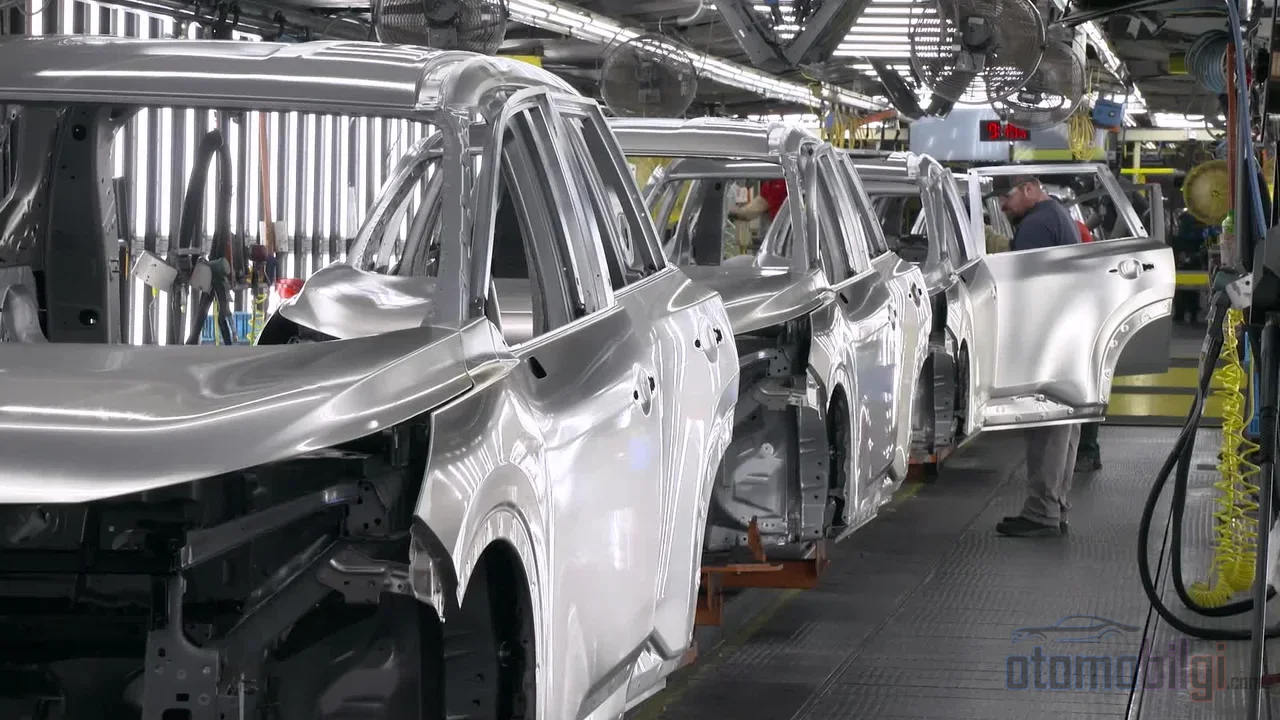
Although the end-of-year target may seem ambitious at first glance, we can say it is not excessive when we take into account that the production infrastructure is not being built from scratch. Buying the facility where Honda ended its production in Türkiye in 2021 gave HABAŞ an advantage most new ventures could only dream of: ready body press lines, paint and assembly infrastructure, and an experienced regional workforce. The task of the factory's new owner is to adapt this infrastructure to its own product program.
Gebze-Şekerpınar factory and production capacity
The backbone of the project is the Şekerpınar facility within the borders of Çayırova, Kocaeli. The total automotive investment - covering passenger and commercial vehicle production together - is being talked about at a level of approximately 1 billion euros . It is aimed to first raise the annual production capacity at the Gebze facility to 75,000 units ; it is also clear that expanding the facility's capacity up to 100,000 cars is on the agenda. It is worth adding: the 75,000 target is a scale indication rather than a figure declared at the commitment level.
Behind HABAŞ making cars lies a long industrial history. Habaş Industrial Facilities, founded in 1969, operates in industrial gases and steel; its heavy machinery factory in Kartal was relocated to Gebze Organized Industrial Zone in 2008, and it also has an additional factory with 32,000 m² of indoor space in Gebkim OSB. So what we are facing is not an investor from outside the automotive industry that merely injects capital, but an industrial organization that has been engaged in heavy production for years. The targeted annual capacity of 20,000 light commercial vehicles in Manisa also shows that the program is not built on a single model.
Known items of the project
| Item | Known status |
|---|---|
| Production site | Gebze-Şekerpınar, the former Honda factory |
| Investment amount | Approximately 1 billion euros (passenger + commercial) |
| Passenger vehicle capacity target | 75,000/year, with expansion to up to 100,000 on the agenda |
| Commercial vehicle capacity | 20,000/year target in Manisa |
| Body types | Sedan and crossover |
| Engine options | Gasoline, hybrid, plug-in hybrid |
| Design | Frank Stephenson |
| Expected segment | C-Segment (no official announcement) |
The Frank Stephenson factor: why is design important?
One of the earliest details to emerge about the project is the design side: the signature of Frank Stephenson, who has worked for brands such as Ferrari and McLaren, is being talked about. As someone who has been in this profession in the automotive industry for more than thirty years, I can comfortably say this: in a new brand's first vehicles, design is more decisive than the mechanics. In the C-Segment, the buyer pays for what they see, beyond the price. The involvement of a designer known by his own name, like Stephenson, is the clearest signal that HABAŞ wants to be taken seriously on a global scale.
There is also a dimension of credibility. We saw what kind of public debate the design language generated during Togg's launch process. Considering that HABAŞ is a second wave passing through the aftermath of that experience, it must be acknowledged that the design choice is not merely an aesthetic preference but part of the brand strategy.
Engine lineup: gasoline, hybrid and plug-in hybrid
Information that the first vehicles will offer gasoline, hybrid and plug-in hybrid engine options points in the same direction. There is no verified information about a fully electric option coming, however. This choice is well-judged given the current reality of the market. In Türkiye, the charging infrastructure still varies greatly by region; hybrid technology also offers the most practical way to give the buyer fuel economy without the worry of electrical infrastructure. Definite data on battery, range, power, performance and equipment levels has not yet been announced - this picture will become clearer by the launch day.
Some posts written at an early date stated that the engines would be Volvo-sourced hybrid and plug-in hybrid units, with Renault/Horse-sourced diesels used in light commercial models. This detail is based on a single source from mid-2024 and remains unconfirmed in recent statements. That is why it is more accurate to speak of the engine lineup at the type level rather than the name level: gasoline, hybrid and plug-in hybrid.
Price competition: on the same front as Togg and Chinese brands
The project's real market impact lies hidden in the segment it will occupy. The expectation is the C-Segment - that is, the most crowded and most competitive slice of the market. HABAŞ entering this segment with gasoline and hybrid options is the fundamental point that distinguishes it from Togg's EV-focused positioning. There is a debate we have become used to since Togg's launch: every new domestic venture being compared with Togg. Many people think this comparison is unfair to both sides; it is a weak inference to consider a brand established with a gasoline-hybrid lineup a direct rival of an EV-focused brand. The competition is real here: for the buyer's wallet in the affordable price segment.
On the Chinese brands front, the situation is clearer. With brands like Chery rapidly gaining a foothold in Türkiye, the price floor in the C-SUV and hatchback classes has been pulled down significantly. HABAŞ positioning itself in this price band both as a Turkish manufacturer and as a holder of a domestic infrastructure relaxed in terms of profit margins could create a logistics and exchange-rate risk advantage against its imported rivals. Moreover, China's automotive ecosystem is having an impact on Türkiye not only at the import level; developments such as Togg's partnership with a Chinese battery giant show how decisive Chinese players have become on the production side of the market as well.
The shrinking market makes the job harder
Now let's move on to the difficult part. HABAŞ is entering not a favorable market, but a shrinking one. The combined automobile and light commercial vehicle market declined 7.40% year-on-year in the January-May period , and in the first half of the year the total market remained at 558,179 units. In July, a monthly figure of 80,786 units was seen with a 25% year-on-year contraction ; the contraction continued in September as well. In the nine-month total, the market fell by 13.39% to 803,465 units . In this picture, a new brand has to grow its share from zero - taking another slice out of a shrinking pie. In the past, the risk of trying out a new brand during contraction periods was much higher than today; now supply diversity has increased, and selectivity on the buyer's side has also increased. Together, these two turn the price factor into a survival condition for new brands. HABAŞ's strategy of emphasizing price competition makes sense precisely at this point. shrinking by 13.39% to 803,465 units fell. In this picture, a new brand has to grow its share from zero - taking another slice out of a shrinking pie means exactly that. In the past, the risk of trying out a new brand during contraction periods was much higher than today; now supply diversity has increased, and selectivity on the buyer's side has also increased. Together, these two turn the price factor into a survival condition for new brands. HABAŞ's strategy of emphasizing price competition makes sense precisely at this point.
The skeptics' voices are also being heard; historical statistics about attempts to establish new brands - only a fraction of the hundreds of private brands established worldwide have survived - are cited as grounds for debate. These statistics are accurate, but not sufficient on their own. While the cost of founding a brand has increased, there are also balancing factors such as ready-made factory infrastructure and existing industrial experience.
What HABAŞ, as the second domestic brand, brings to the equation
HABAŞ is described as the second automobile brand with one hundred percent domestic capital. Its significance for the market should not be sought solely on the plane of nationalism. It creates a concrete difference in two respects: First, employment and the supply chain. A production line in Gebze with a capacity of up to 75-100 thousand means a new order volume for parts suppliers in the region. Second, price balancing. When an affordable domestically produced alternative is offered, it has an indirect disciplinary effect on the pricing policies of imported brands - this is a mechanism that the automotive press has observed for decades.
There is an interesting view in the brand strategy debate: that if HABAŞ wants to become a global brand, it should not follow the exact path taken by Togg. Some commentators suggest looking at the launch models of China's technology brands - first a reliable product in a proven segment, then brand expansion. Whichever model is followed, the market's response to the first unveiling will determine everything. The real test of competition will begin the moment the price tag is revealed.
The calendar for the coming months
There are three developments to watch until the end of the year: the announcement of the official unveiling date, the clarification of the first technical details - especially engine power and equipment levels - and the emergence of price expectations. Considering that the production lines at the factory are being prepared again, it is reasonable to expect a rapid transition to series assembly after the unveiling. However, for a brand trying to hit its target during a period of market contraction, taking its time and launching with the right product is in both its own interest and the market's. Whatever the calendar may be, the Turkish automobile market has been awaiting this unveiling for some time.
Sources
- Automotive – HABAŞ official website
- Major investment from Habaş Automotive, which bought Honda's factory – Dünya
- HABAŞ starts automotive production with €1 billion investment – Motor1 Türkiye
- A new car brand is born from Kocaeli – Kocaeli Gazetesi
- The Second Domestic Car After Togg Is Coming: HABAŞ – Turkinfo
- HABAŞ Domestic Car: Frank Stephenson Design – Otokampanya
- When will the HABAŞ car be released? – Haberdehaber
- HABAŞ Becomes Türkiye's Second Domestic Car Brand – Satın Alma Dergisi
- ODMD Press Release, June 2, 2026
- Türkiye Car Market September 2026 – Araclo
- HABAŞ's Global Brand Formula – The Brandage
- TOBB concerned – will China trip up Togg? – T24