Opel Combo Will Now Hit the Roads from Bursa
Share This Page
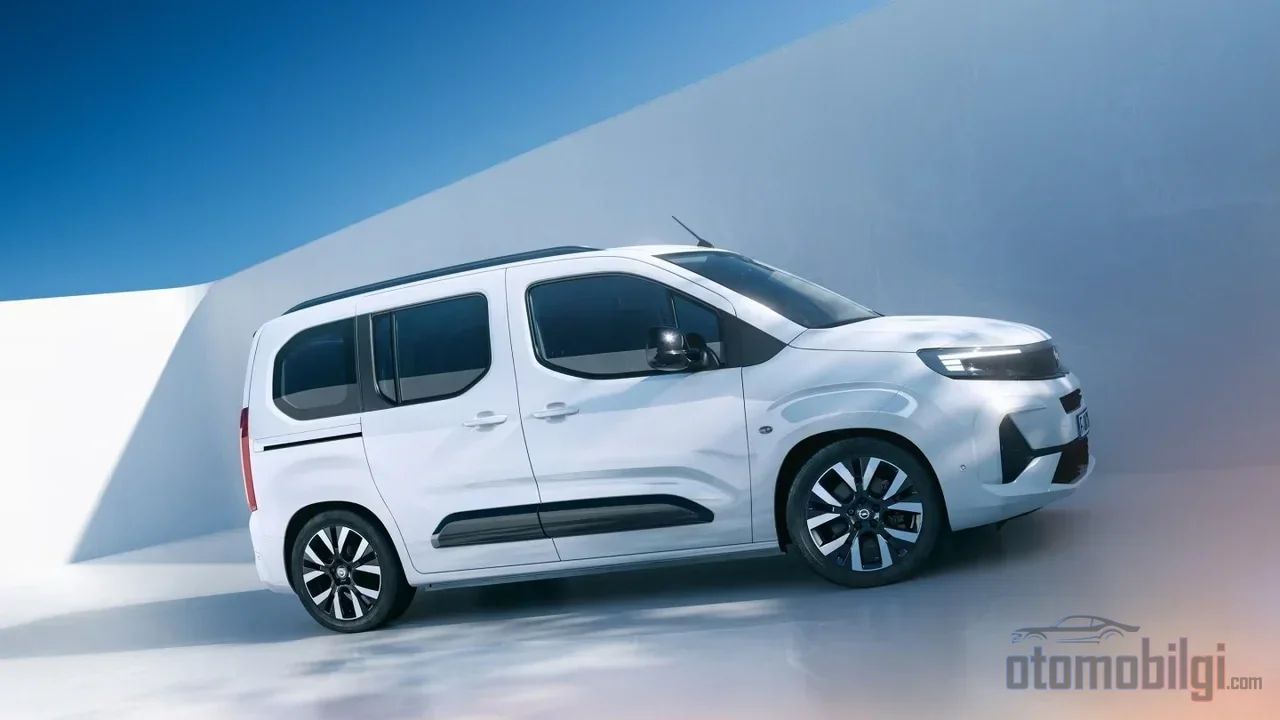
The Opel Combo will start being produced at the Tofaş Factory in Bursa from the third quarter of 2026 and "Made in Türkiye" badge, hitting the roads with this label. This means Opel is returning to production in Türkiye after 26 years, following the end of its automobile production in Torbalı, İzmir, in 2000. The decision to move the brand's best-selling light commercial model to Bursa is a development that should be read carefully, both in terms of Tofaş's capacity strategy and competition in the Turkish light commercial vehicle market.
Highlights
- Opel Combo production in the third quarter of 2026 starts at the Tofaş Bursa Factory.
- Opel after 26 years is producing in Türkiye again; the Zafira and Vivaro were previously produced in Bursa.
- Tofaş–Stellantis K9 project: investment of up to 256 million euros, annual 150 thousand units production target.
- Tofaş raised the annual capacity of its Bursa factory to 500 thousand units.
- The Combo reached a 15% market share in the C-Combivan segment in the first seven months of 2026.
Where and when will the Opel Combo start being produced?
The answer is short and clear: at the Tofaş Factory in Bursa, starting from the third quarter of 2026. This schedule, confirmed by Opel Türkiye's official announcement, shows that the Combo, the highest-volume member of the brand's light commercial vehicle family, will now be offered to the Turkish market as locally produced. With the start of production, the vehicle will cease to be merely an imported model for the Turkish consumer and will become a product signed by Bursa.
There is no coincidence behind this decision. The cooperation between Tofaş and Stellantis is built on a framework that has been established step by step over the past few years. With the agreement signed with Koç Holding in 2023, the commercial and passenger versions of the mid-size light commercial vehicle family coded K0 were allocated to Tofaş, and these models began to be produced in Bursa for four different Stellantis brands. The Peugeot Rifter coming off the Bursa line is also part of this picture. With the addition of the Combo, Opel's light commercial range produced in Türkiye is expanding; the factory now concretely carries the identity of Stellantis's light commercial production center in Türkiye.
The K9-coded leg of the production contract signed with Stellantis is the part that makes this news economically meaningful. The contract includes an investment of up to 256 million euros and, including knocked-down vehicles, an annual production capacity of 150 thousand units target. The Combo's Bursa schedule aligns with the projected flow of this project. In other words, what we have before us is not just an assembly decision for a single model, but the visible step of a long-term production strategy.
Production in Türkiye after 26 years: the line stretching from Torbalı to Bursa
Those who have been steeped in this business will remember: Opel's production history in Türkiye is not new. At the factory established in Torbalı, İzmir, in 1989 with an investment of 40 million German Marks, starting from 1990 the Vectra production had begun. Starting with a modest figure of 1,156 units in its first year, production had surpassed 12,000 by 1993; the A and B generations of the Vectra rolled off the Torbalı line. In 2000, automobile production quietly came to an end, and for many years Opel approached the Turkish market solely as an importer.
Now the picture is changing. The fact that in Bursa Zafira, Vivaro and Vivaro van production had previously begun shows that the room Combo is knocking on the door of is not unfamiliar. Still, the Combo carries a separate meaning: this is the brand's volume leader in Türkiye. In Stellantis's short-term plans, one reads not a cheap-labor-seeking assembly operation, but a choice that brings Opel's most critical segment together with Turkish engineering.
As a brand that once produced in our country, starting production in Türkiye again today is for us an extremely valuable step, not only strategically but also emotionally. The fact that the Opel Combo, developed with German engineering, will come to life in Bursa with Turkish engineering and Tofaş's world-class production quality symbolizes the meeting of two strong engineering cultures.
There is another point Yantaç emphasized: local production aims to offer customers faster, more flexible, and stronger solutions. In the past, waiting periods of months between order and delivery were experienced; short logistics lines and the ability to flexibly adjust production volume according to demand serve to solve this old problem. It should be noted that all of these expectations are conveyed in official statements with "targeted" language, and that no concrete production quantity or export figure has been shared yet.
Tofaş's capacity calculation: from 450 thousand to 500 thousand
This new era in Bursa also marks a threshold on the factory's own scale. Tofaş announced the capacity increase with a public statement: the annual production capacity of the Bursa plant was increased by 50 thousand, from 450 thousand to 500 thousand . This figure is one of the most ambitious capacity steps in the Turkish automotive industry's last thirty years. It is known that Egea/Tipo production has been extended until December 31, 2025, and that after this line, Bursa's weight will shift to Stellantis's light commercial family; although it is talked about in city rumors that Egea production has ended, it is not yet possible to confirm this at the level of an official statement.
Tofaş's moves are not limited to production. The company purchased the entire capital of Stellantis's Turkish distribution company, Stellantis Otomotiv Pazarlama A.Ş. Bringing production and distribution under the same roof shows that the K9 project's annual target of 150 thousand units must be considered together with the logistics and sales side. In the past, the balance between manufacturer and distributor was a separate matter of expertise; now both will be managed from a single center in Bursa. There are also statements that the investment amount exceeds 200 million euros, but the official declaration clearly states up to 256 million euros as follows.
Combo's market position: Opel's light commercial locomotive
To understand why the Combo was brought to Bursa, it is enough to look at the sales figures. In 2025 in Türkiye, Opel with 27,471 units in light commercial vehicle sales became the third best-selling brand in the market; of these sales, 15,722 units were created by the Combo alone. In the first seven months of 2026, the Combo reached 7,779 units in sales and a 15% market share in the C-Combivan segment. So the model brought to Bursa is not a random lineup member; it is the vehicle that carries the brand's real weight in light commercial.
The overall picture of the market, meanwhile, offers a context that cannot be bought with money. In the January–September period, Türkiye's total automobile and light commercial vehicle market shrank by 13.39%, dropping to 803,465 units . The contraction was sharper in September: the total market fell by 25% to 80,786 units ; of these, 62,478 were automobiles and 18,308 light commercial. On the other hand, in the first months of the year, OSD data showed that the light commercial market grew by 9% in the January–April period; the difference in period and scope between the two measurements is the main reason for the divergent signals. In this picture, local production can serve as a shield that provides flexibility in cost and supply in a shrinking market - at least in theory.
With which engine and equipment options is the Combo sold?
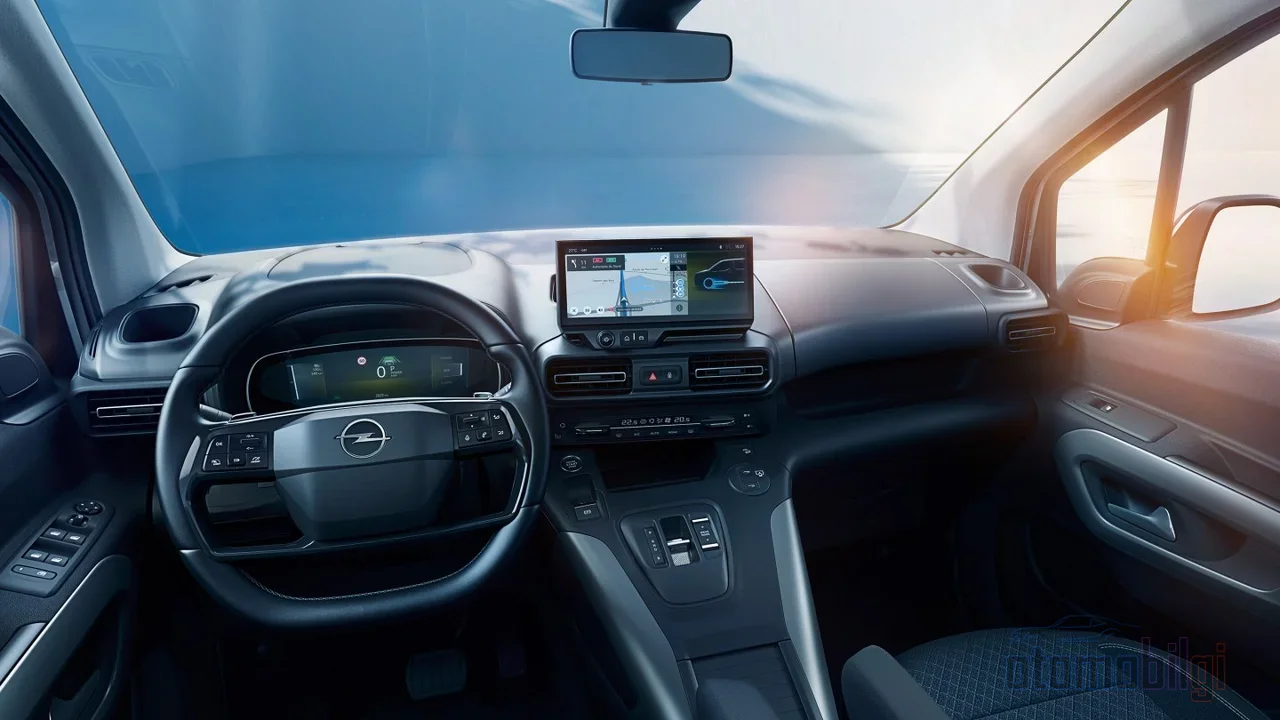
The Combo lineup sold in Türkiye sits on three equipment levels: Essential, Edition and Ultimate. On the engine side, the 1.5-liter diesel producing 130 HP stands out; as a transmission option, a 6-speed manual or an 8-speed automatic is offered. In terms of design language, the Opel Vizor front face, digital cockpit and advanced driver assistance systems are among the standard elements; the Intelli-Lux LED® Matrix Headlight technology is also on the table at the top equipment level. The Combo also continues its roughly 40-year model history with its 100% electric version - it will be a separate point of curiosity to see how this version's position in Türkiye takes shape during the production period that began in Bursa.
| Version | Transmission | List Price |
|---|---|---|
| 1.5 130 HP Diesel Essential | MT6 | 1,631,000 TL |
| 1.5 130 HP Diesel Essential | AT8 | 1,797,000 TL |
| 1.5 130 HP Diesel Edition | AT8 | 2,003,000 TL |
| 1.5 130 HP Diesel Ultimate | AT8 | 2,133,000 TL |
An warning is necessary when approaching the prices: Current lists change quickly depending on version updates and campaign periods; a list figure of 1,875,000 TL for the Essential AT8 was also seen in recent months. So it would be right to read the table above not as an instant certainty, but as a reference showing the lineup's relative positioning. Thanks to the effect of campaign discounts, a significant difference can occur between the list price and the actual purchase price.
Will local production be reflected in the Combo's price?
There are many tradespeople and fleet customers asking this question; the honest answer is that there is no explicit price reduction commitment in the sources. Opel's communication is built on customer advantage rather than price. Within the framework of the campaign launched in October, corporate customers get 500 thousand TL, on Combo Ultimate and Combo Cargo 600,000 TL up to an amount of 12-month 0% interest credit or a cash discount option is offered. The brand's own price list page offers Essential and Edition 500,000 TL 12-month 0% interest or 850,000 TL 6-month 0% interest options, and when no credit is used 100,000 TL cash discount is given; on Ultimate the figures rise to 750,000 TL 12-month 0% interest level, with some packages reaching interest-free amounts of up to 1 million TL. The campaign covers not only the Combo but also the Vivaro, Zafira and Movano.
The conclusion from this picture is that the Combo's battle against its rivals is currently being fought not through the price tag but through financing terms. Time will tell whether domestic production will create a cost advantage in the long run; for now, short delivery times and flexible production volume stand out as concrete benefits offered to the customer. Exchange rates are a rivalless competitor; a vehicle produced in Bursa breathes better than an imported rival during currency shocks - this is the very essence of a 30-year observation.
What should be watched in the coming period?
With the band starting to turn in the third quarter, there are three indicators to watch. First, how many of the Combos leaving Bursa will go to export; export potential is frequently emphasized in social media posts, but no official figure has been announced so far. Second, how the actual production volumes will settle against the K9 project's annual target of 150,000 units. Third, whether domestic production will be reflected in the price list. It is said that the Combo's success story in Türkiye will write a new chapter in Bursa; in this period when the market is shrinking, how this chapter will be filled line by line needs to be closely watched.
Sources
- Opel's Light Commercial Vehicle Locomotive Combo Is Becoming a Bursa Native! (Official from Opel Türkiye)
- Reborn after 26 years: Opel will start producing its light commercial vehicle in Bursa
- Production move from Opel in Türkiye: The best-selling commercial model to be produced in Bursa
- Opel Combo Becomes Local: To Be Produced in Bursa
- Special Advantageous Offers on Light Commercial Vehicles from Opel for October (Stellantis Press)
- Opel Combo Price List (Official from Opel)
- TOFAŞ Increased Its Production Capacity to 500 Thousand!
- Production agreement between Tofaş and Stellantis
- Türkiye Automobile Market September 2026 - Sales Data
- April 2026 Results Announced! (OSD)
- Special light commercial vehicle opportunities from Opel for October