The 26-Year Collaboration at Tofaş Enters a New Era
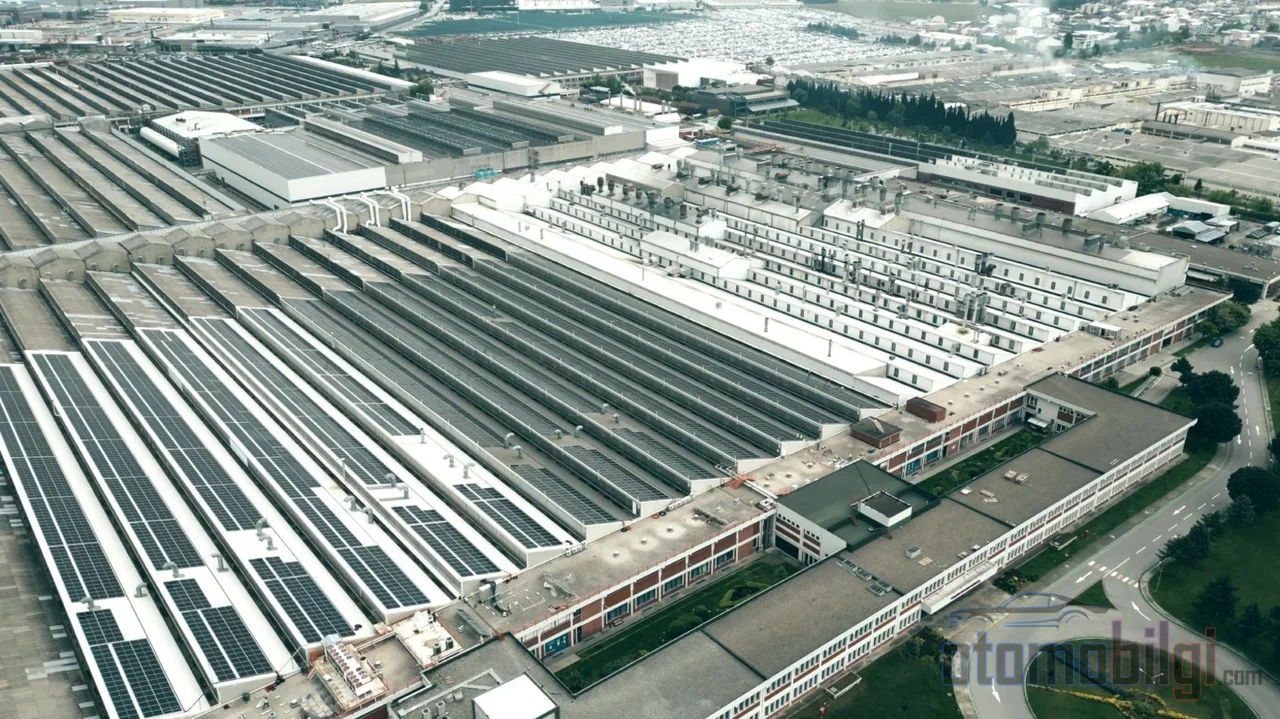
An automotive partnership continuing uninterrupted for 26 years is, in itself, news worthy of this industry's scale. The cooperation between Koc Holding and Fiat - whose home today is Stellantis - has exactly such a history: The Fiat Dobló, which began rolling off the line in Bursa in 2000, was the most recognizable fruit of this partnership. With a ceremony held on Monday, October 26, 2026, at the Tofas Factory in Bursa, the same model re-entered the production line - and in a completely different framework: as the first step of four brands, five models, and an annual capacity of 100,000 vehicles.
This is not an ordinary model change. The Dobló's return to Bursa is the first concrete production output of the new structure, established through the strategic agreement signed in September 2025 and Tofas taking over Stellantis's Turkiye operations in their entirety. In short, the partnership is no longer merely a production relationship; it is a holistic model that brings nine brands under one roof, extending from manufacturing to distribution.
Key Highlights
- Series production of the K9 project began in Bursa on October 26, 2026; the first vehicle was the Fiat Dobló.
- The investment amount is approximately 300 million dollars according to Koc Holding statements; it was announced as 256 million euros in Stellantis's April 2025 bulletin.
- Annual capacity is 100,000 vehicles; the aim is for approximately 20% of production to be exported.
- A total of approximately 660,000 units are planned to be produced by the last quarter of 2034; there is a target of 50% local content.
- When the K9 and the existing K0 line operate at full capacity, Tofas's annual production is expected to rise to 230,000-250,000 units.
What Does the New Era of a 26-Year Partnership Mean?
The production relationship between Koc Holding and Fiat has been taking concrete shape in Bursa continuously since the early 2000s. The Dobló is the emblematic name of this era: It began production at Tofas for the first time in 2000, remained in Bursa until 2023, and reached over 600,000 units sold in the Turkish market over 26 years. After its departure in 2023, the model was produced at another base for three years, and has now returned to Bursa as the first vehicle of a far broader project.
What truly makes the new era meaningful are the structural steps added alongside production. In April 2025, the unification of Stellantis brands under the Tofas roof and a 256 million euro investment decision were announced. In August 2025, Tofas decided to merge by taking over its subsidiary Stellantis Otomotiv Pazarlama; with the Capital Markets Board approval received in October 2025, it was confirmed that Tofas owned 100% of Stellantis Turkiye's capital and voting rights. In April 2026, the new board of directors was announced: Levent Cakiroglu was appointed chairman and Samir Cherfan vice chairman.
On the distribution side, the picture has grown even wider: Citroën, DS Automobiles, Opel and Peugeot were added alongside Alfa Romeo, FIAT, Jeep and Maserati. The company's announced revenue figures also show the pace of the transformation: One year after its transfer to Stellantis Turkiye, revenue rose from 3.5 billion dollars to over 7 billion dollars. The K9, the product of the strategic agreement signed in September 2025, is the production arm of this whole.
What Will Be Produced Under the K9 Project?
K9 is the production code not of a single model, but of a model family spanning four brands in the light commercial segment. The vehicles coming off the line and the key parameters are as follows:
| Item | Detail |
|---|---|
| Models | Citroën Berlingo, Fiat Dobló, Opel Combo, Peugeot Rifter, Peugeot Partner |
| Body types | Cargo and combi versions |
| Annual capacity | 100,000 vehicles |
| Export target | Approximately 20% of production |
| Total production target | ~660,000 units by the fourth quarter of 2034 |
| Employment | About 1,000 people, ~100 local suppliers |
| Localization target | 50% |
In this project, not only the assembly line but also the engineering side is carried out in Bursa: Over 300 engineers and technical staff took part in the development processes; verification and validation tests were completed at the Tofas R&D Center. The platform was built with a multi-energy architecture - if demand for electric light commercial vehicles grows, production can shift flexibly in that direction. In other words, while K9 meets today's diesel and gasoline light commercial demand, it also leaves the door open for tomorrow's electrification scenarios.
What Does the New Era Mean for the Bursa Base?
The Gap Left Behind After the Egea
To grasp the meaning of the K9, one needs to look at the summer of 2026. Production of the Fiat Egea in Bursa came to an end, as reported between June 30 and July 6, 2026; the number of vehicles that came off the line in 11 years was approximately 1.4 million. The breakdown is striking: 565,097 Egea Sedan, 150,896 Egea Cross and 29,678 Egea Hatchback and Station Wagon. In the automotive industry, the end of a model's life always raises questions of employment and capacity at production plants; K9 is the clearest answer given to that question for Bursa.
Capacity and Scale
The facility's total installed capacity is around 450,000 vehicles per year, and the factory has produced its 7.5 millionth vehicle. According to the projection shared by Tofas CEO Cengiz Eroldu, when the K9 and the existing K0 line run at full capacity, the company's annual finished vehicle production will reach 250,000 units - other assessments converge on a range of 230,000–250,000. The overall picture given by Omer Koc is also striking: Over the past five years, roughly 1 billion dollars has been invested in Tofas, and half of that went to R&D and innovation. The company's allocation of about 3 percent of its revenue to R&D for nearly 20 years, an R&D Center with more than 600 employees, and around 300 patent applications are proof that Bursa is not merely an assembly base.
Who Did the Ceremony Bring Together?
The production launch ceremony on October 26 was a gathering where even the attendance itself spoke to the weight of this project. In addition to Minister of Industry and Technology Mehmet Fatih Kacir, Mustafa Varank, Rahmi M. Koc, Omer Koc, Ali Y. Koc, Koc Holding CEO and Chairman of the Tofas Board of Directors Levent Cakiroglu, Stellantis Middle East and Africa Operations Director Samir Cherfan, FIAT CEO Arnaud Belloni and Tofas CEO Cengiz Eroldu were present at the ceremony. Rahmi M. Koc's appearance on stage in person was read as an indication of the strategic importance of this investment at the holding level.
The diplomatic subtext of the ceremony was also noteworthy. While Omer Koc voiced his warnings regarding reciprocity within the Customs Union and the European Union's commercial practices, the speakers at the event criticized protectionist tendencies in Europe. An investment like K9, coming right in the middle of this debate, is being evaluated as a move that reinforces Turkiye's position in the European automotive supply chain through production.
Market Context: Where Does This Investment Fit?
One of K9's stated objectives concerns the domestic market directly: Starting from the domestic market share of locally produced vehicles at around 35 percent, it is projected that this will be increased by roughly 10 points thanks to K9 - this projection is based on Koc Holding's own statement. On the other hand, the company's 2026 expectations are framed more conservatively: In the scenario where the domestic market is projected at around 300 thousand units, the export target is 75–85 thousand and the production target is in the range of 145–155 thousand units; 250 million euros of investment is planned throughout the year. After the balance sheet, analyst expectations were also revised in this direction.
In the broad industrial picture, as of August 2026, Turkiye's annual production reached 854,860 units, with Ford Otosan leading by a wide margin with 290,916 vehicles; Tofas ranks among the top five producers. When K9 reaches full capacity, a significant shift in momentum in the middle of this ranking is likely. On the Stellantis side, K9 is a concrete step of the FaSTLane 2030 strategy announced for the Middle East and Africa region: The goal is to increase the region's revenues by 40 percent and raise the regional share in supply from 30 percent to 90 percent.
In summary: Where Is the Partnership Heading?
For someone who knows this business inside and out, the picture is clear. In the past, Tofas was the production and distribution arm of a global manufacturer in Turkiye; now it is a company that brings production, distribution and engineering under one roof, manages nine brands, and develops products with its own R&D. The 26-year collaboration has evolved, with K9, from a privileged relationship into mutual dependence. Omer Koc's statement that talks with its partner about new models are ongoing also shows that the door remains open.
That is why the Dobló's return to Bursa is not merely symbolic, but instructive: The most reliable clue about which vehicles will come out of Bursa ten years from now is that first Dobló that rolled off the line on the morning of October 26.
Sources
- Tofaş's 300 Million Dollar K9 Investment Has Started Production
- A New Turning Point in the Koç Holding and Stellantis Partnership
- TOFAŞ K9 Project Production Launch Ceremony Held
- Approval Received from the CMB for Tofaş
- Tofaş's New Board of Directors Announced
- Mass Production Begins in Tofaş's 300 Million Dollar Investment in Bursa
- Tofaş Completes Fiat Egea's 11-Year Production Run with 1.4 Million Vehicles
- Tofaş Produces Its 7.5 Millionth Vehicle at Its Bursa Plant
- Expectations Shift at Tofaş After the Balance Sheet
- We Will Become a Mega Corporation