Tofas's Transformation to the Stellantis Era from 1968 to 2025
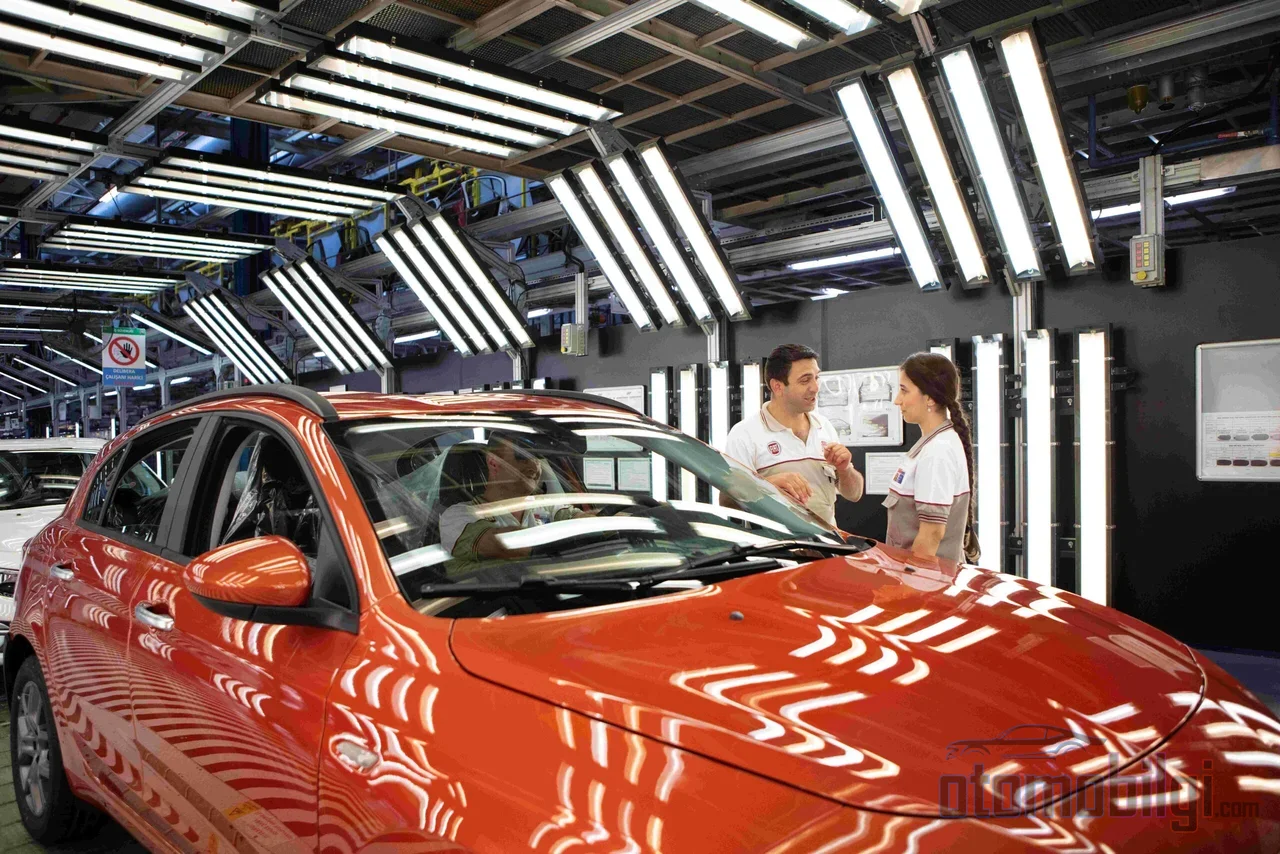
Just think about it: A factory that started out in 1968 on a barren plot of land in Bursa with 600 employees is taking over, in 2025, the management of the Turkiye operations of one of Europe's largest automotive groups in a single move, through a 400 million Euro acquisition. That sounds a bit corporate, doesn't it? But behind it lies a complete story of an era: A journey stretching from the Murat 124 to the Egea, from single-brand assembly to multi-brand production. So why and how did Tofas reach this point? Let's explain it together.
Actually, on this page we are telling the story not of a model, but of a company. We go deep into the design and history details of the Murat 124 or the Egea on other pages; here, the real question is this: How was the partnership structure of this giant facility in Bursa established, what does the transition to the Stellantis era mean, and what do the 2025 figures say?
Highlights
- Partnership structure: 37.8% Koc Holding, 37.8% Stellantis, 24.3% publicly traded shares
- Acquisition price for Stellantis Turkiye operations: 400 million Euro; Competition Board approval April 18, 2025
- 2025 revenue of 319.4 billion TL, net income of 8.3 billion TL, employee count of 4,612
- WCM Gold Level in 2013: One of the top three among FCA's 175 factories
- After the takeover, 8 brands united under a single roof
From 1968 to Today: How Was Tofas Founded, and How Did It Grow?
The story begins on October 1, 1968. Vehbi Koc, founder of the Koc Group, establishes the Turkish Automobile Factory Inc., known by its short name Tofas, in partnership with Fiat. The construction of the factory in Demirtas, Bursa, is completed in 22 months, and the facility opens for production on February 12, 1971. In the first year, capacity is 20,000 vehicles per year, with roughly 600 employees. In other words, the first version of today's giant complex was, honestly, quite modest.
What followed was the kind of industrial epic we all know: The Murat 124 under Fiat license in 1971, the Murat 131 in 1977, and the Sahin, Kartal and Dogan family in 1981. In 1990, capacity rises to 100,000 with the Tempra; in 1993, it reaches 250,000. In 1994, during the Uno era, R&D work begins, and the corporate R&D structure is born within the same year; in 2008, it is officially registered as an R&D Center under Law No. 5746. Today, more than 500 engineers work at the 17,000 m² center, and 145 patent applications have been filed in the last five years. The intellectual and industrial property rights of the Doblo and Minicargo projects also belong to Tofas. So this is not just a factory that produces, but one that designs.
What Is Produced at the Factory?
The production area in Bursa is approximately 1 million m² (350,000 m² of which is enclosed), with an annual production capacity of 450,000 vehicles. The Egea family (Sedan, Hatchback, Station Wagon, Cross) along with the Fiat Doblo and Fiorino come off the line; the factory also produces vehicles for the Citroen, DS, Peugeot, Opel and Vauxhall brands. While the Egea is exported worldwide as the Fiat Tipo, the Doblo goes to the US as the Ram ProMaster City. Over the years, the 1 millionth vehicle rolled off the line as a Fiat Tempra, and the 7.5 millionth as a Fiat Ulysse. Production of the Egea began in 2015 and reached 1,417,047 units in about 11 years; during this period the model was Turkiye's most preferred car for 10 consecutive years. Stellantis announced that the Egea's production journey in Bursa has been completed.
Partnership Structure: Who Owns What Share?
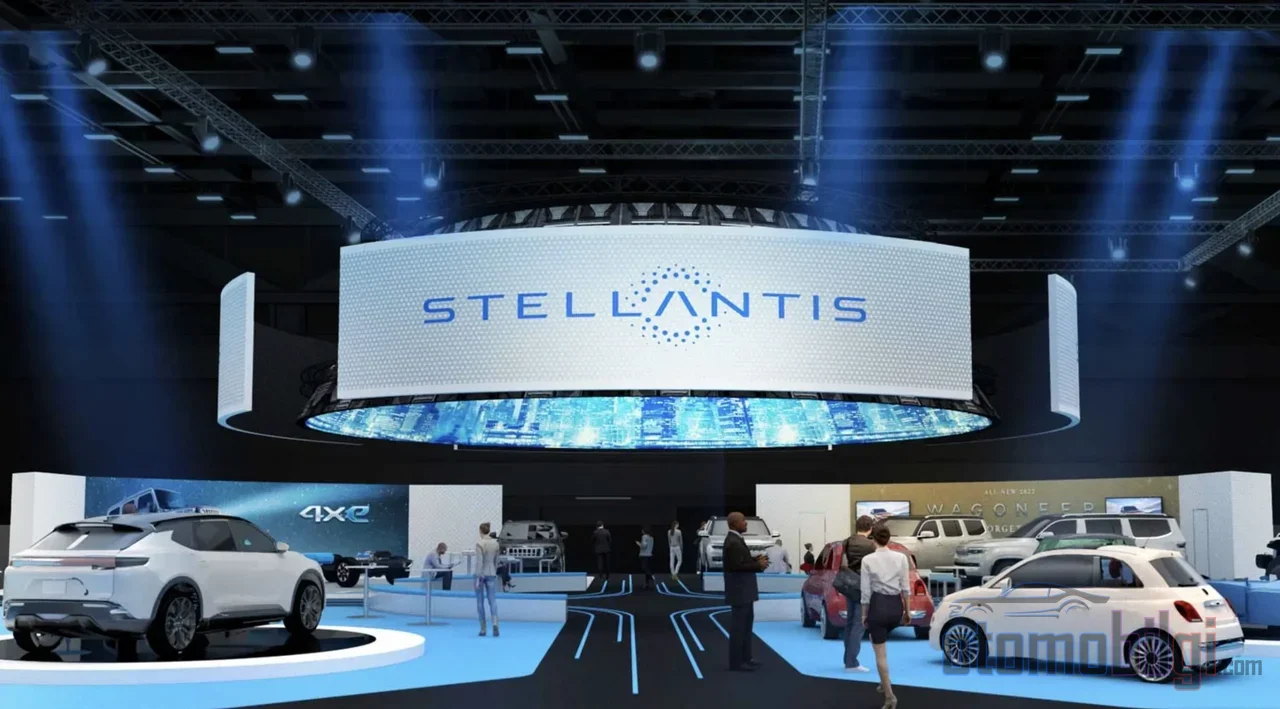
Here is where the corporate heart of the matter beats. Tofas is a publicly traded joint-stock company listed on Borsa Istanbul. The partnership structure is built on a nearly perfect balance: Koc Holding 37.8%, Stellantis 37.8%, and publicly held shares 24.3%. In other words, the two giant partners share equal power. The current share data on KAP gives these percentages with small differences: Stellantis Europe Spa with 189,279,857 shares at 37.86%, Koc Holding with 188,114,548 shares at 37.62%. This tiny difference is a routine detail arising from share transactions carried out over time; the big picture does not change.
The publicly held 24.3% stake trades on the BIST 30 and BIST 100 indices; the company is also included in the BIST Corporate Governance and Sustainability Indices. In management, Omer Koc serves as Chairman of the Board, while Cengiz Eroldu serves as General Manager. Among its subsidiaries are the consumer finance company Koc Stellantis Finans A.S. and Fer Mas Oto Ticaret A.S. 2013 WCM Gold Level:
2013 WCM Gold Level: In 2013, an achievement was written in golden letters into Tofas's corporate identity.
2013 marked an achievement written in golden letters into Tofas's corporate identity. In the World Class Manufacturing (WCM) journey that began in 2006, as a result of the audit conducted on November 13-15, 2013, the Bursa plant reached Gold Level. WCM means a plant moving up a class worldwide in terms of efficiency, quality, and maintenance discipline. Gold Level is one of the top steps of this program. The Gold Level, on the other hand, is one of the peak steps of this program. Tofas has become one of the first three plants among the 175 production facilities in the FCA world to reach this level. In the same year, the company exported 160,000 vehicles, earned 1.6 billion Euros in export revenue, and on its own accounted for approximately 22% of Turkiye's total automobile production.
What Happened in 2025: So what is the main event?
So what is the main event? Stellantis, born from the merger of FCA and PSA in 2020, emerged as a giant player on the global automotive stage and became Tofas's second major partner. Then in 2023, Koc Holding and Stellantis decided to expand their partnership in Turkiye and strengthen Tofas, and a plan for mid-size light commercial vehicles and passenger cars for five brands was announced, with Stellantis aiming to start production in early 2025. Under the 300 million dollar K9 Project, production began at the Bursa plant for four brands.
The real breakthrough came in 2025: Tofas agreed to take over Stellantis's operations in Turkiye, and the acquisition price came to 400 million Euros. The process did not go smoothly; The Competition Authority did not grant direct approval at the first application, but approved the transaction on April 18, 2025, under investment and distribution commitments. In other words, the company got the green light on the condition of taking on certain investments and distribution obligations. Following the acquisition, a two-day dealer meeting evaluated the 2025 business results and shared the 2026 targets.
8 Brands Under a Single Roof
The most visible result of this acquisition is this: The Turkiye distributorship of the Fiat, Peugeot, Opel, Citroën, Jeep, Alfa Romeo, Maserati and DS brands has been united under a single roof, namely Tofas. Moreover, this is not a brand-new situation for Tofas; the company had already been representing Fiat, Fiat Professional, Alfa Romeo, Jeep, Maserati and Ferrari in the domestic market for years. In the 2007 Minicargo project, the Peugeot Bipper and Citroën Nemo were produced for PSA, and in 2011 production of the Doblò for Opel and Vauxhall began; multi-brand production was written into Tofas's DNA in those years.
What Do the 2025 Figures Say?
To make the corporate transformation concrete, looking at the numbers is the most sensible approach. Here is Tofas's 2025 profile:
| Indicator | 2025 Data |
|---|---|
| Revenue | 319.4 billion TL |
| Net income | 8.3 billion TL |
| Number of employees (December 2025) | 4,612 |
| Annual production capacity | 450,000 vehicles |
| Koc Holding share | 37.8% |
| Stellantis share | 37.8% |
| Publicly traded share | 24.3% |
| Stellantis Turkiye transfer price | 400 million Euro |
The financial trajectory is also remarkable: In the first half of 2025, consolidated net profit was 6 billion 291 million TL, which means a 197.2% increase compared to the same period of the previous year. In the second quarter, revenue rose 116% year-on-year to 69.4 billion TL. As for the number of employees: As of December 2025, the workforce of 4,612 is the final step of the personnel adjustments in the company's history; although the data were captured at different periods, the management announces this figure as the official profile.
Why Does This Transformation Matter?
Let's give the short answer: In 2025, Tofas took over Stellantis's Turkiye operations for 400 million Euro, ceasing to be merely a manufacturer and transforming into an integrated automotive company listed on the stock exchange that combines production and distribution under the same roof, controlled by Koc and Stellantis with equal (37.8%) shares. This structure, which provided employment for 4,612 people in 2025 with 319.4 billion TL in revenue and 8.3 billion TL in net income, runs the Turkiye operations of eight brands from a single hand.
When you place this transformation within the broader picture of the Turkiye automobile industry, its meaning grows even larger. We are talking about an industry that went from 11 thousand units of annual assembly in the 1960s to 1.2 million in production today; this journey extends from Ford's first assembly line in Istanbul to the Devrim and Anadol, from Tofas and Renault to Togg. Tofas's transition into the Stellantis era is not the final stop of this long journey; it is a current example of how global automotive groups are rebuilding their local partnerships. The lines in Bursa keep turning, now carrying the weight of eight brands.
Sources
- Tofaş - Wikipedia
- Tofaş Turkish Automobile Factory - OSD
- Tofaş/Stellantis acquisition approved under commitments - Competition Authority
- Stellantis and Koç Holding Strengthen Tofaş - Koç Holding
- A New Turning Point in the Koç Holding and Stellantis Partnership - Stellantis Media
- Certificates and Awards - Tofaş official website
- Tofaş posts 6.3 billion lira consolidated net profit in the first half of the year - Anadolu Agency
- Tofaş and Stellantis reach an agreement - Ekonomim
- 8 brands under one roof - Dünya
- The production journey of the Fiat Egea at Tofaş - Stellantis Media