Why Does Tofaş Also Manufacture for Peugeot and Citroën?
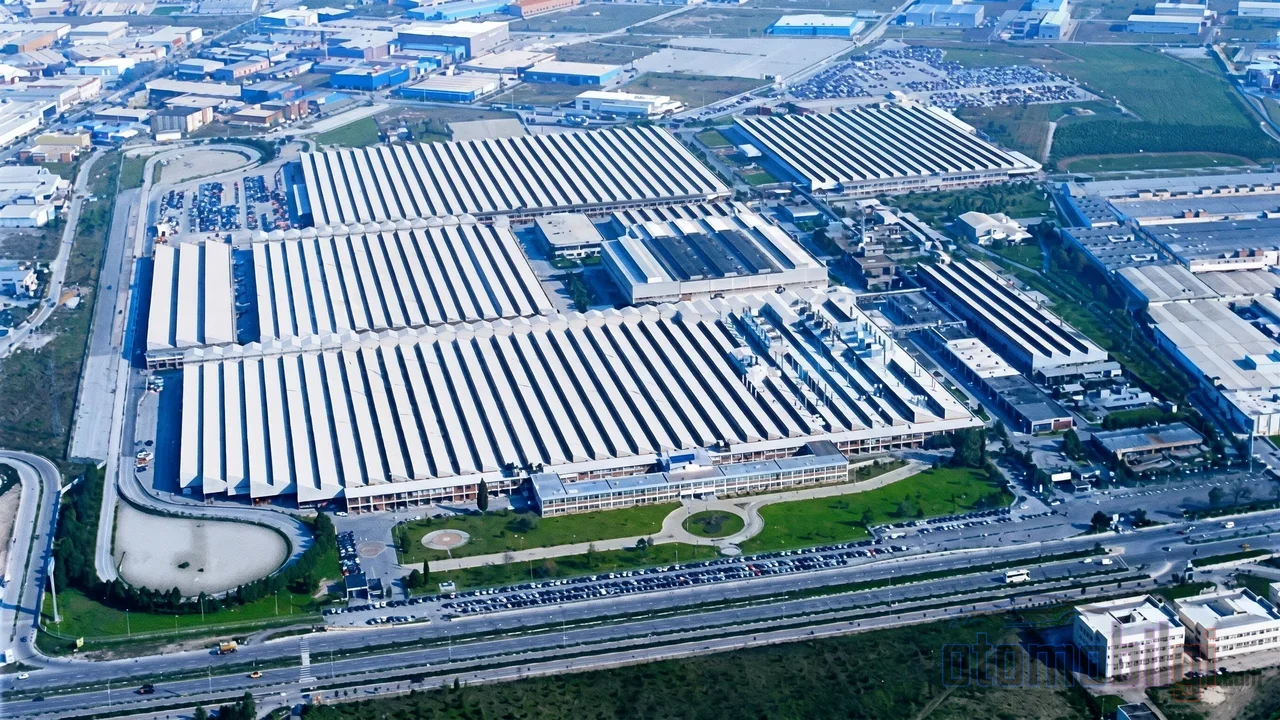
Imagine a factory in Bursa: one day a Fiat rolls out of its doors, the next day a Peugeot, the following day a Citroën, an Opel, or even a Vauxhall. It sounds a bit surreal, doesn't it? But this is a true story, and it began with a single project in 2007. For those wondering why Tofas produces not only for Fiat but also for other brands under the same roof: the answer lies in a contract manufacturing tradition spanning nearly two decades, extending from a single agreement to today's K9 project.
In this article, we will follow that tradition step by step. But first, let us ask this question: How does a factory synonymous with Fiat sell vehicles to a rival group, and how does the intellectual property of that vehicle still remain with it?
Fiat's Home in Bursa: A Brief Founding Story
Tofas was founded on October 1, 1968 under the leadership of Vehbi Koc, as a partnership between Koc Holding and Italian Fiat. The first model, the Murat 124, rolled off the line in 1971 under a Fiat license. In other words, from its very first day, the factory was the child of a partnership; and this detail is actually the seed of the multi-brand production story we will tell later.
Exports to Egypt began in 1975; capacity reached 100 thousand units in 1990 and 250,000 units in 1993. 1994 was a critical year: Tofas R&D was established. The factory was no longer just a place assembling someone else's designs; it was an engineering center capable of designing its own vehicle. In today's partnership structure, Koc Holding and Stellantis hold equal shares, each at 37.8 percent; the remaining 24.3 percent belongs to other shareholders. Annual production capacity is 450 thousand vehicles.
Highlights
- 2007: With the Minicargo project, Tofas produced vehicles for PSA for the first time in its history (Peugeot Bipper, Citroën Nemo)
- The intellectual property rights of the Minicargo belonged to Tofas; total investment of 265 million pounds
- 2013: Tofas rose to WCM Gold Level among FCA's 175 factories
- 2025-2026: With the K9 project, five models from four brands are being produced in Bursa, with an annual capacity of 100 thousand vehicles
The 2007 Minicargo: When Tofas Signed a First
Three Brands, One Line
The turning point of the story came in 2007. Fiat, PSA Peugeot Citroën, and Tofas developed a joint project for light commercial vehicles; its codename was Minicargo. As a result, the same vehicle family entered the market under three different names: the Fiat Fiorino, the Citroën Nemo, and the Peugeot Bipper. The vehicles were gradually introduced to the market from late 2007 onward, and the world premiere was held directly in Bursa. At 3.86 meters in length, it was a compact, city-friendly vehicle suited to narrow streets within its segment.
The striking aspect of this is: it marked the first time in Tofas's history that it sold the rights to one of its models to PSA and manufactured for the PSA group. Even more importantly, the intellectual and industrial property rights of the project belonged to Tofas. In other words, Tofas was not playing the role of a mere assembler here; it was the party that developed the vehicle and owned its design. The agreement establishing this joint production platform was presented in the press as one of the biggest industrial moves of its era; naturally, because nothing like it had ever been seen in Turkiye.
What Do the Numbers Say?
Minicargo was a total investment of 265 million pounds, of which 132 million was spent directly on R&D. With the project, capacity rose from 250 thousand to 360,000; in 2008 it reached 400 thousand. In the same year, the Tofas R&D Center was officially registered: more than 500 employees work at the 17,000-square-meter center, and patent applications had reached 145 in five years. In short, Minicargo was concrete proof of Tofas's evolution from a car assembly plant into a globally scaled manufacturing and engineering company.
2009: The Door to North America Opens
Let's correct a common confusion here: the first vehicle exported from Turkiye to North America in 2009 was not Tofas's but Ford Otosan's Ford Transit Connect. Produced on the line in Kocaeli, the Transit Connect opened up to the roads of the USA and Canada, with 176 thousand units exported in four years. This was a huge milestone for Turkiye's automotive export history; one in four of the Transits going to the USA was Turkish-made.
So where does Tofas fit into this picture? It too benefited from the same global export momentum. As early as 2011, the Doblo began being produced for the Opel and Vauxhall brands; in 2013, investments preparing the Doblo's export to the USA and Canada were announced. The vehicle that entered the North American market as the Ram ProMaster City was also a product of this effort. In other words, Ford Otosan opened the door of 2009, and Tofas walked through it with its own car.
2013 WCM Gold Level: A Factory That Passed the Quality Exam
Multi-brand production is all well and good, but why would global giants entrust their vehicles to Bursa specifically? Part of the answer came in 2013. Among the 175 production facilities in the Fiat-Chrysler world, Tofas became the factory to reach Gold Level in the WCM (World Class Manufacturing) program. Think of it like an exam: all of the group's factories go through the same quality criteria, and Bursa moved ahead as the first facility to reach this level, including the 350 factories of its suppliers.
Indeed, Tofas was already the first factory to reach Silver Level within FCA in 2009. These ratings are no exaggeration, they are genuine quality references: behind the successive brands choosing Bursa as their production base lies this record of reliability.
The Stellantis Era and Today's K9 Project
From Merger to a Single Roof
Let's fast forward on the calendar for the final link in the chain. In 2020, FCA and PSA merged to form Stellantis. Thus Fiat, Peugeot, Citroën, DS, Opel and Vauxhall came under a single roof; the Fiat side, one of Tofas's partners, naturally transformed into this new group. In 2025, Stellantis transferred its operations in Turkiye to Tofas, and in September 2025 a strategic production agreement was signed.
K9: Four Brands, Five Models, One Line
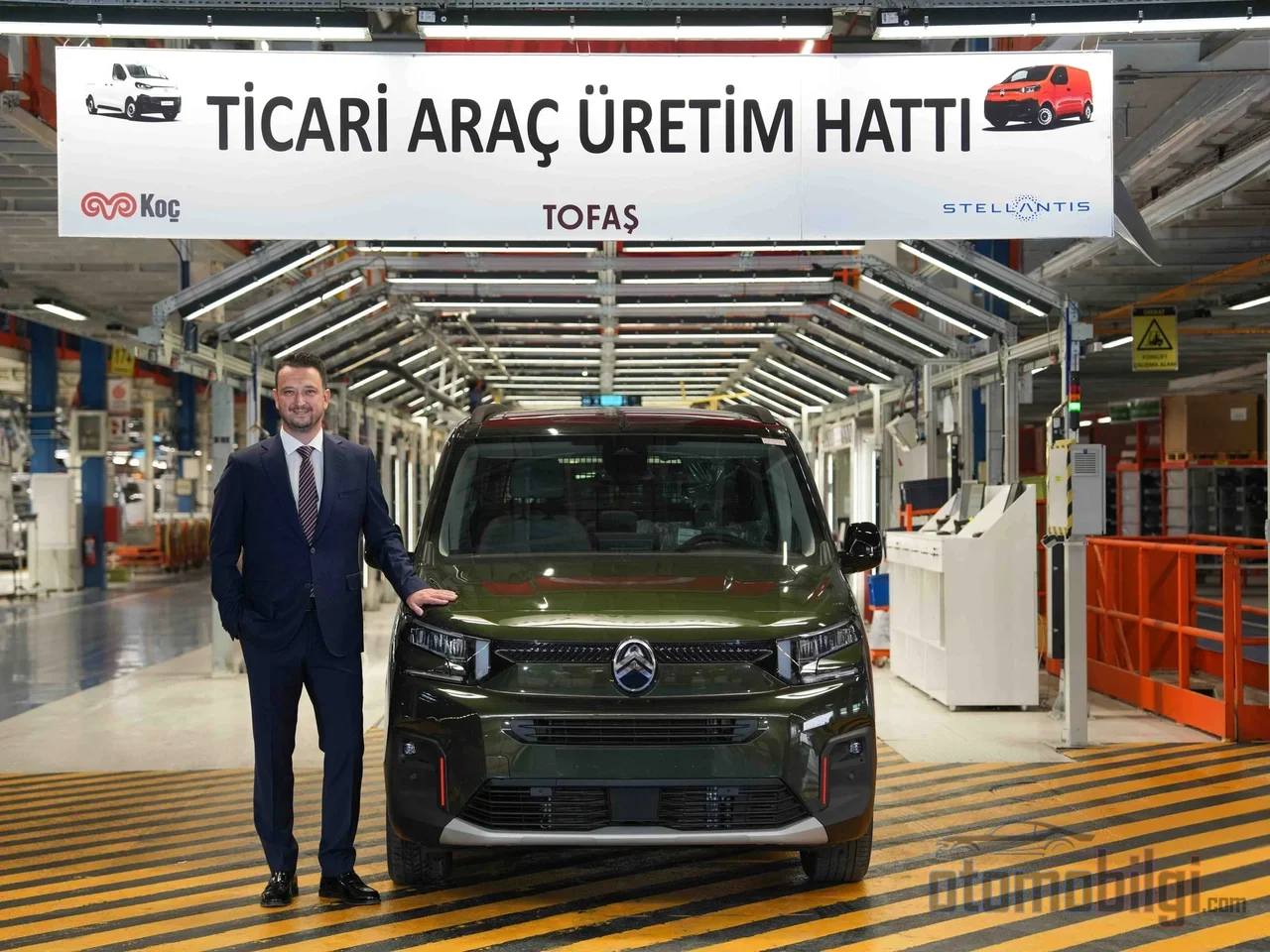
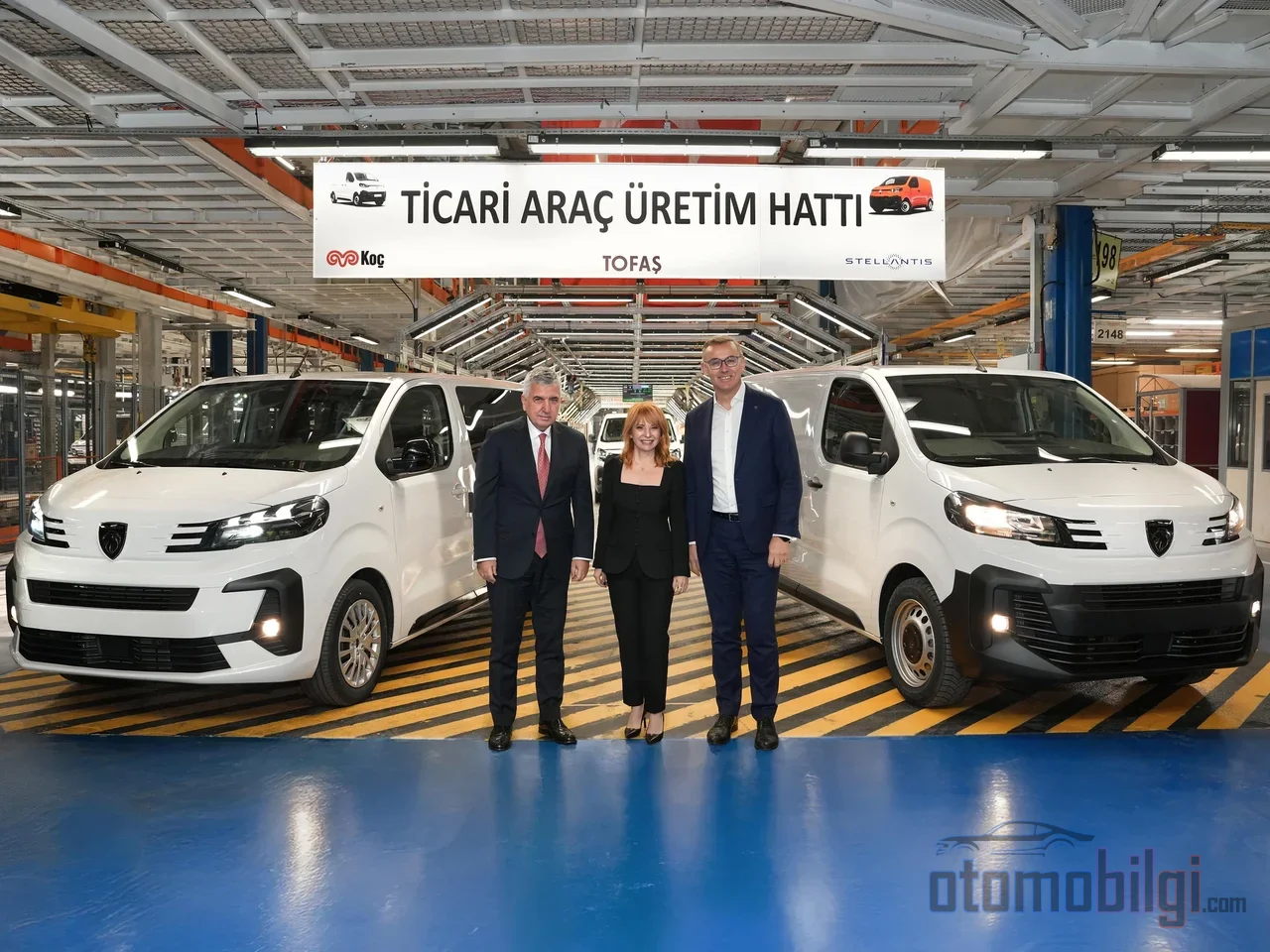
Here is where the story stands today: Production officially began with the $300 million K9 investment, and the first model off the line was the Fiat Doblò; the official ceremony was held in Bursa on October 26, 2026. Under the K9 program, five models from four brands are being produced: Citroën Berlingo, Fiat Doblò, Opel Combo, Peugeot Rifter and Peugeot Partner. Annual capacity is 100,000 vehicles. The export target is the Middle East and African countries; including knocked-down vehicle exports, an annual target of 150,000 units is aimed for.
Under the agreement, Tofas aims to produce a total of 1 million vehicles between 2024 and 2032. Let's clarify the investment figures: The amount announced for K9 is around $300 million; in some documents, the production contract investment covered by the agreement is shown separately in euro terms. These differences are not a contradiction, but separate accounting of different scopes. Indeed, roughly $1 billion had been invested in the previous light commercial generations over five years.
The picture in Bursa changed rapidly as well. In early 2026, the Citroën Berlingo began being produced in Turkiye for the first time in the brand's history; the Peugeot Rifter rolled off the line at the end of July. In the same year, production of the Fiat Egea, which had produced 1.4 million units in 11 years, ended in July. Like a farewell to the old and an opening of the door to the new: the plant focused on the light commercial segment, in addition to the large commercial models, namely the Fiat Ulysse/Scudo, Peugeot Traveller/Expert, Citroën Spacetourer/Jumpy and Opel Zafira/Vivaro families.
So Why Does Tofas Produce for Multiple Brands?
Let's give the clear answer we promised: Tofas produces today for Peugeot, Citroën, Opel and Vauxhall under the Stellantis umbrella, as a natural result of the partnership established with Fiat in 1968 and the tradition of contract-based multi-brand production that began with the 2007 Minicargo project. Koc Holding's position as a partner in both Tofas and Stellantis, the Bursa plant's capacity of 450,000 vehicles, its R&D strength, and its quality infrastructure proven with WCM Gold Level are the fundamental pillars of this model.
Here a confession is also necessary: Turkiye's automotive industry in the 1990s and 2000s was sometimes criticized for assembly-heavy production. But the Tofas example offers evidence that goes beyond this criticism. Because the intellectual and industrial property of the Doblo and Minicargo projects belongs to Tofas. For a plant to produce a vehicle it developed itself and sell it to other brands under their own name is far beyond mere assembly work; this is, in the full sense, a design and manufacturing industry.
The Meaning of This Story Today
Tofas's multi-brand production journey is not a coincidence, but the product of a series of right moves: the R&D center established in 1994, the partnership formed with protected intellectual property in 2007, the Gold Level earned in 2013, and the K9 agreement signed in 2025. Each step was built upon the previous one.
The next question on everyone's mind is clear: Will the target of 1 million vehicles by 2032 really hold up? We saw the first Doblò to come off the K9 line; next up are the export figures. Bursa's story continues to be written, and this time Fiat is not the only one taking the stage.
Sources
- The new compact, economy van concept developed by Fiat and PSA Peugeot Citroën in partnership with Tofas
- Minicargo became 'Nemo, Fiorino and Bipper'
- Tofaş has started production of the Minicargo
- Ford Otosan - Wikipedia
- Koç Holding - Tofaş's K9 Investment Has Entered Production
- Tofaş and Stellantis signed a production agreement
- Tofaş targets to produce 1M vehicles by 2032 under Stellantis deal
- Fiat Doblo returned to Türkiye: 5 models will be produced at Tofaş
- History - Tofaş official website
- The 'golden' factory