From Design to Production: Turkish Automotive Engineering
Share This Page
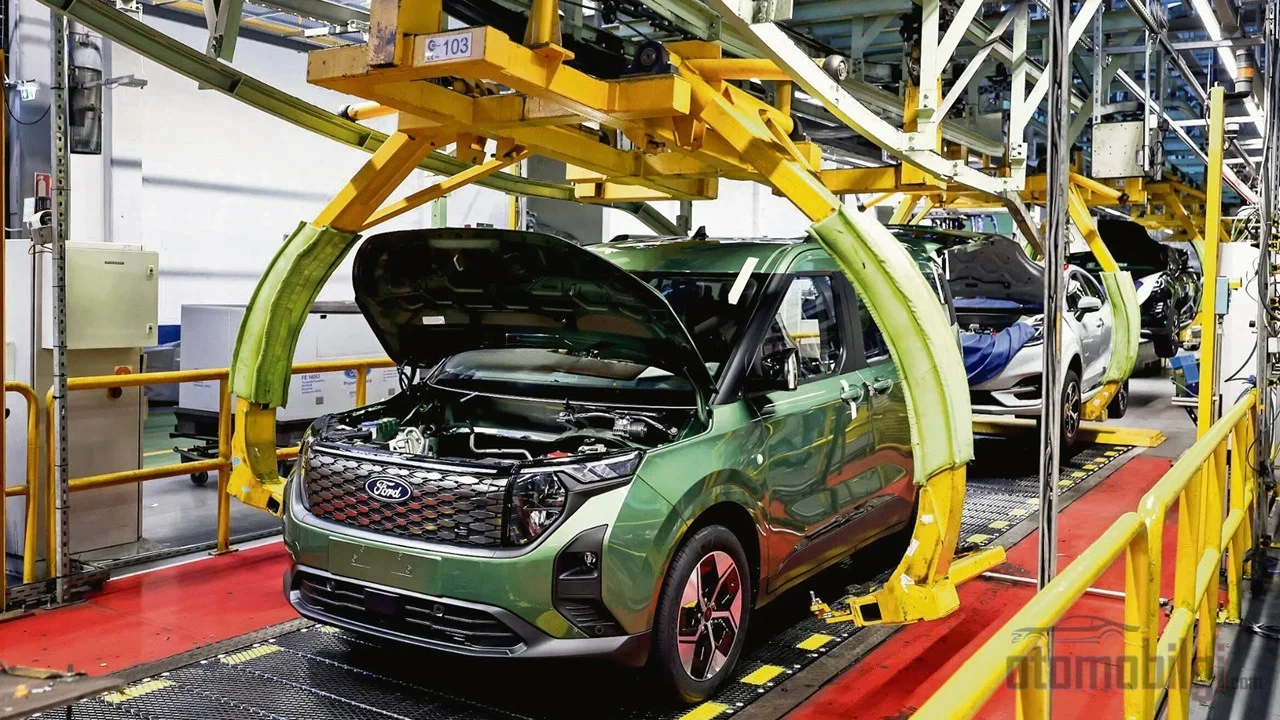
Although Türkiye's automotive industry was long associated with assembly and manufacturing, today Ford Otosan is Ford's global design center for heavy commercial vehicles, Turkish engineers are developing world-renowned models, and Togg has brought a car with fully domestic intellectual property onto the roads. In other words, Türkiye is now not just a country that builds cars, but one that designs them and carries out serious automotive engineering.
Highlights
- The Devrim was designed and built in 1961 in about 129 days, with some 200 engineers and technicians.
- Anadol became the first Turkish car to enter series production on December 19, 1966.
- The intellectual property rights of the F-MAX tractor belong entirely to Ford Otosan; it was named International Truck of the Year in 2019.
- With the Ecotorq transmission, localization in heavy commercial vehicles rose from 74% to 90%.
- Togg is the first Turkish brand to receive the iF Design Award in the field of mobility.
When I first heard this, I couldn't believe it: Some of the trucks and commercial vehicles sold around the world, driven by European drivers, trace their drawing boards back to Istanbul and Kocaeli. We always look at where a car is manufactured, don't we? Yet the real story lies in who designed that car, at which desk, and with what engineering expertise. Let's take a look together at this story from 1961 to today.
Devrim: A Symbol Born in 129 Days
The story begins in 1961 at the Eskişehir Railway Factory. On the instruction of President Cemal Gürsel, work began in June, and the project was completed in a total of 129 days. Some 200 Turkish engineers and technicians took part; the 65-horsepower engine was installed at the Ankara Motor Factory, while other components were completed in Eskişehir. The first test was carried out on October 29, 1961.
To be honest, the Devrim was not a perfect car; its limitations are openly acknowledged in the sources. It never entered series production either, and the reason has not been clearly documented. But for me, the main point is this: Before Türkiye had even established an automotive industry, it demonstrated that it had engineers capable of designing and building a car from scratch. The only one of the four vehicles to survive to this day is on display at TÜRASAŞ, and the museum in Eskişehir welcomed 470,000 visitors over 4.5 years. That means there is still that kind of curiosity between us and that car.
Anadol: The First Turkish Car to Enter Series Production
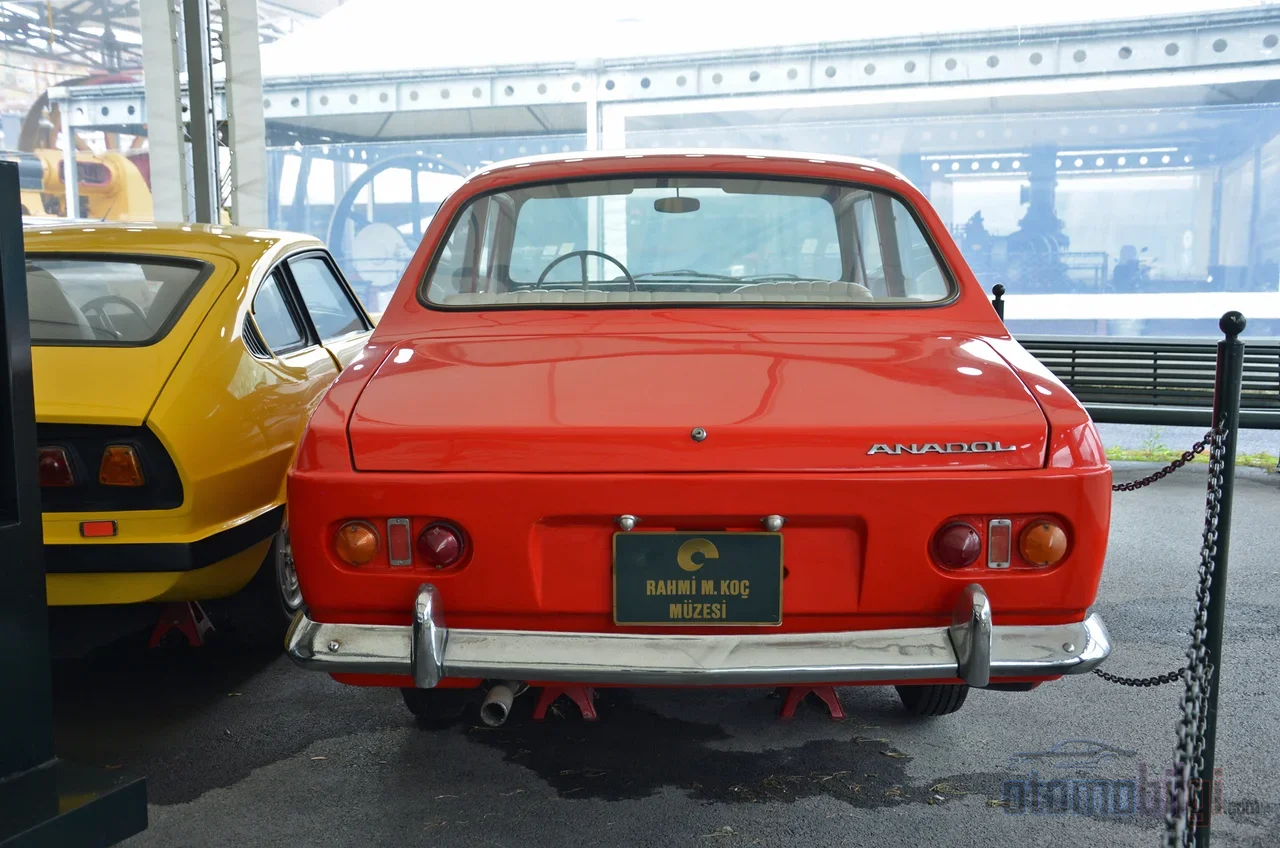
The Devrim was a symbol; five years later, the first series production arrived. At the Istanbul factory of Otosan, founded by Vehbi Koç, through the Koç Holding–Ford partnership, production of the Anadol A1 began on December 19, 1966; the first sale took place on February 28, 1967. An interesting detail: the idea's origin was a fiberglass pickup that Rahmi Koç and Bernar Nahum had seen three years earlier. The prototype, built in England, crossed the Alps and reached Istanbul in 63 hours. There is also a curious side to the story: the same project was the subject of an attempt to become that country's first domestic car in New Zealand under the name Anziel Nova, but it never came to fruition.
But was the Anadol fully domestic? No - it was produced under license from the British Reliant Motor Co., and the engine was Ford's. Knowing this distinction matters, because at the time Türkiye's roadmap was this: start with assembly and licensing, grow the supply industry, build up capital. The Anadol was produced between 1966 and 1991; according to figures from Ford Otosan, 84,000 units were manufactured between 1966 and 1984. In 1973, the first Turkish sports car, the Anadol STC-16, entered the production line. In my opinion, it is one of the first models that should come to mind when it comes to design.
From Assembly to Manufacturing Industry: How Were the Roots Put Down?
In fact, Türkiye's reckoning with the automobile goes back much further: In 1929, Ford set up an assembly line in the Istanbul free zone, but the economic conditions of the 1930s made this venture unsustainable. Motor vehicle production began in 1955 in the form of an assembly industry, and until the 1980s production relied largely on assembly. The automotive industry was established in the 1960s within the framework of import substitution policy; in the 1970s, developments toward component and parts manufacturing accelerated. So first assembly, then parts, then design - we climbed the ladder step by step.
One of those steps was the supply industry. For a long time, academic assessments highlighted the following picture: Türkiye successfully fulfills its role as a production center, but product and technology development remains limited. This criticism was justified, and it is precisely because of this that the transformation in the next section is so meaningful.
Ford Otosan: From a Production Base to a Global Design Center
Now we come to the most exciting part of the story. Otosan A.S. was founded by Vehbi Koc on July 7, 1959; in 1960 it began with the production of the Ford Consul and Thames in Acibadem. In 1997, the shares of Koc Holding and Ford were equalized at 41%-41%. Today, Ford Otosan is Ford's global design and engineering research center for heavy commercial vehicles, and a support center for light commercial vehicles. In other words, Ford's trucks are designed in Türkiye - read that again.
The milestones of this transformation are as follows:
- 2007: The Gebze Product Development Center came into service.
- 2014: The Sancaktepe R&D Center was opened.
- 2018: Production of the F-MAX tractor, whose intellectual property rights belong entirely to Ford Otosan, began; a year later it was named International Truck of the Year.
- 2021: With an investment of 58 million euros, the first domestic Ecotorq transmission designed by Turkish engineers was produced in Eskisehir.
- 2022: Production of the E-Transit, Türkiye's and Ford's first fully electric commercial vehicle in Europe, began in Golcuk.
The F-Vision, drawn by Turkish designers and engineers at the Design Studio in Sancaktepe, was an electric concept truck with Level 4 autonomous technology, and was exhibited at the 2018 Hannover Fair. It is reported that the engineering and design of the Transit Custom, Tourneo Custom, and Courier families were also carried out by Turkish teams at Ford Otosan. Let me make a simple analogy: We were once cooks who simply copied a foreign recipe; now we are the cooks who write the recipe itself.
The Size of the Accumulation in Numbers
The Ecotorq transmission raised the localization rate in heavy commercial vehicles from 74% to 90%, and the company has become one of the few truck manufacturers in the world capable of developing the engine, transmission, and axle all three at once. In the last five years, over 320 million dollars in engineering exports were made - yes, design is also an export item. The 2 billion euro investment announced in 2021, the largest private-sector investment in the Turkish automotive industry, was aimed at electric and connected next-generation commercial vehicles. In 2025, fully electric versions of the Puma and Courier entered the production portfolio; and the Yeniköy Plant was selected as a Lead Plant in 2026.
The bigger picture is striking too: According to a study on the company's economic impact, every 1 TL of production creates 2.94 TL of economic volume; every 1 job corresponds to 14.47 people, and in total there is an employment network of 277 thousand people - roughly 1% of the Turkish economy. In short, this is not an R&D center that exists only on paper.
Tofaş and Togg: The Two Ends of the Accumulation
Design expertise is growing on the Tofaş front as well. The company's R&D Center opened a product development and software branch at the Izmir Institute of Technology Technopark; and within the company there are specialized design organizations, such as existing model design leadership. This means that Turkish engineers sit not only on the factory floor but also at the table where the model is drawn. (There are reports about the return of the Şahin and Doğan; it should be noted that this claim is unverified and that prototype and mass production dates have not yet been finalized.)
And the biggest step on the long road: Togg. Türkiye's Automobile Enterprise Group, a Türkiye-based manufacturer producing the first vehicles to which it holds the intellectual property rights. It became the first Turkish brand to receive the iF Design Award in the field of mobility; its design team worked under the direction of Murat Günak. Within the project, 27 Turkish engineers returned from abroad to take up positions at Togg - meaning a reverse brain drain took place. The T10X is marketed as a sustainable electric vehicle. It would not be much of an exaggeration to think that the design and development experience accumulated at Ford Otosan provided trained human resources for this ecosystem.
What Does "Fully Domestic" Mean, and What Does It Not Mean?
To get to the heart of the matter: Türkiye's story is now beyond assembly; we also have a seat at the design table. But we must not miss the mark. The domestic parts share of vehicles manufactured in the country is around 60% - meaning that "domestic" does not mean every part is produced here. The journey that began with the Anadol under a Reliant license evolved into 100% company-held intellectual property with the F-MAX, and into ownership extending from design to engineering with Togg. In the short term, there is no goal of doing everything from scratch entirely on our own; long-term accumulation, trained engineers, and a steadily growing ownership share. The only thing to lose, in my view, is ignoring this accumulation. If the willpower that built the Devrim in 129 days is today designing trucks for the world, what might it achieve next?
In summary: Türkiye long ago learned to produce the world's cars; in the last two decades, it has also formalized designing and developing them. There is a Turkish signature in the engineering of global models, imported brains have returned, and the first fully domestic vehicle with intellectual property is on the roads. I have a feeling we will all write the next chapter of this story, born from the ashes of the Devrim, together.
Sources
- Devrim (automobile)
- A Success Story | Devrim Automobile | TÜRASAŞ
- Devrim Automobile - Eskişehir Municipality
- The first domestic automobile journey: Devrim
- Anadol
- Anadol's story on the roads
- Turkish automotive industry
- The spatial distribution of the automotive industry in Türkiye
- Automotive Industry Working Group Report
- Ford Otosan
- Ford Otosan looks to the future with its products and technologies
- The multiplier power on the economy: Ford Otosan
- Türkiye's Largest Automotive Investment Comes Again from Ford Otosan
- Tofaş R&D Technology Overview
- Tofaş's legendary models Şahin and Doğan are coming back
- Togg
- Togg became the first Turkish brand to win the iF Design Award in the field of mobility
- 27 engineers are in their homeland for Togg
- Automotive Supply Industry 2023 Report