Why Wasn't the Zafer Car Produced in Türkiye?
Share This Page
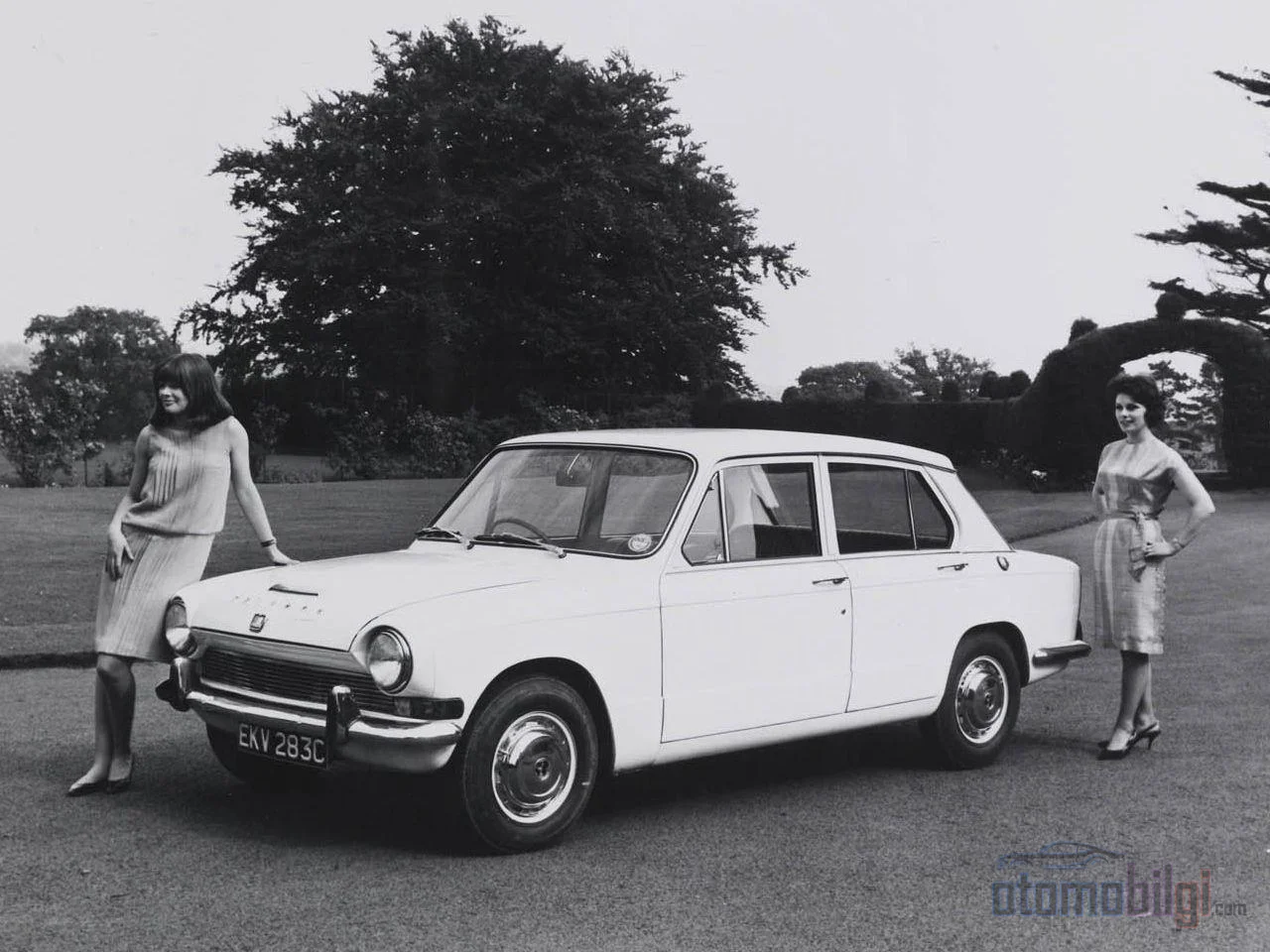
The Zafer automobile is the second domestic car project, developed in partnership with Triumph in the 1960s but shelved at the introduction stage, and then produced in Israel by Autocars. Zafer, which came closest to being Türkiye's move into mass production after Devrim, never made it into production, and its fate took shape on the other side of the Mediterranean. So how exactly did this story unfold, and why did it never make it onto the production line? If you're ready, let's travel back together to the Türkiye of the '60s.
Highlights
- The Zafer project began being developed in partnership with Triumph in 1968.
- The project was terminated while the vehicle was at the introduction stage; the exact reason for cancellation has not been documented.
- The Triumph 1300, on which it was based, was assembled as CKD in Israel by Autocars between 1967 and 1973.
- The Ethiopia adventure of the Tofaş Şahin repeated a similar scenario years later.
From Devrim to Anadol: The Ground Where Zafer Was Born
Before talking about Zafer in Türkiye's domestic car story, a few names must be mentioned. Devrim, produced in 1961 at the Eskişehir Railway Factory on the orders of President Cemal Gürsel, is the first car designed in our country. But Devrim never entered series production; the most fundamental reason was its inability to find investment. In other words, there was a beautiful beginning, but no industry to back it up.
The one that took over the banner of mass production was Anadol: with its fiberglass body, the first truly domestic car to come off the line under the Ford Otosan umbrella. It is precisely this gap - that fine line between Devrim's dream and Anadol's realization - that is exactly where Zafer stands. In the Türkiye of the '60s, car production still consisted largely of assembly; we were talking about an annual output of approximately 11,000 units. It is not hard to imagine how early a period that was when you think of today's figure reaching 1.2 million.
How Was the Zafer Project Born?
The company that stepped in was TOE, that is, Türk Otomotiv Endüstrileri, which produced International Harvester's trucks and pickups in Türkiye. In the mid-1960s, TOE sat down at the table with Volvo for joint vehicle production. But no result came out of this negotiation. We have no clear information on why the agreement with Volvo could not be reached; this gap must be acknowledged as it is.
When that door closed, TOE turned to another address: the British giant Triumph. In 1968, work began on producing a car under the Zafer brand in partnership with Triumph. The plan was ambitious: first a sedan, followed by station wagon and pick-up models were envisioned. In other words, it was not a single-vehicle trial, but a full-fledged product family that was being imagined.
What Was Behind Zafer?
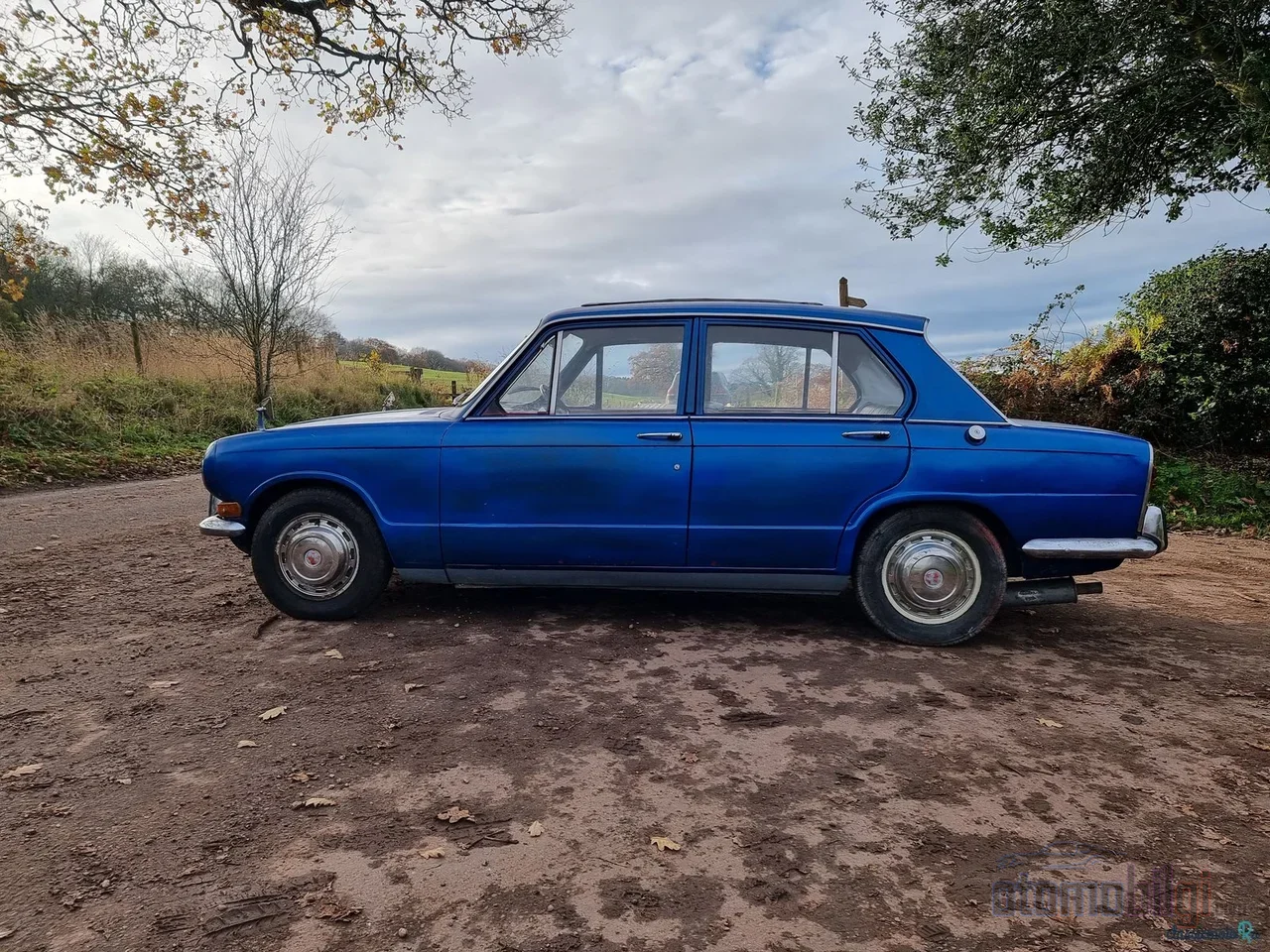
The technical foundation on which Zafer rested is connected to Triumph's Herald family, introduced in 1959. The Herald's design belonged to the legendary Italian designer Giovanni Michelotti, and thanks to its separate chassis construction with detachable panels, the vehicle was a favorite for full CKD (Complete Knock Down) assembly. It was assembled in many countries, from India to Australia, from South Africa to Peru. The model that formed the basis of the Zafer was the Herald's successor, the front-wheel-drive Triumph 1300. In short, the Zafer was built on a proven platform that was highly suited to the assembly production of that era.
Why Was the Zafer Automobile Not Produced?
Here is the most heartbreaking part of the story. The Zafer was abandoned while still in the introductory phase. In Turkish sources, the reason is usually conveyed as pressure from certain individuals and circles. But let's be honest: although this narrative is widespread, there is no official reason verified by a primary archival document. Accepting that the reason is still not fully known is a more honorable approach than exaggerating the story.
At the time, there were also doubts circulating about the idea of a domestic automobile; there are even claims discussed in forums that Vehbi Koç shelved the Anadol project for fear of drawing the reaction of state institutions. These remain matters at the level of unverified rumors. But they all point to the same thing: in those years, domestic automobile production in Türkiye was treated as if it were not just an engineering problem, but a matter of politics and trust. In this climate, the Zafer remained a project whose seed was planted but never watered.
The Zafer's Fate Continued in Israel
Now comes the most interesting part of the story. The project shelved in Türkiye came back to life on the other side of the Mediterranean when Haifa-based Autocars took over the business from Triumph. Based on the front-wheel-drive Triumph 1300, these vehicles were assembled in Israel as CKD with original British parts and produced under the names Gilboa and Carmel.
In Turkish accounts, it is said that this production continued until 1981; British automotive history sources give the range as 1967-1973. The dates in Wikipedia's Susita article also show a different window, such as 1968-1975. This difference most likely depends on which model and which versions are counted; but giving an exact end date is difficult. The clear thing we can say is this: The Zafer was born in Türkiye and raised in Israel.
| Model | Type | Technical Basis |
|---|---|---|
| Susita 12 | Station wagon | Triumph Herald 12/50 engine |
| Carmel / Carmel Ducas | Sedan | Herald chassis, 13/60 engine and transmission |
| Susita 13/60 | Sedan, wagon and pick-up | 13/60 unit on the Herald chassis |
| Dragoon | Off-road utility vehicle | Triumph 1300 base, originally the Triumph Pony project |
Autocars' own story was not a straight line either: the company went bankrupt in 1965 and was taken over by Leyland-Triumph in England; the product line was renewed and production continued the following year. Even the opening of an exhibition in Haifa about Israel's failed automobile industry shows that this story ended there with a closure as well. In other words, there was no happy ending even where Zafer went.
A Scenario That Played Out Again: The Ethiopia Adventure of the Tofaş Şahin
It would be a mistake to think of Zafer's story as an isolated event, because something similar happened again years later. Tofaş was founded in 1968 through Vehbi Koç's initiatives and began production in 1971 with the Murat 124. The Kuş Series that rolled off the line in 1981 remained Türkiye's most familiar car for years. Production in Türkiye ended around 2002–2003; but the vehicle's story was not over.
Holland Car in Ethiopia, using the license and parts it obtained from Tofaş, began producing the Şahin under the name DOCC. The Şahin suited this market very well with its durability and low maintenance costs; the vehicle rolled off the line for the last time in 2010, with Holland Car's DOCC production. Just think: A car that was retired in Türkiye continued its production life in another country. It was like a journey in reverse of the Zafer, but in fact another version of the same lesson.
What the Almost-Produced Projects Taught Us
There is also a name we often confuse with Zafer: Etox Zafer, presented as a domestic sports car in the 2010s. Although it was announced that it had received type approval and orders were being collected, it never reached series production; it has nothing to do with the Zafer of the 60s. So in Türkiye's automobile history, this name keeps repeating almost like a curse.
The real lesson to be drawn, in my opinion, is this: On the road from Devrim to Zafer, from Etox to today's Togg, the real issue was not a lack of ideas, but a lack of the stability and investment needed to carry an idea to series production. Zafer's platform was a proven technique, already assembled in other countries; what was missing was the determination to keep that line running in Türkiye. Today, for anyone looking at production figures exceeding 1.6 million and a strong parts industry, Zafer's story is not just nostalgia, but also a measure of how far we have come. Do you think we could one day rewrite the story of a Türkiye that has accounted for these shelved projects?
Sources
- SECOND DOMESTIC CAR PROJECT: ZAFER (Mehmet Solmaz)
- Triumph 1300: Autocars Israel - AROnline
- Around the World: Autocars of Israel - AROnline
- Haifa exhibit shows history of Israel's failed auto industry - The Jerusalem Post
- The Zafer That Was Never Produced on the Grounds That It Could Not Withstand the Pressures - Webtekno
- Triumph Herald - Wikipedia
- Devrim (automobile) - Wikipedia
- The Devrim Car - Eskişehir Metropolitan Municipality
- Tofaş Kuş Series - Wikipedia
- The Şahin Was the Cure for Ethiopia - Lojiport
- Turkish automotive industry - Wikipedia
- The Devrim Car and the History of the Domestic Automobile - ikinciyeni.com
- What Happened to the Etox Project? - yenielektrikliaraba.com
- Türkiye's domestic car projects that it wanted so much but failed to achieve - GZT