How Did the Murat 124 Become Türkiye's First Tofaş?
Share This Page
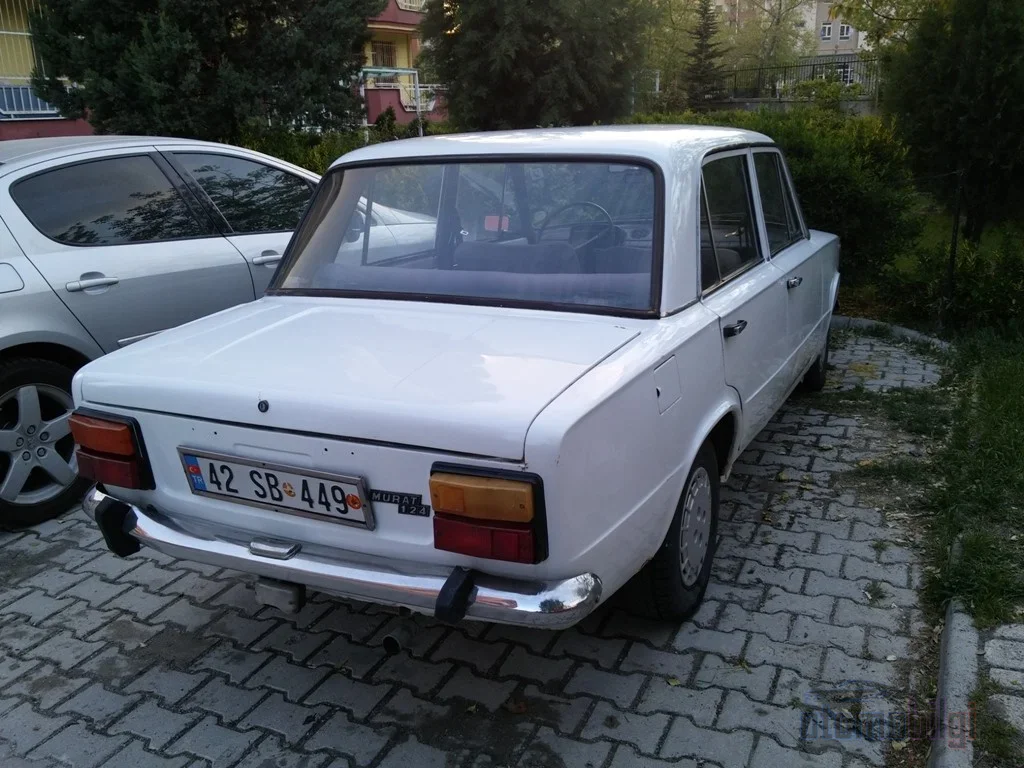
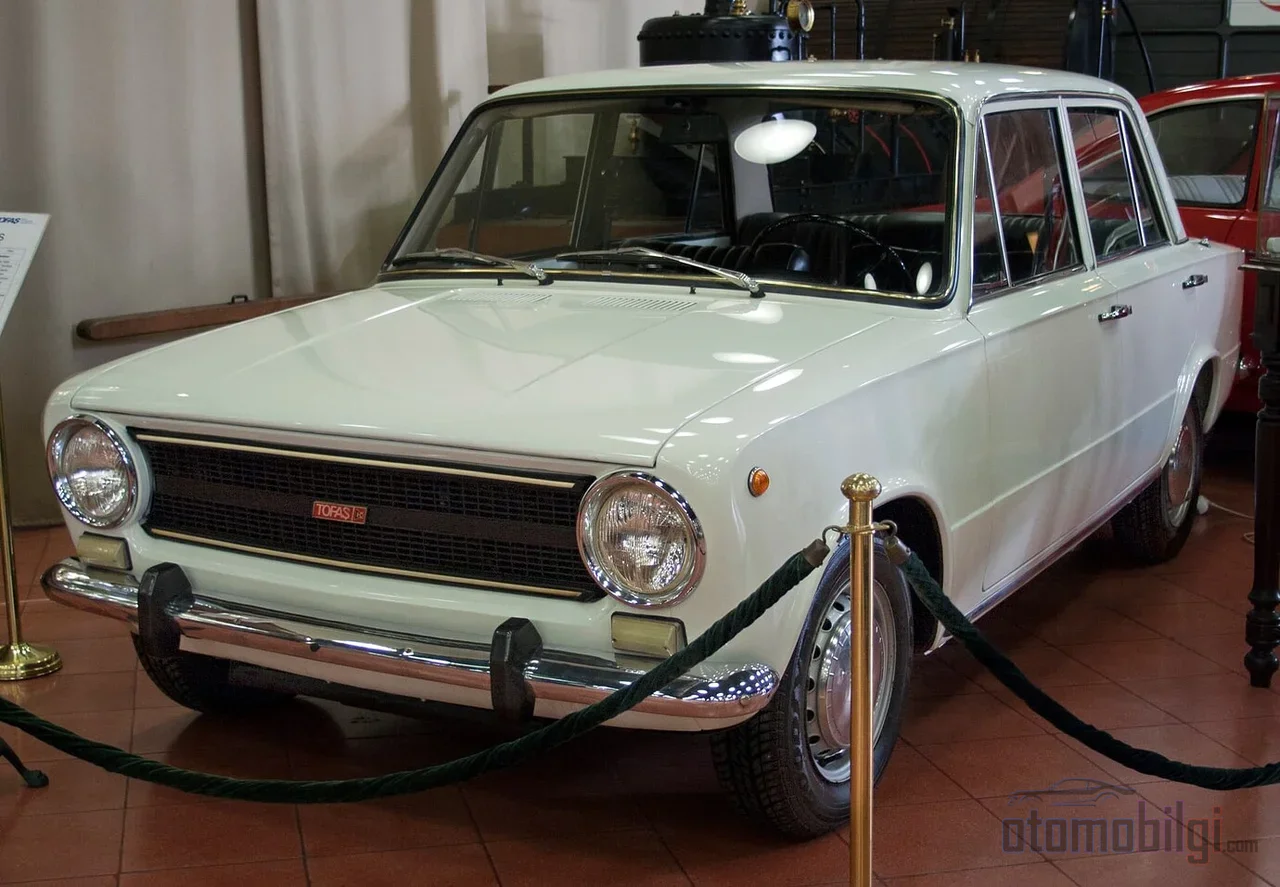
Murat 124, Tofaş's first model, was produced from 1971 to 1976 at the Turkish Automobile Factory, established in 1968 as a partnership between Koç Holding and Fiat, and was the first automobile produced in Türkiye under a foreign license, built under the Fiat 124 license. After Devrim's one-off attempt and Anadol's first step into series production, this was the vehicle that established the true production pillar of the domestic automobile industry; with a production of approximately 135,000 units, it became concrete proof of the transition from an assembly workshop to a real manufacturing industry.
Highlights
- Tofaş was founded on October 1, 1968 as a partnership between Koç Holding and Fiat.
- Production began in 1971 at the Bursa factory with an annual capacity of 20,000 units.
- Total production was around 134,867 units; in 1976 it handed over to the Murat 131.
- In 1975, the 100,000th Murat 124 rolled off the line.
- Its affectionate nickname among the public: Hacı Murat.
Now let's get to the question: Anadol had hit the roads, so what happened next? This is exactly where the story shifts to Bursa. And I think this is the truly exciting part, because we are no longer content with just making a car; we are building a factory, a sector, and an industry.
How Was Tofaş Founded? The Birth of the Koç-Fiat Partnership
Turkish Automobile Factory Inc., or simply Tofaş, was founded on October 1, 1968 under the leadership of Vehbi Koç, through a partnership between Koç Holding and the Italian giant Fiat. The partnership structure was quite balanced: 37.8% of the shares belonged to Koç Holding, 37.8% to Fiat, and the remaining 24.3% belonged to other partners. In other words, a structure in which no single party had the final say and both sides sat at the table.
The company was founded on paper, but where was the factory? In 1969, construction began in the Demirtaş, Osmangazi area of Bursa. And finally, on February 12, 1971, the factory was officially opened; President Cevdet Sunay and Prime Minister Süleyman Demirel also attended the opening. The fact that a factory opening drew attention up to the very top of the state in that era is enough to show just how significant this undertaking was considered.
Do you remember Devrim? In 1961 in Eskişehir, a single prototype was produced entirely by Turkish engineers, but series production never materialized. Anadol, meanwhile, had been in series production since 1966 under the Otokoç-Ford partnership. When Tofaş entered this picture, the goal was different: both high-volume production and, over time, a parts industry that became increasingly localized. In short, if Anadol was the first step, Tofaş was the attempt to turn that path into a highway.
Murat 124: The Story of the Fiat 124 in Bursa
In the year the factory opened its doors, the Murat 124 also entered the production line. It was built on the chassis of Fiat's world-renowned 124 model of the era and became the first automobile produced in Türkiye under a foreign license. Capacity was set at 20,000 units per year - a huge figure for those years.
So where does the name come from? Tofaş named the model after the Ottoman sultan Murad I. gave it its name. The public affectionately turned it into Hacı Murat. The first example, with chassis number 0000001, is on display today at Tofaş's Anatolian Cars Museum in Bursa. A car's chassis number starting from zero is like an announcement that an era has begun, just imagine.
What Were the Technical Specifications?
The classic small family car of its era: a four-stroke, four-cylinder, carbureted engine with a displacement of around 1,200 cm³. On the performance side, the top speed was in the 160 km/h range, with 0-100 km/h taking about 15 seconds. It may look ridiculous by today's standards, but in 1970s Türkiye, this was a fast and modern car. Let me also add: slightly different figures are also circulating for displacement and power, such as 1197 cc and 65 hp; this difference probably stems from different model years and engine versions in different markets, not from measurement errors.
| Specification | Value |
|---|---|
| Production years | 1971-1976 |
| Base model | Fiat 124 |
| Engine | Four-cylinder, carbureted, ~1,200 cm³ |
| Top speed | ~160 km/h |
| 0-100 km/h | ~15 seconds |
| Total production | 134,867 units (approximately 135 thousand) |
A small note on the production count as well: while official records cite an exact figure of 134,867, some places use the rounded 135 thousand; the two are actually just two different tellings of the same story. Production came to an end in 1976, when the Murat 131 took over the line. Don't be misled by contradictory accounts about the years; the real timeline is the 1971-1976 range.
Meanwhile, for those who are curious: The Fiat 124 was produced under license not only in Türkiye but also in the Soviet Union, where it hit the roads as the Lada. So the DNA under the hood was related to cars in other corners of the world.
From Assembly Workshop to Manufacturing Industry: The Local Parts Story
Here is the heart of the page. Because the real significance of the Murat 124 is not just the number of cars sold; it is the transformation behind that number. Car production in Türkiye was often discussed at the level of "opening the incoming crates and assembling them." Tofaş's goal was to gradually produce what was inside those crates here as well.
Let's look at the concrete steps. In 1973, the spare parts manufacturer OPAR was founded. In 1974, the first export was made with the Murat 124, and in 1975 exports extended to Egypt - imagine, in its very first years, cars coming off the Turkish line were crossing borders. And in 1975, the 100,000th Murat 124 rolled off the line; production reaching nearly five times the founding capacity.
As for the local parts ratio, let's be honest: we don't have a localization percentage specific to the Murat 124. But the automobile exhibition documents of the era paint the general picture: in 1974, the local parts ratio in trucks, pickups, and minibuses produced in Türkiye was above 60%, while in Anadol units it exceeded 72%. This is clear proof that the parts industry was growing rapidly. Not knowing the exact ratio of the Murat 124 at that time doesn't invalidate the story; it just keeps us on the "let's tell it without exaggeration" line.
The factory's growth curve also shows the transition: capacity reached 20 thousand in 1972, 35 thousand in 1984, 100 thousand in 1990, 250 thousand in 1993, 360 thousand in 2007 and 450 thousand in 2017. The assembly shop was gradually turning into a production giant.
The Mark Left by the Murat 124 in Türkiye
The Murat 124 was not just a model, it was a cultural event. With it, Turkish families learned to say "our car"; tradespeople got to know its hood opened with the crank, children slept on its seats. Even the nickname Hacı Murat has a story: the public embracing the car's name was a sign that it was no longer "the Factory's product" but "the neighborhood's car". What do you think it means for a car to be given a nickname? To me, it is the most sincere proof of affection.
The model chain did not break apart and disappear; on the contrary, it chained on. In 1976 came the Murat 131, from 1981 onward the legendary "bird series" of Şahin, Kartal and Doğan, and in 1983 the Serçe, considered the successor of the Murat 124. In other words, the Murat 124 became the ancestor of Tofaş's model family. Moreover, it and its siblings instilled in Türkiye's motor vehicle culture the habits of driving, repairing, and tying a charm on cars.
Where Is Tofaş Today? From the Murat 124 to the Stellantis Era
From the very spot where the Murat 124 left the line, the story speeds up. In 1990 the Tempra, in 1994 the Uno, in 1999 the Marea and Brava, in 2000 the Doblo, in 2002 the Albea, in 2007 the Linea and Fiorino, and in 2015 the Egea took to the roads. Critical steps were taken along the way: In 1991 domestic engine production began, and in 1994 Tofaş R&D was established. Today this center, one of the two major R&D centers in Europe with more than 500 employees in its 17 thousand m² area, pioneered multi-brand production in Türkiye with the Doblo and Minicargo projects, whose intellectual rights belong to Tofaş. With the Fiat Palio project in 1998, it also participated in a global product project for the first time and began managing a worldwide supply chain.
The milestones speak too: the 2 millionth vehicle was produced in 2003, the 3 millionth in 2009, the 4 millionth in 2012, and the 6 millionth in 2019; and in 2022, the 1 millionth Egea rolled off the line. In 2013, it became one of the facilities to reach WCM "Gold Level", the highest production quality rating among Fiat-Chrysler's 175 factories; and in 2016, it was ranked as Türkiye's third largest industrial enterprise.
Major changes also took place on the partnership front. When Fiat merged with PSA in 2020, Stellantis was born; today, Fiat's shares in Tofaş belong to Stellantis, and the partnership structure is again 37.8% / 37.8% / 24.3%. Even more interestingly: In April 2025, the Competition Authority approved Tofas's acquisition of Stellantis's Türkiye shares, and the acquisition was completed in 2025. So the factory that once produced the Murat 124 is now the very organization managing Stellantis's operations in Türkiye. That partnership Vehbi Koc founded in 1968 was the first page of a journey of more than fifty years, stretching from the Murat 124 to today's manufacturing and engineering giant.
So what comes next? The Murat 124's adventure turned the bricks laid by Devrim's single-prototype dream and Anadol's bold beginning into an industry; the partnerships of the 90s and 2000s also paved the road that today leads to electric vehicles and Togg. What excites me is this: who knows what kind of car the next "Haci Murat" will be?
Sources
- Tofas - Wikipedia
- Tofas Murat 124/Serce - Wikipedia
- History - Tofas
- Tofas's history from 1968 to the present - BloombergHT
- A New Turning Point in the Koc Holding and Stellantis Partnership - Stellantis Media
- The Murat 124's 48-year journey on the roads - TRT Haber
- Automobile Exhibition 74 - MMO Industry Archive
- The road Vehbi Koc opened with Tofas - Kocbayi