The Domestic Car's Share in the Melting Domestic Market Is Growing
The January-October balance sheet of Turkiye's automotive industry presents an unusual picture: total production declined by 6 percent to 1,092,519 units, while export revenue rose 3 percent to 35.2 billion dollars. The domestic market shrank by 15.1 percent, leaving 916,149 units. In other words, factories are producing fewer vehicles but earning more money; on the sales side, the market is shrinking rapidly. Within this divergence, the domestic car's position in the local market is not as simple a story of erosion as suggested by the headline. When the figures are examined, a more complex and actually more interesting picture emerges.
The January-October data announced by the Automotive Manufacturers Association on November 16, 2026 is striking in terms of the magnitude of the decline in car production: car production fell 17.4 percent to 592,163 units; in the same period last year, that figure was 717,321. Against the 125,000-unit loss on the car side, commercial vehicle production grew by 12 percent. Production facilities are not sitting idle, but the nature of the products rolling off their lines has changed. So how did this change affect the domestic car's share in the local market?
Highlights
- Car production in the January-October period fell 17.4% to 592,163 units
- Export revenue set a record at 35.2 billion dollars despite the 9% drop in unit terms
- The import share of cars sold in the domestic market declined from 70.2% to 64.7%
- Domestic share in cars stands at 35%, and at 24% in light commercial vehicles
- In July 2026, a minimum fixed SCT of 100,000 TL was introduced on cars
How is export revenue rising while production falls
The most striking divergence of the period is the gap between units and dollars. In unit terms, total automotive exports fell 9 percent to 779,557 units; car exports dropped to 364,639 units with a serious loss of 25.3 percent. In contrast, export revenue increased by 3 percent. This difference stems from the change in the mix of exported products and the price effect: higher-value commercial vehicles are being exported instead of cars. Commercial vehicle exports rose 11.4 percent to 414,918 units, and tractor exports also showed an 11 percent increase.
The manufacturer ranking clearly shows this transformation. Ford Otosan alone produced 34.4 percent of the industry with 381,838 units, growing its production by 2.7 percent. Oyak Renault's loss in car production was 48,631 units, Hyundai Assan's 35,320, and Tofas's 34,780. The Tofas example can be considered a summary of the transformation: Egea production ended in June 2026, and car production fell from 62,443 to 27,663; but the facility's light commercial vehicle production jumped from 39,923 to 81,154, and the company's exports roughly doubled.
What is the domestic share in the local market really like
Here there is a finding contrary to what the headline suggests, and it needs to be said honestly: the January-October data shows that the domestic share in the car market has not eroded but has actually increased slightly. Of the cars sold in the domestic market, 64.7 percent are imports; last year, that rate was 70.2 percent. The import share in light commercial vehicles fell from 79.2% to 75.6%. According to OSD data, the domestic share stands at around 35% in automobiles and 24% in light commercial vehicles. In other words, one in every three cars sold in Turkiye, and one in every four light commercial vehicles, is domestically produced.
However, this increase is a result of the market's collapse, not of domestic production getting stronger. Imported car sales declined by 23.5%; the entire domestic market shrank by 15.1%, while the car market contracted by around 17%. October alone summarizes the picture: 64,939 cars were sold, and the market contracted by 28.4%, dropping to its lowest October level since 2023. The rise in the domestic share is fed by the dramatic shrinkage of the pie on which the share is calculated. On the other hand, the content of this share has also changed: While a long-established domestic model like the Egea faded into history, the name filling the gap became Togg.
Who took the share, and from whom
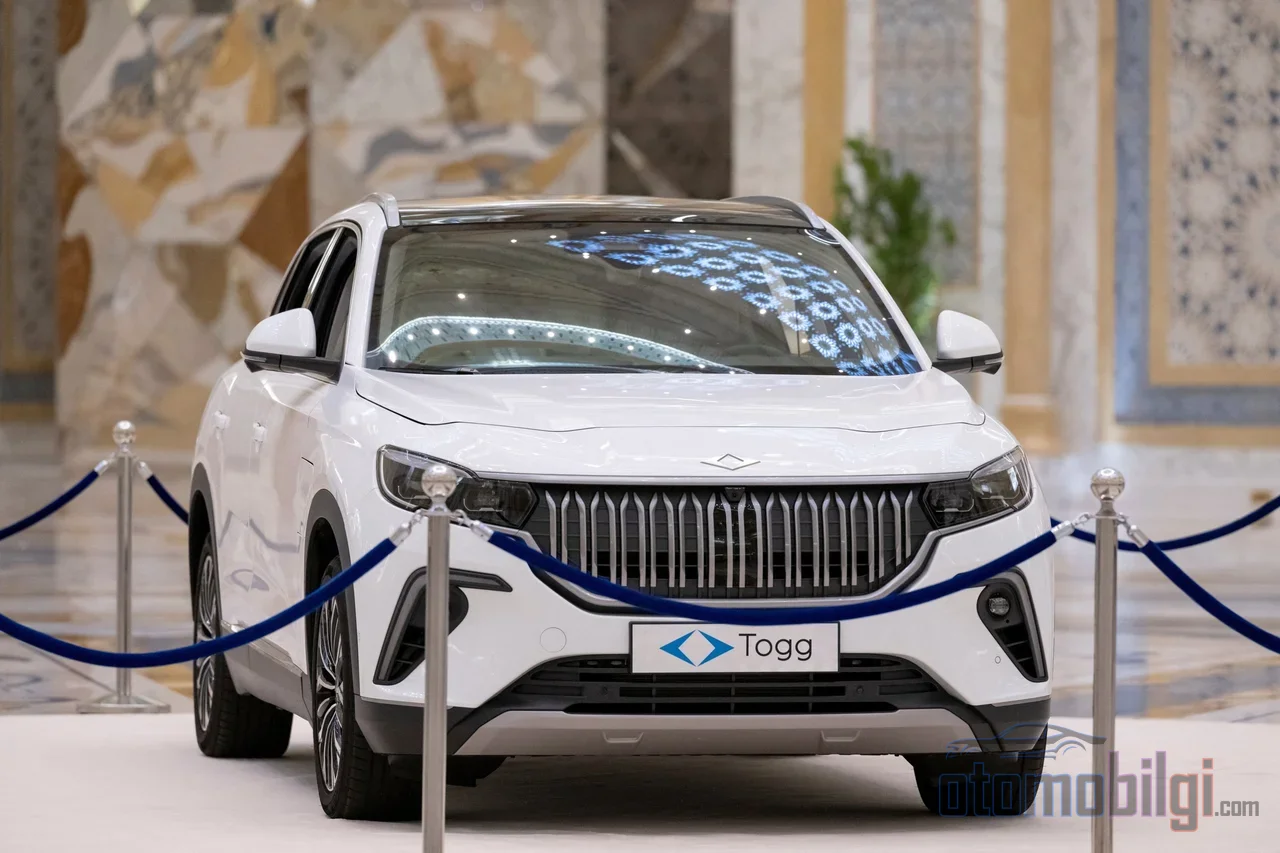
Registration data shows Renault leading with 105,417 units and a 10.5% increase in the January-October period; Volkswagen followed with 58,754 units up 9.8%, Hyundai declined 1% with 52,186 units, and Toyota stayed at 51,556 units. In October, 62,097 cars were registered for the first time; Renault led with 14.5%, Togg ranked second with 11.7%, and Volkswagen took third place with 11.1%. The Togg T10X became the best-selling car of the month with 4,059 units in October, according to distributor data; the September sales of 6,692 units were also the brand's second-highest monthly performance to date. Togg's share of car sales reached approximately 10.5%, and in the electric segment the T10X and T10F shared the top two spots.
In other words, in the new architecture of the domestic share, a withdrawal from old-style hatchback and sedan production stands alongside the rise of the domestic electric brand. The capacity utilization rate also shows the cost of this transition period: the 61% average means that car production has returned to levels around 2013, that is, 13 years ago. The rise in capacity utilization to 68.1% in October, however, can be read as a sign of a slight recovery toward the end of the year.
| Indicator | January-October 2026 | Change |
|---|---|---|
| Total production | 1,092,519 units | -6% |
| Car production | 592,163 units | -17.4% |
| Commercial vehicle production | On the rise | +12% |
| Total exports (units) | 779,557 units | -9% |
| Export revenue | $35.2 billion | +3% |
| Domestic market | 916,149 units | -15.1% |
| Domestic share in cars | 35% | Positive direction |
How the SCT base and the credit wall shaped the market
The reason the market has shrunk so much lies not on the demand side but mainly in tax and financing regulations. With the regulation that came into effect in July 2026, a minimum flat SCT of 100,000 TL, that is, a base tax, was introduced for cars, and a tiered system was added to SCT rates. The tax base threshold is also decisive: while vehicles with a tax-free price not exceeding 1,650,000 TL pay 25% SCT, above the limit the rate jumps to 55%. This threshold has practically turned price lists into a weapon; manufacturers and distributors are trying to keep their models below the threshold.
The picture on the credit side is even harsher. While the average new car price approaches the 2 million TL level, the individual vehicle loan limit is capped at 300 thousand TL, and no individual loans can be extended for vehicles whose final invoice value exceeds 2 million TL. While terms longer than 12 months are restricted for gasoline and diesel vehicles, credit conditions are more flexible for electric vehicles. In an environment where the policy rate is 36 percent, this asymmetry naturally steers demand toward electric vehicles and models below the threshold. The limited interest-free loan offers seen in November campaigns also fall within this framework.
The development in tax revenue summarizes the contradiction: motor vehicle SCT (OTV) collection in the first 10 months of the year was 589 billion TL; in October, while the market shrank by 30.12 percent, collections declined by 26.38 percent. The tax paid per vehicle is rising, but as sales fall, the total pot shrinks. In October, the automotive industry led Turkiye's exports with 4 billion 32 million dollars in exports, and its share of total exports reached 15.6 percent; for the year as a whole, the sector maintained its leadership with 35.2 billion dollars and a 17 percent share.
Is the domestic car's share really eroding?
The clear answer to the question is this: according to January-October 2026 data, no - the domestic share in the car market stands at around 35 percent, slightly above last year; but this improvement is not the result of healthy growth, but of imports collapsing faster than domestic sales. In the same period, domestic car production contracted by 125 thousand units, the car lines of the two major manufacturers suffered significant production losses, and with the Egea being discontinued, one of the market's longest-established domestic models faded into history. The future of the domestic share no longer lies in classic hatchback production; it should be sought in Togg's move to second place in the registration rankings and its leadership in the electric segment.
As anyone who has eaten the dust of this business knows, share statistics in the automotive industry can easily mislead through temporary fluctuations. What really matters is which products the production base is shifting toward, and whether exports can keep that base standing. In the current picture, exports are playing this role successfully: although volumes are falling, revenue is rising, and commercial vehicle production compensates for the gap in cars in dollar terms. The domestic market, meanwhile, is seeking a new balance - in a space narrowed by the SCT base, the tax threshold and credit limits - where the domestic electric brand stands out. The story of the domestic car is not one of share erosion; it is a transition period for an industry rebuilding its model base and technology from the ground up.
Sources
- OSD - Homepage / October 2026 Results
- OSD Data and Stock Exchange Companies
- The 10-month picture in automotive: Production down 6 percent, domestic market down 15 percent
- The automotive industry ranked first in October with 4 billion dollars in exports
- October 2026 car sales
- October 2026 car registrations
- New SCT (ÖTV) Regulation (July 2026)
- Financing and auto loan limits in the automotive sector
- Sharp decline in car sales: The domestic market is shrinking
- October 2026 car sales: Togg T10X leads