France-Germany Incentive Agreement Leaves Türkiye Out
Share This Page
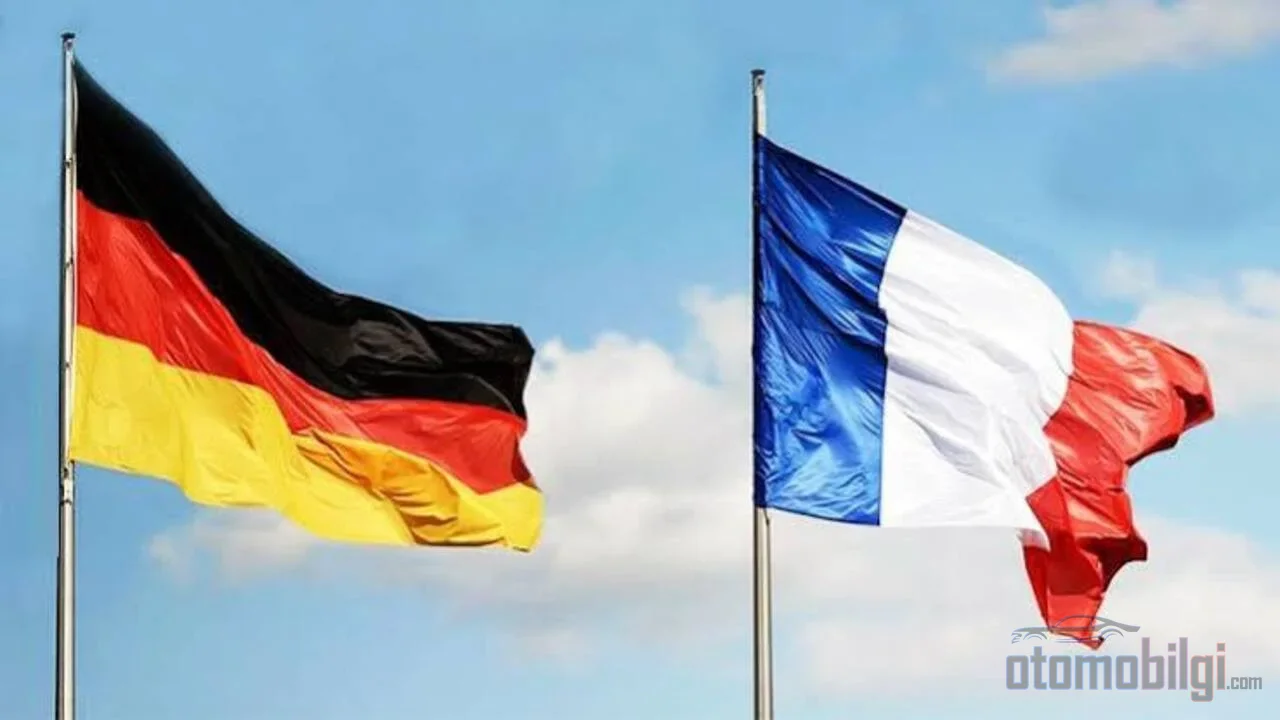
France and Germany reached a compromise allowing the United Kingdom to also benefit from Europe's automotive incentive plan, while leaving Türkiye out of scope. The agreement that Emmanuel Macron and Friedrich Merz eventually reached on the margins of the EU summit in Brussels on October 15-16 foresees that state support in the future will be directed only toward vehicles produced in EU countries, the UK, and the European Economic Area. Despite the Türkiye-EU Customs Union, Türkiye remains outside this list, raising the risk that the Turkish automotive industry will face a competitive disadvantage on the incentives and public procurement side in the market where it realizes approximately 60 percent of its exports.
Highlights
- October 15-16 On this date, Macron and Merz agreed on a joint approach regarding the European automotive industry.
- The UK is being included in the incentive scope; the criterion is January 1, 2020 being part of the EU internal market as of this date.
- Türkiye's automotive exports reached a historic peak in 2025 at 41.5 billion dollars .
- The share of exports going to EU countries is approximately 60 percent.
- The proposal is not yet an EU decision; the automotive package is targeted by the end of the year to be completed.
Why is Türkiye not included in the Made in Europe scope?
The answer hinges on a single date: January 1, 2020. The Industrial Acceleration Act proposal presented by the European Commission in March foresees that public support will, in principle, be directed only toward vehicles produced in EU member states and European Economic Area countries. This date is also the path by which the UK can enter through the door: the commission stipulates that the European-origin production scope may also be opened to countries that were part of the EU internal market on January 1, 2020. The UK had not yet left the Union at that date; therefore, it meets the condition. Türkiye, despite its Customs Union membership, is excluded because it was not part of the internal market as of that day. The Customs Union does not automatically grant rights such as benefiting from incentives. Japan and South Korea are also left out through the same door.
Those who have been through the wringer in this business know: in industrial policy, dates are never innocent. Choosing a date either includes you or excludes you, regardless of where you stood at that moment. Türkiye has been in the Customs Union since 1995, within the European production chain; but because it was not an internal market member on the first day of 2020, thirty years of integration falls victim to a single line on a calendar.
The content of the agreement: origin criteria and 2035 flexibility
At the center of the compromise is the proposal presented by the commission under the name Industrial Acceleration Act. The aim is to support European production in strategic sectors and to direct public resources toward products that meet specific origin conditions. According to the first draft of the proposal, vehicles must be assembled in the EU and at least 70 percent of their parts by value, excluding the battery, must originate from the EU; separate requirements are foreseen for battery components. So even though the concept is called Made in Europe, what actually shapes the criterion is not where the assembly line stands, but which continent the supply chain is fed from.
Britain's price: trade measures applied to China
The agreement also states that coverage is not free of charge. In order to be included in Britain's incentive scheme, the UK is expected to adopt trade measures, including the additional tariffs the EU applies to Chinese electric vehicles. Britain still applies a 10 percent customs duty on Chinese cars, while the EU introduced additional tariffs varying by manufacturer in 2024. In other words, the door opened to Britain is tied to the condition of drawing a common line against Chinese-origin competition.
Softening on the road to 2035
The second pillar of the compromise is the emissions calendar. It was accepted that manufacturers will reduce their average emissions by 90 percent instead of 100 percent from 2035 onward, with no additional compensation requirement imposed for the remaining 10 percent; the commission had proposed that the remainder be offset with carbon-neutral fuels or green steel. German Chancellor Merz made the meaning of this flexibility clear:
Thus, the internal combustion engine ban will now be consigned to history.
President Macron, for his part, defined the goal in a post of his own: "We have a clear goal: to successfully transform our automotive industry while protecting our climate targets and our production in Europe." Days before the agreement, a memorandum was also reached between the EU and China to limit exports of hybrid vehicles of Chinese origin to 350,000 units per year, whereas around 800,000 units of exports are expected this year. The picture should be read as part of Europe's general tendency to close its internal market.
How much will the Turkish automotive industry be affected by this regulation?
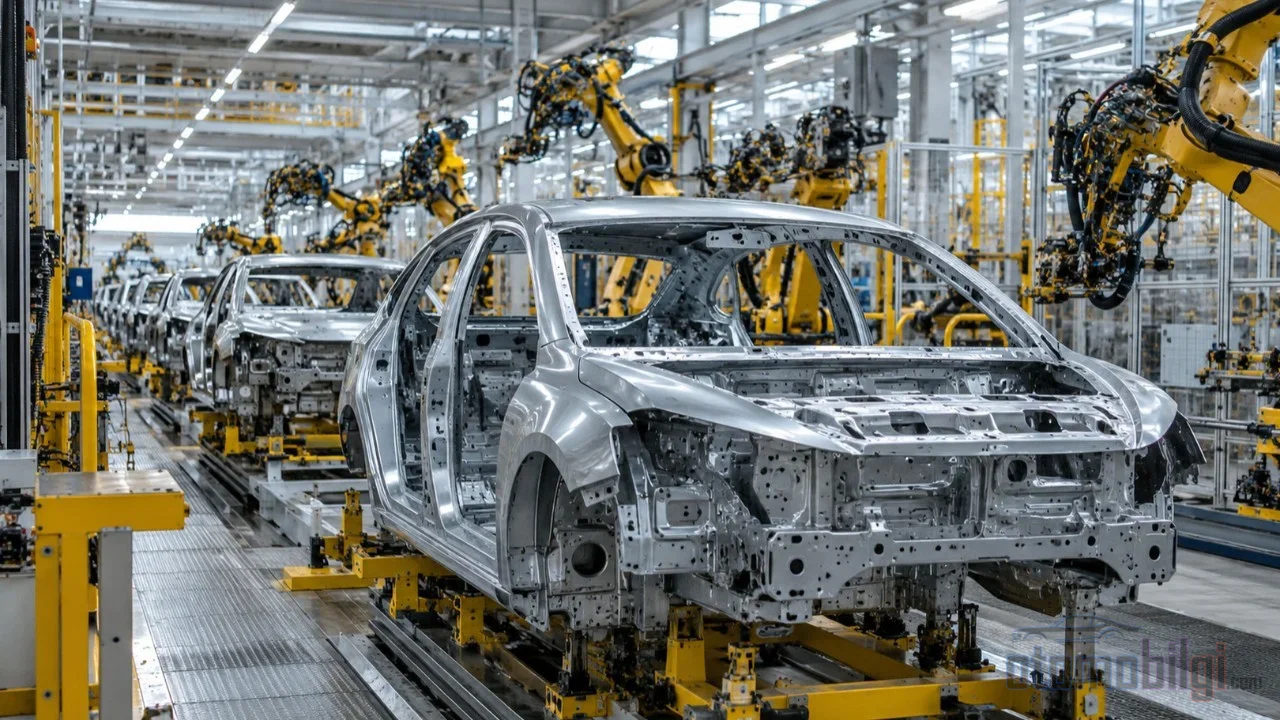
First, let's clarify: the export of vehicles produced in Türkiye to the EU is not being banned. The risk lies not at the customs wall, but on the side of incentives and public procurement. If the regulation enters into force, only production that meets the conditions will benefit from state support in Europe and certain public purchases; vehicles from Türkiye will remain shut out of these doors. In the age of the internal combustion engine, this mattered little; in the transition to electric, state incentives determine almost the fate of sales. In the past, a manufacturer would build its product and launch it to market, keeping buyer incentives secondary. Now, being left out of incentives means being placed on the least visible spot of the shelf.
Trade Minister Ömer Bolat issued a clear warning in remarks to AFP one day before the compromise: being excluded from the plan, he said, would harm both sides' economies. The figures Bolat cited show that this objection is not merely a diplomatic courtesy statement. Türkiye has been in the Customs Union since 1995; of the 205 billion euro trade volume with the EU, 55 billion euros comes from the automotive sector. European manufacturers have been operating in Türkiye since 1971, and roughly 75 percent of Türkiye's automotive production belongs to European companies; these companies provide employment for around 250 thousand people in Europe. In other words, this is not merely an export market, but part of the production backbone of European industry.
2026 in figures: record target, falling production
The sector is also reacting to a difficult picture during the period when the regulation is being discussed. Türkiye's automotive exports set a historic record of 41.5 billion dollars in 2025; the sector is targeting 43.7 billion dollars for 2026. However, in the first half of the year, vehicle exports fell by 12.3 percent to 462,552 units. In the first nine months, total automotive production fell by 6 percent to 971,159 units, while exports declined by 11 percent. In the January-September period, the largest exporting manufacturer was Ford Otosan with 295,007 units. In the first eight months, exports rose by 2.5 percent to 27.21 billion dollars; Germany maintained its position as the top market with 4.44 billion dollars. The directionless trend in production and export figures is important precisely for this reason: industry is vulnerable to any additional cost or any closed door coming from outside.
Negotiations continue in Brussels: the decision is not final
Let us note an important detail from the start: the proposal is not yet an EU decision. The final text will take shape in the legislative process between the Council and the European Parliament, and whether Türkiye will be included in the scope will become clear during this process. EU leaders are aiming to complete the automotive package by the end of the year. It is reported that the SPD's demand for employment and production guarantees within the German government played a role in the delay of the compromise. On the Turkish side, it must be seen that diplomacy has not lagged behind: in July, Bolat defended the preservation of Türkiye's place in the European automotive production chain in Brussels; on October 7, the Ministry laid the draft on the table with the EU countries' ambassadors in Ankara.
What are the manufacturers saying?
The most notable objection from the industry front came from Toyota. In a statement from the European Union, it was noted that talks on the inclusion of the UK were welcomed, but they wanted to see the agreement "expanded to also cover trusted partners such as Türkiye and Japan"; it was emphasized that critical investments such as battery production would benefit from broader inclusiveness. The European Automobile Manufacturers' Association, in its position paper on the Industry Acceleration Act, demanded that Türkiye's existing automotive capacity be exempted from the legislation. Considering the electric vehicle production intensifying in Türkiye under the leadership of Toyota and Togg, it is self-evident which investments this demand seeks to protect.
The dispute between France and Germany: protectionism or openness?
This consensus was not born overnight. France argued that public support should be limited to production in EU countries, while Germany wanted a broad model covering production countries such as Türkiye and Morocco, in addition to the UK. Germany, against France's protectionist "made in Europe" line, had aimed for close cooperation with Türkiye in its new industrial policies. In the end, Germany made concessions in the compromise, and Türkiye and Morocco were left outside the scope of origin. As someone who has practiced this profession for many years, let us note: every industrial policy compromise is sealed by erasing a country from one side's map; this time, that country was Türkiye. Moreover, France says it wants the automotive rules to be applied to other sectors under the Industry Acceleration Act, such as steel, cement, and green technologies; whether the exclusion will remain limited to automotive is a separate question mark.
The most frequently asked questions from readers
- Will the export of vehicles produced in Türkiye to the EU be banned? No; the risk lies in the conditions for benefiting from public procurement and incentives.
- Why is Türkiye not included in the same exemption as the UK? Because on January 1, 2020, it was not part of the EU internal market; the Customs Union does not automatically grant these rights.
- Is the decision final? No; the final text will take shape in the EU legislative process, and whether Türkiye will be covered will become clear in that process.
- Will the exclusion spread to other sectors? France wants the automotive rules to be applied to other sectors under the IAA, such as steel, cement, and green technologies.
Where will the process evolve: the coming weeks will be decisive
The current situation can be summarized as follows: there is a politics of compromise on the table, but no legal outcome yet. How much the EU balances its own industrial interests against supply chain realities in the remainder of the legislative process will be revealed by whether Türkiye is included in the scope. The ACEA's exemption request and Toyota's "Made with Europe" call show that the industry itself is also uncomfortable with France's narrow origin definition. Bolat's warning is on record: the risk of mutual harm is on the table. When I first entered this profession, Europe's automotive map was in the hands of nations; now it is origin dates and supply percentages that are being discussed. Türkiye's place on this map can either be redrawn before the year ends or locked in by a calendar provision. Let us save for later the truth the industry already knows: the production line does not draw borders, but incentive legislation does.
Sources
- France and Germany open the door to the UK: Türkiye is left out of the deal - Dünya Gazetesi
- A "Made in Europe" concession from Germany to France: Türkiye is left out of automotive incentives - DW Türkçe
- France and Germany reached an agreement to protect their automotive industries - Bloomberg HT
- Automotive Industry Association (OSD) - September 2026 data
- Ministry of Trade - Automotive sector's 2025 export record and 2026 target
- Automotive sector targets a record with $43.7 billion in exports in 2026 - Anadolu Agency
- Ford Otosan maintained its leadership in automotive exports - Foreks
- Automotive Sector Report - First Half of 2026 - Erdem&Erdem
- IKV's assessment of the EU Industrial Acceleration Act and "Made in EU"
- A New Equation in European Industry: Germany's opening toward Türkiye - SDE
- Automotive sector: Erosion in profitability despite record domestic demand - Allianz Trade
- Global EV Outlook 2026 - IEA