Toyota's New Hybrid Engine Impacts Sakarya
Toyota has put two moves on the table back to back on October 28 and 29: a new-generation hybrid power unit targeting more than 15 percent efficiency, and the Multi-Pathway platform that will bring hybrid, plug-in hybrid, and fully electric vehicles together in a single architecture. For someone who has been following this industry for more than three decades, this is a move outside Toyota's usual pace. So how will these two announcements affect the production-export balance through the Sakarya plant, where the Corolla is manufactured?
Highlights
- The heart of the new hybrid system is the 1.5-liter four-cylinder engine family; naturally aspirated and turbocharged options are on the agenda.
- The efficiency target is more than 15 percent fuel savings compared to current solutions; this is not a result, but a development target.
- The Multi-Pathway platform unites BEV, PHEV, and HEV in a common architecture; it was announced on October 29.
- The plant in Sakarya outputs with an annual capacity of 280,000 vehicles; 90 percent of Corolla and C-HR production is exported.
- Which models the new engine will come to, and when, has not yet been announced.
What Does the New Hybrid Engine Promise?
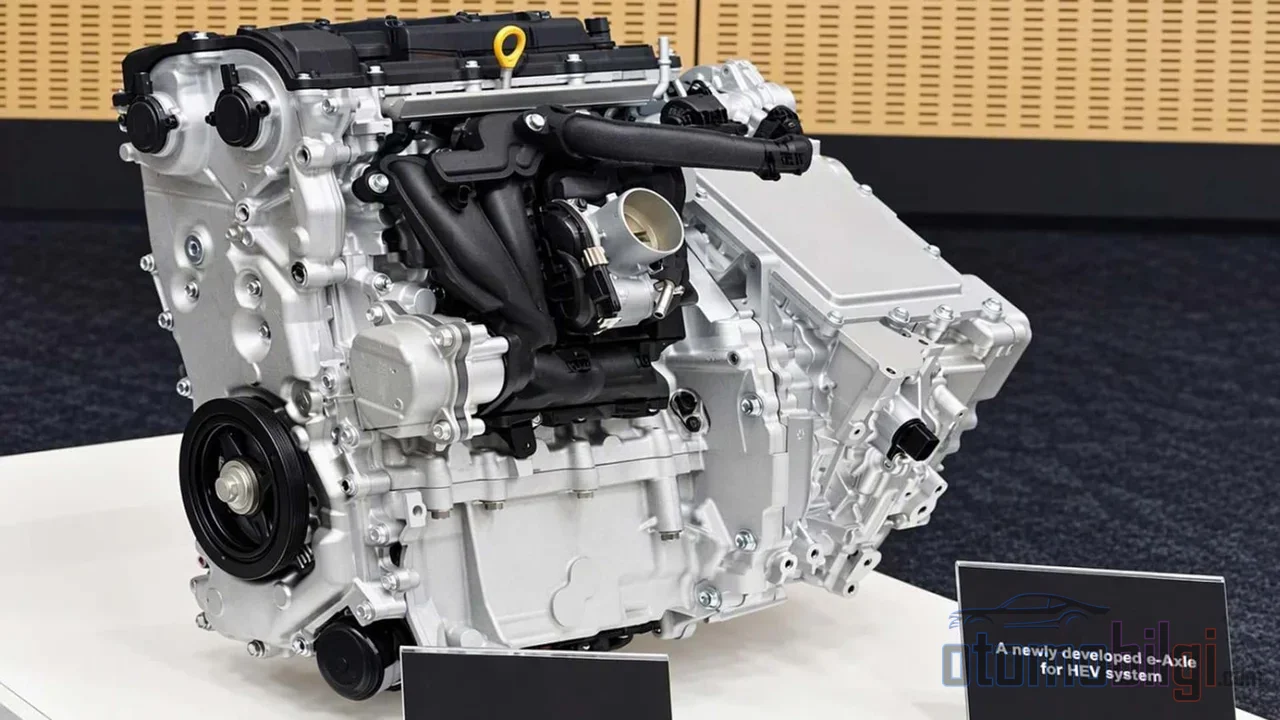
Toyota's approach is built contrary to what is customary in this business. Instead of adapting the existing internal combustion engine to electric driving, the company is designing the engine, electric motor, and power electronics together from scratch. As a result, there will be a unit developed together with the hybrid system; the parts are not made to fit each other afterward.
At the center of the system is a family of 1.5-liter four-cylinder engines. The naturally aspirated version aims to take over the duties of the current 1.8-liter engine and the 1.5-liter three-cylinder engine in hybrid systems. The fact that a turbocharged option is also on the agenda indicates that the family is intended to cover a wide performance range. It was not clearly stated whether the current engines will be dropped from production immediately; Toyota's habit of gradually phasing out its models is well known to everyone.
The sources of the efficiency gains are also listed one by one: reduced mechanical friction, improved thermal management, reduced electrical losses, and reduced aerodynamic drag. In addition, lighter and more compact electric motors, power control units, and inverters will be used. In other words, the 15 percent target will come not from a single magic solution, but from stacking small gains on top of each other. Meanwhile, to be honest: the stated figure is not a result verified by independent tests, but the manufacturer's development target. Making this distinction is one of the most fundamental ground rules of technical journalism.
Multi-Pathway: One Platform, Three Power Options
The Multi-Pathway platform, announced a day earlier on October 29, is the connecting link of the engine news. Both its name and its content are self-explanatory: battery electric (BEV), plug-in hybrid (PHEV), and conventional hybrid (HEV) vehicles meet in a common architecture. Toyota has long advocated not a single path but multiple paths from hybrid to fully electric; is now carrying this approach over to the production side.
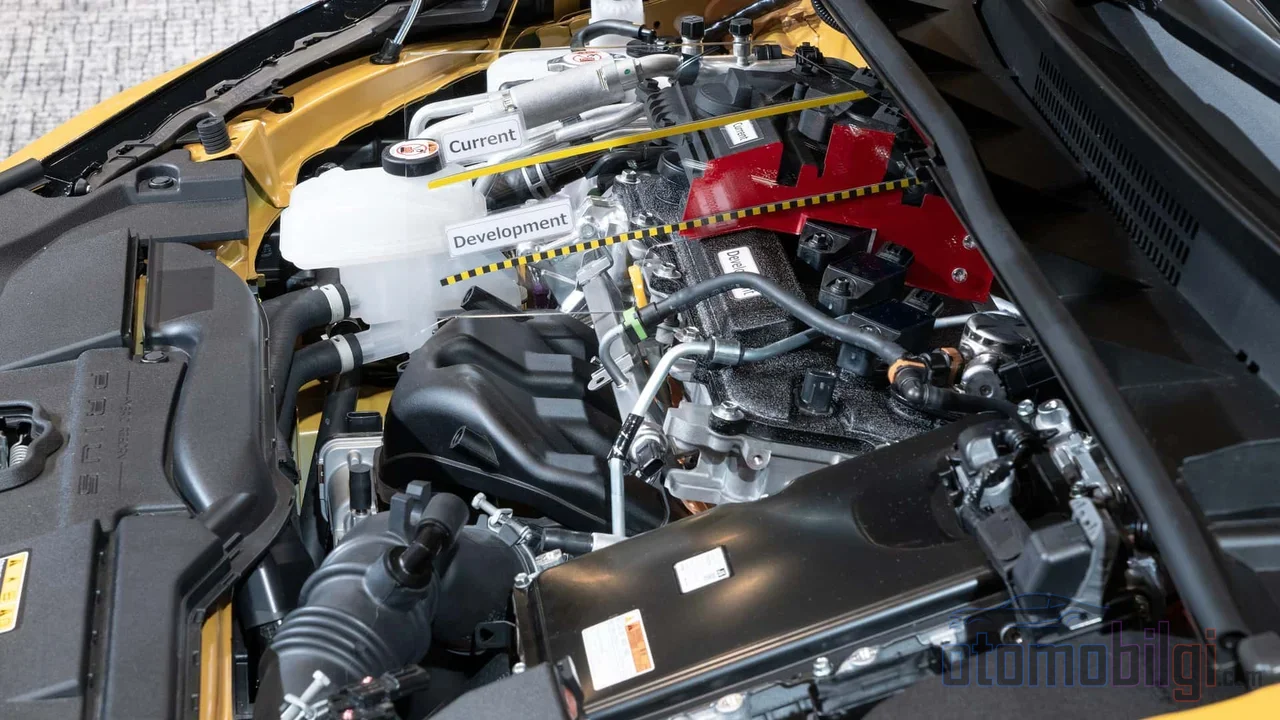
The expected gains of the shared architecture fall under three headings: reduced development and manufacturing costs, spreading investment costs across higher production volumes, and flexible production among different powertrain options in the factories. As the variety in the engine lineup shrinks, production lines will also become simpler. In the past, each powertrain option required a separate line and a separate logistics chain; now different propulsion types will be able to pass through the same line. It is also being discussed that the compact power units will offer new possibilities for vehicle design; as the volume under the hood grows, the designer's hand is freed.
The fact that these two announcements were made within the same week is no coincidence. The shared platform is the infrastructure that will make it easier for the new engine family to spread across different body and propulsion types. One is content, the other is the container.
The Corolla Connection: Where Does Sakarya Stand in This Move?
The question everyone is really curious about is this: which vehicles will the new engine go into? One faction has written that the Corolla will come with this engine; however, the manufacturer's official side has not yet made a statement about which models the new engines will be used in and when. So the Corolla connection is, for now, a strong expectation, not confirmed information. Presenting a rumor as news is one of the most costly mistakes in this profession; therefore, these lines contain only what has been confirmed.
And what is confirmed is this: 12th generation of the Corolla. generation, along with its hybrid version, is produced at the Toyota Automotive Industry Turkiye plant in Sakarya, and the new Corolla Hybrid will be exported to 100 countries. With the new Corolla Sedan, the company's total investment has now exceeded 2 billion euros; it was stated that the facility will become Turkiye's hybrid base. Moreover, it was announced that Toyota's first battery production line in Europe will also be established in Sakarya; it is known that the plug-in hybrid Corolla will also be produced there. The corporate picture is striking in this context:
production started in September 1994, exports in February 2002; production started in September 1994, exports began in February 2002; capacity is 280,000 vehicles per year, total investment is 2.5 billion euros, and the number of employees is 5,200. For a production base of this scale, the new-generation hybrid unit is not just an engine change; it is a technological test that will determine the export portfolio's next decade. Why Is the Market Ready for This Move?
The timing favors Toyota.
The timing favors Toyota. Electric and hybrid cars accounted for 51.9% of the total market in the first nine months; sales reached 326,035 units. Hybrid car sales alone reached 204,956 units as of September, accounting for 32.6 percent of the market; while petrol cars led with a 41.2 percent share, the gap is closing fast. Two or three decades ago, the word hybrid was a concept explained warmly at auto shows; now every second car sold features electrification. Toyota raising the efficiency bar at this point can be considered its own reading of where the market is heading.
On the other hand, the picture is not entirely rosy. According to the Automotive Industry Association data, production fell 6 percent and exports 11 percent in the first nine months; eight-month production dropped to 841,583 units. The overall market is also trending downward. In a shrinking market, cost advantage - meaning shared platforms and a simplified engine lineup - carries critical importance in the competition. The fact that automotive exports hit a historic record of $41.5 billion in 2025 also reminds us how great the industry's potential is.
The New Engine: Which Models, When, At What Price?
Three questions, three open-ended answers. Which models the new engines will be used in has not yet been announced; there is no timetable either. The Turkiye-specific model, sales date and pricing information are equally unclear. The fifth-generation Corolla currently on sale, with hybrid technology, offers 140 HP and 185 Nm of torque in its 1.8-liter hybrid; with power increased 15 percent over the previous generation, this unit comes with 4.5-4.7 lt/100 km consumption and 102-107 g/km CO2 values. When the new-generation engine arrives, this will be its reference point. On the hybrid pricing front, the Corolla starts at 2,540,000 TL and goes up to 3,053,000 TL; the Hatchback starts at 2,230,000 TL and the Yaris Cross at 2,388,000 TL.
The calculation on the buyer's side also makes sense: for annual mileage exceeding 15,000 kilometers and city-focused use, a hybrid is a sensible choice; 4-4.5 lt/100 km consumption in city driving is realistic. The payback of the 50-150 thousand TL difference between the hybrid and gasoline versions falls in the 3-5 year range. Battery warranty is 10 years/240,000 km; a 12-15 year lifespan expectation is common in real-world use. If the new engine succeeds in pulling down the cost of this ecosystem, every item in this equation will be rewritten.
Conclusion: The Real Test for Sakarya Starts Now
Toyota's two announcements this week show that the hybrid era has not ended - on the contrary, it has entered a second lap. The 15 percent target is, for now, on paper; we will see what independent tests say. But the direction is clear: more compact, more efficient and cost-reduced hybrid systems, and flexible factories bringing three drivetrain types together on a single platform. A base like Sakarya, with an annual capacity of 280,000 vehicles and exporting 90 percent of its production, being right at the center of this transformation carries the potential to move the plant into the position of Turkiye's hybrid capital. The real news will come on the day it becomes official which model the new engine will arrive in, and on what date. Until that day, sticking to what is confirmed is the wisest course.
Sources
- Toyota's new hybrid engine will be 15 percent more efficient
- Savings target of more than 15 percent: Toyota, electric, plug-in hybrid and hybrid
- A New Platform from Toyota: Hybrid and Electric Vehicles Unite
- A New Platform from Toyota: Hybrid and Electric Vehicles Unite
- Corolla with 5th Generation Hybrid Technology Now on Sale
- The New Corolla Hybrid will be exported from Sakarya to 100 countries
- 90 percent of the Corolla and C-HR produced in Sakarya are exported
- Corporate Data - Toyota Türkiye
- Automotive Industry Association
- ODMD September 2026 Press Release