Audi Q3 and Toyota RAV4 PHEV Underperform in IIHS Test
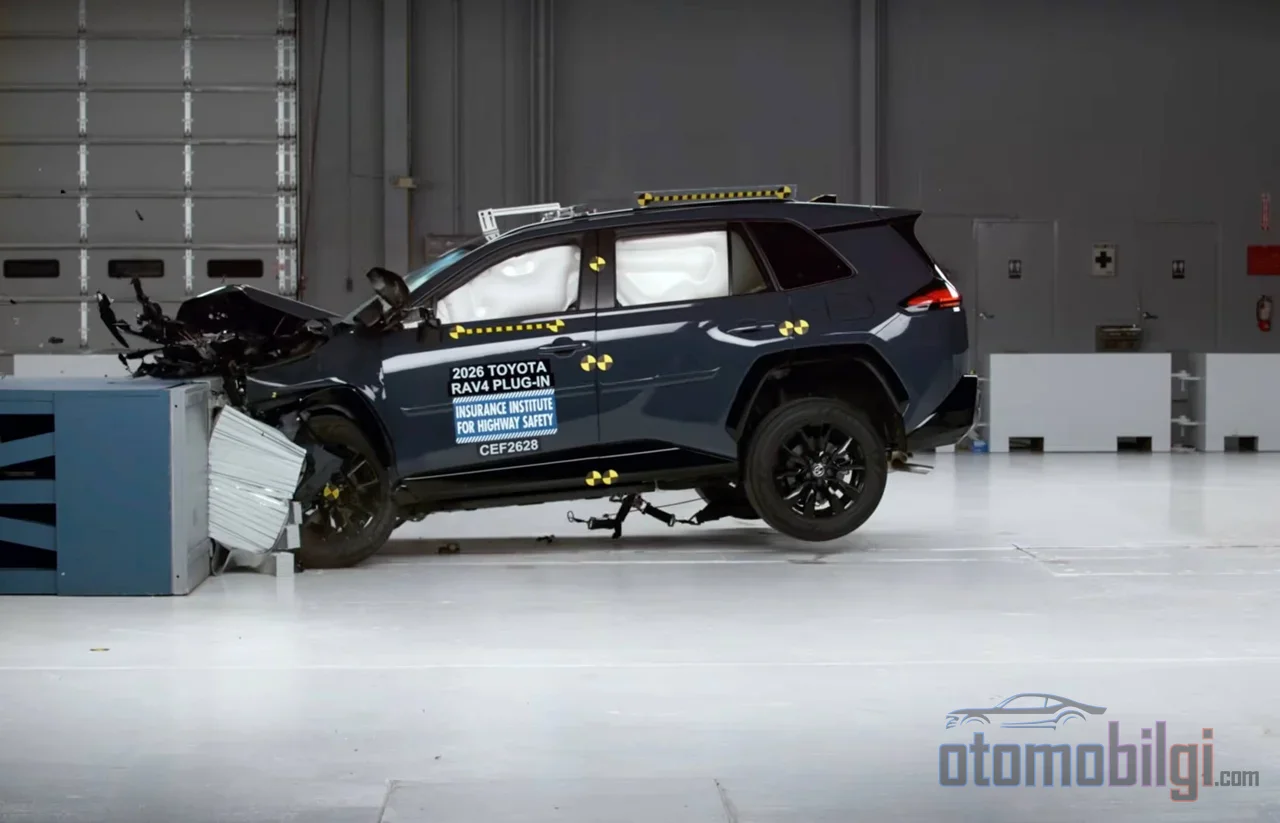
The IIHS announced the results of its updated moderate overlap front crash test, and the list didn't turn out as expected: the redesigned Audi Q3 received the lowest rating of Poor, the Toyota RAV4 Plug-In Hybrid had to settle for Marginal, and the hybrid RAV4 only managed to reach Acceptable. While all three vehicles earned the top rating in every other test, a single trial being this decisive immediately raises this question: was the bar raised, or did the vehicles fail the class?
What Does the Test Measure, and Why Was It Renewed?
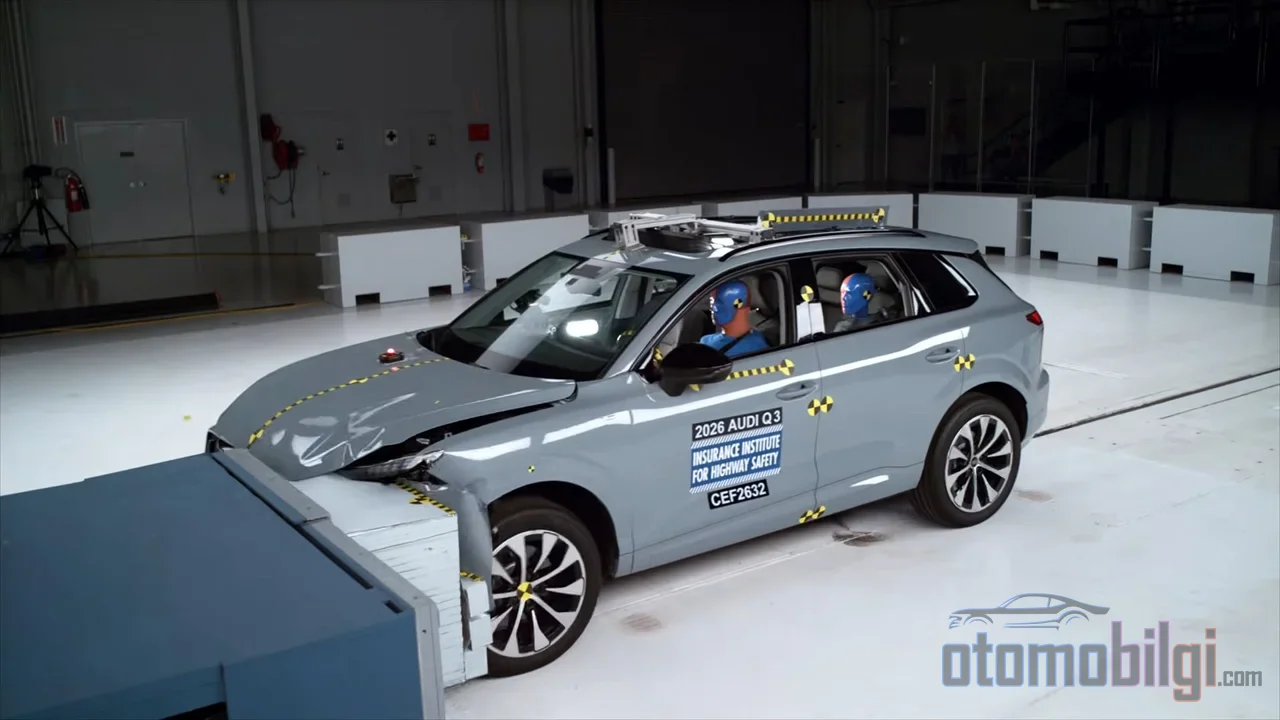
The moderate overlap front crash test is one of the IIHS's older procedures: the vehicle enters the scenario at 40 mph, roughly 64 km/h, with a portion of its front end striking the barrier. For someone who has been following this field for more than three decades, the test's origins sound familiar; when the IIHS published its first crash tests in 1995, manufacturers criticized the protocol as being too harsh, but within a few years they had begun producing vehicles that scored high in those same tests. The pattern is always the same: a rule changes, there is a brief period of unrest, and then the industry adapts.
That said, the current update is not an ordinary revision. Based on findings that rear-seat passengers can still be seriously injured, the IIHS renewed the test in 2022 to focus on rear-seat safety. The updated protocol replaced the original evaluation in the 2024 Top Safety Pick+ criteria. In the driver's seat, a 50th percentile adult male-sized dummy is used, while the rear seat carries a dummy the size of a 5th percentile small female or a 12-year-old child - that is, precisely one of the most common passenger profiles in family cars.
The 2026 award criteria are also built on this: a Good rating is required in the small overlap front, moderate overlap front, and side tests. The main innovation added this year is the vehicle-to-vehicle front crash prevention test. In short, a Good rating in the updated moderate overlap test is required to earn Top Safety Pick - and the Q3 and RAV4 PHEV failed to clear that threshold.
The Highlights
- The 2026 Audi Q3 received Poor in the updated moderate overlap test; the rating also applies to the 2027 model year.
- The 2026 Toyota RAV4 hybrid received Acceptable, and the RAV4 Plug-In Hybrid received a Marginal rating.
- All three vehicles hold a Good rating in every other IIHS test; the weak point is only rear-seat protection.
- As a result, the Q3 and RAV4 PHEV failed to meet the criteria for the 2026 IIHS Top Safety Pick awards.
- In the same test, the 2027 VW Jetta and 2026-27 Nissan Kicks earned Good; the Kicks improved from Poor to Good after a belt change.
Audi Q3: The Slipping Rear Belts Cost It the Rating
At the center of the Q3's Poor rating is the behavior of the rear passenger belts. The belt slides from the pelvis toward the abdomen at the moment of impact, and this slippage leads to the lowest rating in the rear seat belt and dummy kinematics categories. The downward slippage of the shoulder strap was measured as a moderate risk of injury to the rear passenger's chest. It received Good for head and neck protection, and Good for thigh protection - meaning the problem isn't in the vehicle's body structure, but in the hardware that restrains the occupant.
Such a finding is actually good news from an engineer's perspective, because fixing it is a narrower task than renewing the body. It's a problem that can be solved by working on parameters such as the belt anchorage geometry, buckle design, or dummy positioning. It's not yet clear how quickly Audi will address this; but since the Q3's Poor rating also applies to 2027 models, an annual model change alone won't be enough.
The RAV4 Dilemma: One Vehicle, Two Different Outcomes
The RAV4 side paints perhaps an even more striking picture, because two versions with the same body received different ratings. The hybrid RAV4 achieved an Acceptable rating: the rear passenger's shoulder belt slid too far up toward the dummy's neck, losing its effectiveness; moderate risk was measured in the head, neck, and chest area. Rear belt performance remained at an acceptable level.
In the Plug-In Hybrid, the same problem plays out one step worse. In addition to the shoulder belt sliding, the belt moves from the ideal position on the pelvis toward the abdomen, which increases the risk of abdominal injury. Looking at the numbers, the rear chest index was measured at 40, and the shoulder belt tension at 3.7 kN. This belt sliding into the abdomen is the common reason many new vehicles performed poorly in the updated test.
The reason for the difference between the two versions is not surprising: the powertrain. The PHEV's larger battery adds weight to the body, and the increased mass also amplifies the load placed on the belt system at the moment of impact. Let me say this with thirty years of professional habit: in safety engineering, weight never forgives; a few hundred kilograms makes itself known in the chest of the test dummy. Let's also remember that the RAV4 was completely redesigned for the 2026 model year and is now offered only as a hybrid or plug-in hybrid - meaning one of Toyota's best-selling models, in a market where it sells hundreds of thousands of units a year, encountered this result in its full renewal year.
What Was the Effect of the Results on the Awards Table?
The most tangible reflection of the ratings is seen in the awards list. The Q3 and RAV4 PHEV failed to meet the 2026 Top Safety Pick criteria due to their weak results in the moderate overlap test. Audi's situation carries an interesting irony: excluding the Q3, the brand has won six Top Safety Pick+ awards in 2026. Audi USA's official announcement emphasizes the fact that these awards are now harder to win. For the curious, there's one more comparison: while the BMW X1 had no moderate overlap problem in the same test series, the Q3 fell behind the award threshold on this front.
On the Toyota side, the picture affects the entire brand: no Toyota SUV model received a 2026 IIHS Top Safety Pick. Considering the sales volume, this is one of the most visible examples of the gap between reputation and crash performance.
| Model | Moderate Overlap Rating | Core Problem |
|---|---|---|
| Audi Q3 (2026-27) | Poor | Rear belts sliding from the pelvis to the abdomen |
| Toyota RAV4 Plug-In Hybrid (2026) | Marginal | Shoulder belt sliding and risk of abdominal injury |
| Toyota RAV4 Hybrid (2026) | Acceptable | Shoulder belt riding up toward the neck |
| Nissan Kicks (2026-27) | Good | Improvement after the belt change |
| VW Jetta (2027) | Good | - |
| Chevy Trailblazer (2026) | Poor | Rear seat problem; also headlights and front crash prevention |
Nissan Kicks Example: How Fast Is a Poor Fixed?
The most instructive story of this test series is not Toyota's or Audi's, but Nissan's. The Kicks, which received a Poor in the same test in the 2025 model year, changed its rear seatbelts in vehicles produced after late June 2026. Retest result: From Poor to Good, and that in the middle of a model year. This performance improvement earned the Kicks the 2026 Top Safety Pick award.
The lesson here is clear: IIHS ratings exert a concrete and rapidly effective pressure on manufacturers. The data is public, the shortcoming is specifically identified - a Poor result can be reversed within a few months with the right engineering intervention. It is evident that Audi and Toyota now face the same choice. The question is how quickly they will respond.
Does a Poor Rating Mean the Car Is Unsafe?
Let us give a direct answer: No - all three vehicles have received Good ratings in every other IIHS test; the problem lies only in the updated moderate overlap test, and specifically in the sliding of the rear seatbelt. In the small overlap front crash and updated side impact tests, all three models carry the highest rating. So a Poor or Marginal label is not a denial of the vehicle's overall safety capability, but a marker of a specific weakness in a specific scenario.
That said, the weight of the rating should not be taken lightly. The IIHS scale runs Good, Acceptable, Marginal and Poor, and Poor is the lowest rung. According to IIHS data, a Good rating in moderate overlap protection reduces the likelihood of death in a crash by 40% compared to a Poor rating. The practical conclusion from the buyer's perspective is clear: someone seeking the award may need to wait a year for the Q3 or the RAV4 PHEV.
What Is the Difference Between IIHS and NHTSA?
IIHS is an independent organization affiliated with insurance companies and can update its test protocols without requiring legislative approval. This means a moving target for manufacturers, so to speak: a car that receives a Good today can fall behind on the new scale tomorrow when the protocol changes. NHTSA, as the government regulator, operates within a different legal framework. The objection voiced in forums converges precisely on this point: cars that appear less safe because the criteria changed were considered safe enough under the standards of three to five years ago. The bar was raised; the cars did not regress compared to before.
Summary of the Picture from the Buyer's and Manufacturer's Perspective
This kind of result has two audiences, and the meaning differs for each. For the buyer, three things become clear: whether the vehicle you're looking at gets Good in all tests, or whether it breaks down in a single category; which model year the result belongs to; and whether the manufacturer has given a date for a fix. The Nissan example showed that factory-level improvement is possible even mid model year - which is why looking at the production date has become more meaningful than looking at the brochure.
For the manufacturer, the equation is longer-term. The IIHS's ability to freely update its protocol creates constant improvement pressure in the industry, and this pressure has been a cycle that has historically resulted in safer vehicles. The geometry of rear seatbelts may have been designed with the same logic for decades; now an engineering wave will begin in this area too. In the past, few vehicles earned a rating in the moderate overlap test; now almost every new model gets the top grade; the difference of the next decade seems likely to be shaped by whether those sitting in the rear seats will receive the same protection as well.
Sources
- 2026 Toyota RAV4 Plug-In Hybrid 4-door SUV - IIHS
- 2026 Audi Q3 - IIHS
- 2026 Toyota RAV4 - IIHS
- 2026 TOP SAFETY PICKs criteria - IIHS
- IIHS pushes improvements in crash avoidance with 2026 awards - IIHS
- Audi earns six IIHS 2026 TOP SAFETY PICK+ awards - Audi USA Media
- 2026 Audi Q3 And Toyota RAV4 PHEV Underperform In IIHS Updated Moderate Overlap Crash Test - Jalopnik
- Why No Toyota SUV Earned an IIHS Top Safety Pick for 2026 - Cars.com
- NHTSA's Crash Test Dummies - NHTSA