Ford Is Recalling 33,000 Explorer Police Interceptors
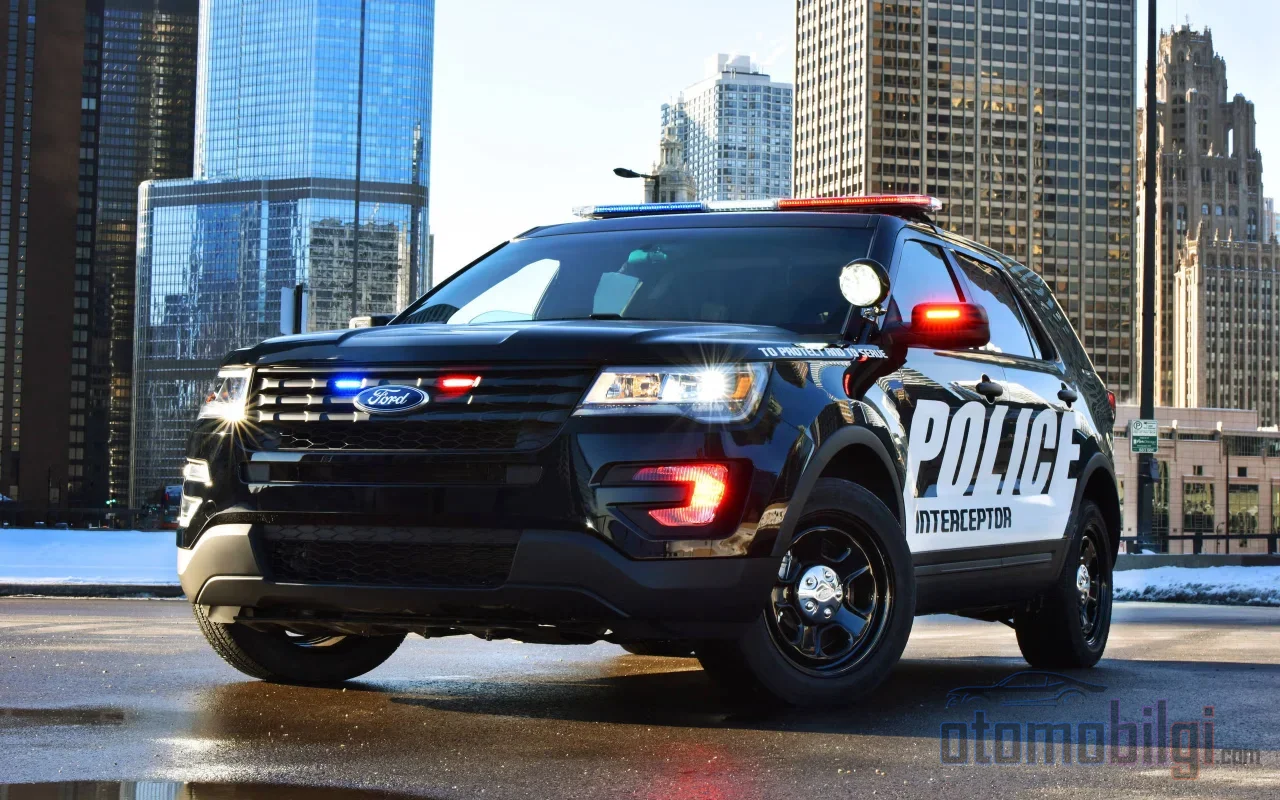
A police vehicle's most critical moment is often not when it starts its engine, but when it turns off its lights. For a unit waiting at a street corner at night, remaining in darkness is the very essence of the operation. Ford is recalling a total of 33,578 units of the 2026 and 2027 model year Explorer Police Interceptor Utility SUVs due to a defect that causes problems at exactly this point: an electrical signal fault in the overhead console causes the map lights to turn on by themselves and become impossible to switch off.
Although it may seem like a harmless electronic glitch at first, the issue is not that simple. The defect violates an explicit provision of the US federal safety standard FMVSS 101 and directly endangers the confidentiality of police units conducting nighttime surveillance. So what is the technical source of the fault, which vehicles are affected, and what repair procedure will dealers follow?
Ghost Signal: Why Won't the Map Lights Turn Off?
The origin of the problem lies in the vehicle's overhead console. When the vehicle is started, the console can mistakenly interpret an electrical signal as a command to turn on the map lights. Ford describes this condition in its internal documentation as a ghost activation signal, in its original wording a "phantom Global On" condition. When the signal arrives, the map lights turn on by themselves and cannot be switched off with their individual switches.
The result is a distracting interior lighting that stays on continuously while driving. For a civilian driver, perhaps just an annoying detail; but for a police unit conducting nighttime surveillance or a covert operation, a brightly lit interior is an opening that puts the entire operation at risk. Moreover, the Explorer Police Interceptor's feature called Police Dark Car was designed precisely to prevent unwanted interior lighting; this defect effectively nullifies the vehicle's feature developed specifically for its most sensitive scenario.
Highlights
- Ford is recalling a total of 33,578 units of the 2026-2027 Explorer Police Interceptor Utility.
- The defect causes the map lights to turn on and become impossible to switch off, violating the FMVSS 101 standard.
- Affected production range: March 3, 2025 - October 23, 2026.
- Notification letters will be sent on December 28-30, 2026; repairs will be free of charge.
- As of October 13, there are 69 warranty claims; no accidents or injuries have been reported.
Which Vehicles Are Affected?
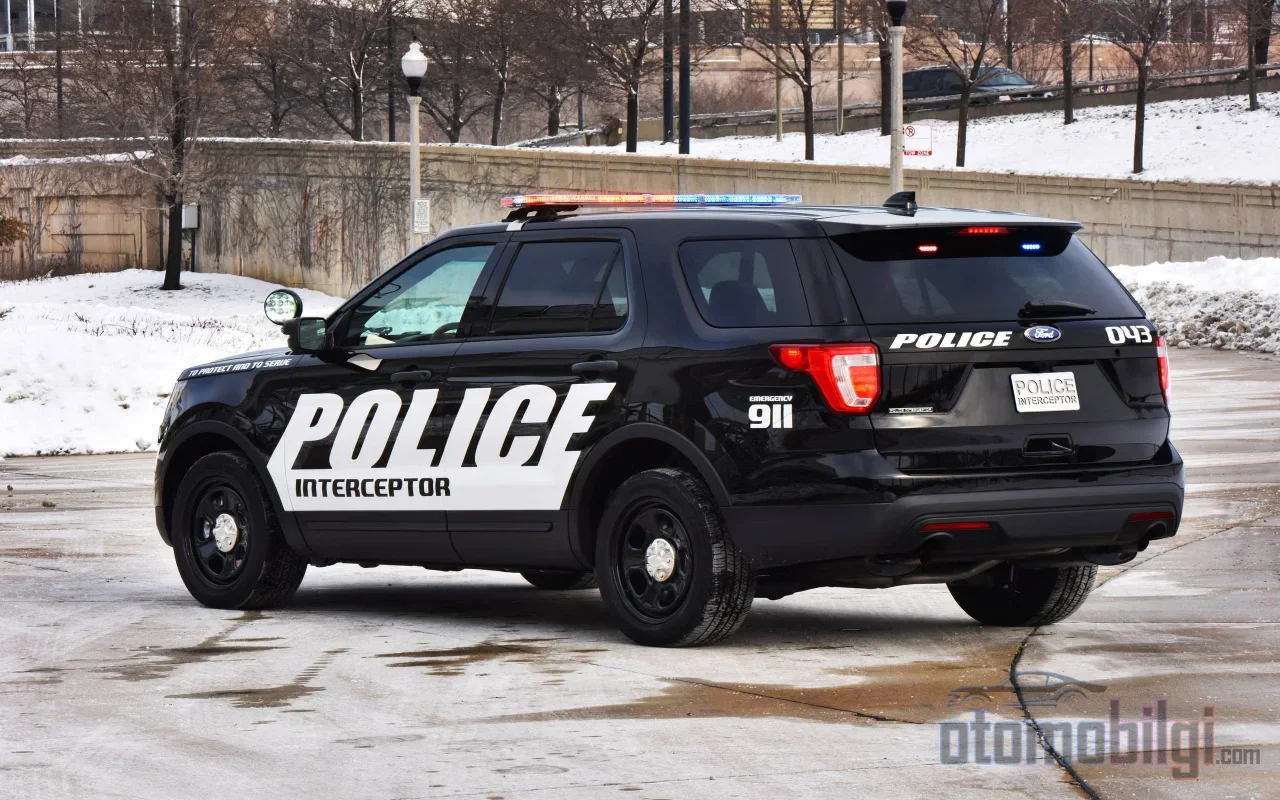
The recall covers 2026 and 2027 model year Explorer Police Interceptor Utility vehicles produced between March 3, 2025 and October 23, 2026. The reference number in the NHTSA registry is 26V726 (NHTSA-26V726000).
Another measure of the problem's prevalence comes from warranty claims: As of October 13, 2026, Ford has received 69 warranty claims related to this defect. So far, no accidents or injuries have been reported; the risk is not about collisions, but is built on loss of confidentiality, distraction, and regulatory non-compliance. Still, the violated rule is not an empty formality: Section S5.3.4(a) of FMVSS 101 requires that front interior lighting in the first row be equipped with a means of turning it off. A lamp that cannot be turned off is also legally out of standard.
How Will Dealers Repair It?
The repair procedure proceeds along two separate paths depending on the vehicle's production date:
- In vehicles produced before July 9, 2026, the overhead console will be replaced entirely with a new one.
- In more recently produced vehicles, the console will be inspected for the updated component; if the correct part is already installed, the console will be reinstalled, otherwise it will be replaced.
All repairs will be free of charge for vehicle owners as required by federal law. At this point, a reminder is in order: until the vehicles are repaired, police units planning night operations would be wise to opt for other vehicles before the recall letter arrives. Interior lighting that won't turn off violates the first rule of any mission that expects to be immersed in darkness.
What Should Owners Do? VIN Lookup and Calendar
Ford plans to send notification letters to vehicle owners between December 28-30, 2026. However, there is no need to wait for the letter; a fleet manager or an individual user can immediately query, via Ford's official support page or the Ford app, using the 17-character VIN number, whether the vehicle is covered by the recall.
Finding the VIN number is not difficult either: it is written on the driver's side door frame, in the lower left corner of the windshield, or on purchase and insurance documents. Owners whose vehicles are covered can have the free repair performed by making a service appointment with an authorized dealer along with the VIN.
The Explorer Family's Exhausting Year
This recall is only the latest link in the intense recall traffic experienced by the 2026 Explorer family. According to safety databases, there are 15 separate recall records for the 2026 Explorer: a passenger-side airbag active ventilation issue, piston crown manufacturing defects and crank connecting rod bearings in the 2.3-liter engine, campaign code 26C50 covering overhead console inspection and replacement, windshield bonding errors, and a Dynamic Bending Light headlight software fault affecting 2025-2026 Explorers are among them.
The police side is not new to this either. In previous years, approximately 85,238 units of the 2020-2022 Explorer Police Interceptor Utility vehicles had been recalled due to engine fire risk. Additionally, NHTSA has been conducting an investigation in October-November 2026 into airbag inflator ruptures in 2021-2026 Explorers. Although the map light that won't turn off seems like a relatively minor issue in this picture, it carries a distinct weight precisely because it touches the very center of the vehicle's mission definition, namely night visibility management.
In summary: Serious, or Not?
The short answer: a low-risk flaw in terms of physical safety, but a significant one operationally. No accidents or injuries have been reported so far; the problem is mostly in the dimension of a regulatory violation, distraction, and loss of concealment in night missions. Still, it is not surprising that Ford acted quickly, given that it involves a fleet of 33,578 vehicles and an explicit clause of the federal standard.
The practical formula for fleet managers is clear: Query by VIN, contact an authorized service center if the vehicle falls within the range, and plan the repair without waiting for the letters at the end of December. Until the repair is completed, using an alternative vehicle for night shifts stands out as the most sensible approach.
Sources
- Ford Recalls 33,000 Explorer Police Interceptors for Interior Lights That Won't Turn Off
- Map Lights May Remain Illuminated / FMVSS 101 (NHTSA-26V726000)
- Ford Support: Is There a Recall on My Vehicle?
- 2026 Ford Explorer Recalls, Complaints and Investigations
- Ford Recalls More Than 85,000 Police Interceptor Utilities for Fire Risk