2027 RAV4 Prices Announced: NACS Coming to the PHEV
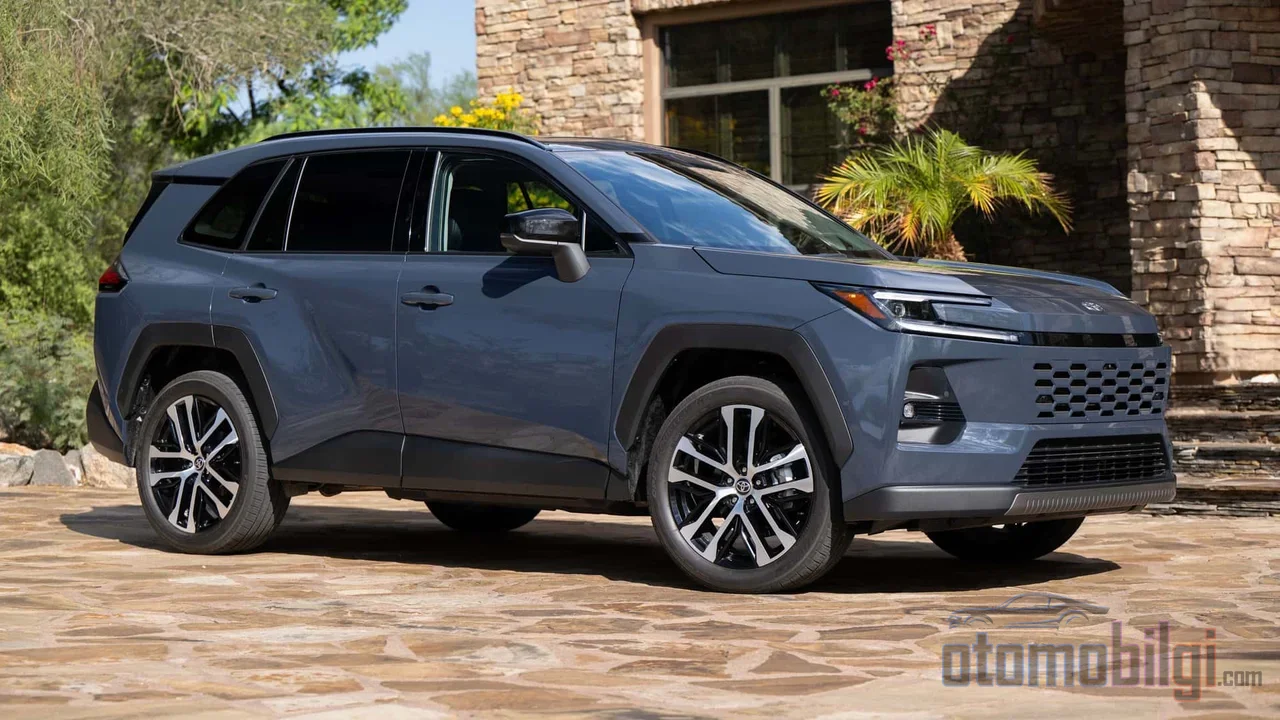
Toyota announced the official price list for the 2027 model year RAV4 on November 6, 2026, and the announcement was not limited to prices alone. In the Woodland trim, a new suspension that noticeably increases ground clearance, and in the plug-in hybrid version, a switch to the NACS charging port that has become the Tesla standard arrived in the same package. For someone who has been following this segment for more than five decades, such model year updates usually get lost in technical detail pages; this time things are different. Because the PHEV's switch to NACS is not just a port change - it means extending a standard that has settled at the center of North America's charging infrastructure to yet another mid-range hybrid SUV.
2027 RAV4 Prices: Starting Point $32,300
According to the official announcement, the 2027 RAV4's starting MSRP was set at $32,300. This figure is remarkable compared to the 2026 model year, where the Hybrid LE trim started at $33,350: the entry price appears to have effectively been lowered. However, a single starting figure does not tell the story of the distribution across trim levels; details of the upper trims' prices are still gradually becoming clear.
Before the official price announcement, figures that remained at the estimate level had also entered circulation. Among them were projections of approximately $32,650 for the LE Hybrid FWD, around $44,000 for the Limited Hybrid AWD, and around $48,550 for the top PHEV trim, the GR Sport AWD. For now, these figures should not be read as a price list; the only officially announced value is the $32,300 starting price. The fact that the gap between estimates and the official list was kept so narrow in vehicle pricing is an indicator in itself: Toyota has built the new generation's price architecture to be quite predictable.
Highlights
- 2027 RAV4 starting price: $32,300 (2026 Hybrid LE started at $33,350)
- The Woodland suspension raises ground clearance to 23.1 cm (9.1 inches); other trims sit at 8.1 inches
- All PHEV trims feature a factory-installed NACS charging port and DC fast charging
- PHEV system output of 324 hp, electric range of 52 miles
- Standard hybrid: 2.5-liter naturally aspirated engine system, 226 hp in FWD, 229 hp in AWD
Woodland's New Suspension: Ground Clearance Rises to 9.1 Inches
The most concrete engineering item in the 2027 announcement is the new suspension coming to the Woodland trim. With revised springs, this trim's ground clearance reaches a level of 9.1 inches (23.1 cm). Most other trims, except the GR Sport, remain at 8.1 inches; meaning the Woodland has gained roughly an inch of advantage over its siblings.
Context matters: the previous model year's Woodland came with 8.5 inches of ground clearance, and the GR Sport went as low as 7.5 inches. Combined with all-terrain tires and an electric rear axle, this increase makes the Woodland one of the most off-road-ready members of the compact SUV class. The fact that the ride height is highlighted so prominently in the official announcement for a volume model like the RAV4 is also a sign of how heated the off-road capability competition in the segment has become.
The NACS Era in the PHEV: The Tesla Standard Comes from the Factory
The real turning point is on the charging side. Starting from 2027, all RAV4 PHEV models will come with a factory-installed NACS charging port and the CCS port will fade into history. Moreover, DC fast charging capability is being added to all PHEV trims; compatibility with the Tesla Supercharger network has been officially confirmed.
To see how rapid this change is, it is enough to look back one year. The 2026 model year RAV4 PHEV did not have a NACS port; DC fast charging was done through the CCS1 port, and the battery charged from 10 to 80 percent in about 30 minutes. That same year, a solution carrying two separate charging ports was being discussed for the PHEV; Toyota's view at that stage was that a single charging standard would suffice. With 2027, this cautious approach appears to have been abandoned, and the lineup has simplified to a single NACS port.
Toyota had already taken its first steps in this direction: Starting from 2025, the transition to the native NACS port had begun in its electric models. The RAV4 PHEV joining this scheme shows that the standard has become the default not only for pure electrics but also for plug-in hybrids. The combination of 52 miles of electric range and DC fast charging opens the door to the vehicle being lived with largely like an electric car in daily use. Of course, the debate is not over: Whether fast charging is necessary for a battery with around 40 miles of range still creates differences of opinion among user communities. For some, a Supercharger is unnecessary for this battery size; for others, it provides range flexibility on long journeys. Toyota appears to have chosen the side of the second camp.
2027 RAV4 Technical Specifications and Price Table
The new generation RAV4 was completely redesigned in 2026, shelving its gasoline version and moving entirely to electrification. There is no notable design change for 2027; the changes are focused on trim, charging, and suspension. Here is the main table with official announcement and verified data:
| Feature | Hybrid (HEV) | Plug-in Hybrid (PHEV) |
|---|---|---|
| System power | 226 hp (FWD) / 229 hp (AWD) | 324 hp |
| Similarity / Engine | 2.5-liter naturally aspirated I4 + electric motor | 2.5-liter naturally aspirated I4 + more powerful electric motor |
| Transmission | eCVT | eCVT |
| Electric range | - | 52 miles (approximately 84 km) |
| 0-60 mph (approximately 0-97 km/h) | AWD: 7.0 seconds | 5.4 seconds (GR Sport) |
| Charging port | - | NACS (factory-installed), DC fast charging |
| Starting price (US) | $32,300 (MSRP) | Not announced |
As for torque values: in the hybrid system, the gasoline engine produces 163 lb-ft (approximately 221 Nm), and the electric motor 170 lb-ft (approximately 230 Nm). On the PHEV side, the torque value has not yet been announced by the manufacturer; it would not be right to fill this in with speculation.
Fuel Economy, Dimensions, and Interior Equipment
As a fuel consumption reference, the 2026 EPA figures are a useful guide: the hybrid FWD delivers 47/40/43 mpg (city/highway/combined), while the PHEV GR Sport comes in at a combined 39 MPGe. With a 14.5-gallon tank, total range is targeted to fall in the 550-620 mile range.
The exterior dimensions sit at an appropriate level for the class: length 181-182.9 inches, width 73-74 inches, height 66.3-69.1 inches, and a wheelbase of 105.9 inches. Cargo volume is 37.5 cu ft behind the second row in the hybrid, and 70.4 cu ft with the seats folded; in the PHEV, as the price of the battery, these figures drop to 33.5-33.6 and 63.5-63.6 cu ft.
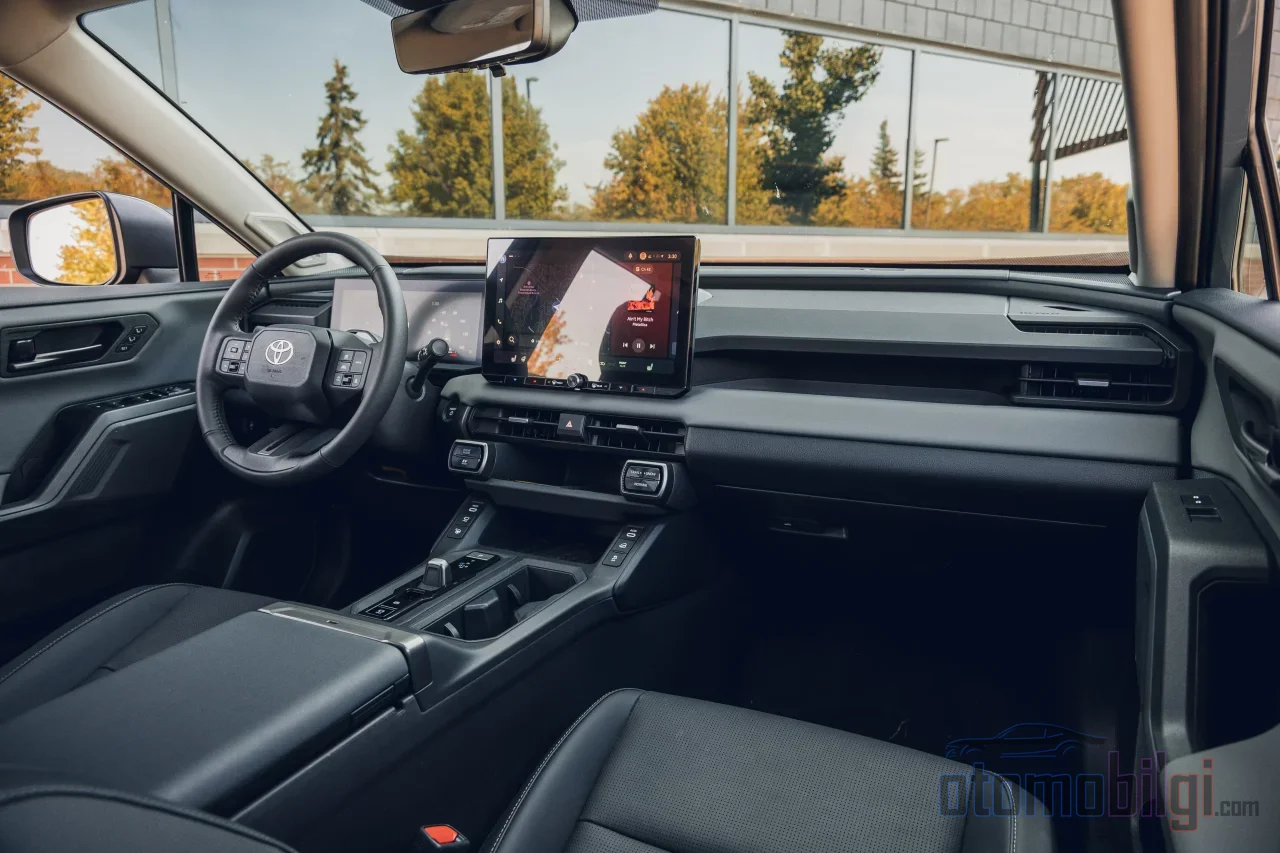
Inside, Toyota Safety Sense 4.0 is standard on all models. A 12.3-inch digital instrument cluster comes regardless of trim, while on the multimedia side a 10.5- or 12.9-inch screen with wireless CarPlay/Android Auto support is offered. The warranty package is comprehensive as well: basic warranty 3 years/36,000 miles, powertrain 5 years/60,000 miles, hybrid components 8 years/100,000 miles, and hybrid/PHEV battery 10 years/150,000 miles of coverage.
Position in the Segment and Market Context
The RAV4 is one of the best-selling names in the compact SUV segment worldwide, and with the generational change in 2026 it had dropped the gasoline version entirely and made the hybrid lineup standard. The 2027 model year update amounts to consolidating this strategy: price discipline has been maintained, the off-road-oriented Woodland trim has been given a genuine capability boost, and the PHEV is now effectively connected to North America's most widespread fast-charging network.
Reviews are of course not always positive. Some test drives of the new generation raise criticisms about a cabin that feels narrower, a step back in material quality, fewer physical controls, and a noisy, jarring ride plus an overly intrusive driver attention monitoring system. There is a counterargument as well: the hybrid-standard lineup, good fuel economy, well-known reliability, and low depreciation are seen as sufficient for this vehicle to maintain its segment leadership. The truth probably lies somewhere in between: the RAV4 sells on balance, not excellence.
Should You Wait for 2027 or Buy the 2026?
This is the question readers ask most often, and the answer varies depending on needs. What is clear is this: for someone considering the 2027 PHEV, the NACS port and DC fast charging are two strong reasons to wait. Using Tesla stations with an adapter on a 2026 model with a CCS port, however, carries uncertainty in terms of warranty and port damage risk; there is no clear official statement on this matter.
As for the delivery schedule, patience is required: according to the official announcement, the 2027 RAV4 hybrid models will begin reaching dealers in the US later in the year; no exact date has been announced. It is also not yet clear when the Woodland and PHEV versions will hit the ground. In short, the 2027 RAV4 holds a strong hand on paper with its $32,300 entry price and, in particular, its NACS-equipped PHEV version; as for how well this hand will play on the field, we'll see in the coming months, when the vehicle hits the roads.
Sources
- 2027 Toyota RAV4 Builds on a Fully Electrified Formula with New Woodland Capability and Expanded Charging Convenience - Toyota Pressroom
- 2026 Toyota RAV4 - Toyota Pressroom
- 2027 Toyota RAV4 Raises Prices and Ride Height, PHEV Model Adds NACS - Car and Driver
- Toyota Quietly Gave The 2027 Toyota RAV4 PHEV A Big Upgrade - InsideEVs
- 2027 Toyota RAV4 Woodland Pricing And Upgrades - Motor1
- 2027 Toyota RAV4 Review: Expert Insights, Pricing, and Trims - MotorTrend
- 2027 Toyota RAV4 - Autoblog via Yahoo Autos
- Here's Why the 2026 Toyota RAV4 Plug-In Hybrid Has Two Charge Ports - Edmunds