Why Do 400-Volt Vehicles Slow Down on 800-Volt Charging?
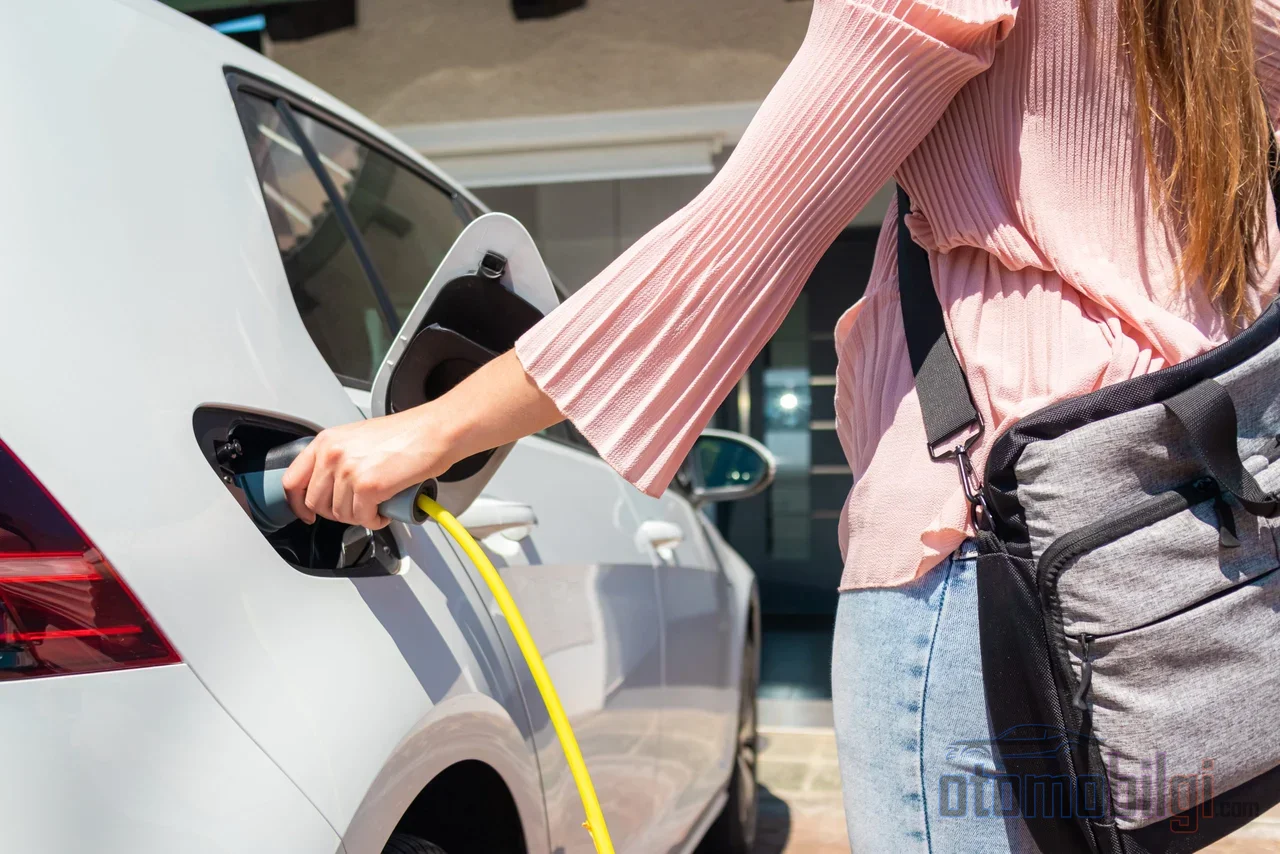
You pull up to a 350 kW DC fast charging station, plug in the connector, and watch a power reading on the dashboard far below what you expected. The station is healthy, the cable is cool, and the battery is still mostly empty. The problem, contrary to what most drivers assume, is not at the station but in the vehicle's high-voltage architecture. So what actually happens when a 400-volt vehicle is connected to a high-voltage station capable of delivering nearly four times the power?
The answer to this question lies in the compatibility problem between the two main voltage architectures of electric cars and the output characteristics of DC fast charging stations. We will approach the topic in reverse of most explanations: the usual discussion is how an 800V vehicle charges at a 400V station, but the physics is symmetrical and the same rules apply in the opposite case as well.
Voltage Matching: The Fundamental Rule of DC Charging
In DC fast charging, the station sends current directly to the vehicle battery; during this process, the vehicle's own onboard charger is not engaged. For this to work, there is one unavoidable condition: the source voltage must exceed the instantaneous voltage of the battery pack. Otherwise, current cannot be pushed from the station to the battery; electricity does not flow on its own from a lower voltage to a higher voltage.
The battery of a vehicle with a 400V architecture operates nominally around 400 volts; as the state of charge progresses, this value climbs within a range that varies from pack to pack. In an 800V architecture, this range is noticeably higher. For example, the Porsche Taycan's 800V system operates between 610 and 835 volts.
DC fast charging stations are designed according to this reality. Modern DC chargers are typically configured to deliver constant power across a wide output range of 200-1000 volts; communication between the vehicle and the station proceeds throughout the charging session by tracking the voltage and current values requested by the vehicle's battery management system (BMS). So a 400V vehicle connected to a high-voltage-capable station is not unable to charge due to incompatibility; the station lowers its output to the vehicle's voltage. The real problem begins after that.
Key Takeaways
- In DC charging, the station voltage must exceed the battery voltage; a source that does not cannot push current into the battery.
- The same 150 kW of power must be transferred at 375 A at 400V and 187.5 A at 800V.
- Modern DC stations typically offer output in the 200-1000 V range; the bottleneck is usually on the vehicle side.
- Doubling the current increases the heat loss (I²R) at the same conductor resistance fourfold.
- Even if peak power doubles, the charging time is not cut in half; what matters is the average power over the entire session.
Why Is a 400V Vehicle Slow at a High-Voltage Station?

The station adjusting its output voltage to the vehicle is not the solution to the speed problem. Because charging power is a simple product: voltage times current. When you are forced to keep the voltage in the 400-volt band, the only way to demand high power is to raise the current. Delivering 150 kW requires about 375 amps at 400 volts, and 187.5 amps at 800 volts.
As current increases, two concrete walls are hit. The first is heat: when conductor resistance stays constant, doubling the current quadruples I²R losses. For the same power, the current that is sufficient in an 800V system means serious heating in the cable, connector, and battery side on the 400V side. This heating stresses both the temperature limits of the charging hardware and the battery's thermal tolerances; the system throttles the current to protect itself. The technical analysis published by Ars Technica in 2026 also points to the same point: for the same power, currents of about 900 amps are required on the 400V side, which is far beyond the capacity of most charging cables and connectors.
The second wall is the vehicle itself. Even though modern stations offer a wide voltage range, the vehicle's battery management system and power electronics cannot go beyond a certain maximum current and power value. Vehicles with 400V architecture are in practice limited to peak charging power in the range of about 150-250 kW; 800V architecture can manage much higher powers with much lower current. As a result, a 400V vehicle connected to a 350 kW station takes its limit not from the station but from its own architecture.
Comparison: Practical differences between 400V and 800V architectures
| Feature | 400V architecture | 800V architecture |
|---|---|---|
| Typical peak charging power | ~150-250 kW | 350 kW and above |
| Current required for 150 kW | ~375 A | ~187.5 A |
| Cable heating | High (high current) | Low |
| 10-80% charging time | ~20-30 min | ~15-20 min |
| Cost and prevalence | Cheaper, established technology | More expensive components |
It should not be concluded here that the 800V side wins in all areas. Low-voltage architecture is a mature, cheaper solution fully compatible with the existing hardware ecosystem. In daily use, especially for drivers who rarely need fast DC charging, this advantage translates into a tangible price difference.
The Reverse Also Holds: How Does an 800V Vehicle Charge at a 400V Station?
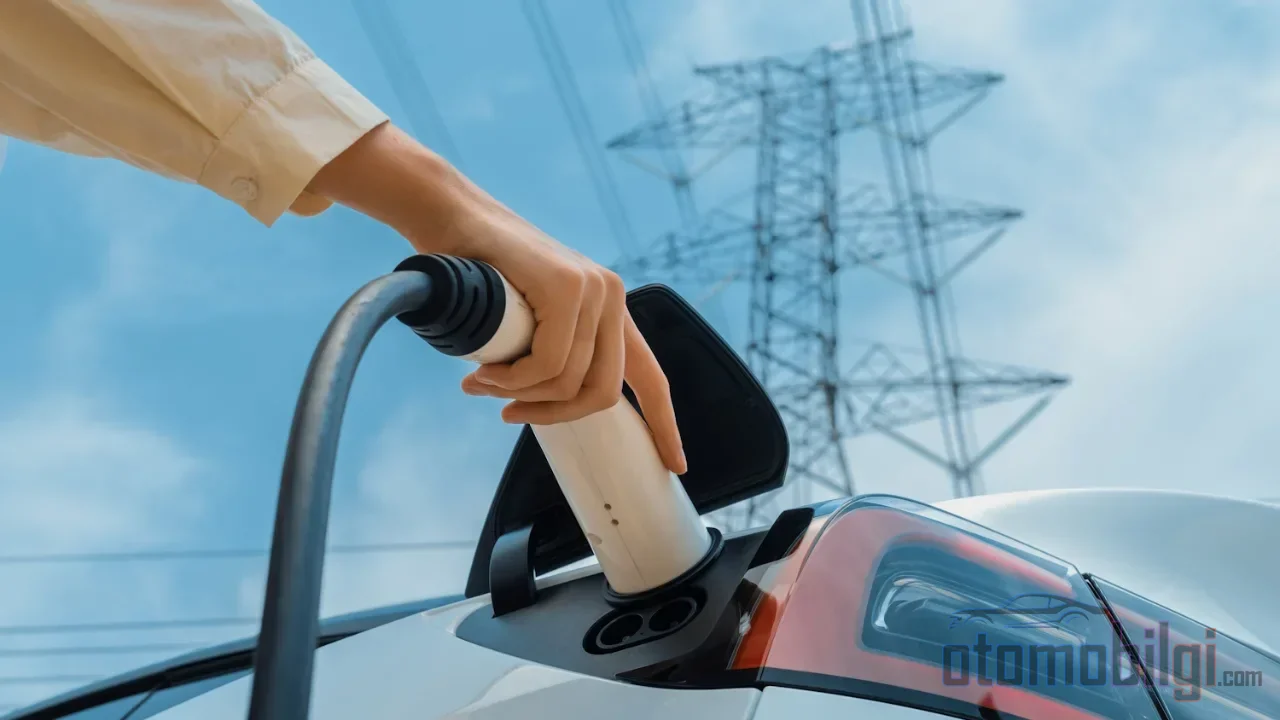
Since physics works the same way in both directions, the compatibility problem appears far more sharply for 800V vehicles. If the source voltage cannot exceed the battery voltage, charging is impossible; therefore, for an 800V vehicle to draw energy at a 400V station, the voltage must be raised inside the vehicle, that is, a boost (voltage step-up) operation must be performed with a power electronics circuit. Manufacturers solve this problem in three different ways.
Internal DC/DC converter
The most direct solution is to install a high-power boost converter in the vehicle. The Porsche Taycan is the well-known example of this: The 2025 Taycan carries a 150 kW DC/DC converter as standard for charging at 400V stations. The critical point is this: even if the station offers more power, the converter limits charging to 150 kW. On 800V infrastructure, the same vehicle can accept power up to 320 kW under ideal conditions; charging from 5 to 80 takes 22.5 minutes under ideal conditions.
The converter also has a cost: efficiency. Boosting does not increase the station's power; quite the opposite, due to conversion losses, only a portion of the power drawn from the station actually reaches the battery. In a 150 kW session, even a converter that is 97 percent efficient produces roughly 4.5 kW of heat; cooling that heat is a separate item of mass, volume and cost. Converters used for this purpose in the industry come in power classes between 50 and 150 kW, are typically implemented with resonant topologies, and are marketed with efficiency values exceeding 98 percent.
Reusing the motor and inverter
Hyundai's E-GMP platform offers a more elegant engineering answer: to step up the 400V charging input, it reuses the rear motor's windings as an inductance and the inverter's switches as the elements that control energy transfer. Thus, without adding a separate boost converter, the existing power electronics takes on a second duty during charging. This solution also has a subtle engineering detail: During the 250-amp charging current, with rotor control off, a parasitic torque of roughly 12.5 percent of the motor's rated torque, peaking at 20 N·m, is generated; by keeping the control active, the rotor is locked and this torque is suppressed.
Reconfiguring the battery pack
The third approach eliminates the conversion loss entirely: splitting the 800V pack into two 400V banks using high-voltage switches. The Porsche Macan uses this method; first the state of charge of the two banks is balanced, then the banks are connected in parallel to draw charge from a 400V station. This way, the Macan receives 135 kW at a 400V station and 270 kW at an 800V station, and its 10-80 charging times are approximately 33 and 21 minutes respectively. The Macan example also reveals an important fact: doubling peak power does not halve charging time, because what matters is the average power over the session.
What Factors Determine Charging Speed?
At this point, it would be wrong to reduce the topic solely to voltage architecture. The real speed of a charging session is limited by the weakest link in the chain, and that link is not always the vehicle:
- The station's voltage range and current limit: Many Level 3 fast chargers can deliver at most 400 amps within the 300-600 VDC range; which means a practical ceiling of roughly 120-240 kW.
- The vehicle's power and current ceiling: The battery management system limits the maximum acceptable current regardless of the architecture.
- State of charge (SoC): As the battery fills, the acceptable power drops; the charging curve slows down noticeably after 80 percent. In a 400V architecture, the heat generated by high current overheating the battery and cables reinforces this slowdown.
- Temperature conditions: As both the station cable and the battery approach their thermal limits, the system throttles the current.
This chain logic also invalidates the assumption that "800V is always faster." If an 800V vehicle is connected to a lower-voltage station and its internal converter has a low power ceiling, it can charge slower than a 400V vehicle in good conditions.
The Infrastructure Reality: 800V Stations Are Still a Minority Today
The charging-side advantage of the 800V architecture depends on the prevalence of high-voltage stations, and that prevalence is still limited today. According to industry data, only about 1.5 percent of DC fast chargers deployed in the US offer 800V support; in Europe, too, only a few hundred out of 40,000 charging stations meet this standard. The overall picture is that roughly 2 percent of all DC stations can deliver full speed to high-voltage vehicles.
This picture is a point of comfort for 400V vehicle owners: most of the existing network is already designed for their vehicles, and even if you come across an 800V station, your vehicle charges without issues at the low end of that station's output range. The price you pay is not being able to reach the peak power levels that high-voltage vehicles achieve - meaning not minutes, but tens of minutes lost in a single session on a long journey. At the other end of the debate stands the practical argument of those who defend the 400V side: in daily use, this loss amounts to at most a few hours per year.
Short Answer: Why Can't You Get Full Power?
In summary: When a 400V vehicle is connected to a high-voltage station, the station's output is stepped down to the vehicle's battery voltage, and the charging power is limited by the current that can be pushed at that voltage. When you demand high power, the current sticks to its ceiling; as current increases, the I²R heat losses in the cable, connector, and battery grow up to fourfold, and the system throttles itself. For this reason, a 400V vehicle typically cannot exceed the 150-250 kW band even at a 350 kW station. Doubling the voltage is the way to transfer the same power at half the current; that is precisely the reason the 800V architecture exists.
The lesson for the driver is simple: when reading charging speed, don't look at the kilowatts on the station's sign, but at the vehicle's peak charging power, its charging curve, and the battery temperature. No matter how powerful the station is, the narrowest link in the chain is still your vehicle; and that link is often the voltage architecture.
Sources
- How do 800-V EVs charge on 400-V dc fast chargers?
- Doubling the voltage: What 800 V architecture really changes in EVs
- Taycan: The Glossary - Porsche Newsroom
- Hyundai Electric Global Modular Platform
- 400V vs 800V Charging
- Taking charge of electric vehicles - Texas Instruments
- Designing with SiC in EV DC Fast Chargers - Wolfspeed
- 400V vs. 800V EV Charging
- EV Charging Speeds - Eleport
- High-Voltage Booster - Preh