Angle Kit: Why Is Steering Angle Vital in Drifting?
Share This Page
When you press full lock, does the steering wheel stay stuck in your hands while the car spins like a carousel? What's happening in that moment is most likely a lack of angle. A factory road car can never reach those crazy counter-steer angles that drifting demands; because engineers designed it for the trip to the supermarket, not for entering a drift while clipping the door. So where does this angle come from, which parts change, and why does it directly affect the race result? Let's take a look one by one.
What Is an Angle Kit and Why Is It Essential for Drifting?
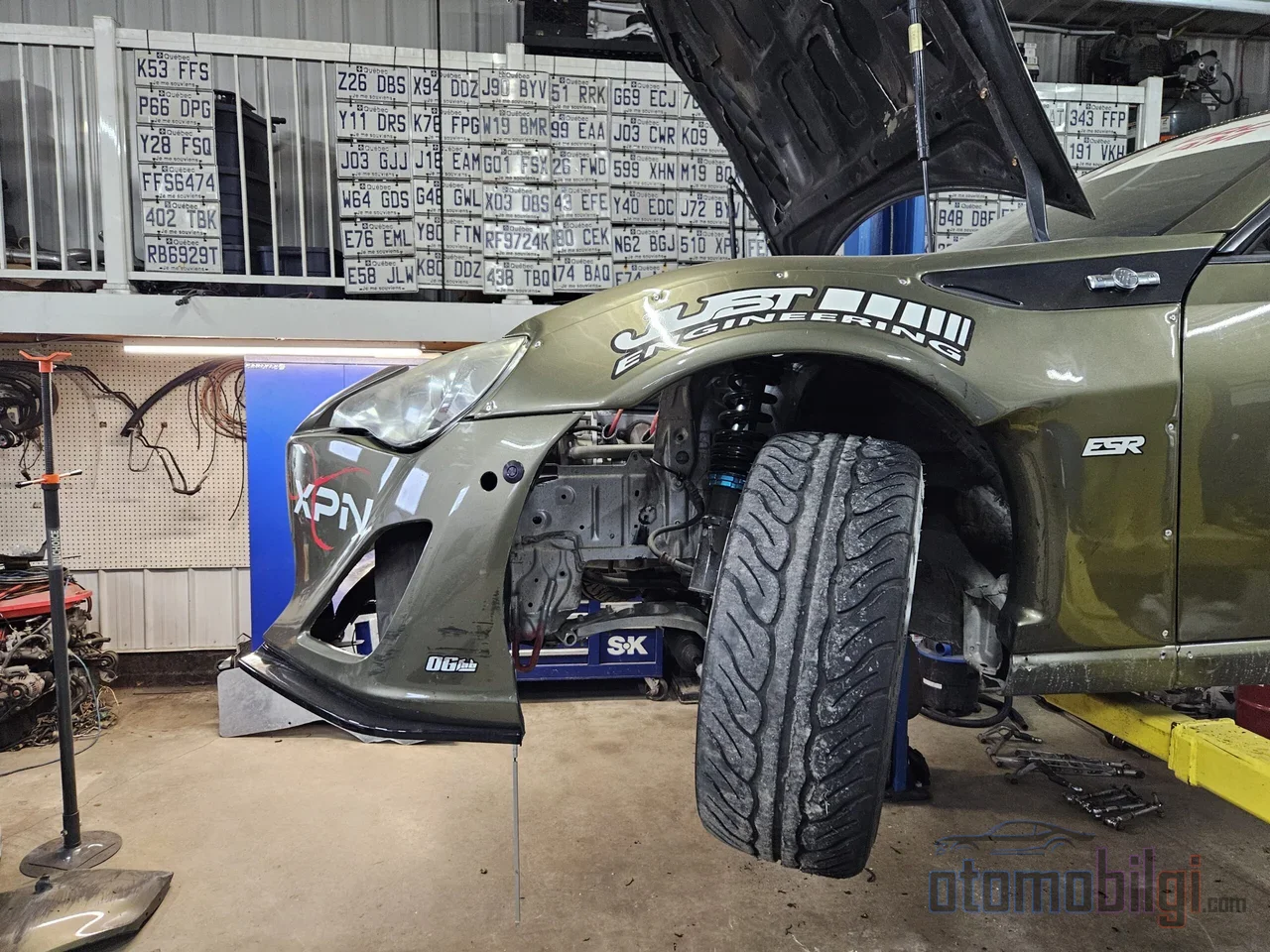
Steering angle is the maximum angle the front wheels can turn left or right from center. It's measured in degrees, and in fact every car has this value. A normal road car typically offers 30-40 degrees of lock; some are even stingier, staying around 24-28 degrees. That's plenty for daily use, but in the drifting world these figures are laughably small.
In drifting, the rear wheels slide intentionally, and you manage this slide by turning the front wheels in the opposite direction of the slide, that is, counter-steering. The problem is this: in a standard setup you can't reach enough lock for the correction you need, and the car slips from your hands and spins. That's why competitive drift cars usually turn at angles of 60-70 degrees, sometimes even more. This difference isn't about parking convenience; it's about winning or losing.
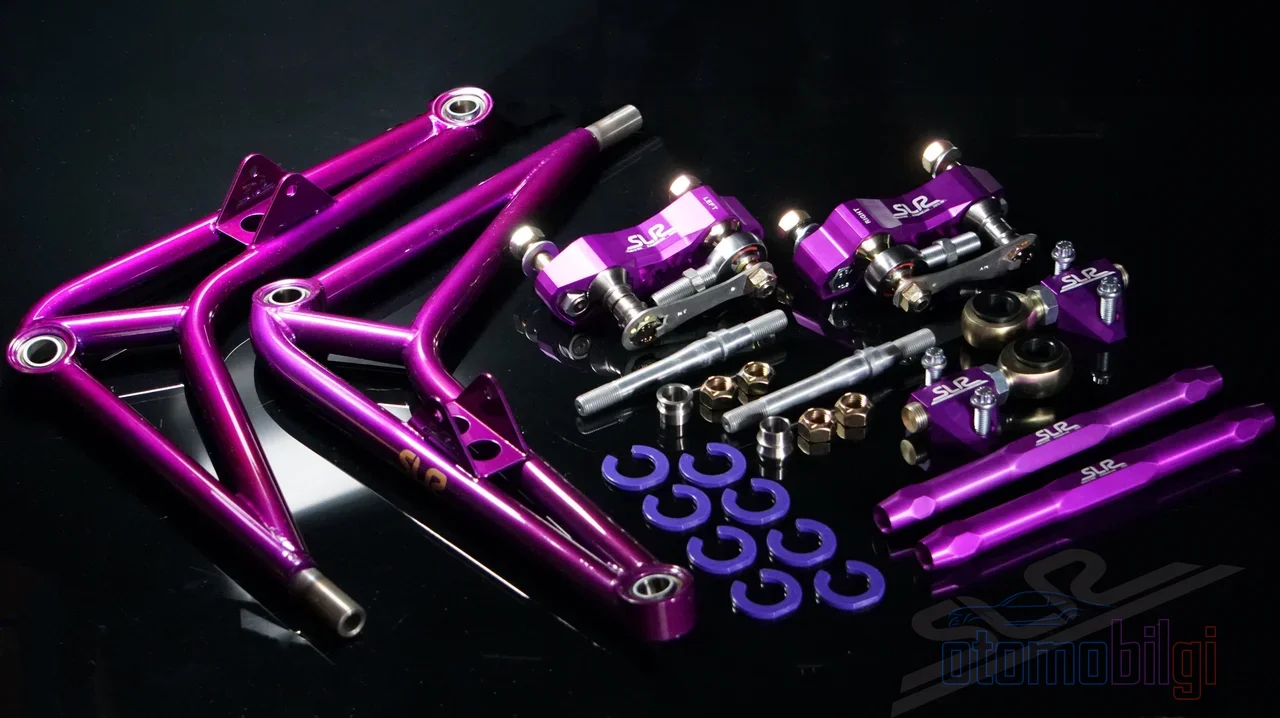
And this is exactly where the angle kit comes in. It's a package of parts that reconfigures the front geometry for drifting, and it typically consists of three main components: modified knuckles, known as angle knuckles, long and reinforced tie rods, and rack spacers. For example, a BMW E36 angle kit can offer over 60 degrees of usable lock. A small detail, but in the end the car transforms into a completely different machine.
Highlights
- Factory cars use a steering angle of 24-28 degrees, while competitive drift cars use 60-70 degrees.
- A typical angle kit consists of three parts: knuckle, long tie rod, and rack spacer.
- GKtech's offset rack spacers move the pivot point 30 mm forward and 34 mm outward, increasing rack stroke by 19 mm.
- In drifting, zero or reduced Ackermann is usually preferred; classic Ackermann geometry does the exact opposite.
- If you experience steering bind at full lock, the steering can't recover and a spin becomes inevitable.
Why Does Factory Geometry Fall Short in Drifting?
Let's think of it with an everyday analogy: imagine a parking spot you're trying to enter in a tight parking lot with the steering turned all the way. The steering locks halfway through and you miss the spot. Drifting is exactly this situation at 200 km/h. While the rear of your car is sliding, the front wheels need to turn very aggressively in the direction the slide is continuing; the standard angle runs out in the middle of that turn.
The concrete benefits of the extra angle: the recovery window is getting bigger, meaning your chance to bounce back from a mistake increases. Drift can be held at lower speeds, which is critical for tight lines and sticking in tandems. Left-right transitions become sharper, and you can more comfortably support aggressive throttle input. As the angle increases, the car's turning circle shortens, so when you turn the steering wheel close to 90 degrees, you really turn much tighter.
But let's be honest about this too: the extra angle can slow things down, especially at the beginner level. As the angle increases, the margin for error grows too, and the driver can pick up the bad habit of trying to fix everything with the steering. Whereas line and angle should really be left to the throttle. In other words, an angle kit isn't a magic wand; it's a powerful tool added on top of a driver who has already mastered throttle control.
Chassis choice also comes into play. While cars with massive control arms like the Mustang are very unsuitable for learning in stock form, classics like the 240SX or the FC RX-7 can perform well even at stock angle on low-speed courses. So starting with the right chassis is also a strategy before getting into an angle kit.
What's Inside the Kit? Component Component Technical Logic
Rack Spacer: The Most Common First Step
A rack spacer is a spacer piece fitted between the steering rack and the inner tie rod end, extending the rack to increase steering travel. This is the easiest modification to install; but sometimes the bump stops on the rack or on the arms need to be removed. Small, cheap, effective - which is why it's the first thing everyone tries.
However, there's an interesting debate here. Offset rack spacers, the versions that physically move the pivot point, are according to some experienced installers the main culprit behind rack failures: they can bend and break the rack and cause power steering leaks. On the other side, there are those who defend them with engineering arguments; they say that by bringing the pivot closer to the axle centerline, they reduce the Ackermann angle and slow down the steering ratio. The numbers are interesting too: in some cases, 1 mm of movement in the rack means up to 5 degrees of angle change. Both sides agree that the truly ideal solution is to reposition the rack entirely. In summary: each part needs to be thought of not on its own, but as part of the system.
Knuckle and Control Arms: The Heart of the Angle
The knuckle is the pivot to which the wheel attaches and which determines the pivot point of the steering arm. The position of the tie rod hole relative to the ball joint determines the Ackermann geometry, and a shortened knuckle speeds up the steering ratio. Knuckles produced for drifting generally offer zero or reduced Ackermann; this reduces the tires rubbing against each other, increasing tire life and speed.
Control arms, meanwhile, are the unsung hero of drifting. Stock S13 tie rods are M12 sized and can bend at drift angles, creating steering bind. Performance versions are made from forged chromoly, feature PTFE-lined joints and offer adjustable length; this provides bump steer correction and consistent toe. The inner tie rod is the most stressed linkage point in drifting, and saving money here can end up being the most expensive saving of all.
Then there are the control arms. Extended front control arms provide a wider front track; this means better negative camber at angle and better tire contact. A classic example: on the AE86, a 2-inch extension was not enough, and the correct number turned out to be 3 inches. In other words, every chassis has its own magic number.
Ackermann and Steering Bind: The Two Faces of the Angle
First, the logic behind Ackermann: in a turn, the inner wheel travels a tighter radius and the outer wheel a wider one. Classic Ackermann geometry therefore turns the inner wheel at a greater angle; a perfect design for the tires to roll effortlessly on a straight road. But since you counter-steer in drifting, the roles of the inner and outer tires reverse, and classic geometry causes the tires to fight against each other. This is exactly why zero or reduced Ackermann is preferred in drift cars. Even so, the debate is not entirely settled: some believe that parallel Ackermann can provide smoother corrections in high-speed drifting, because the geometry does not follow a straight line, especially on modified cars.
The second face is steering bind, meaning the steering mechanism locking up at full lock. As the angle increases, the inner tie rod can reach an over-center position, and bind occurs at full lock. If this happens, the disaster scenario is as follows: the self-alignment torque, the natural force trying to return the steering to center, becomes insufficient, and the driver cannot save the car from the spin. There are solutions: increasing the tension rod length (on the S13, just a 5 mm extension solved the bind), installing lock stops, or moving the rack 25 mm. There is also a balance on the caster side: setting high positive caster just by shortening the tension rod lowers the bind angle, so caster is not a free adjustment either.
Lowering, Bump Steer and Other Side Effects
Increasing the angle alone is not enough; things get complicated once you lower the car. In an excessively lowered car, the factory geometry is disturbed: excessive bump steer, bind in the toe link, a harsh ride and constant settling onto the bump stops are seen. Bump steer is precisely this: while the suspension moves up and down, the wheels change direction on their own, unmonitored. The solution is to correct the geometry with an adjustable tie rod angle. The recommended starting values are as follows: negative camber between -2° and -5°, caster between 4-7°; 0 degrees of camber is not recommended on a MacPherson strut car, because it increases bind. A wide front track also allows the inner tie rods to reach full lock without rubbing, and provides stability at angle.
One more practical warning from the field: mixing parts from different brands is risky. Products from the same manufacturer with matching geometry are designed together, and in a high-angle setup with a rack spacer, bump steer must always be readjusted. And it's essential to test everything first in a safe environment, on a track, or in an area under organized supervision. These things are not suitable for street trials.
How Much Angle Do the Professionals Use?
If you look at the front ends of cars competing in series like D1 Grand Prix and Formula Drift, you'll see that the factory geometry has been almost completely rewritten; extreme angle solutions here - with custom knuckle designs and repositioned racks - setups exceeding 60-70 degrees have become standard in the later years of the series. But not everyone needs such extreme values. On tight and amateur-level courses, a lot of angle can be unnecessary; at the high-power Pro-Am level, however, plenty of angle is almost a requirement. So the right answer isn't a fixed number of degrees, but the combination of the car, the course, and driving style.
Awareness is rising rapidly in Türkiye as well: the first round of the 2026 season of the Apex Masters Türkiye Drift Championship was held at TOSFED İstanbul Park, and ready-made angle kits are now being sold in the domestic market; on sahibinden.com there are options ranging from the Wisefab E36 kit to installation services. Even the companies that perform the installation openly state that the kit significantly changes the front-end geometry - meaning this is a serious modification and should be treated as such.
Can You Learn to Drift Without an Angle Kit? Final Word
Yes, you can learn it - in fact, starting without an angle kit is recommended. Because the stock angle prevents you from using the steering wheel as a recovery tool, and you learn to solve lines with throttle, clutch, and momentum. An angle kit, with the recovery window it adds on top of that foundation, becomes an upgrade that opens you up to faster, tighter, and more aggressive driving. The short answer: the factory 24-40 degrees teaches you to survive, while 60-70 degrees teaches you to win. Both are necessary; the order is to learn first, then add angle.
Sources
- Steering Angle Modifications
- Why Drift Cars Run More Steering Angle (And How to Get It)
- Steering Bind
- Precision Steering for Drifting – Why Upgrading Inner Tie Rod Matters
- Drift Angle Kit Guide: Knuckles, Tie Rods, and Rack Spacers
- Tech Explained: Ackermann Steering Geometry
- Everything You Need to Know About Ackermann in Drifting
- What Is an Angle Kit, the Essential Component of Drift Cars?
- MADMODS BMW E36 Drift Angle Kit
- The Ultimate Guide to Suspension and Handling: Bump Steer