Is Drifting an Art or a Sport? The Aesthetic Debate of Automotive Culture
Share This Page
Drift is both a sport and an art: on one side stands a scored and regulated racing discipline built on speed, angle, line and style; on the other, a form of expression where the driver leaves their own signature on the car, the asphalt and the crowd, where everything from the car's setup to the driving becomes a personal identity. And here is the secret: these two identities do not exclude each other - drift draws its strength precisely from this dual nature.
Highlights
- Drift competitions are scored according to the criteria of speed, angle, line and style.
- The first professional series, D1 Grand Prix,, started in Japan in 2001.
- Keiichi Tsuchiya's 1987'deki Pluspy video inspired modern drifting.
- In Formula Drift, style is measured under three sub-headings: entry, fluidity and commitment.
- The first drift race in Türkiye was held in 2011; 62 races have been held to date.
What Exactly Is Drift, and How Does It Differ from Normal Racing?
Let's start with the basics. Drifting is a driving technique in which the driver intentionally provokes the rear of the car to slide, does not let go of control while losing traction, and completes the corner within this controlled slide. The rear slip angle of the car exceeds that of the front wheels, and the front wheels point in the opposite direction of the corner - this is called opposite lock, or countersteering. From the outside it looks like chaos, but inside everything is calculated.
Here is the interesting part: in classic racing, drifting is an undesirable condition. It slows the car down, wrecks the tires and bearings, and ruins lap time. In the pits it is called a "mistake." In the discipline of drift, the purpose is exactly reversed: control and aesthetics are sought within oversteer. In other words, drift takes the moment that other forms of racing throw in the trash and puts it on stage. In my opinion, that alone is a beautiful idea in itself.
So how is this control achieved? Traditionally there are four basic methods: the clutch kick, which provokes the rear with a clutch stab; the power oversteer, which breaks traction by applying power; techniques that play with balance through weight transfer (including the Scandinavian flick and lift-off oversteer); and the classic handbrake turn. The driver then keeps the car in a state of slide by constantly adjusting the throttle, brake, clutch, gear and steering inputs. Think of it this way: you know how you make constant tiny corrections on a bicycle to avoid falling - in drifting, the same thing happens dozens of times per second, in the opposite direction.
From Japan's Mountain Roads to the World Stage
The story of drifting begins on touge, the rural mountain roads of Japan. The touge culture, which took shape in the 1960s-70s with the development of the post-war automotive industry, became the center of Japanese street racing. On narrow, winding, foggy mountain roads, the way to descend quickly was through controlled loss of the rear end.
The pioneering name of the technique was Kunimitsu Takahashi , who originally made his name as a motorcyclist. He is considered the creator of drift techniques in the 1970s; the bias-ply tires of the era were also surprisingly well suited to high-slip-angle driving. Then Keiichi Tsuchiya entered the scene - his nickname was Dorikin, meaning Drift King. Tsuchiya, who was passionately devoted to Takahashi's techniques, spent hours on mountain roads, and when the Pluspy video showcasing his skills was released in 1987, it inspired a generation. In 1988, he organized Ikaten with magazine founder Daijiro Inada, one of the first drift organizations.
From there the story went global: in 1996, one of the first recorded drift events outside Japan was held at Willow Springs in California, with Tsuchiya performing on stage. In 2001, D1 Grand Prix was founded, and drift became a fully professional series with scoring standards and competition rules for the first time. Today, along with series such as Formula Drift, the top series in the US Formula Drift, King of Europe and Drift Masters in Europe, RDS in Russia, and WDS in China, drift is now a celebrated global motorsport with grandstands and sponsors. In 2017, Tokyo even hosted the FIA Intercontinental Drifting Cup. From underground to the FIA - a beautiful journey, isn't it?
How Is Style Scored? Drift Through the Eyes of the Judges
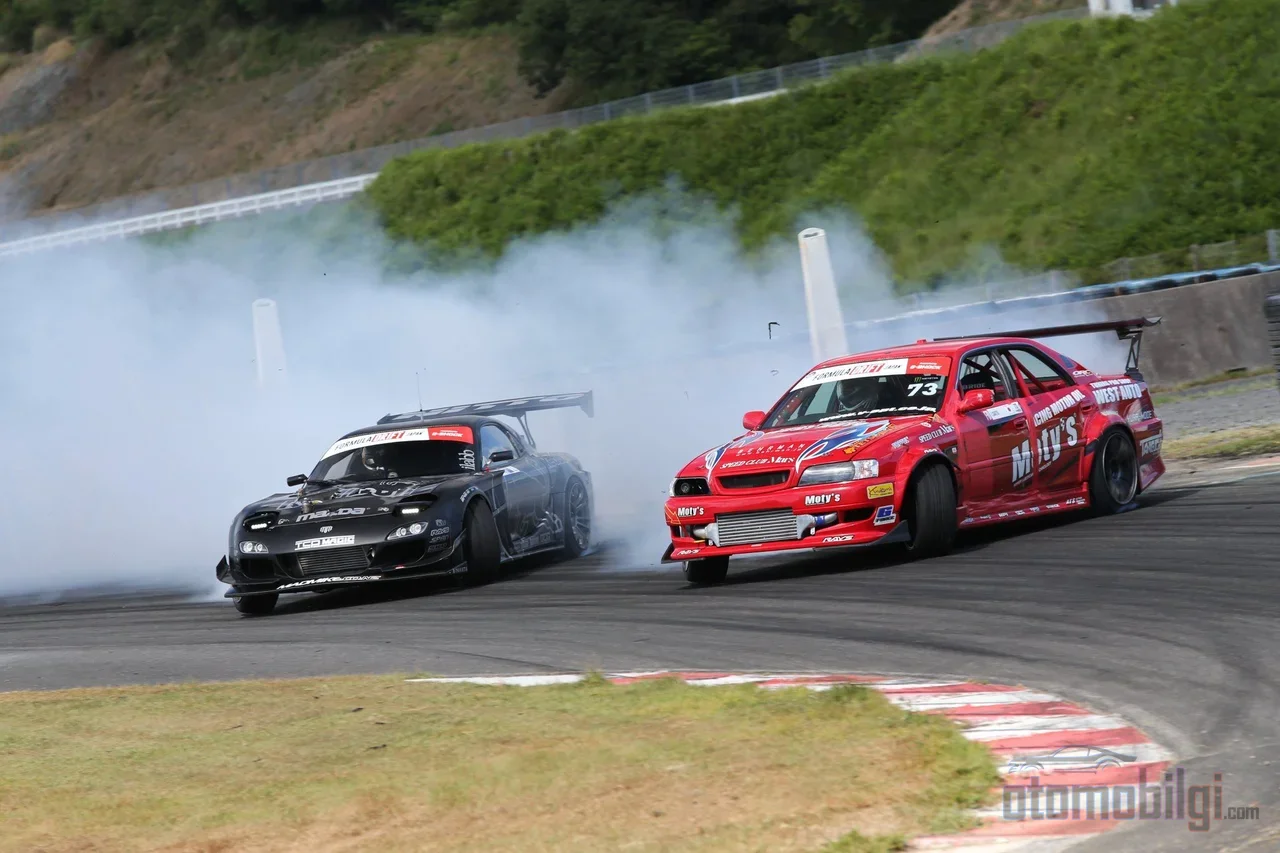
Here is the heart of the debate: how do you score a work of art? Drift's answer is pragmatic. Competitions are scored on speed, angle, showmanship, and the corner line (line) determined by the judges. In Formula Drift, it comes down to three criteria: line (hitting the designated line, inner clipping points, and outer zones), angle (maintaining the angle) and style. Style is divided into three subcategories: early and smooth entry (initiation), lock-to-lock fluidity (fluidity), and commitment, meaning consistent throttle and proximity to walls. In the official 2020 rulebook, fluidity and commitment were each worth 10 points - meaning "looking cool" has a direct point value.
The format is a separate excitement: qualifying rounds tansō are run as solo runs, and finals tsuisō turn into tandem drift. Each matchup is played in lead-chase format with two passes; the lead driver makes it as difficult as possible, while the chase driver gets as close as possible and mimics. Overtaking during drift is not welcomed, and spinning loses the pass. Tire smoke is part of the mix too. And the best moment: if the crowd is impressed enough by a close pass, they call for an extra run with "one more time." Imagine a motorsport whose audience shouts "do it again" - that is by definition a bit of performance art.
Regional differences are also interesting: in Australia, how accurately the chase car mimics the lead car is judged; in some European series, the lead driver's attempts to break the chase driver are penalized with point deductions. The same discipline, two different understandings of enjoyment.
Human Jury or Artificial Intelligence?
Precisely because of this subjectivity, the jury debate heated up. D1GP is prototyping a sensor-based electronic jury system to reduce subjectivity, King of Europe measures the criteria with GPS telemetry, and Drift Kings International announced an AI-powered jury for 2026 that measures every drift with centimeter precision, 20 times per second. Formula Drift drivers are also discussing a sensible proposal for the human-machine balance: humans should judge style and line, while the system scores angle and speed. Drift Masters' 2026 jury rules also score style with specific focus areas. In other words, while the sporting side becomes increasingly objective, the most human aspect - style - is deliberately left to humans. In my view, this choice already contains half the answer to the debate.
Machines Sign Too: Cars and Personal Style
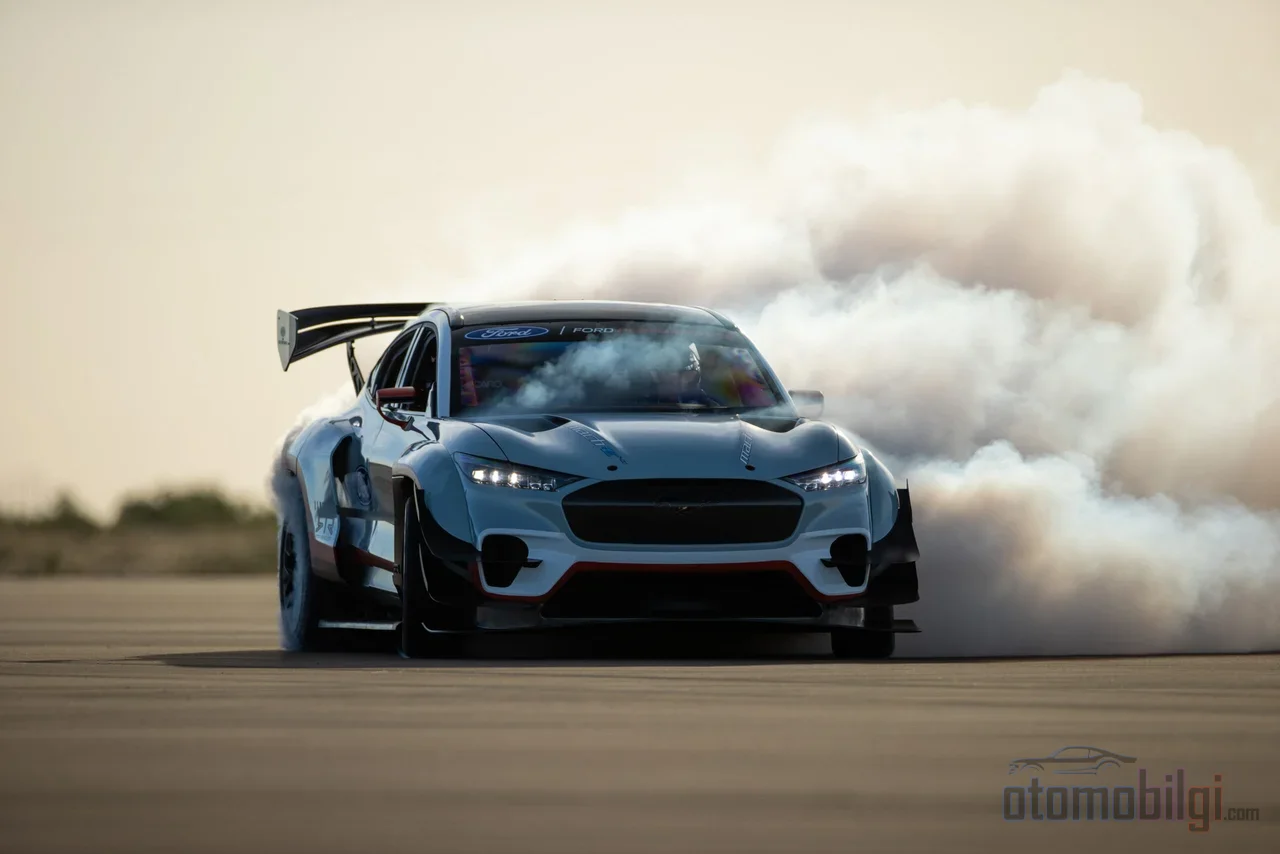
Drift cars are generally lightweight-to-mid-weight RWD coupes and sedans. There is no power limit in Formula Drift, which is why LS engine swaps are very common. On European tracks, BMW's E30, E36 and E46 generations dominate; in the US, Vaughn Gittin Jr. took the Ford Mustang to top-level drifting from 2005 onward. It is no surprise to see what is coming next: Subaru WRX or Nissan GT-R - even AWD cars are converted to RWD. The list of essentials in a build is long: a two-way clutch-type LSD differential is almost mandatory, along with an angle kit and modified knuckles to increase steering angle, stiff coilover suspension, a hydraulic handbrake and a five-point harness are standard equipment.
But the real point is this: this build is not a performance list, it is a statement of identity. In grip racing, everyone chases the efficient line and consistency; in drifting, each driver develops a unique form of expression. The car's setup, your entry style, the way you apply throttle, how boldly you approach the wall - all of it becomes your personal signature. This kind of individuality is rare in many motorsports. Your driving style is like your handwriting: even if two people write the same letters, their signatures never match.
Drift Culture Reflected on Screen and in Life
If we are going to debate whether a subculture counts as art, we need to look at how deeply it has seeped into culture. And drift has plenty to show for itself here. 1995 Starting in Initial D , the manga tells the story of high school student Takumi Fujiwara learning to drift in his Toyota AE86 on the touge roads of Mount Akina, and it is said to have been a key source in the series' international spread. For many of today's drift fans (myself included), this series was the first point of contact that opened the door. A sport having its own anime series is, in my opinion, the clearest proof that it dares to compete with high culture.
Hollywood came knocking too: the 2006 film The Fast and the Furious: Tokyo Drift carried drift subculture into mainstream cinema, and the real Drift King Keiichi Tsuchiya makes a cameo in the film. That same year, Pixar's Cars in the film, Doc Hudson teaches Lightning McQueen the technique he summarizes as "turn right to go left." In other words, drift has woven itself into every layer of popular culture, from children's films to action cinema. This discipline, born in Japan as an underground subculture, is today a celebrated global motorsport - and this is a story of a culture's journey as much as a story of aesthetics.
So Where Does Drift Stand in Türkiye?
This discussion is also visible when viewed from Türkiye. The Türkiye Drift Championship is organized under the supervision of TOSFED, with race ownership by the Drift Automobile Sports Club. Drift culture in the country has a history of roughly 15 years; the first race was run in 2011 and a total of 62 races have been held to date. The fourth round of the 2026 championship was run on Sunday, September 27, 2026 at TOSFED Istanbul Park; the 2025 races had been broadcast on television. In fact, drift pilots representing Türkiye meet with students at universities to introduce the culture.
While these may seem like small details, they are actually proof of the thesis: drift is governed as a fully-fledged sport with rules, points, a federation, and a calendar; at the same time, it lives as a culture discussed for its aesthetics in the stands, in videos, and on social media. The two identities turn side by side on the same track.
Art or Sport? The Answer Is Both
Let's put the opposing view on the table: there are those who say "drift is not a race," and they have a fair point - they say that in the classic sense of racing, it is not truly a race of two competing vehicles reaching the finish line first. The answer, however, is transparent: drift is a less accessible, highly specialized art form that requires both sport and great finesse. In other words, both the criticism and the defense arrive at the same place.
Think about it: functionality meets art here. A race discipline with points, rules, series, and telemetry - that's the sport side. A performance that expresses itself, leaves its signature, and earns the call of "one more time" - that's the art side. Nowhere in this story, stretching from drift's two architects to today's artificial intelligence jury debate, from touge corners to Istanbul Park, do the two identities clash; they complement each other. In my view, the answer to drift has long been written on the track: everyone who doesn't lose the car but finds it while sliding is, at the same time, both an athlete and an artist.
Which do you think carries more weight - the chrome setup card or the "one more time" chant? Let's meet in the comments and discuss without getting covered in tire smoke.
Sources
- Drifting (motorsport)
- D1 Grand Prix
- Keiichi Tsuchiya
- Pro Sporting Regulation - Formula Drift Japan
- Drift Masters 2026 Judging Rules
- Formula Drift drivers' discussion of the judging system
- DRIFT/RS AI Judging launch - Drift Kings International
- Long May We Drive | LA Drifting Culture
- Touge Driving - Apex Custodian Club
- The origins of Touge in Japan
- What Is Drifting and How Is It Done?
- Understanding the Art of Drifting - SLR Speed
- The Amazing Creativity of Drifting - Drift Enthusiast
- Drift vs Grip - Torque School
- What is Drifting? - Driftworks
- What Makes a Drifting Car Work - SLR Speed
- Competition Details - TOSFED
- History of Drifting - APEXMASTERS
- 2026 Türkiye Drift Championship Round 4
- Türkiye's Best Drift Drivers at IKU
- Drift racing discussion - r/motorsports