From Initial D to Games: How Drift Culture Lived On in Popular Media?
Share This Page
Drift culture, after being born on Japan's winding mountain passes, moved to the screens and became a global phenomenon. Anime and manga told it to millions, racing games handed us the controller and let us try it ourselves, while cinema and social media presented the car as a form of art, completely changing perception. Today, drift lives on not only on the track but in every layer of cultural production.
Highlights
- The Initial D manga was published between 1995 and 2013 and sold more than 55 million copies
- The anime series was produced between 1998 and 2014; Eurobeat music became the franchise's signature
- Since the mid-1990s, approximately 20 Initial D games have been released
- Scoring in drift is based on criteria such as speed, fluidity, and drift angle
- Stages of the Türkiye Drift Championship can be watched on television
Hello, on this page I'll tell you about drift's journey from the mountain road to the anime screen, and from there to our consoles. Buckle up if you're ready, because this story has more twists than you'd expect.
Touge: It All Started on Japan's Mountain Passes
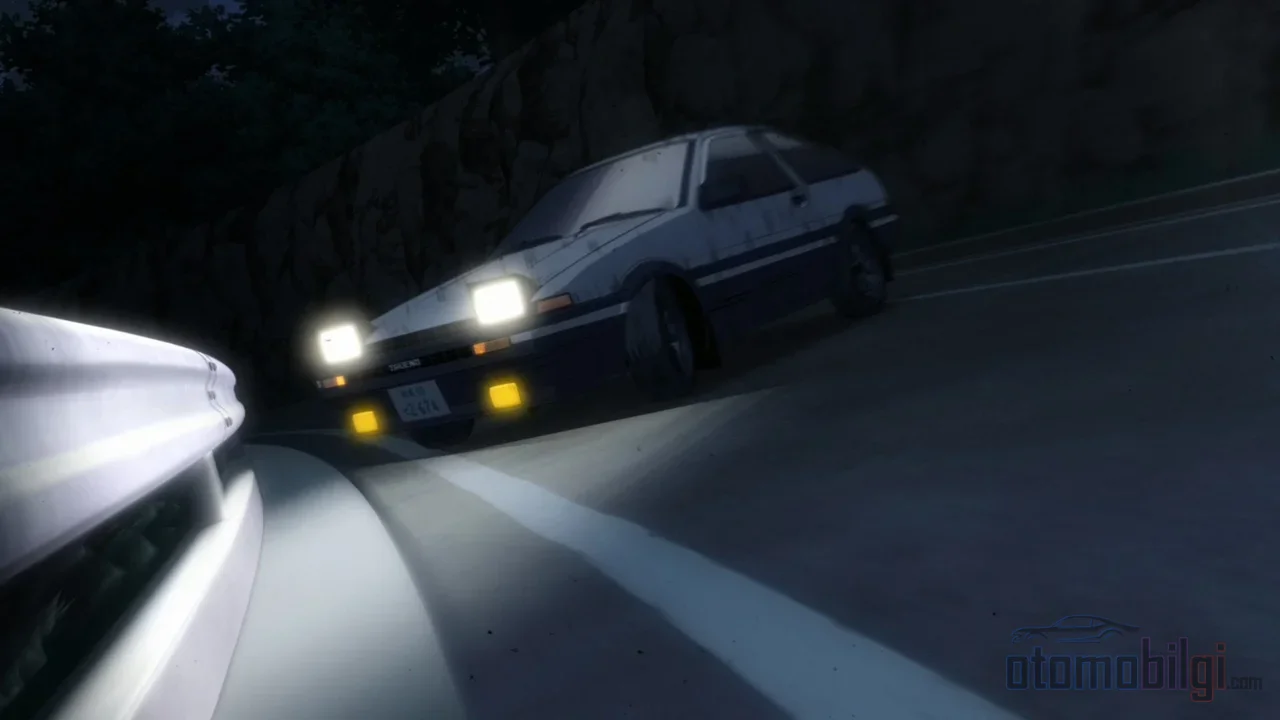
Japan's winding mountain passes, known as touge, are cited as the birthplace of drift. In the 1970s, driving techniques developed on these narrow, twisting roads; drivers descending downhill looked for ways to get through corners faster by sliding the rear of the car in a controlled manner. In a way, drift was a solution born of everyday need: the road was winding, time was short, and passion was high.
Over time, this scene began to organize itself. Professional drift races held with production cars evolved into a series in Japan that took the name D1 Grand Prix; although the series' first event was initially held under a different name, it soon became the center of professional drifting. Drift's origins are of course not undisputedly Japanese: some say the roots partially extend all the way to Europe. But the place where the culture, the scene, and the aesthetics took shape is touge, by a wide margin.
On the spectator side, things get even more interesting. In drifting, the driver deliberately slides the rear of the car but never loses control. Speed and fluidity - that is, how fast and seamlessly you take the corner - along with criteria like drift angle determine the scoring. And of course there's the show: smoke, counter angle, the sound of revs. For someone watching this, the phrase "turning loss of acceleration into art" is no exaggeration. Formula DRIFT driver Kyle Mohan says exactly this about the engine-building process:
This is a true art form.
Initial D: How Did Drift Reach a Worldwide Fanbase?
Here is where the answer to the question you're looking for becomes clear. Shūichi Shigeno's manga was published in Young Magazine between July 17, 1995 and July 29, 2013 : 719 chapters, 48 volumes. As of April 2021, over 55 million copies, it was among the best-selling manga in history. The story is simple but gripping: 18-year-old Takumi Fujiwara drives down the mountain every morning in his father's Toyota Sprinter Trueno AE86 for the family tofu business, and these daily trips turn him into a master driver without him even realizing it.
The anime series hit screens in 1998 and ran until 2014. Eurobeat tracks, still considered the franchise's signature, became practically synonymous with drift music during this era. A live-action film of the same name was also released in 2005. The key point is this: in 1998, drifting was still an underground pursuit. With Initial D, touge, the racing line concept, and the AE86 legend reached wide audiences for the first time. The inspiration of Shigeno, the manga's author, also stemmed directly from his curiosity about drift racing on Japan's mountain roads; in other words, the fiction was a direct reflection of the real scene.
The result? The popularity of Japanese drift culture grew significantly, and the series continues to inspire young street racers even today. The AE86 overtaking faster cars within the anime also played a major role in the car achieving legendary status; an unassuming machine carrying its driver perfectly summarizes drifting's message of "driver over car."
Sega's Arcade Empire and the Birth of the Games
Manga and anime weren't enough; gamers wanted the controller. From the mid-1990s onward, around 20 Initial D games were released, most of them developed by Sega. Initial D THE ARCADE, released in 2021, became one of Sega's main racing game series and stood out as the only arcade game offering cross-store, cross-border 1-on-1 online duels via internet connectivity. According to figures close to Sega, without Initial D, racing games might not exist in arcades at all today; the franchise also brought the concept of "character" to racing games in Japan and Southeast Asia.
Initial D's influence seeped into other games as well. The PS2 game of Tokyo Drift featured an obvious copy of Project D. A more recent example is JDM: Japanese Drift Master: the game openly states it drew inspiration from Initial D and AKIRA; it offers an open world of over 250 km, inspired by Gunma, Hakone, and Hokkaido, and is full of familiar nods, from the mountain's name to its parking lot. So this isn't just nostalgia, it's an active transfer of cultural heritage.
The Simracing Revolution: Forza, Assetto Corsa, and a New Generation of Drifters
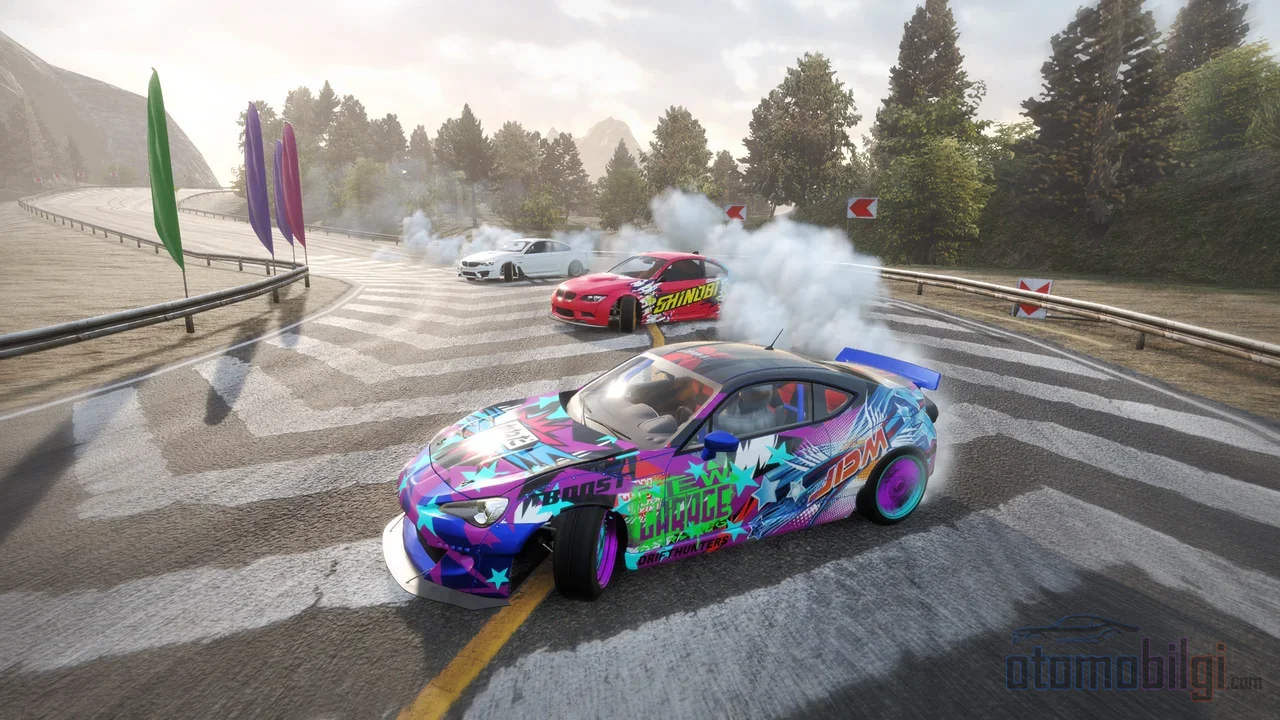
One of the easiest ways to learn drifting now happens from your couch. In gaming communities, Forza is praised as "the easiest game to drift in," while also facing heavy criticism: people say the racing physics aren't a full simulation, and that the tire smoke and performance scoring system are exaggerated. At the other end is Assetto Corsa: this Italian-made game, developed by Kunos Simulazioni in 2014, became the hub for drift communities seeking high realism. Moreover, the roots of sim drifting go back much further than today's servers, reaching decades back to Japanese drift culture.
The road looks open: the developers of Assetto Corsa EVO, Project Motor Racing and Rennsport are making promises about the future of modding; meaning community-made drift content will keep flowing in the years ahead. To me, the best thing about these games is this: you can learn at zero risk, at your own pace, not by easing off but by going full throttle. Just like learning to ride a bike with training wheels first - games are the training wheels of drifting.
Cinema, Social Media and YouTube: The Perception of Drifting as an Art
Cinema's share in the globalization of drifting cannot be underestimated. With an aesthetic that goes beyond its anime roots, Initial D carried drift culture far beyond its mountain-pass origins, and this "polarizing" visual style drew new audiences to the door. The anime market approaching 88 billion dollars globally and reaching 2.88 billion users also intensifies the wind of this revival; anime is reshaping films, series and games.
The final layer is social media and YouTube. Content creators like Taylor Ray, noriyaro, DriftHunterAlbo, Chelsea DeNofa or Lone Star Drift bring drifting to millions every day; there are accounts in the USA where drift-focused influencers have reached hundreds of thousands of followers. Thanks to this content, drifting is now seen not as a "car-destroying hobby" but as a performance art with choreography. Of course, there is a shadow side too: drift shares on social media don't always have legal consequences but can sometimes prove costly - so knowing the line between art and irregularity is essential.
Drifting in Türkiye and the Road from the Screen to the Track
So how did all this culture reach Türkiye? Drifting, which has been the subject of films and computer and console games, also gained a wide following here. The rounds of the Türkiye Drift Championship can be watched on television; the broadcasts from June, August and October of the 2025 season received thousands of views. On the show side, Driftherapy Show Team has been on stage as Türkiye's most active drift team and leading show team since 2014.
In other words, the loop is being completed: a technique born on Japan's mountain roads spread to the world through anime, entered our living rooms through games, began to be perceived as an art through cinema and social media, and has now become a culture we grow up watching its own championships. Which game do you think will add a new chapter to this story next year?
Sources
- Initial D - Why It's So Iconic | OverTake.gg
- Drifting Legacy & Setting - Japanese Drift Master
- "Initial D": Bringing Japan's Drifting Culture from the... - nippon.com
- Initial D and Takumi Fujiwara: The Virtual Star of... - Adrian Flux
- Drifting (motorsport) - Wikipedia
- D1 Grand Prix - Wikipedia
- The Beginning of Drifting: D1 Grand Prix - Driving Line
- Formula DRIFT - Professional Drifting Championship
- What is drifting? - Red Bull
- The Amazing Creativity of Drifting - Drift Enthusiast
- Assetto Corsa - Wikipedia
- The future of sim racing modding - Traxion
- The Global Anime Boom - Inside Pulse
- 25 Drifting YouTubers You Must Follow in 2026 - Feedspot
- What is drifting? How is drifting done? - Milliyet Molatik
- Driftherapy - Türkiye's Most Active Drift Team
- A 'drift' post on social media came at a heavy price - Sabah