The Birth of Drift Culture and Its Rise Around the World
Share This Page
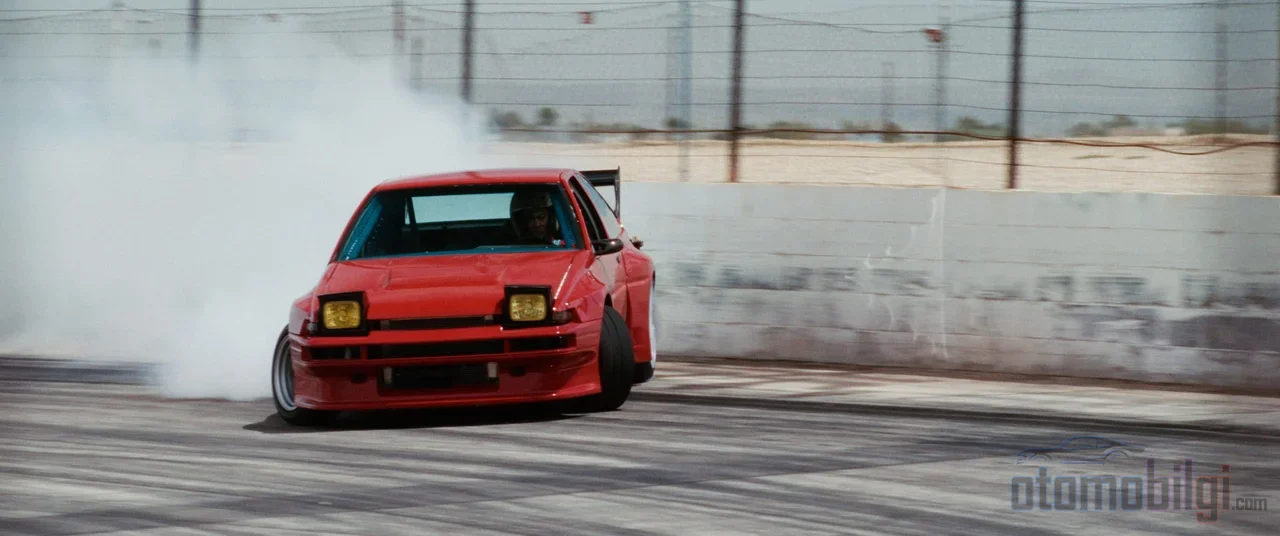
Drift is a motorsport in which the driver intentionally slides the car's rear tires and exits corners sideways; it was born on Japan's narrow mountain roads in the 1970s, and today it is raced all over the world with professional series such as D1 Grand Prix and Formula Drift. So how did it go from late nights spent on mountain roads to podiums? Let me tell it from the beginning, because this story is truly sweet.
Highlights
- The cradle of drift: Japan's touge mountain roads became the hub of informal racing in the 1970s
- Keiichi Tsuchiya won the title of "Drift King" in the 1980s by using deliberate drift mid-race
- In D1 Grand Prix, a solo score can exceed 100 (maximum 103); in Formula Drift, the qualifying score is capped at 100
- In the 2026 Formula Drift PRO standings, Conor Shanahan is at the top
- The 2nd round of the Türkiye Drift Championship was held in Gaziantep on May 24, 2026 held in Gaziantep on
Touge: It All Began on Japan's Mountain Passes
First, let's break down the word: touge () means "mountain pass" in Japanese. This word, which describes Japan's steep, winding mountain roads, has also signed the birth certificate of drift culture. There is actually an ironic twist to the story: these roads were originally built so that commercial vehicles could cross the rugged terrain. The "S" curves and hairpin corners designed to slow vehicles down on steep climbs turned, entirely by chance, into an ideal training ground for drifting.
In the 1960s and 1970s, alongside Japan's rising post-war automotive industry, young people began to channel their passion for speed outward. Access to racetracks was limited and expensive; if so, what were the mountain roads waiting for? Enthusiasts headed out to the touge at midnight and started racing by their own rules. There were two popular formats: Cat-and-Mouse races: the chaser wins if they catch the car ahead; if the lead car manages to keep its gap, it wins. In Time Attack, the rule was simple: the fastest time wins.
Legendary Roads
Everyone who has heard of touge culture has a few roads in mind, and each has a story. Mount Haruna, as anime fans will immediately recognize, is the real-life version of "Akina" in Initial D. Hakone Turnpike is so legendary that it is nicknamed "Japan's Nürburgring." Irohazaka Pass is famous for its descent, while Usui Pass is known for its famous C-121 corner. Each of these roads is still a pilgrimage site for fans today. If it were you, which one would you visit first?
Drift King: Keiichi Tsuchiya and the Story That Went Mainstream
Every culture has a hero, and drift's comes from two people. The pioneer was Kunimitsu Takahashi, who went from former motorcycle racer to racing driver: he is remembered as one of the first to use drift techniques in racing to gain an advantage through corners, and he inspired a generation including Keiichi Tsuchiya. The common narrative goes: Takahashi the pioneer, Tsuchiya the popularizer.
So who is Keiichi Tsuchiya who is he? Born in Nagano in 1956, this man made a name for himself by deliberately drifting in the middle of a racing championship in the 1980s. Inspired by rally techniques, he adopted controlled sliding through corners; it reduced braking needs and allowed faster exits from tight corners. Let me make a simple analogy: normally you slow down and turn through a corner, but Tsuchiya said, "Why not slide a bit so I both turn and keep my speed." The result? "Drift King", or Dorikin the title.
What followed was a true domino effect: His legendary video introduced drifting to the international stage (accounts differ on whether the video was called "Pluspy" or "Plus Option", making it hard to confirm its exact name). Tsuchiya became a two-time Le Mans class winner, consulted on the legendary anime Initial D, served as stunt coordinator on The Fast and the Furious: Tokyo Drift and even made a cameo in the film. He is also the man behind the D1 Grand Prix launched in 2000. One man's life created not just a sport, but literally a culture.
Let's not forget popular culture's share: Initial D the manga and anime brought touge into the mainstream in the late 1990s and early 2000s. Then came Gran Turismo, Need for Speed and Forza Horizon and games like them, along with the Tokyo Drift film, turned the passion for drifting into a global explosion. The millions who learned on a game controller are on real tracks today.
Professional Series: What Are D1 Grand Prix and Formula Drift For, What Are the Differences?
The transition from mountain roads to the podium was formalized in 2000 with the founding of the D1 Grand Prix in Japan. D1 is a production car drift series referred to under the subtitle "Professional Drift", and according to its official definition, the winner is determined by "cool drift driving performance". In other words, speed alone is not enough; style is also a must. In D1, the cars are relatively slow but focused on technique and driving style, and the jury system is designed accordingly.
On the other side is the US-based Formula Drift : the premier series featuring the world's best drivers, with a noticeably faster pace than D1. Both are drifting, but their characters are like two different brothers: one is an art gallery, the other a rock concert.
| Feature | D1 Grand Prix | Formula Drift |
|---|---|---|
| Headquarters | Japan | USA |
| Focus | Technique and driving style | Speed and show |
| Solo score limit | Can exceed 100 (max. 103) | Limited to 100 |
| Winner determined by | Cool drift performance (jury/dbox) | Tandem runs |
Which one is "real drifting" is still a matter of debate in the community; in my opinion, both are faces of drifting. European series like Drift Masters also take the stage with their own jury rules: according to the 2026 rules, the chasing driver can start slightly before the one ahead but must remain behind until the leader initiates the drift.
News from the 2026 Season
The 2026 Formula Drift season was quite eventful. Dmitry Brutskiy collected his third title as PROSPEC champion. Conor Shanahan won the Round 7 in Las Vegas; also topped Round 6 in Seattle, with Fredric Aasbo second and Branden Sorensen third. Round 4 in Stafford, however, was won by James Deane . In the PRO standings, Shanahan leads with 230 points, Deane is second with 150 points. Does the rest of the season promise excitement? I'd say it absolutely does.
How to Build a Drift Car? Power, Differential and Techniques
So what goes on behind the scenes of this craft? A drift car thinks very differently from your street car. At the heart of it lies the LSD (limited slip differential): it locks the two rear wheels together, distributes power evenly and gives you a predictable, repeatable drift. Think of it this way: in a normal differential, power always goes to the wheel that slips away most easily, as if one of your two legs keeps slipping; with an LSD, both legs always receive the same power at the same time. Since the differential settings directly affect how power is distributed to the wheels, great care goes into tuning them. In serious competition and at high power levels, toe-in values on the rear wheel of up to 10 mm per wheel can even be used.
The "Big 4" That Initiate the Slide
There are four classic ways to break the grip of the rear tires, and every drifter has these in their repertoire:
- Clutch kick: You enter the corner at steady throttle, then suddenly release the clutch to shock the drivetrain and break the rear tires' grip.
- Handbrake: The hydraulic handbrake locks the rear wheels; the slide is initiated without needing power. But be careful: it has a slowing effect.
- Feint/flick: A more advanced technique; you swing the car's weight in the opposite direction and then release it to start the slide. It provides a faster drift than the handbrake and is a favorite of professionals.
- Power over: As the name suggests: you open the throttle generously and use the power to break the rear tires' grip.
If you're asking which is better, the answer depends on the situation. In a slow, tight corner the handbrake saves you; in a fast transition the feint is far smoother. That's why a good drifter lapping the track is the one who can choose among these techniques according to the corner.
Drift in Türkiye: Where and How Does the Championship Run?
Good news: The Türkiye leg of this culture is also growing stronger. 2026 Türkiye Drift Championship's second round was run on May 24, 2026 in Gaziantep; 13 drivers started in the PRO category, and the round, hosted by the Gaziantep Metropolitan Municipality, featured a total of 16 professional drivers including 4 athletes from Northern Cyprus. The event wasn't just about racing; there were also social activities and car shows. The third round was run on June 21, 2026 at TOSFED Istanbul Park by the Drift Automobile Sports Club.
TOSFED Drift Cup and Türkiye Drift Championship qualifying heats are regularly held at TOSFED Istanbul Park; results are also published in real time. So for the curious, the door is wide open: find a race day, go, and feel the electricity of those tandem laps in person. In my opinion, there's a world of difference between understanding drifting from videos and watching it from the edge of the track.
Sport or Art? The Two Faces of Drifting
I think the most beautiful thing about drifting is precisely this dual identity. Even without a stopwatch, a winner can emerge: judges score your drift angle, your line through the corner, and how the car holds its stance in the smoke. The phrase "cool drift driving" in the official D1 definition actually sums up the essence of this sport - aesthetics matter as much as speed, and style as much as duration. On one hand, it's a serious engineering competition played out with physics, suspension geometry, and differential settings; on the other, it's the dance of the car. I have a guess: this is exactly what went through the mind of the first Japanese kid sliding on Touge roads at midnight - "Can I take this corner differently?" Do you think the future of drifting will lean more toward speed or more toward style? I think both sides will win.
Sources
- Touge Driving: How Japan's Mountain Roads Became the Birthplace of Drifting - The Apex by Custodian
- The History of Drifting: From Japanese Mountains to World Circuits - Drift Nation
- Explore the fascinating story of drifting's Japanese roots - Red Bull
- What's D1 Grand Prix - D1GP Official
- D1GP vs Formula Drift: Judging, Cars and Format Compared - Tsuiso Japan
- 2026 PRO Standings - Formula DRIFT
- 2026 Formula Drift Pro Championship Round 6 Seattle - Formula DRIFT News
- Drift Masters 2026 Judging Rules - Drift Masters
- Keiichi Tsuchiya - Wikipedia
- Drift King: The Story of Modern Motorsports Legend Keiichi Tsuchiya - Hagerty
- How to Build a Drift Car - Apex Masters
- Drift Car Set Up - Suspension Secrets
- Clutch Kick Drift Technique - Texas Drift Academy
- Drifting Techniques Explained - SLR Speed
- Türkiye Drift Championship Round 2 Gaziantep 2026 - Apex Masters
- Round 2 of the 2026 Türkiye Drift Championship in Gaziantep - Gaziantep Metropolitan Municipality
- TOSFED İstanbul Park, the First Stop of Drift Excitement - TOSFED
- Drift Race Results - TOSFED