From the AE86 to the Silvia: Iconic Drift Chassis
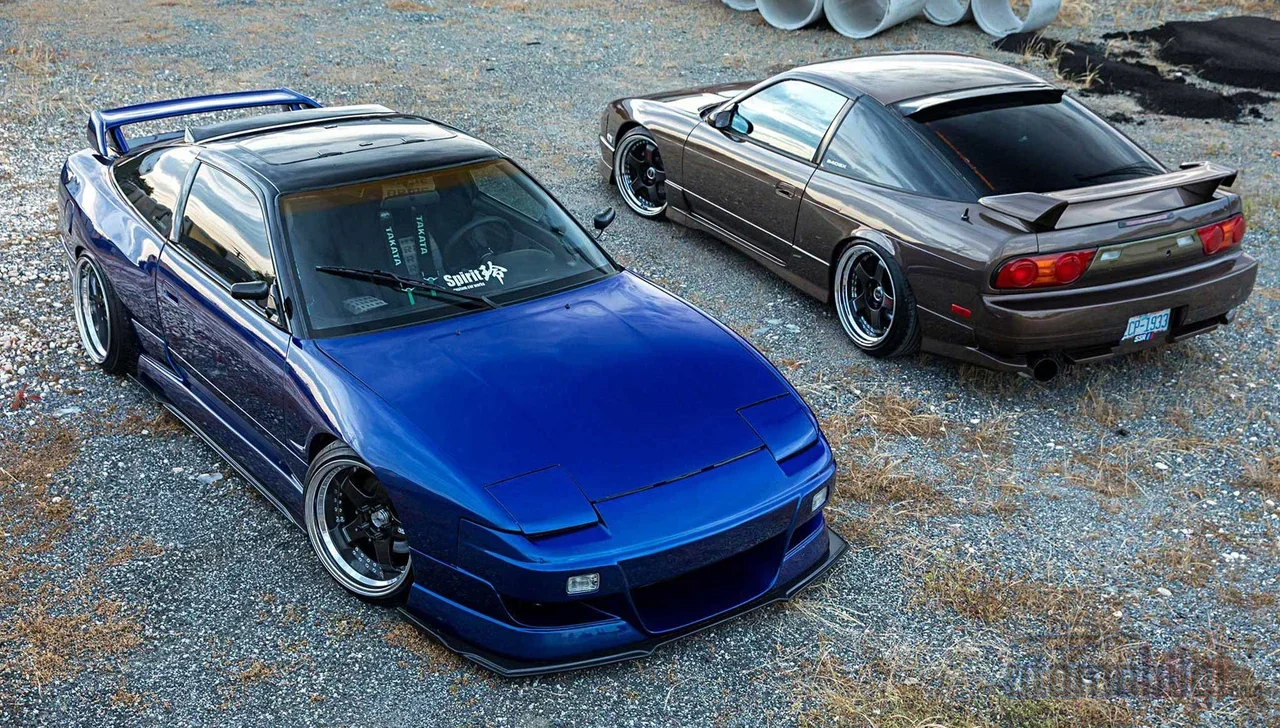
Share This Page
When it comes to the legendary chassis of drift culture, lightweight, balanced and rear-wheel drive machines like the Toyota AE86, Nissan Silvia S13/S14/S15, Mazda RX-7 and Toyota Chaser come to mind. All of them meet the two fundamental criteria for drifting: a rear-wheel drive system and a balanced chassis structure. On this page, I compare each chassis's engine layout, weight distribution, parts availability, and why it became a cult icon in the drift scene. Ready? Let's take a look at the machines!
Highlights
- AE86: Lightweight body + 4A-GE engine; the icon of the mountain roads (touge) where drifting was born.
- Silvia S13: Named Japan's Car of the Year in 1988; ~1,180-1,224 kg, 2,475 mm wheelbase.
- RX-7 FD: 1.3L twin-turbo Wankel engine, ~255 hp, 50/50 weight distribution.
- Chaser JZX100: Thanks to its long wheelbase, a forgiving drift sedan for beginners.
- Daigo Saito, the only person in history to win both the D1 Grand Prix and Formula Drift.
What Makes a Drift Car a Drift Car? The Common Formula
Let's clarify one thing first: Drifting is a driving technique where the rear wheels (or sometimes all four) are intentionally slid. So, flooring the throttle to make a corner right in front of you with a car that doesn't have rear-wheel drive... hard. Let's not say impossible, but at the very least it requires a lot of effort.
All iconic chassis share the same basic recipe: engine at the front or front-mid, power going to the rear wheels, balanced weight, and a light car. This trio allows the driver to swing the rear tires out in a controlled manner using the throttle and steering. Think of it like finding your own body rhythm on a swing - the car responds to you, and you adapt to it.
This formula emerged from Japan's mountain roads, that is, from touge culture. Then the D1 Grand Prix turned this chaos into an official competition, and the winner began to be determined by what D1 itself describes as the "coolness" of the drift driving. From that point on, the question of which cars delivered this coolness best answered itself: the machines below.
Toyota AE86: How Did a Small Corolla Become a Legend?
The story of the AE86 is not just an accidental success, but an accidental legend. Originally, this was an ordinary, lightweight-bodied, 4A-GE engined, affordable, rear-wheel-drive Corolla. Nobody designed it for drifting; but on Japan's mountain roads, this lightweight and balanced combination was exactly what drivers were looking for. It had so little power it could barely be called powerful, but its weight was also almost nonexistent - and in drifting, momentum is everything.
Two things elevated the AE86 to cult status. First, its association with Keiichi Tsuchiya, known as the "Drift King". Second, Initial D , the manga that started in 1995 about a Japanese teenager delivering tofu with an AE86; the story, which became an anime, turned into a global phenomenon and introduced drift culture to the world. So it's not at all illogical for a Corolla to become a pop culture icon, right?
A nice detail is this: while the same car became a drift legend in Japan, in Europe it was favored in the rallying world thanks to its LSD differential. The same car, the star of two different sports on two different continents. No matter the scenario, a light and balanced chassis wins.
What about today? The AE86 represents driving skill, finesse, and a momentum-focused approach; you drift with feel, not power. Let's be honest with a beginner: this car will not forgive you. But the learning process will make you a genuinely good driver.
Nissan Silvia S13, S14 and S15: Why Is the "S-Chassis" the Backbone of Drifting?
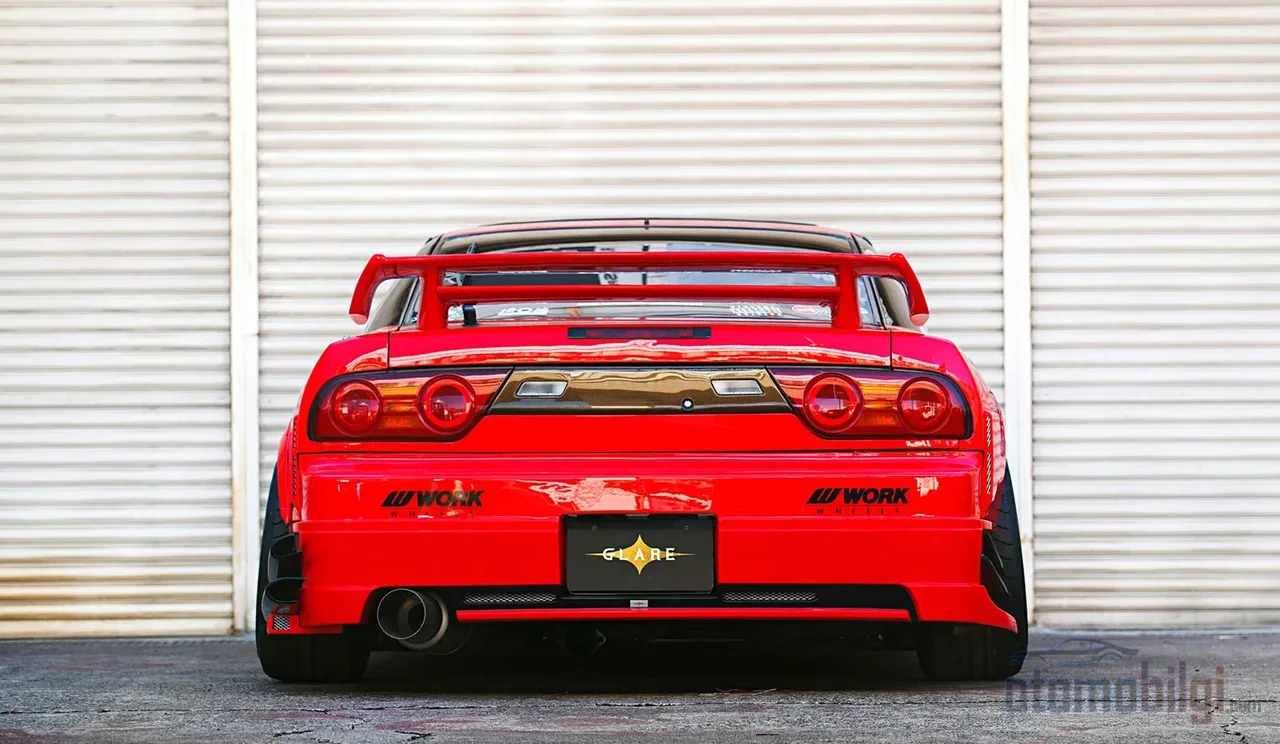
The Silvia's lineage is actually surprisingly old. The first Silvia, the CSP311, was introduced in 1965 and was a hand-built coupe designed by Albrecht Goertz, who also designed the BMW 507 - which is why only 554 units were produced. Weighing 978 kg with a 1.6-liter engine producing 96 PS, it was pleasant but not yet a car that would shake the drifting world.
The real revolution S13 came with. Produced from 1988 to 1993, the S13 won the 1988 Car of the Year award in Japan; its weight ranged from 1,180 to 1,224 kg, with a wheelbase of 2,475 mm. From this generation onward, exports stopped, so in Europe it was known as the 200SX, and in North America as the 240SX . The S13's light chassis, rear-wheel-drive system, and enormous modification potential turned it into a legend. Even today, a clean, unmodified turbo S13 changes hands in the $18,000-28,000 range - the cult tax is real.
Then came the S14 : it was completely redesigned in 1995 and shares almost no parts with the S13. Sold in North America in hatchback (S13) and coupe (S14) body styles, the 240SX was the affordable performance car of its generation. Finally, the S15 reached the peak in both motorsport and popular culture: 2004 D1GP champion Ryuji Miki claimed the title with an S15 Silvia.
Is It Easy to Find Parts? The Honest Answer
This is where the scene splits in two. On one hand, it is said that stock parts are expensive and hard to find; on the other hand, the Silvia is described as a car that is easy to find spare parts for and has low maintenance costs. In fact, both are true: finding original stock parts has become genuinely difficult due to the car's age. But in the drifting world, there is such a massive aftermarket (that is, independent replacement and performance part) ecosystem around the S-chassis that practically every part has an alternative available. If you are looking for stock parts, you will struggle; if you are looking for drift parts, you will be drowned in a paradoxical abundance of options. Which is the better problem to have is debatable.
Mazda RX-7: The Wankel Engine and Perfect Balance
The RX-7 is the strangest engineering marvel on this list. It uses a front-mid-engine, rear-wheel-drive layout; the power source is a compact and light Wankel (rotary) engine. In other words, it is not like conventional piston engines - to simplify, it produces power by means of a rotating rotor. This makes the engine very small and very light, and it is precisely for this reason that the weight distribution is nearly perfect.
Its two generations also deserve a mention. FC, known for its nearly 50:50 weight distribution, and this balance significantly enhances its handling and cornering capabilities. FD is the peak: a 1.3-liter twin-turbo rotary engine, 255 hp, approximately 1,270 kg (2,800 pounds) and a perfect 50/50 weight distribution. The R1 and R2 packages further strengthen performance with upgraded suspension. The trio of lightness, agility and a high-revving rotary engine makes the FD a favorite among driving enthusiasts - both in drifting and on the track.
If I had to make a comparison: the RX-7 is a dancer-type drift car. If the AE86 leaves you alone with yourself, the FD hands you a ready-made dance partner. But if you're not familiar with rotaries, you may encounter surprises on the maintenance side; this engine's character is not like a conventional engine's.
Toyota Chaser JZX90 and JZX100: The 4-Door Sedan That Drifts
The most elegant answer to the question "Does a drift car have to be two-door?": Toyota Chaser. The JZX90 and JZX100 are regarded as one of the most impressive Japanese performance sedans of the 1990s. The Chaser also competed in the Japanese Touring Championship in the '90s, but where it truly shone was drift events - and yes, Tokyo Drift it was also etched into memories as the car used against DK in the film. Despite being a sedan, its popularity for drifting shows just how unnecessary the prejudices are.
The JZX100 with the 1JZ-GTE engine is drifted and, thanks to its long wheelbase, has a forgiving character. In other words, even if you get a bit too aggressive with the throttle, the car gives you a chance to recover - that's why it's generally considered a better choice for beginners. What's more, the Chaser is affordable, durable and easy to modify; plenty of spare parts are also available. In terms of budget and forgiveness, recommending a Chaser to a beginner is one of the safest pieces of advice in this scene.
Let's Put the Chassis Side by Side: Which One Is for Whom?
Now let's move on to the real question: which chassis is better for whom? Here's a brief comparison with the concrete figures from the digest:
| Chassis | Key technical specs | Parts availability | Character |
|---|---|---|---|
| Toyota AE86 | Light body, 4A-GE engine, rear-wheel drive | Rare car, classic parts market | Focused on momentum and driving skill; unforgiving |
| Nissan Silvia S13 | 1,180-1,224 kg, 2,475 mm wheelbase | Stock parts hard to find, aftermarket is massive | Balanced, modification-friendly, cult |
| Nissan Silvia S15 | 2004 D1GP championship (Ryuji Miki) | Strong aftermarket support | Competitive drift car |
| Mazda RX-7 FD | 1.3L twin-turbo Wankel, 255 hp, ~1,270 kg, 50/50 balance | Rotary engine requires special maintenance | Agile, high-revving, dancer-type |
| Toyota Chaser JZX100 | 1JZ-GTE engine, long wheelbase | Plenty of spare parts | Forgiving, durable, beginner-friendly |
And I know you won't let me pass without asking about the Supra. Let me be honest: the Supra's (especially the MK4 A80's) role in the drift scene is less documented than the others on this list. The technical picture built around these cars - engine placement, weight distribution, parts availability - isn't described with the same clarity for the Supra. In other words, I don't have enough concrete data to say "the best drift car is the Supra"; this debate mostly circulates on fan forums.
The Cult Ones Who Brought Order to the Competition: D1 GP and Formula Drift
The legendary status of these chassis is no coincidence; they all proved themselves on big stages. D1 Grand Prix is the pioneering series that entered drift's official competition history, and the names of the nomad teams - Nomura, Taniguchi, Ueo, Imamura - introduced this scene to the world. Youichi Imamura won the D1GP three years in a row between 2009 and 2011; some commentators found these consecutive wins "somewhat predictable" and debated the competitive balance, but it's not without a sense of amazement.
On the US side there's Formula Drift; names like Daijiro Yoshihara (2008), Fredric Aasbø (2012), Daigo Saito (2013) and Forrest Wang (2018) reached the championship. Aasbø is FD's winningest driver and a former champion. And the only name in history: Daigo Saito, the only driver to win both the Japanese D1 Grand Prix and the US Formula Drift championship. In Japan, Naoki Nakamura is also counted among the most successful legends.
What About the Türkiye Scene? The State of Drift in Our Country
In Türkiye, drift is no longer a street legend but a sport with written rules. TOSFED publishes the official "National Drift Rules" booklet and the Türkiye Drift Championship continues in stages. In competitions, cars are fitted with score recorders called "drift boxes"; the car's speed and angle values are recorded by this device. So the jury isn't just saying "wow, that was good" - they're measuring.
By name, Özer Mollamehmetoğlu is mentioned as one of Türkiye's top 5 best car drivers. When drift car selection is discussed in Türkiye, the requirement of being rear-wheel drive or all-wheel drive comes to the fore; for example, while the MX-5 is an enjoyable car, it is found weak in terms of parts availability and engine power. In other words, the formula on the world stage applies here too: light, balanced, rear-wheel drive.
Let's not forget the European front either: in the Drift Masters European Championship, judges score based on four criteria, the first of which is speed. As emphasized in the Gran Turismo guides as well, drifts are evaluated based on the angle taken relative to the ideal racing line on the track; too high an angle counts as a spin. So this business isn't just about showing off smoke - there's a fine math between line, speed, and angle.
Conclusion: Which Chassis Should You Start With in 2026?
I can't give you a clear signpost, because by nature this debate has no single right answer - but I can offer you an honest compass. If you truly want to develop your driving skills and want every mistake to teach you something, the AE86 side is waiting for you. If you're looking for a balanced chassis with a massive modification ecosystem and the thickest scene culture, the Silvia S13 is still unquestionably at the center. If you want to learn with a forgiving car and show that drifting can be done with 4 doors too, the Chaser JZX100 is your car. And if you're seeking the perfect balance and want a rotor spinning under the hood, there's the RX-7 FD. Which one do you think it is? I reckon quite a few of us will write in the comments section - may this debate never end.
Sources
- Drifting (motorsport) - Wikipedia
- What's D1 Grand Prix - D1GP Official
- The Beginning of Drifting: D1 Grand Prix - Drivingline
- Nissan Silvia - Wikipedia
- Nissan Silvia S13, S14, S15: History, Generations, Specs - Motortrend
- This Is What Makes The Nissan Silvia A Great Drift Car - Hotcars
- How the Nissan Silvia (240SX) went from humble coupe to drift king - Hagerty
- What's so special about S-chassis? - Haltech
- The Definitive History and Legacy of the Nissan Silvia - UpGarage
- Mazda RX-7 - Wikipedia
- Mazda RX-7 FD: The Sports Car That Perfected Balance - Hotcars
- Mazda RX-7: History, Generations, Specifications - Motortrend
- Generation Gap: Ranking each and every Mazda RX-7 - Octo Classic
- Mastering the Art of Drifting and Racing with the FC RX7 - SLR Speed
- Drift Sleepers: Toyota Chaser JZX90 & JZX100 Buyer's Guide - Hemmings
- Here's Why The Toyota Chaser Is A Great First Drift Car - Hotcars
- Toyota Chaser vs Nissan Skyline for Drifting - Drift-sho
- How a Serial Manga Made a Toyota Corolla a Pop-Culture Icon - Road & Track
- Initial D and How Anime Sparked the Global Drift Boom - NXCar
- Formula D - Wikipedia
- AE86 vs S13: Which Drift Car to Buy in 2026? - Stance Auto
- National Drift Rules - TOSFED
- What Is Drifting and How Is It Done? - Red Bull Türkiye
- How Is Drifting Done? - Habertürk
- 10 Legendary Cars That Wrote Their Names in Golden Letters in Drift History - Webtekno
- Owning a Drift Car on a Low Budget - Arabam.com
- How to Drift - Gran Turismo 6 Guide
- Part availability for the Nissan Silvia/240SX - Reddit r/Drifting
- Why is the AE86 such an iconic car - Reddit r/JDM