The Legendary Names Who Created Drift in the Shadow of Touge
Share This Page
Drift is a motorsport in which the car is deliberately slid through corners in a controlled manner, where style matters more than speed; its roots go back to the mountain passes of 1970s Japan, namely the touge roads, and thanks to pioneers like Keiichi Tsuchiya it evolved from an illegal street culture into organized leagues worldwide. So how did cars slid through mountain roads night after night come to this? Come on, let's meet the heroes of this story.
Highlights
- Keiichi Tsuchiya 30 January 1956 was born in Nagano and went down in history with the nickname "Drift King" (Dorikin).
- Tsuchiya 1995 and 1999 won his class at Le Mans; in 1999 he finished 2nd overall.
- D1 Grand Prix in Japan and Formula DRIFT 2003 in the USA laid the foundations of professional drifting.
- Drifting today is popular around the world in 34 countries ; in Türkiye it established its own stage with the TOSFED championship.
What Is Touge and Why Did Drift Emerge on Japan's Mountain Roads?
First, let's decode the word: Touge () refers to rural mountain pass roads in Japan. Tight corners, steep climbs, guardrails, and altitudes where your phone signal would cut out... In other words, a natural drift track, but the kind that's open to traffic and dangerous. These are exactly the roads cited as the birthplace of Japan's street racing culture.
The history is also interesting: Touge racing began in the 1960s and 1970s with the rise of Japan's post-war automotive industry. In the 1980s the scene shifted to Osaka; factory workers would buy cheap, base-model cars, modify them, and head out onto mountain roads at night. These street racers were called hashiriya and this culture, at its core, carried rebellious youth and danger. In other words, drifting was first a form of rebellion; while it was still years away from becoming a sport, sliding through corners was a matter of prestige.
Have you ever wondered why the first drift cars weren't powerful supercars but light, humble base models? The answer is simple: the touge consisted of narrow corners with no long straights. What worked there wasn't raw power, but the skill of keeping the car balanced while sliding it through the corner. And the people who turned this skill into an art quickly emerged.
The True Pioneers of Drift: Who Came Before Tsuchiya?
Most people associate drifting with a single name, but there are actually older chapters to the story. 1964 At the Japanese GP, Tetsu Ikuzawa used a sliding technique through corners with his Skyline sedan to pass the Porsche 904 GTS. Just imagine: a sedan passing a legendary race car in tight corners! Then former motorcycle racer Kunimitsu Takahashi began being called the "father of drift" in the 1970s for his oversteer style on wet surfaces. So sliding through corners was first a racing tactic, and only later became a style.
Keiichi Tsuchiya: How Was the Drift King Born?
Now we come to the main hero of the stage. Keiichi Tsuchiya 30 January 1956 was born in Nagano and grew up in the town of Tomi; the town's population was below even 30,000. His first car was a Nissan Skyline 2000GT and Tsuchiya honed his skill on touge roads. Winter's snowy, low-grip surfaces were his best teacher, showing him how a car behaves. Compared to those of us struggling with grip settings in simulators today, Tsuchiya's school was an icy mountain road.
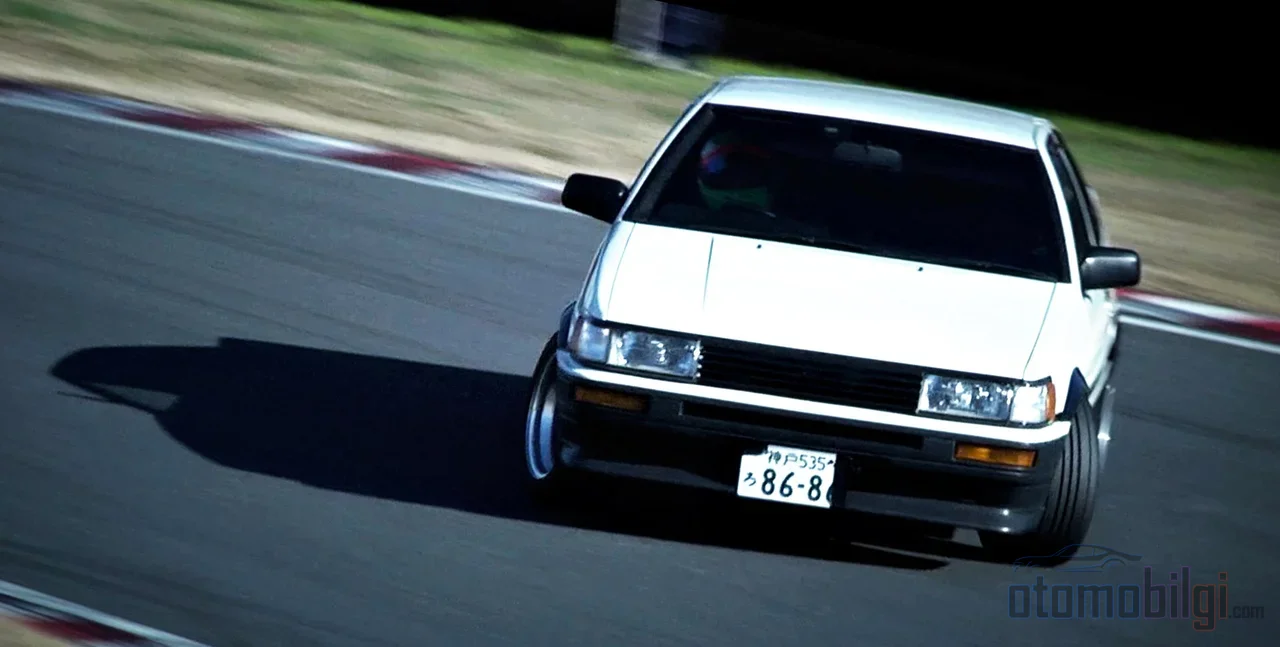
His professional career 1977 began with the Fuji Freshman series. In 1984, in the same series, he took 6 wins with the Toyota AE86, and in 1985 he reached first place in Class 3 of the All Japan Touring Car Championship. But what truly made him a legend was his life off the track: Tsuchiya was using drifting in unconventional ways in non-drift racing events and popularizing this style as a motorsport. From this came the nickname "Drift King", or Dorikin .
There was an illegal side to the business, of course. Having his racing license revoked came up as a possibility due to his filming of illegal street racing videos one after another. The two-part video "The Touge", produced by Pluspy, documented touge driving with the AE86; in the first installment, dated 1987, Tsuchiya performs a demonstration on the Usui mountain pass with an AE86 Corolla Levin . These videos circulated hand to hand among young people like a secret textbook. The result? The Toyota AE86 Sprinter Trueno, "Hachi-Roku", thanks to him became one of the most popular sports cars in history. Now you know why Initial D chose an AE86, don't you?
What surprised me most about Tsuchiya's story is his versatility. He wasn't just a drifter, but also a serious racing driver: From 1994 to 2000 he raced at Le Mans, winning in 1995 with the Honda NSX and in 1999 with the Toyota GT-One
in his class; in 1999 he finished 2nd overall, and in 2001 he ended the All Japan GT in second place. A drift king also being at the top of endurance racing is like a resounding slap to the "a drifter is not a serious racer" prejudice. His mark on popular culture was also significant: He consulted for the Initial D anime/manga series and played cameos. In the film
The Fast and the Furious: Tokyo Drift (2006), he worked as stunt coordinator and stuntman; did you even know that one of the fishermen at the beginning of the film is Tsuchiya himself? Keep your eyes open when you rewatch the film. For those wanting to learn drifting, he left a tangible legacy:
The "Drift Bible" book, published in
Tsuchiya's advice to young drivers still holds true today: if you want to go professional, quit illegal racing. The door to those wanting to leave the underground had already been opened, because the scene was forming its own leagues.
D1 Grand Prix: From the Illegal Scene to the Professional League
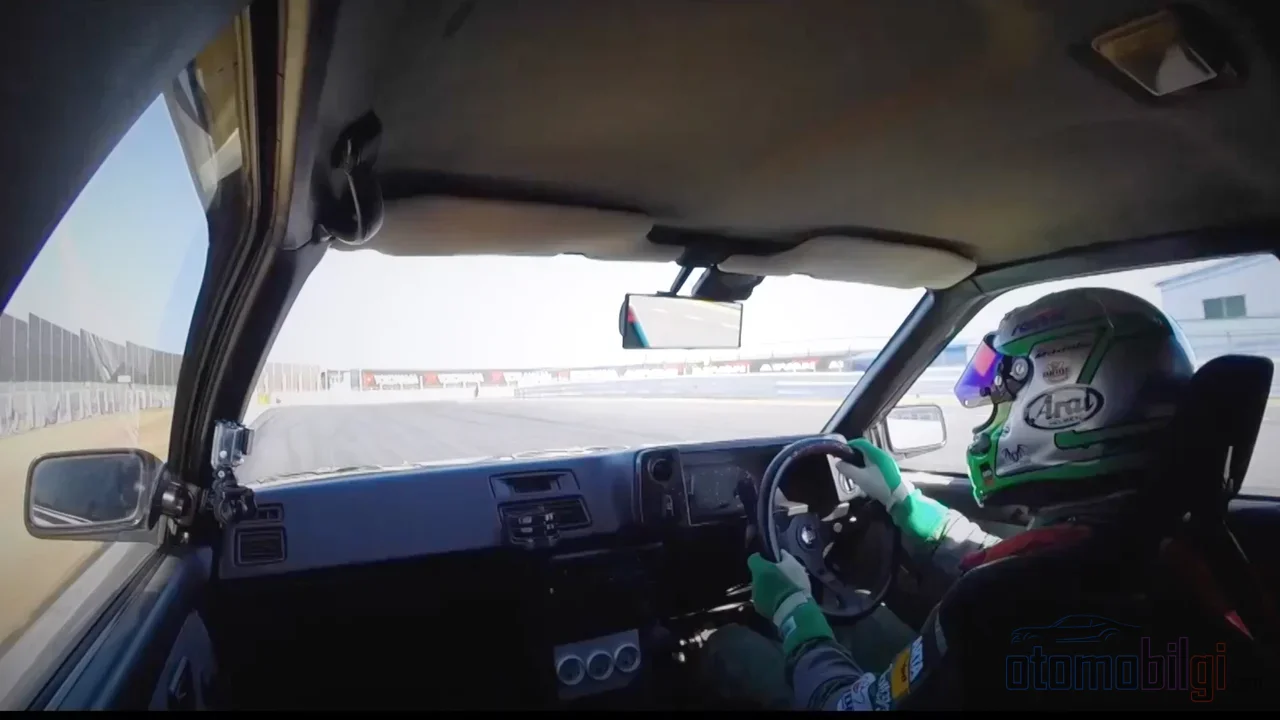
Drift became organized into leagues in Japan with D1 Grand Prix. D1GP is a Japan-based professional drift series run with production cars; the first "All Japan Professional Drift Championship" event later took the name D1 Grand Prix. Even the series' own definition captures the spirit of the event: the winner is determined by their "cool drift driving performance." So I guess this is where we part ways with the "fastest finisher wins" formula. Here, a panel of judges sits at the track and scores your style. It's a bit like a talent competition and a bit like an art exhibition, isn't it?
One of the notable names on the D1 scene is Manabu Orido; he is referred to as the series' first "grand champion." And the series crossed borders: according to D1GP's 15th anniversary video, drift is popular in 34 countries around the world today. A hobby that began at a mountain pass transformed into an intercontinental scene within a few decades. As for the matter of a double crown on the international stage: it is often said that Daigo Saito is the only driver to have won both the D1 Grand Prix and Formula Drift championships; since this claim is based on secondary sources, it is worth reading it without treating it as confirmed, but if it's true, it would be a remarkable line on the list.
Formula Drift: A New Stage in the United States
The American leg of drift's global story 2003 opened in: Jim Liaw and Ryan Sage founded Formula DRIFT as a sister company of Slipstream, and the series became the leading professional drift series in the US. Liaw served as president of the series from 2003 to 2021 and repeatedly emphasized the contribution of drivers of Asian origin to the series; a founder who never forgets that the roots reach back to Japan is a nice detail in my opinion.
The roster of the early years was colorful too: rally and stunt driver Rhys Millen, pilots coming from open-wheel racing... Drift attracted everyone from different disciplines. Names like Alex Pfeiffer are also counted among drift's earliest pioneers in the US; he goes down in history as the first Hawaiian driver to join the series. The Tsuchiya quote above from Vaughn Gittin Jr., the first American to win a professional drift event in the US, perfectly describes the bond between the two scenes: the new generation was still seeking the old generation's approval.
2026 Formula Drift: The Scoring Has Changed, Who Stands Out?
If you're curious about the series today, the 2026 season actually adds a new dimension to the debate over whether drift is "art or sport." Automatic elimination scoring was introduced in collaboration with Race Data Labs, and of the scoring components, "Driving Style" accounts for 20% of creating; while assessing the difficulty level still requires nuance. In other words, machines measure, but the human eye still interprets style. Doesn't it seem strange to you that while cars keep getting smarter, in drifting the final word still belongs to feel?
The season opened with a family story from Ireland: Conor Shanahan won the first round at Long Beach, his brother Jack finished 3rd, and Fredric Aasbo took 2nd between them. After the 7th round in Las Vegas, Conor heads into the final round with a 47-point lead and has already claimed his third win of the season. The Orlando finale gave us a James Deane versus Aurimas Bakchis showdown. I can say that the championship battle stayed breathtaking right up to the end.
Drifting in Türkiye: Where Is the TOSFED Championship Held and Who Does It Host?
It is a very welcome development that drifting has found a stage in Türkiye with its own rules and a calendar. The TOSFED 2026 Türkiye Drift Championship calendar is as follows: Round 1 on April 25, Round 2 on May 23, Round 3 on June 20 (Istanbul Park) and Round 4 on September 26, 2026. Additionally, the TOSFED Drift Cup is run as a separate category, meaning a door is also open for new names to make their mark. Let us also add that the foundation of Istanbul Park was laid in 2003; this Formula 1 facility has an established drifting scene as well.
So who stood out this season? The points standings after Round 1 (Istanbul Park) were as follows: Rüzgar Okman (100), Çağlar Küçükdumlu (90), Akay Akbil (78), Doğuş Can Dursun (65), Mehmet Yazgan (48). By the end of the season, the picture had changed: at Round 4, Abdullah Bostan was at the top, followed by Çağlar Küçükdumlu and Enver Haskasap. The fact that the top spot shifted so much within a single season is enough, in my opinion, to show how fierce the competition is on this scene.
Is Drifting Art or Sport? The Philosophical Question of Judged Scoring
Now lean back in your seat, because we have reached the controversial part. In drifting, the fastest finisher does not determine the winner; the jury evaluates style. At this point, a question immediately comes to mind: what if drifting is not an activity sport requiring effective scoring but an art? This debate is a classic issue even in philosophy; the question "can sport be considered art?" has been circulating for years. Drift is one of the most colorful examples of this debate, because it stands between two worlds.
Actually, the answer may lie hidden in both. The best drift drivers control every movement with calculated precision while sliding the car. In other words, what an outside observer calls "like a painting" is, from the inside, a matter of engineering and reflexes with centimeter-level precision. Think of it like ballet: every pose that looks fluid on stage hides years of discipline behind it. My opinion is this: drifting is both art and sport, and this dilemma does not weaken it - quite the opposite, it makes it special. So what do you think? Is a car slid on a mountain road at midnight any less art than a painting hung in a museum?
There is also the drivers' own side: Tsuchiya telling young people to quit illegal races if they want to become professionals is proof that the scene has matured. Secret clubs behind closed doors still exist, but the main scene is now lit, juried, and rule-bound. Reading this at the end of a story that rose from illegal roots to world championships - isn't that a nice closing?
Final Word: From a Mountain Road to the World
Looking at the line stretching from Tsuchiya's AE86 to the 2026 finals at Istanbul Park, one thing becomes clear: what keeps drifting alive is not the cars or the leagues, but the people. A technique a small-town kid learned on snowy corners spread to juried leagues, books, animes, and 34 countries worldwide. The next time you see a car slide through a corner at a perfect angle, remember that there is a forty-year story behind it. And ask me whatever is on your mind, let's chat: if you were on that mountain road, would you press the gas?
Sources
- Keiichi Tsuchiya
- Drift King: The Story of Modern Motorsports Legend Keiichi Tsuchiya
- Dorikin Tsuchiya Keiichi: The Touge Part 1 (Video 1987)
- D1 Grand Prix
- What's D1 Grand Prix
- Formula D
- The History of Drifting and The Future of Formula Drift
- Formula Drift announces major 2026 competition format changes
- Conor Shanahan wins Round 1 of 2026 Formula Drift
- Touge Driving: How Japan's Mountain Roads Became the Birthplace of Drifting
- The origins of Touge in Japan
- The Real-Life Tokyo Drift - Touge Racing
- TOSFED 2026 Türkiye Drift Championship results
- Türkiye Drift Championship Round 1 - Istanbul Park 2026
- What Is Drifting and How Is It Done?
- Drifting (motorsport) - Turkish Wikipedia
- Understanding the Art of Drifting