How Does the Approach to Drifting Differ in Japan, America and Europe?
Share This Page
Drift is performing the same art in three different languages across three continents: Japan offers the technical elegance born on mountain passes, America has built a scene that chases power and spectacle, while Europe puts track discipline and the driver's control at the center. The same sport changes considerably from continent to continent, from vehicle choice to scoring, from its relationship with the audience to its racing philosophy.
Highlights
- The origin of drift 1970s Japan and its touge mountain roads.
- Keiichi Tsuchiya did not invent drifting but became the person who popularized it as a sport; he was one of the founders of D1 Grand Prix.
- Formula DRIFT 2003 was founded, and competitors with 100 points start and lose points for mistakes.
- Drift Masters 2014 was founded, and its scoring looks at four criteria: speed, angle, line, and style.
- Formula DRIFT, 2026 switched to a new scoring method called UDSM in the season.
How does drift differ by continent?
The short answer to this question is this: drift everywhere relies on the same fundamental skill, namely driving the car sideways in a controlled manner; but where, in which car, and for what purpose you showcase that skill changes everything. In Japan, the essence lies in aesthetics and technical purity, in America power and spectacle take the spotlight, while in Europe track discipline and driver control hold the reins. You can compare it to an instrument: the same note, three different interpretations.
Even the scoring culture changes from continent to continent. Generally, drift competitions are evaluated according to four main criteria: speed and fluidity, drift angle, line choice, and style. But how these four criteria are weighed, and how much importance each is given, varies from series to series, and it is precisely at this point that each continent's character emerges.
Japan: Technical elegance born from the touge
The story of drift begins on Japan's narrow, winding mountain roads, that is, on the touge. Touge means mountain pass in Japanese, and these roads were actually built with S-curves for commercial vehicles. Those hairpin turns accidentally became the perfect training ground for drift. In the 1960s and 1970s, since track access was expensive, drivers turned to the mountains; there, formats known as cat-and-mouse, where the chasing driver wins if he catches the car ahead, and time attack style battles targeting the fastest time developed.
Keiichi Tsuchiya: The role of the Drift King
The name that earned the title of drift's birthplace Keiichi Tsuchiya, or as everyone knows him, Dorikin, the Drift King. Born in Nagano in 1956, Tsuchiya began his career in the 1977 Fuji Freshman Series and, inspired by rally techniques, popularized controlled sliding in corners on the touge. Let's make one thing clear: Tsuchiya did not invent drifting, but he was the person who turned it into a culture. He released the legendary Pluspy video, became one of the founders of D1 Grand Prix, served as a consultant for Initial D, and took on stunt coordination in the Tokyo Drift film. On the circuit side, he was also among the best in his class: he took class victories at Le Mans in 1995 and 1999, and finished the 2001 All Japan GT Championship in second place.
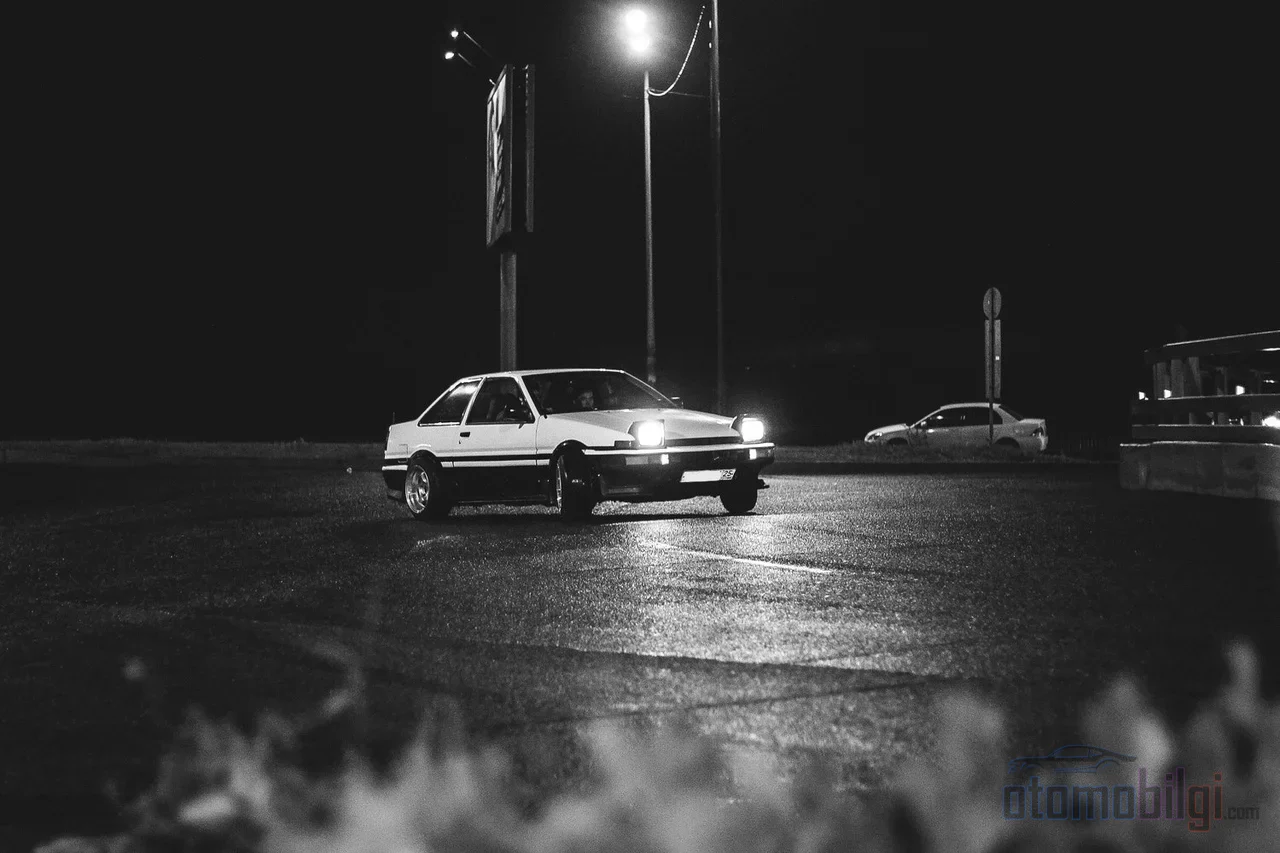
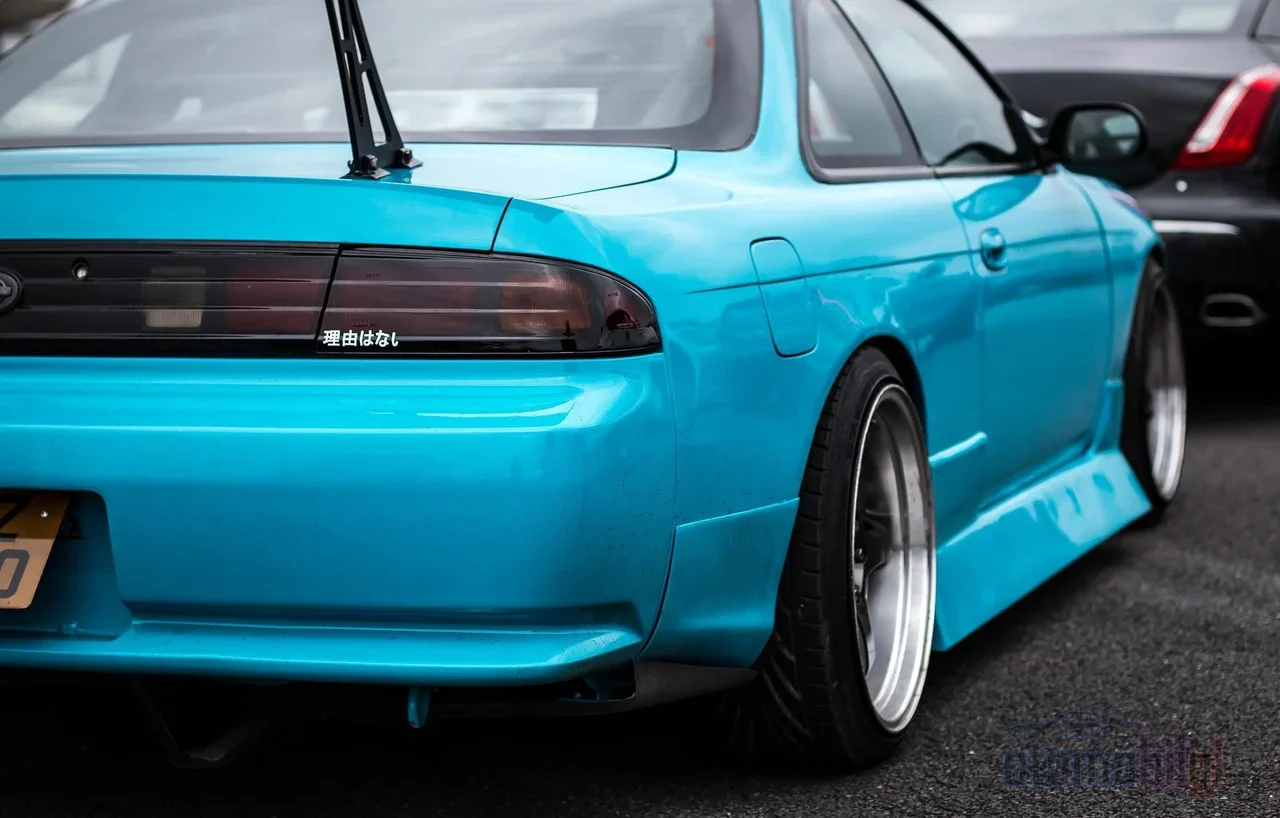
As a pioneer of the style Kunimitsu Takahashi's name is also frequently mentioned; he is one of the early figures who brought sliding techniques to the racing scene. Legendary touge roads such as Mount Haruna, Hakone Turnpike and Irohazaka Pass are still considered sacred places of drift folklore today. In Japan, drifting is seen as more than a competition - it is a celebration of skill, creativity and teamwork; how you drive matters as much as determining the winner. The rise of cars such as the Nissan Silvia and Toyota AE86 to legendary status is also part of this aesthetic understanding.
America: The world of power and show that is Formula Drift
On the US side, drifting turned into a professional show with Formula DRIFT, founded in 2003 by Jim Liaw and Ryan Sage. The scoring works like this: competitors start with 100 points and lose points as they make mistakes. In head-to-head battles, three judges choose the winner after two runs. In other words, the American system is built on a structure that makes mistakes visible and penalizes them one by one.
The car culture of the American scene also carries its own character. Even on forums, this is the most debated topic: in the USA, drifting is done with heavy, big-engine vehicles; compared to the Japanese scene, the difference between vehicle weight, engine type and road structure is obvious. This is read as a reflection of a power- and show-oriented mindset. Still, it must be honestly added: there are no verified concrete numerical comparisons on the horsepower side; this distinction is more of a trend voiced in community discussions and scene observations, not a finalized statistic.
The series is not slowing down in 2026 either: in the 2026 season the Universal Drift Scoring Method, or UDSM, was introduced to reduce the uncertainty in lengthy judge deliberations. The physical data presented during qualifying now provides a reference for judges during the competition. This shows that scoring is increasingly leaning toward data and measurability; in other words, even America's show culture is becoming more transparent together with technology. On the PRO-AM side, the driver finishing the season with the highest score earns a PROSPEC license the following year; there is a clear path from the bottom rung of the ladder to Pro.
Europe: Track-based interpretation and Drift Masters
In Europe, things lean a bit more toward technical control. Founded in 2014, Drift Masters is considered the continent's largest drift series and uses special drift arenas in football stadiums as well as F1 circuits. The series' stage emphasizes the driver's technical control; in other words, it is not pure power and show as in America, but an interpretation grounded in track discipline. The 2026 season started at the Vallelunga Circuit near Rome; the calendar is still expanding.
On the scoring side, Drift Masters looks at four criteria: speed, angle, line, and style. In other words, it overlaps exactly with the general drift scoring philosophy but strikes a different balance from the Japanese and American series. Europe's other step is institutionalization: drift came under the FIA umbrella, and the FIA published technical regulations for DC1 drift cars; rules came in such as the requirement that ballast be mounted only between the axles, front-to-back. Some European organizations announced that they aim to move toward this regulation through annual adjustments. This is the most concrete sign that drift is being integrated into the classical motorsport discipline in Europe.
There is also a debate about series seniority: while Drift Masters claims in its own promotion to be the world's leading professional drift series, many fans see Formula Drift and Drift Masters as two separate powers and find their approaches entirely different from each other. Probably the fairest picture is this: one is the peak of the American scene, the other Europe's; which one is bigger depends on what you measure.
Three continents side by side: A comparison of philosophy, cars, and scoring
To see the continents' differences at a glance, let's open up the table:
| Continent | Leading series | Scoring approach | Character |
|---|---|---|---|
| Japan | D1 Grand Prix | Aesthetics and technical precision come to the fore | Touge origins, an interpretation close to art |
| USA | Formula DRIFT (2003) | Deduction from 100 points, line-angle-style; UDSM in 2026 | Power and show focused |
| Europe | Drift Masters (2014) | The four criteria of speed, angle, line, and style | Circuit-based, with an emphasis on technical control |
A similar picture exists in car choices. Japanese legends like the Nissan Silvia and Toyota AE86 are considered the classic icons of drifting; in the modern era, the Toyota GR86 and Ford-based builds stand out. The use of heavy, big-engine vehicles in America aligns with the continent's power-focused mentality. This cultural and technological exchange between continents continues to enrich the global scene; each scene takes something from the others and adds it to its own interpretation. There are also exceptional names: Daigo Saito is known as the only driver in history to win both the D1 Grand Prix and world drift championships; one of the best proofs of cross-continental transition.
So where does Türkiye stand in this picture?
Türkiye has also been integrated into this intercontinental map. The second round of the 2026 Türkiye Drift Championship was run on May 23-24, 2026, hosted by the Gaziantep Metropolitan Municipality, with 13 drivers taking the start in the PRO category. The rest of the calendar is also full: the third round on June 20, the fourth round on September 26-27 at TOSFED İstanbul Park, and the fifth round on October 24, 2026. TOSFED also has a national drift rulebook; meaning Türkiye has established a national scene with its own rules framework.
Türkiye scenes mostly adopt the four main criteria logic in scoring: speed and fluidity, angle, line, and style. So while philosophically closer to the European side, the traces of Japan-origin technical culture are felt here too. Which continent's approach do you find more appealing? The quiet elegance on the mountain pass, the spectacle amid stadium noise, or the measured technical control on the track?
The same discipline, three different languages
The beauty of drifting is exactly this: the core skill is the same, but each continent adds its own culture, its own path, and its own understanding of the car. Japan preserves aesthetics and origin, America magnifies scale and show, Europe brings institutional discipline. This art, born on Tsuchiya's mountains, today speaks in three different languages and still mesmerizes those who listen. The next step, I think, is yours: watch the three scene videos side by side and see the difference with your own eyes.
Sources
- Touge Driving: How Japan's Mountain Roads Became the Birthplace of Drifting - The Apex by Custodian
- Formula D - Wikipedia
- Formula Drift announces major 2026 competition format changes - Racer
- Formula D for Dummies - The Hundreds
- From Pro-Am to Pro and What You Need to Know - Drift Enthusiast
- Drift Masters - Wikipedia
- Drift Masters - dm.gp
- FIA Technical Regulations for DC1 Drift Vehicles - FIA Motorsport Games
- What are the rules of drifting? - Red Bull
- The Story of Japan's Drift History - Red Bull Türkiye
- Is this true that America and Japan have different drifting styles? - Reddit r/Drifting
- 2026 Türkiye Drift Championship Round 2 - Gaziantep Metropolitan Municipality
- Drift Competition Results - TOSFED