CATL Opens Battery Service Center in Istanbul
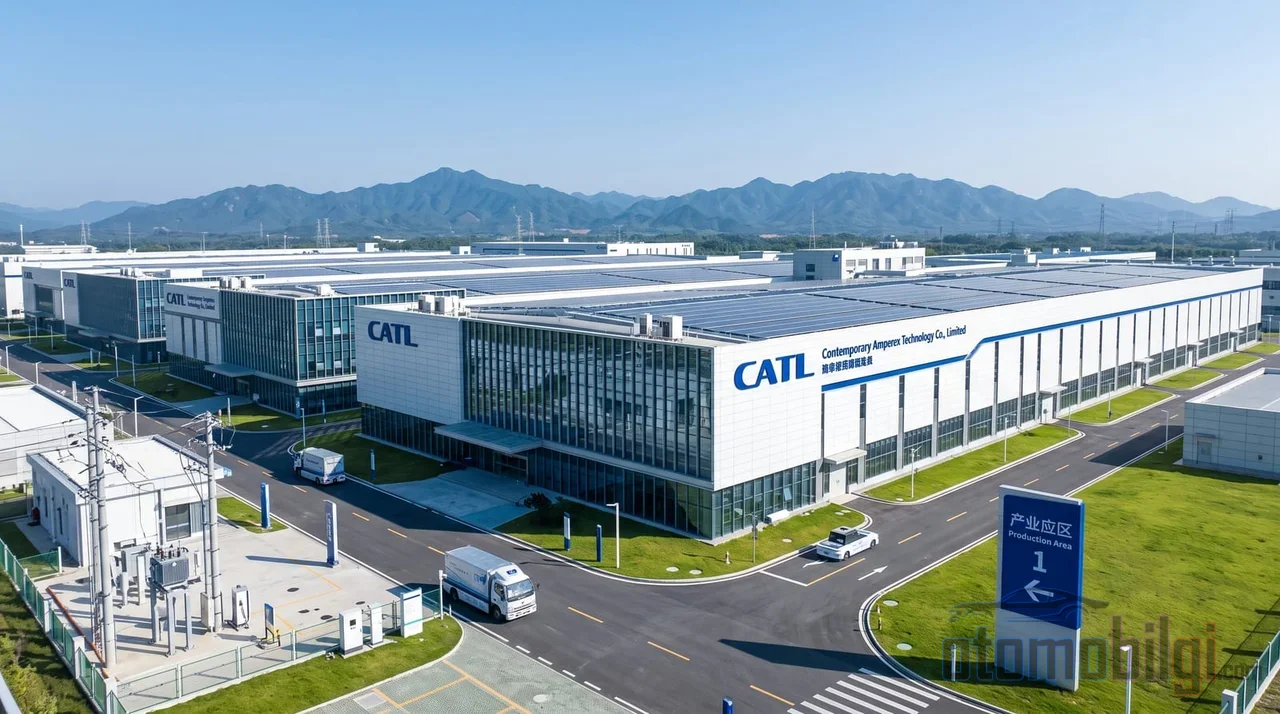
The name of the scenario electric vehicle owners fear most is well known: battery failure and the service process that follows, often tied to facilities abroad and lasting weeks. The name stepping onto the stage to change this picture is also a familiar one. CATL, the world's largest battery manufacturer, is establishing Turkiye's first NING Service center in Istanbul, with a planned opening date of November 19, 2026. So what exactly will this center change, which vehicles' batteries will it be able to work on, and what does it mean for the market's electric fleet exceeding 491,000?
What Is NING Service, and Where Will the Center Open?
NING Service is CATL's global after-sales service brand. Founded in 2011 and now holding approximately a 40% share of the global electric vehicle battery market, CATL is growing the business of supporting its batteries throughout their lifespan as a separate business line. Worldwide, more than 24 million vehicles are on the road with CATL cells; Tesla, BMW, Mercedes-Benz and Volkswagen are counted among these customers.
The center in Istanbul will open on the Tuzla side of the city. The opening will be carried out under Ascendum's strategic business model called Green.Shift; Ascendum is also CATL's distributor of construction machinery batteries. The company's current job postings indicate that the center will be positioned as an experience point for customers, automotive manufacturers and the energy sector. Expanding the center to other cities and growth through dealerships in the future are also part of the plans.
This is not a body shop or a classic authorized service center. The planned service list covers battery fault diagnosis, maintenance, repair, warranty management, digital monitoring, battery lifecycle services and technical consulting. In later stages, battery condition reports, restoration and component replacement are also expected to come up. It should also be noted that the scope will not be limited to cars: Green.Shift plans also include mobile and construction site energy products, charging and microgrid solutions, and energy storage systems.
Highlights
- Turkiye's first NING Service center will open on November 19, 2026 in Tuzla, Istanbul
- CATL's global battery market share is approximately 40%; more than 24 million vehicles use its batteries
- The number of electric vehicles in Turkiye has reached 491,492, and the number of commercial charging sockets has reached 48,971
- Cell-based repair, according to figures given in China, is roughly 10 times cheaper than complete battery replacement
- Repair times at the centers are targeted to be under 72 hours
Which Brands' Batteries Will Be Serviced?
The short answer right now is this: vehicles and energy systems that use CATL batteries. The long answer has not yet become clear; which vehicle models, under what conditions and at what pricing will receive service is not mentioned in the announcements. The scope of authorization and the agreements to be made with manufacturers are the critical details that will determine the center's real impact. That is why it is still too early to declare this development the savior of the market; but knowing how big the gap in the infrastructure is explains why the launch is getting so much attention.
As for the Togg connection, realism is also needed. The cells of the Togg T10X and T10F models sold today do not come from CATL, but from Farasis, the other partner in the Siro joint venture. The CATL connection points to the future: It is reported that the battery and chassis technologies of CATL's subsidiary CAIT will be used in the T6X, targeted for release in June 2027, and in new B-segment models. Official confirmation of these details is still awaited. It is also worth recalling that BYD produces its Blade battery in its own factory; the cell supplier for some other models has not been verified.
How Does Battery Repair Work and How Long Does It Take?
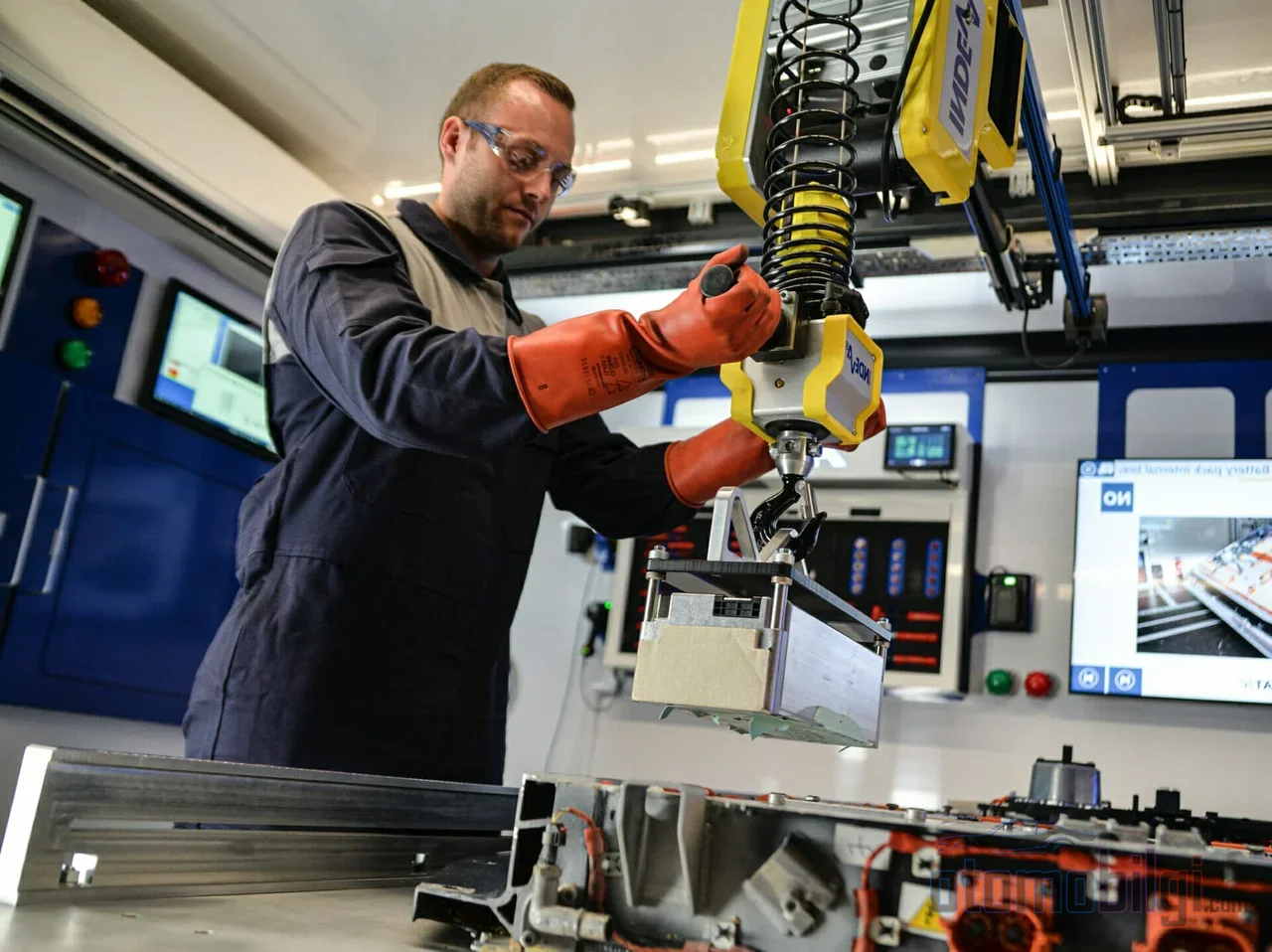
NING Service's difference lies in the method itself. It should not be confused with NIO's well-known battery swap model: there, the entire pack is replaced, whereas in CATL's approach the damaged pack is repaired at the cell level using a method called 'CTP deep repair' and reinstalled in the vehicle. The goal is to keep repair times under 72 hours at the centers; the mobile service vehicle with 800 km of range reduces this time to 48 hours for complex failures and covers 90% of maintenance scenarios.
The cost figures currently apply to the Chinese market. According to data announced by CATL, a complete battery replacement averages around 100,000 yuan, or about 13,750 dollars; NING Service repairs range between 10,000-20,000 yuan (roughly 1,375-2,750 dollars). That means roughly a tenfold difference. Pricing for Turkiye has not yet been announced, and the exchange rate, labor, and local conditions will change the final picture. Still, the reference point shows the lens through which the question of 'scrap or repair' for an out-of-warranty battery is viewed.
491 Thousand Electric Vehicles: Why Is the Service Infrastructure So Critical?
The market picture turns this investment from mere news into a necessity. As of September 2026, the number of electric vehicles in Turkiye reached 491,492, and the number of commercial charging sockets reached 48,971. In just the past year, the number of vehicles increased by 169,782. Projections indicate approximately 2.5 million vehicles by 2030 and over 4 million by 2035. In the past, the electric vehicle debate revolved around range and the lack of charging points; now the second leg of the debate - what happens after the sale - is firmly on the table.
The charging side is busy with its own problems. High installation costs, insufficient utilization of stations, and services that resemble one another are cited as the main factors straining the profitability of the charging market. The regulatory side is not idle either; EPDK's draft amendment to the Charging Service Regulation grants existing operators a compliance period until December 31, 2026. In this picture, NING Service's vision, which also covers charging and microgrid solutions, positions the center not merely as a central repair point but as part of the after-sales ecosystem.
The global rollout is no coincidence either. At its brand day in Haikou in August 2026, CATL announced that it was expanding its repair network; among the ten new centers opened the same day were Hong Kong, Norway, and Turkiye. The goal is to reach 100 cities worldwide by the end of the year. In June 2026, the Middle East's first NING Service experience center had opened in Riyadh. Turkiye is a link in this chain; the difference in stages between the center announced by Ascendum as opened in August and the opening planned for November is not yet fully clear, so the November 19 date should be read as the planned opening.
The Eight-Year Syndrome: Is Cell-Based Repair the Answer to Consumer Anxiety?
The most painful issue in the electric vehicle world is making its name heard as warranty periods begin to expire. When typical battery warranties of around eight years run out, authorized services, due to global procedures, often opt for complete pack replacement instead of repair. Reports that an out-of-warranty battery replacement in Turkiye has reached levels of 1.5 million TL fueled the debate even further this year. The fear of the vehicle losing value at the end of the warranty has become a concern that even influences purchasing decisions.
The used-car side is not clean either. Fraud methods have come to light in which battery health (SOH) can be displayed as rising from 60% to 95% through BMS resets. There is also something consumers should know in terms of consumer rights: a battery being declared out of warranty through a one-sided service assessment does not terminate those rights, and the battery warranty may not carry the same coverage as the vehicle warranty. The warranty periods on the market also differ from one another: 8 years/160,000 km for the Togg T10X and T10F, 8 years/250,000 km for BYD, 10 years/1,000,000 km for the KGM Torres EVX; while the legal warranty at Chery stands at 2 years/60,000 km.
Cell-based repair is read as a direct answer to exactly this picture. Repairing at the cell level instead of sending the faulty pack to the scrapheap can soften both the cost and the perception of 'warranty is over, the car is worthless.' The shortening of service processes tied to sending vehicles abroad is also a direct gain for the vehicle owner.
What Will Be the Center's Impact on the Market?
A measured answer stands as follows: The Istanbul center carries the potential to make advanced battery diagnostics and repair feasible on-site for the first time, without dependence on facilities abroad. Behind annual sales approaching three hundred thousand, there is a growing fleet, the batteries of that fleet beginning to age, and, in response, a repair market that has not yet become institutionalized. 491,000 vehicles currently rely on 48,971 sockets and a limited number of battery experts; NING Service is bringing a genuinely institutional player into the service leg of this equation.
But the impact cannot be measured until the scope of authority becomes clear. Which brands' batteries can officially be worked on, the warranty and repair agreements made with manufacturers, pricing, and spare cell supply will determine how the center translates its paper promises into the field. If the green light is given, it is said that the Green.Shift partnership could in the future also cover the sale of automobile or technology products owned by CATL group companies; there is no confirmed plan yet.
Viewed through the lens of thirty years in the trade, the picture looks familiar: every new technology sells its product first and thinks about its service infrastructure later. In the internal combustion era that debt was paid off over decades; in the electric era the payment schedule looks far more compressed. CATL's Istanbul center is one of the first concrete steps in that schedule. When the doors open on November 19, the real question will be which brands will be admitted under which conditions - and that answer will ring the starting bell of the market's real test on battery service.
Sources
- CATL Opens Its First Battery Service Center in Türkiye
- CATL Battery Repair Center Opens in Istanbul
- CATL to Open Battery Service Centre in Türkiye
- CATL NING Service opens an experience center for Türkiye in November
- NING Service, established by battery giant CATL, is coming to Türkiye
- Chinese battery giant CATL opens an after-sales service facility in Riyadh
- Electric vehicle count exceeds 491 thousand
- The 8-Year Syndrome in Electric Vehicles Whose Battery Lives Are Expiring
- Taylan Özgür Dil